
When designing straight bevel gears for efficient power transmission, several key considerations should be taken into account. These considerations focus on optimizing gear geometry, tooth profile, material selection, and lubrication. Here are some key factors to consider:
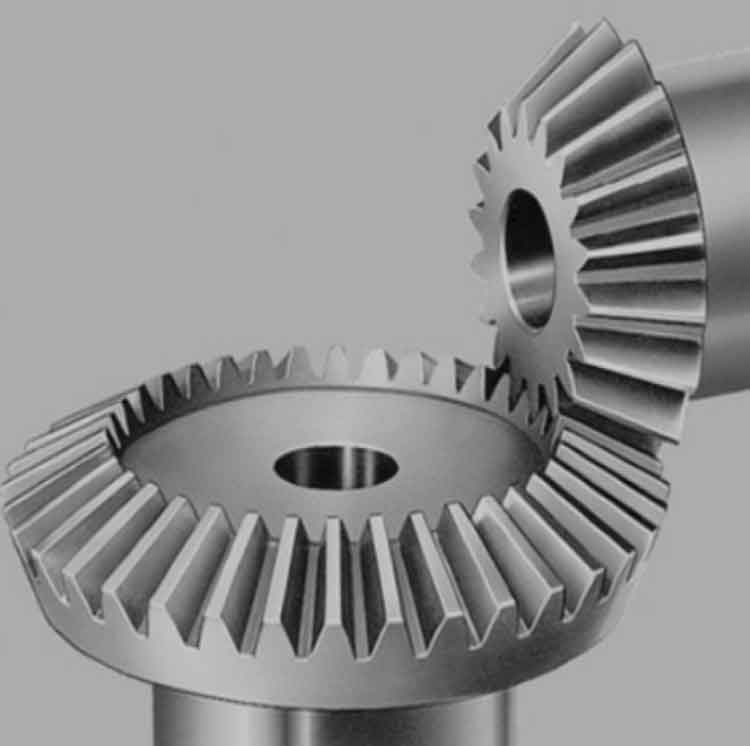
- Gear Ratio and Teeth Count: Determine the required gear ratio based on the application’s torque and speed requirements. Select appropriate teeth counts for the driving and driven gears to achieve the desired gear ratio. The gear ratio should be chosen to maximize power transmission efficiency and meet the specific application needs.
- Tooth Profile and Geometry: Optimize the tooth profile and geometry of the straight bevel gears to ensure smooth engagement and disengagement, reduce friction, and minimize energy losses. Consider factors such as tooth shape, helix angle, face width, and tooth thickness to achieve efficient power transmission. Use specialized software or consult with gear design experts for accurate tooth profile optimization.
- Material Selection: Select high-quality materials with excellent strength, durability, and wear resistance. Common materials for straight bevel gears include alloy steels, hardened steels, and cast iron. Consider factors such as load capacity, fatigue resistance, and surface hardness when choosing materials to ensure reliable and efficient power transmission.
- Surface Finish and Quality: Pay attention to the surface finish and quality of the gear teeth. Ensure smooth and properly finished tooth surfaces to reduce friction and minimize wear. Proper heat treatment techniques can be applied to enhance the surface hardness and wear resistance of the gears.
- Backlash Optimization: Backlash, which refers to the clearance between the mating gear teeth, should be properly controlled. Optimize the backlash to achieve a balance between smooth gear operation and the prevention of excessive tooth contact, which can lead to increased friction and power loss.
- Lubrication and Cooling: Proper lubrication is crucial for efficient power transmission. Select a suitable lubricant that provides adequate film thickness and lubrication properties for the gear operating conditions. Ensure sufficient cooling of the gears, especially in high-speed applications, to prevent overheating and reduce power losses due to friction.
- Alignment and Mounting: Accurate alignment and proper mounting of straight bevel gears are essential for efficient power transmission. Ensure precise alignment of the shafts and gears to minimize misalignment-induced losses and wear. Use appropriate mounting techniques to secure the gears firmly in place.
- Efficiency Testing and Optimization: Conduct efficiency testing and analysis to evaluate the gear system’s performance and identify areas for improvement. Use the test results to refine the gear design, tooth profile, lubrication, and other parameters to achieve higher power transmission efficiency.
By considering these key factors during the design process, straight bevel gears can be optimized for efficient power transmission. This leads to reduced power losses, improved overall system performance, and increased longevity of the gear system.