
Abstract:
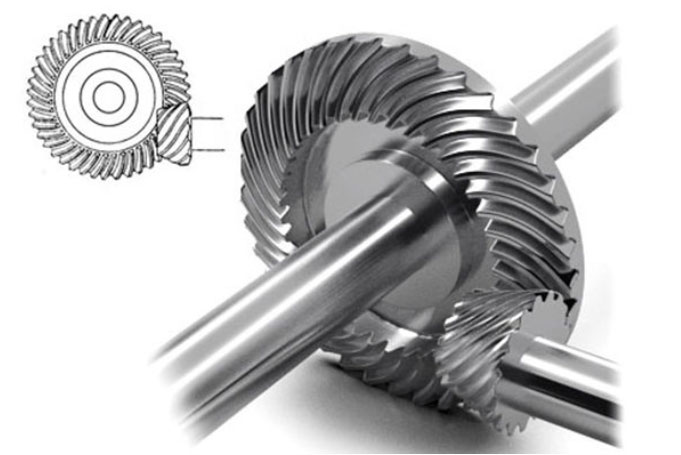
Hypoid gear transmission can conveniently realize the power transmission between space staggered axes, and it boasts numerous advantages such as high coincidence degree, strong bearing capacity, and low transmission noise. It is widely utilized in automobiles, aviation, shipping, and construction machinery. This dissertation delves into the face-hobbing method for hypoid gear machining, aiming to establish a comprehensive cutting dynamics model and explore effective chatter suppression techniques.
1. Introduction
1.1 Research Background and Significance
Hypoid gear play a pivotal role in power transmission systems due to their unique advantages. However, the complexity of their geometry and the precision required in manufacturing pose significant challenges. The face-hobbing method is a prominent technique for hypoid gear shaping, yet it is susceptible to chatter, which affects the surface quality and operational performance of the gears. Therefore, research on cutting dynamics modeling and chatter suppression in the face-hobbing process of hypoid gear is crucial for enhancing manufacturing precision and efficiency.
1.2 Development Status of Hypoid Gear Machining Technology
1.2.1 Historical Development of Hypoid Gear Machining Technology
The evolution of hypoid gear machining technology can be traced back to the early 20th century. Initially, manual methods were employed, which were labor-intensive and prone to errors. With the advancement of technology, mechanized and automated methods emerged, significantly improving production efficiency and accuracy.
1.2.2 Current Research Trends in Hypoid Gear Machining
Current research focuses on optimizing the machining process, enhancing the precision of manufactured gears, and reducing production costs. This includes investigations into new materials, cutting tools, and machining strategies.
1.3 Research Dynamics in Gear Machining Dynamics
1.3.1 Research Trends in Cutting Force Prediction
Accurate prediction of cutting forces is essential for optimizing the machining process and ensuring the quality of the final product. Researchers have developed various models to predict cutting forces, including analytical, numerical, and experimental approaches.
1.3.2 Research Trends in Dynamic Characteristic Modeling of Gear Cutting Process Systems
Understanding the dynamic characteristics of the gear cutting process system is crucial for identifying potential issues and implementing effective solutions. Research in this area focuses on modeling the vibrations and dynamics of the machining process.
1.4 Research Trends in Chatter Suppression Methods for Gear Machining
Chatter is a common issue in gear machining that can significantly affect the quality of the final product. Research in chatter suppression includes both theoretical and practical approaches, such as optimizing machine tool design, using dynamic absorbers, and implementing advanced control strategies.
1.5 Main Content and Structure of This Dissertation
This dissertation is organized into six chapters, covering the research background, theoretical foundations, cutting force analysis, dynamics modeling, chatter suppression, and software development.
2. Theoretical Foundations of Face-Hobbing for Hypoid Gear Machining
2.1 Theory of Tooth Cutting Engagement for Hypoid Gear Transmission
This section introduces the basic principles of hypoid gear machining, including the design of hypoid gear pairs and the positional relationships during the face-hobbing process.
2.2 NC Machining Process System for Face-Hobbing of Hypoid Gear
This section discusses the tools, machine tools, and workpieces involved in the face-hobbing process, as well as the geometric relationships under different conditions.
2.3 Modeling of Tooth Surface Formation During Face-Hobbing
This section presents the principles of tooth surface formation in the NC machining system and analyzes the tooth trace and tooth surface generated by both non-generating and generating methods.
2.4 Adjustment Calculations for Semi-Generating Milling of Cycloidal Hypoid Gear
This section provides a case study of gear pair design and calculates the installation parameters of the large gear blank, tool disk installation parameters, and tool tooth angle corrections.
3. Cutting Force Analysis in Face-Hobbing of Hypoid Gear
3.1 Vectorization Model of Undeformed Chip Geometry
This section introduces the homologous points on the tooth surface during face-hobbing and presents the vectorization of undeformed chip geometry during both the slotting and tooth surface forming stages.
3.2 Prediction of Cutting Forces Based on the Vectorization Model
Based on the vectorization model, this section develops a method for predicting cutting forces during the face-hobbing process.
3.3 Optimization of Process Parameters Based on Constant Cutting Forces
This section proposes a model for optimizing process parameters to maintain relatively constant cutting forces and presents the results of this optimization.
3.4 Case Study and Experimental Validation
This section introduces a case study and validates the proposed models and methods through experimental testing.
4. Dynamics Modeling of Face-Hobbing Process System for Hypoid Gear
4.1 Modeling of Tool-Workpiece Motion Relationships Considering Machine Tool Vibrations
This section establishes a kinematics model for the face-hobbing process under vibration conditions and presents a vectorized representation of the machined tooth surface.
4.2 Vectorization of Dynamic Cutting Forces Under Vibration Conditions
This section analyzes the theoretical cutting thickness under no vibration conditions and the dynamic cutting thickness during the face-hobbing process under vibration conditions.
4.3 Cutting Dynamics Modeling of Face-Hobbing Process System for Hypoid Gear
This section presents the cutting dynamics of the hypoid gear process system and analyzes the structural dynamic characteristics of the tool disk spindle system.
4.4 Prediction of Machined Tooth Surface Morphology
This section discusses the prediction of machined tooth surface morphology based on the established dynamics model.
4.5 Case Study and Experimental Validation
This section presents a case study and validates the proposed dynamics model through experimental testing, including modal analysis, dynamic cutting force simulation, and vibration simulation.
5. Chatter Suppression in Face-Hobbing of Hypoid Gear
5.1 Overview
This section introduces the challenges of chatter in the face-hobbing process and the importance of chatter suppression.
5.2 Performance Optimization of Tunable Distributed Damping Dynamic Absorbers
This section presents the design and optimization of tunable distributed damping dynamic absorbers and compares their performance with traditional dynamic absorbers.
5.3 Chatter Suppression Effect in Face-Hobbing of Hypoid Gear
This section designs the mechanical characteristics of the dynamic absorber, compares the vibration suppression effects, and evaluates the surface quality of the machined tooth surface.
6. Development of Cutting Dynamics Analysis Software for Face-Hobbing Process
6.1 Overall Design of the Software
This section introduces the overall design of the cutting dynamics analysis software for the face-hobbing process.
6.2 Development of the Software
This section discusses the development environment, main program logic, and functional integration of the software.
Conclusion and Outlook
This dissertation presents a comprehensive study on cutting dynamics modeling and chatter suppression in the face-hobbing process of hypoid gear. Through theoretical analysis, experimental validation, and software development, significant progress has been made in enhancing the precision and efficiency of hypoid gear manufacturing. Future research will continue to explore new materials, cutting tools, and machining strategies to further improve the performance of hypoid gear.
Tables:
| Table 2.1 | Geometric Parameters of a 10/37 Hypoid Gear Pair for a Truck Rear Axle Transmission |
|---|---|
| Gear Number |
| Table 3.1 | Parameters of the 10/37 Hypoid Gear Cutter and Cutter Teeth |
|---|---|
| Cutter Number of Teeth Groups (Nh) |
| Table 4.5 | Modal Test Results of the Cutter Disk Process System of the Spiral Bevel Gear Machine Tool |
|---|---|
| Test Point |
| Table 5.4 | Comparison of Normal Tooth Surface Machining Errors of Hypoid Gear |
|---|---|
| Measurement Point |