
Abstract
This thesis focuses on the research and development of a gear honing process database system for internal honing wheels. With the increasing demand for high-precision and low-noise gear transmission in electric vehicles, the gear honing process, particularly the powerful honing technique using internal honing wheels, has become increasingly significant. This paper aims to develop a database system that manages gear honing process data, providing complete processing solutions to improve production efficiency and quality accuracy in gear manufacturing.
1. Introduction
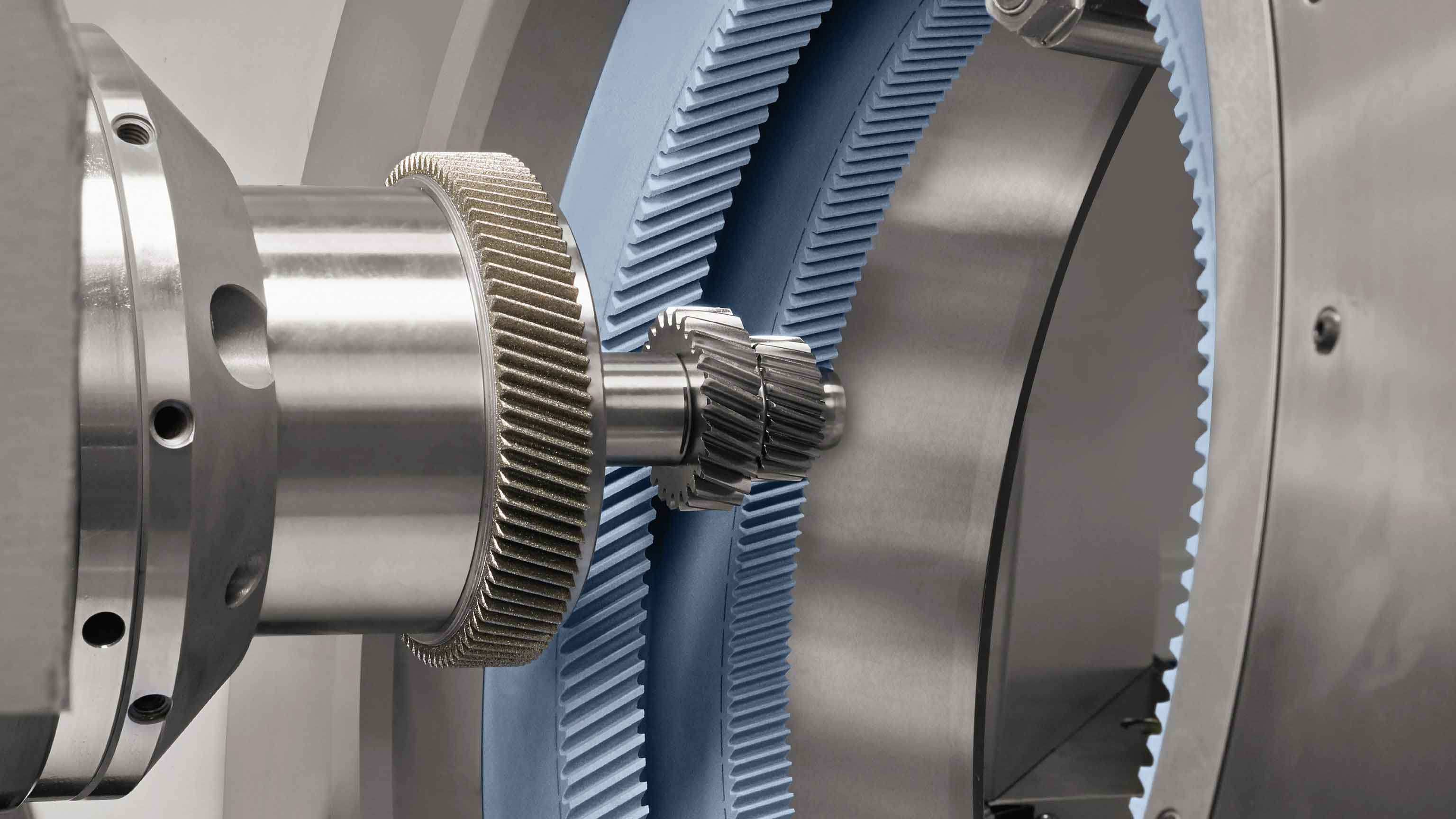
The electrification of automobiles requires gear transmissions to effectively suppress noise at high speeds. The powerful honing process using internal honing wheels, characterized by high processing accuracy, tooth surface error correction, and excellent transmission performance, perfectly meets the demands of gear applications in electric vehicles. This technology is expected to gain wider application in the future.
2. Literature Review and Research Trends
Previous research and developments in process database systems, particularly in the field of gear manufacturing, have shown a trend towards integration, intelligence, and optimization. By investigating foreign process databases and summarizing their development, it is evident that the future of process databases lies in advanced data management, intelligent decision-making support, and continuous optimization capabilities.
3. Overview of Gear Honing Process
The gear honing process, especially powerful honing with internal honing wheels, involves precision machining to achieve high surface quality and accuracy. The honing process can be divided into three stages: the sparking stage, the stable honing stage, and the polishing stage. Each stage has distinct characteristics and requirements for process parameters.
| Honing Stage | Description |
|---|---|
| Sparking Stage | Initial contact between honing wheel and gear, with some grinding particles in sliding or plowing phases. |
| Stable Honing Stage | All grinding particles are in the cutting phase, with consistent feed speed and gear formation speed. |
| Polishing Stage | Residual allowance is reduced, grinding particles transition to sliding or plowing phases. |
4. System Requirements Analysis and Conceptual Design
The development of the gear honing process database system begins with a thorough analysis of user requirements. The system needs to manage a wide range of process parameters, including those related to the honing wheel, workpiece gear, honing parameters, and machining conditions.
4.1 Requirements Analysis
The system should provide solutions based on user inputs, such as gear material, tooth number, module, and other relevant parameters. It should also be capable of optimizing honing parameters to achieve desired output variables like tooth surface roughness and profile error.
4.2 Conceptual Model Design
The conceptual model design is a crucial step in database system development. It involves abstracting application requirements into an information world structure, enabling effective communication with users and facilitating modifications as needed.
5. Logical Structure Design and Database System Architecture
5.1 Logical Structure Design
The logical structure design defines the database schema, tables, and relationships between them. Key tables include those for honing wheels, workpiece gears, honing parameters, and machining fluids.
| Table Name | Key Fields | Description |
|---|---|---|
| Honing Wheel Table | s_id, s_number, s_module, etc. | Details about the honing wheel |
| Workpiece Gear Table | g_id, g_material, g_number, etc. | Details about the workpiece gear |
| Honing Parameter Table | H_process, H_xspeed, H_zspeed, etc. | Honing parameters for the process |
| Machining Fluid Table | Fluid type, concentration, etc. | Details about the machining fluid |
5.2 Database System Architecture
The system adopts a combined C/S (Client/Server) and B/S (Browser/Server) architecture, enabling both local and remote access to the database.
6. Mixed Reasoning Technology and Honing Parameter Optimization
The system incorporates mixed reasoning technology, combining rule-based reasoning and case-based reasoning, to retrieve the most similar process instances and optimize honing parameters. Mathematical models for tooth surface roughness, honing force, and processing efficiency are established, and a Particle Swarm Optimization algorithm (PSO) is used for parameter optimization.
7. Development of the Database System
7.1 Application Client Development
The application client is developed using ADO (ActiveX Data Objects) technology for database connectivity and manipulation. Key functionalities include user login, data input, and query.
7.2 Web Frontend Development
The web frontend provides a user-friendly interface for remote access to the database system. It includes login, data management, and process instance management functionalities.
8. System Interface Demonstration
8.1 Application Client Interface

The application client interface allows users to input gear details, manage honing processes, and optimize honing parameters.
8.2 Web Frontend Interface
The frontend interface provides similar functionalities but with a focus on remote accessibility and user-friendliness.
9. Conclusion and Future Work
This thesis presents the research and development of a gear honing process database system for internal honing wheels. The system manages a comprehensive set of process data, providing complete processing solutions to improve production efficiency and quality accuracy in gear manufacturing.
However, there is still room for improvement. Further research is needed to deepen the understanding of the honing process mechanism, and the determination of feature attribute weights in the case-based reasoning part of the system should be made more objective through experimental methods.