
Abstract: The tooth surface of spiral bevel gear is complex. To investigate the sensitivity of machine tool geometric errors to tooth surface deviations, based on the establishment of a machining deviation model for spiral bevel gear tooth surfaces, both local sensitivity analysis (LSA) and Sobol’s global sensitivity analysis (GSA) methods are employed to study the impact of variations in input parameters on output results. The critical geometric errors influencing tooth surface deviations are identified. The characteristics of the two analysis methods are compared in terms of input parameters and output results. Principles for selecting sensitivity analysis methods are clarified: For models with unclear distribution ranges of input parameters or similar distribution patterns and weak linearity or nonlinearity.
1. Introduction
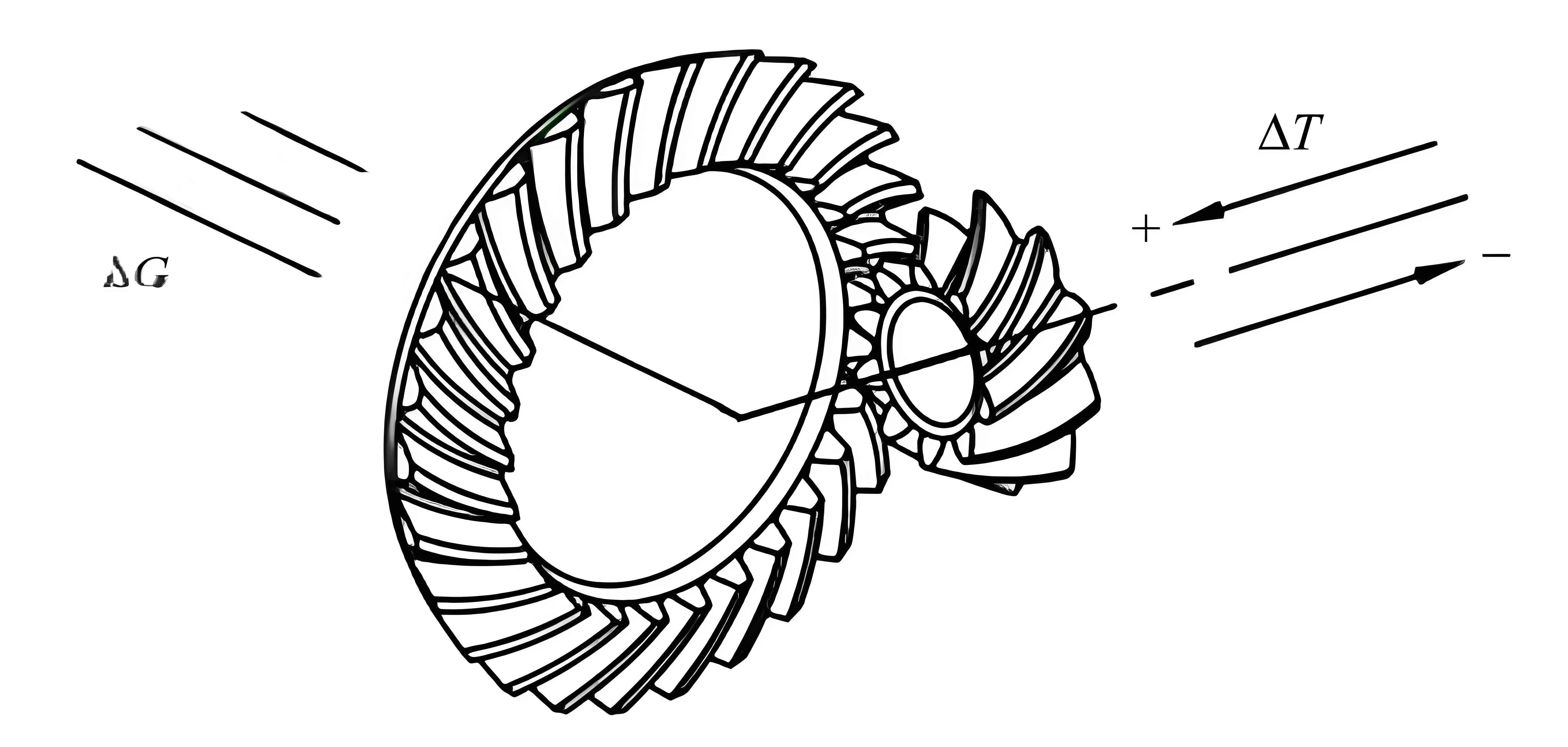
Spiral bevel gears are widely utilized in automobiles, aviation, mining machinery, and other fields due to their high contact ratio, strong load-bearing capacity, high transmission ratio, and high transmission efficiency [1]. The manufacturing accuracy of spiral bevel gears is directly related to the errors of numerical control (NC) machine tools [2]. Machine tool errors include geometric errors, thermal errors, servo control errors, etc. Among them, geometric errors are repeatable and stable and can be precisely compensated for through the NC system [3]. Therefore, studying the characteristics of machine tool geometric errors and identifying key geometric error terms are crucial for tooth surface deviation compensation, the allocation of machine tool motion accuracy, and maintenance [4-5]. Sensitivity analysis is a method for studying the degree to which changes in input factors in a system affect output results. The analysis results are represented by sensitivity coefficients, with larger coefficients indicating a higher correlation between the input factor and the output result. Sensitivity analysis is an important method for studying the relationship between machine tool geometric errors and machining accuracy. Domestic and foreign scholars have conducted in-depth research on the sensitivity analysis of machine tool geometric errors.
2. Sensitivity Analysis Methods
Sensitivity analysis is a method to study the impact of variations in input parameters on the output results of a system. The analysis results are quantified through sensitivity coefficients, with larger coefficients indicating a higher correlation between the input factor and the output results. This section introduces two main sensitivity analysis methods: local sensitivity analysis (LSA) and Sobol’s global sensitivity analysis (GSA).
2.1 Local Sensitivity Analysis (LSA)
Local sensitivity analysis focuses on examining the sensitivity of the output to small changes in individual input parameters, assuming other parameters remain constant. It is typically calculated using partial derivatives or finite differences.
2.2 Sobol’s Global Sensitivity Analysis (GSA)
Sobol’s GSA considers the overall impact of input parameters on the output results, including individual and interaction effects. It uses variance-based decomposition to quantify the sensitivity of each input parameter.
3. Case Study of Sensitivity Analysis
This section presents a case study of sensitivity analysis for spiral bevel gear tooth surface machining deviations, using both LSA and Sobol’s GSA methods.
3.1 Sampling and Calculation
Table 1 shows the geometric and machining parameters of the spiral bevel gear used in this study.
| Parameter | Value |
|---|---|
| Tooth number (Z1) | 18 |
| Module at the large end (mt/mm) | 4.29 |
| Face width (wb/mm) | 45 |
| Helix direction | Left |
| Midpoint helix angle (β/°) | 35 |
| Addendum height (ha/mm) | 8.78 |
| Dedendum height (hf/mm) | 5.03 |
| Pitch cone angle (γ1/°) | 27.21 |
| Face cone angle (γp/°) | 31.65 |
| Root cone angle (γf/°) | 25.36 |
| Outer cone distance (Lo/mm) | 140.9 |
The theoretical tooth surface of the spiral bevel gear can be obtained using Equation (13). Considering the influence of machine tool geometric errors in actual machining, the actual tooth surface can be calculated using Equation (14). A discrete 15×9 point matrix is used to represent the tooth surface. By combining Equations (13) and (14), the theoretical and actual tooth surface point matrices can be obtained. The deviation value (Kf) of corresponding tooth surface points can be solved using the coordinates of points in the matrices. The tooth surface deviation (K), which is the output result of the calculation model and used to measure the magnitude of tooth surface deviations, can be obtained using Equation (15).
3.2 Input Parameter Discussion
When using the LSA method, it is necessary to ensure that the variation of the same type of input parameter is the same, so that the output results are comparable. The selection criteria are unrelated to the actual range and distribution pattern of the input parameters, so changes in the actual input parameter range will not affect the LSA results. In the previous section, the input parameter range for Sobol’s GSA method was selected with reference to the characteristics of the LSA method, ensuring that the range and distribution pattern of the same type of parameters were the same. However, in reality, the input parameter ranges generally differ, and the variation patterns often vary. Therefore, considering actual possible situations, taking geometric error number 4 as an example, the range of this geometric error is changed from 0-10 μm to 0-20 μm, while other conditions remain unchanged. The sensitivity analysis results can be obtained.
3.3 Result Analysis
Comparing the calculation results of the two sensitivity analysis methods before and after changes in the input parameter range, the following characteristics of the two sensitivity analysis methods for the spiral bevel gear tooth surface machining deviation calculation model can be found:
(1) In the ideal case where the input parameter range and distribution pattern are completely the same, the sensitivity coefficient distribution patterns of linear errors to spiral bevel gear tooth surface deviations obtained by the two sensitivity analysis methods are the same. The sensitivity coefficients of linear error terms for all five axes show a trend of y-direction > x-direction > z-direction.
(2) In the ideal case where the input parameter range and distribution pattern are completely the same, the distribution patterns of sensitivity coefficients of angular errors for all axes to spiral bevel gear tooth surface deviations obtained by the two sensitivity analysis methods show slight differences due to the adopted probability calculation formulas and sampling limitations, but the overall trends are the same.
By applying the two sensitivity analysis methods to the sensitivity analysis of the spiral bevel gear tooth surface machining deviation model, the following findings can be obtained:
(1) In the ideal case where the input parameter range and distribution pattern are completely the same, the LSA method has a smaller calculation volume and can quickly obtain preliminary analysis results. At the same time, the analysis results have the same distribution pattern as the GSA results, providing certain reference value.
(2) Sobol’s GSA method considers the impact of the input parameter range and distribution pattern on the analysis results, which is more scientific, and the conclusions obtained are more credible and have a wider range of applications. In addition, most global sensitivity analyses can be used to study the quantitative relationship between input parameters and output results, as well as the impact of parameter interactions on output results. However, compared to the LSA method, the calculation volume increases significantly, requiring more time.
4. Conclusion
This study provides theoretical guidance for the application of sensitivity analysis methods in spiral bevel gear tooth surface machining and offers references for selecting sensitivity analysis methods. Through case studies and comparative analysis, the characteristics and applicable scenarios of the two sensitivity analysis methods are clarified, which is of great significance for improving the manufacturing accuracy of spiral bevel gears and optimizing machine tool design.