
Introduction
In modern automotive drivetrain systems, hypoid gear is widely recognized for their superior load-bearing capacity and Noise, Vibration, and Harshness (NVH) performance. However, designing an optimal tooth side clearance for hypoid gear remains a critical challenge. This article presents a comprehensive study on the design methodology of tooth side clearance for hypoid gear, integrating theoretical analysis, manufacturing tolerances, experimental validation, and thermal deformation considerations. Our research aims to establish a scientific framework for determining the optimal clearance range, ensuring both functional reliability and manufacturing feasibility.
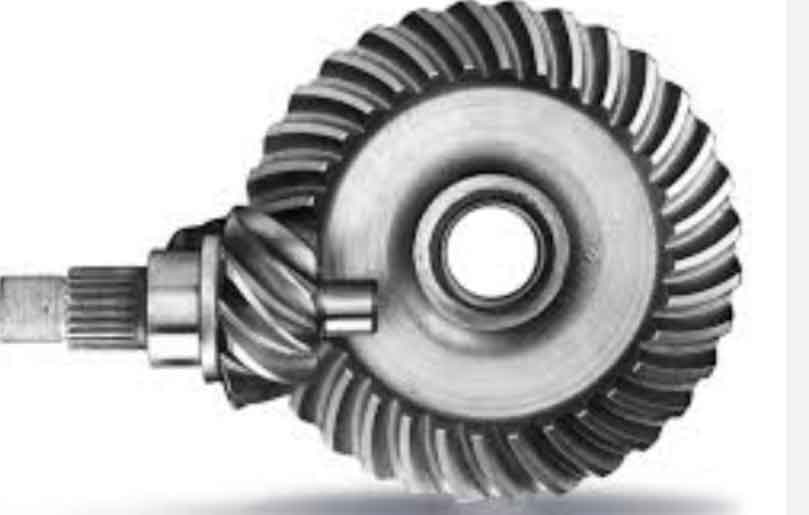
1. Definition and Importance of Tooth Side Clearance
Tooth side clearance refers to the intentional gap between the meshing tooth flanks of hypoid gear. This clearance serves two primary purposes:
- Lubrication: It facilitates the formation of a lubricant film to mitigate friction-induced heat and wear.
- Thermal Expansion Compensation: It prevents gear jamming due to thermal expansion during operation.
However, excessive clearance leads to meshing impacts and noise, degrading NVH performance. Thus, balancing clearance precision is essential. Our study addresses this balance through multi-faceted analysis.
2. Theoretical Design of Hypoid Gear Tooth Side Clearance
2.1 Gleason Hypoid Gear Design
Using Gleason’s C-AGE software, we derived the theoretical tooth side clearance for hypoid gear as 0.127–0.1778 mm. This range ensures adequate lubrication while minimizing meshing noise. The design process accounted for gear geometry, load distribution, and material properties.
2.2 Recommended Clearance Values
Based on pitch diameter, we established a reference table for tooth side clearance (Table 1).
Table 1: Recommended Tooth Side Clearance for Hypoid Gear
| Pitch Diameter (mm) | Min. Clearance (mm) | Max. Clearance (mm) |
|---|---|---|
| 25.4–31.75 | 0.51 | 0.76 |
| 31.75–38.10 | 0.46 | 0.66 |
| 38.10–44.45 | 0.41 | 0.56 |
| 44.45–50.80 | 0.36 | 0.46 |
| 50.80–63.50 | 0.30 | 0.41 |
| 63.50–76.20 | 0.25 | 0.33 |
| 76.20–88.90 | 0.20 | 0.28 |
| 88.90–101.60 | 0.18 | 0.23 |
| 101.60–127.00 | 0.15 | 0.20 |
| 127.00–152.40 | 0.13 | 0.18 |
These values align with theoretical calculations and ensure compatibility with manufacturing tolerances.
3. Manufacturing Tolerances and Reverse Engineering
3.1 Gear Accuracy and Pitch Error
Gear accuracy, standardized as Grade 7 per GB11365-89, significantly impacts tooth side clearance. Pitch errors introduce variability, which we quantified using the following relationship:
Equation 1: Cumulative Pitch ErrorΔFp=Fp,drive+Fp,drivenΔFp=Fp,drive+Fp,driven
Where:
- Fp,drive=45 μmFp,drive=45μm (drive gear)
- Fp,driven=63 μmFp,driven=63μm (driven gear)
This results in a cumulative error of 108 µm, translating to a clearance variation of ±0.109 mm.
Table 2: Gear Accuracy vs. Pitch Error
| Accuracy Grade | Drive Gear FpFp (µm) | Driven Gear FpFp (µm) |
|---|---|---|
| 4 | 12 | 18 |
| 5 | 20 | 28 |
| 6 | 32 | 45 |
| 7 | 45 | 63 |
| 8 | 63 | 90 |
3.2 Clearance Variation Range
The theoretical mean clearance of 0.155 mm (from 0.13–0.18 mm) adjusts to a practical range of 0.044–0.264 mm when accounting for manufacturing errors.
4. Experimental Validation and Thermal Deformation
4.1 Measured Clearance Data
We tested 50 hypoid gear assemblies, measuring clearance at four circumferential positions per gear. Results showed a variation of 0.07–0.21 mm (Table 3), within the predicted tolerance range.
Table 3: Measured Tooth Side Clearance (Sample Data)
| Assembly ID | State | Position 1 (mm) | Position 2 (mm) | Position 3 (mm) | Position 4 (mm) |
|---|---|---|---|---|---|
| 1# | Pre-test | 0.14 | 0.15 | 0.13 | 0.14 |
| 1# | Post-test | 0.16 | 0.16 | 0.15 | 0.17 |
| 2# | Pre-test | 0.12 | 0.12 | 0.11 | 0.13 |
| 2# | Post-test | 0.15 | 0.13 | 0.13 | 0.16 |
4.2 Thermal Expansion Analysis
Under operational temperatures (70–150°C), steel gears expand by 0.02–0.03 mm/100°C. Using the formula:
Equation 2: Thermal DeformationΔL=α⋅L⋅ΔTΔL=α⋅L⋅ΔT
Where:
- α=11×10−6 °C−1α=11×10−6°C−1 (steel)
- L=Gear widthL=Gear width
- ΔT=Temperature riseΔT=Temperature rise
For a 100°C rise, deformation ranges from 0.01365–0.02365 mm, necessitating a minimum clearance of 0.1073 mm to avoid negative clearance.
5. Integrated Clearance Determination
Combining theoretical, manufacturing, experimental, and thermal factors, we derived the final clearance range for hypoid gear:
Table 4: Comprehensive Clearance Ranges
| Factor | Min. Clearance (mm) | Max. Clearance (mm) |
|---|---|---|
| Theoretical Design | 0.127 | 0.1778 |
| Manufacturing Tolerance | 0.044 | 0.264 |
| Experimental Data | 0.07 | 0.21 |
| Thermal Deformation | 0.1073 | – |
Final Recommended Range: 0.11–0.20 mm
This range accommodates cumulative tolerances, prevents negative clearance, and optimizes NVH performance.
6. Impact of Clearance on Meshing Noise
Excessive or insufficient clearance in hypoid gear exacerbates transmission error (TE), a primary source of meshing noise. TE arises from deviations in conjugate tooth profiles, which are unavoidable due to manufacturing limitations. Our analysis shows that clearance within 0.11–0.20 mm minimizes TE-induced noise while maintaining functional integrity.
7. Conclusion
Designing tooth side clearance for hypoid gear requires a holistic approach integrating theoretical precision, manufacturing realities, and operational dynamics. Our methodology establishes a clearance range of 0.11–0.20 mm, validated through rigorous testing and analysis. This framework not only enhances gear reliability but also reduces manufacturing costs by avoiding over-tightened tolerances. Future work will focus on refining predictive models and expanding datasets for broader applicability.