
1. Introduction
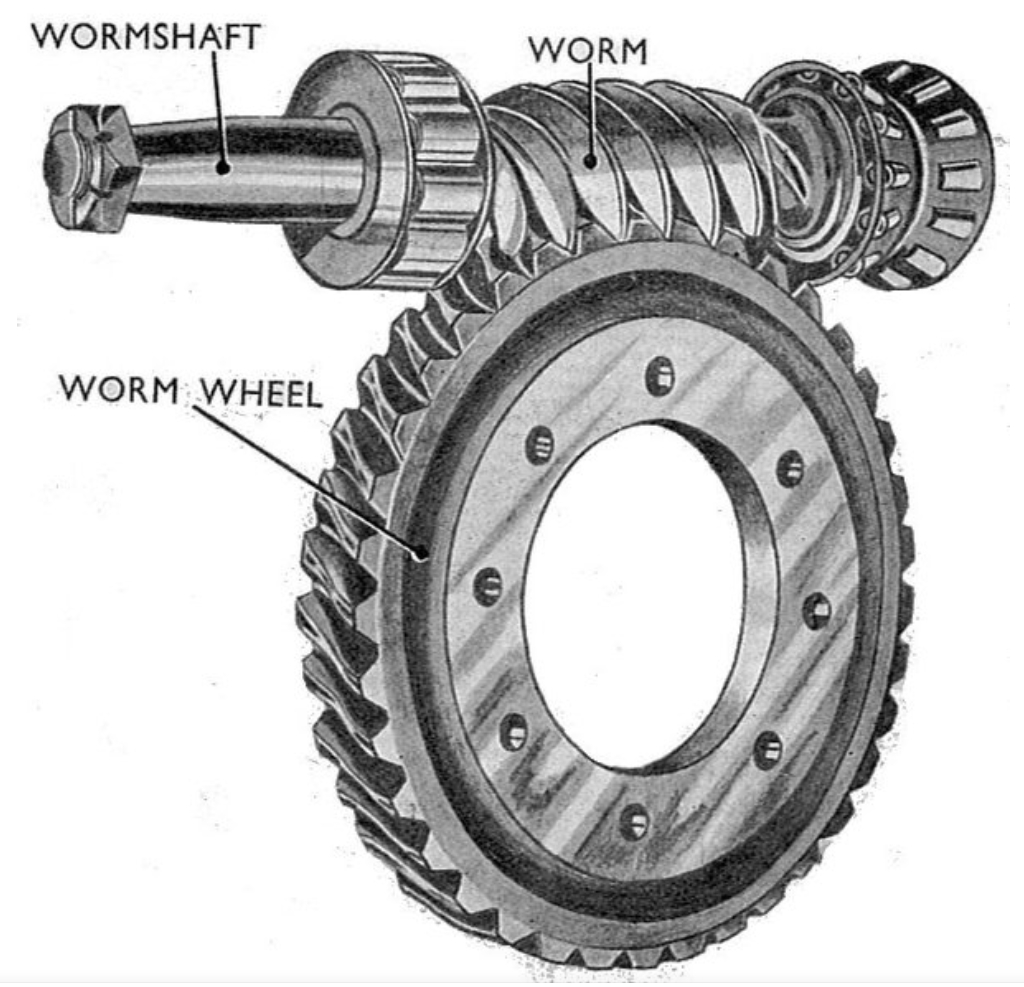
As a critical component in modern vehicles, the Electric Power Steering (EPS) system has replaced traditional hydraulic systems due to its energy efficiency and superior control performance. However, the increasing complexity of EPS components, particularly in Column-mounted EPS (C-EPS), introduces challenges such as friction-induced noise. Among these, noise generated by the worm gear and worm mechanism remains a persistent issue, significantly impacting vehicle NVH (Noise, Vibration, and Harshness) performance. This study focuses on diagnosing and mitigating friction-induced noise in the worm gear assembly, providing actionable insights for improving EPS design and manufacturing processes.
2. Classification of EPS Noise
EPS noise can be categorized based on driving conditions and sources (Table 1).
| Noise Type | Description | Primary Sources |
|---|---|---|
| Rotational Noise | Occurs during continuous steering wheel rotation. | Motor operation, worm gear meshing. |
| Bump-Induced Noise | Generated on uneven roads due to part collisions. | Intermediate shaft splines, worm gear. |
| Impact Noise | Arises during rapid steering direction changes. | Worm gear, steering joints. |
Friction-induced noise in the worm gear primarily falls under rotational noise, manifesting as:
- “Clicking” sounds during low-speed maneuvers (e.g., parking).
- High-frequency squeaks during steering reversals, exacerbated at low temperatures.
3. Mechanism of Friction-Induced Noise
The root cause lies in stick-slip motion between the worm gear and worm surfaces. This phenomenon arises from alternating static and dynamic friction coefficients (μs>μdμs>μd), coupled with system elasticity. The resulting vibration generates audible noise, often high-pitched despite low-frequency stick-slip cycles.
Mathematical Representation of Stick-Slip:Ffriction={μs⋅N(Static phase)μd⋅N+k⋅x(Slip phase)Ffriction={μs⋅Nμd⋅N+k⋅x(Static phase)(Slip phase)
Where NN = normal force, kk = system stiffness, xx = displacement.
4. Key Strategies for Noise Mitigation
To suppress stick-slip and associated noise, four pillars are emphasized:
4.1 Dimensional Control and Optimization of Worm Gear
- Issue: Excessive dimensional deviations in worm gear (e.g., face runout) cause uneven contact pressure.
- Solution:
- Modify injection molding from 4-gate to 6-gate design to reduce runout (Table 2).
- Introduce rounded edges on worm teeth to minimize abrupt contact transitions.
| Parameter | Original Design | Optimized Design | Improvement |
|---|---|---|---|
| Injection Gates | 4 | 6 | Runout reduced by 40% |
| Tooth Edge Geometry | Sharp | Rounded (R0.2 mm) | Smoother meshing |
4.2 Material Selection for Worm Gear
Material properties critically influence friction, wear, and thermal stability. Key tests include:
| Material | Hardness (Shore D) | Water Absorption (%) | Friction Coefficient | Wear Rate (mm³/N·m) |
|---|---|---|---|---|
| PA12+GF | 75 | 0.8 | 0.15 | 1.2×10⁻⁶ |
| PA66+GF | 85 | 1.2 | 0.18 | 1.5×10⁻⁶ |
| PA6G | 78 | 1.0 | 0.12 | 0.9×10⁻⁶ |
Findings:
- PA6G exhibits the lowest friction and wear but poor high-temperature stability.
- PA66+GF balances hardness, dimensional stability, and thermal performance.
4.3 Lubricating Grease Optimization
Lubrication directly affects worm gear noise by reducing friction fluctuations. Critical factors include:
| Factor | Requirement | Impact on Noise |
|---|---|---|
| Grease Quantity | ≥16 g per assembly | Insufficient grease → incomplete film → noise |
| Temperature Stability | Maintain viscosity across -40°C to 120°C | Prevents thermal thinning/thickening |
| Compatibility | Non-reactive with anti-rust oils | Avoids additive degradation |
4.4 Assembly Process Refinement
Precision matching of worm gear and worm components minimizes meshing gaps. Key steps:
- Grouping: Sort housings and worm gears into tolerance-matched batches.
- Pairing: Assemble components from the same group to ensure minimal clearance.
5. Experimental Validation
5.1 Bench Testing
A dedicated rig evaluated worm gear-worm pairs under simulated steering loads. Results confirmed:
- Optimized worm gear geometry reduced noise by 60% at 20°C.
- PA66+GF material extended durability by 30% compared to PA12+GF.
5.2 Vehicle Testing
Field trials on C-EPS-equipped vehicles demonstrated:
- Elimination of low-temperature squeaks after lubrication adjustments.
- Consistent noise reduction across 10,000 km endurance runs.
6. Future Directions
- Advanced Lubricant-Material Synergy: Investigate interactions between worm gear materials (e.g., steel vs. composite) and novel greases.
- Predictive Modeling: Develop finite element models to simulate stick-slip dynamics.
- Standardized Testing Protocols: Establish universal benchmarks for worm gear noise evaluation.
7. Conclusion
The systematically addresses friction-induced noise in EPS worm gear assemblies through dimensional precision, material engineering, lubrication science, and assembly rigor. By aligning these strategies, automotive manufacturers can enhance NVH performance while ensuring long-term reliability. The methodologies outlined here serve as a blueprint for tackling similar tribological challenges in evolving EPS architectures.