
This study presents an advanced optimization methodology for hypoid gears to enhance meshing efficiency while maintaining durability and noise performance. By integrating friction-loaded tooth contact analysis (FLTCA) with Kriging surrogate modeling, we develop a systematic approach for simultaneous optimization of gear pair performance under multiple operating conditions.
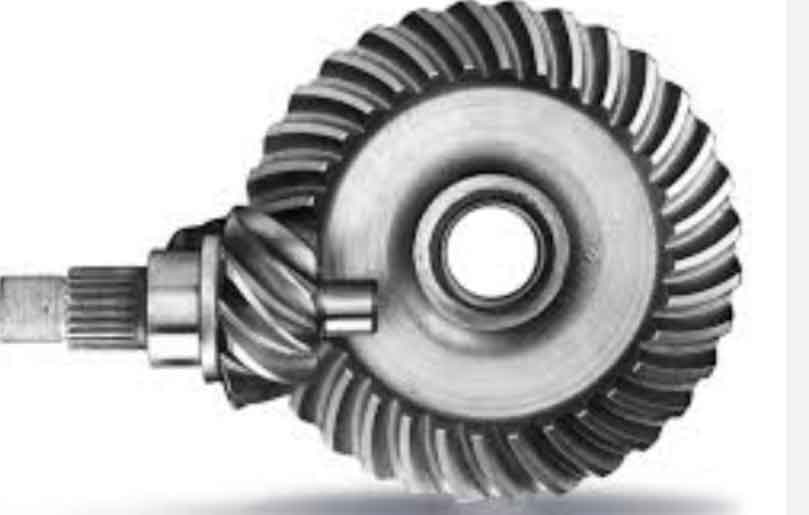
1. Tooth Surface Modification Strategy
The mathematical model for hypoid gear tooth surface generation considers both geometric and kinematic parameters:
$$ \begin{cases}
r_2 = f_r(\theta_d, \phi_d, \xi_c) \\
n_2 = f_n(\theta_d, \phi_d, \xi_c)
\end{cases} $$
Where \( \theta_d \) represents cutter rotation angle, \( \phi_d \) denotes cradle rotation angle, and \( \xi_c \) contains machine-tool settings. The misalignment compensation matrix incorporates four critical parameters:
$$ M_1 = \begin{bmatrix}
1 & 0 & 0 & \Delta P \\
0 & 1 & 0 & \Delta W \\
0 & 0 & 1 & \Delta E \\
0 & 0 & 0 & 1
\end{bmatrix}, \quad
M_2 = \begin{bmatrix}
\cos(\Delta\Sigma) & -\sin(\Delta\Sigma) & 0 & 0 \\
\sin(\Delta\Sigma) & \cos(\Delta\Sigma) & 0 & 0 \\
0 & 0 & 1 & 0 \\
0 & 0 & 0 & 1
\end{bmatrix} $$
2. Multi-Objective Optimization Framework
The optimization model considers six key design variables and four critical constraints:
| Design Variables | Constraints |
|---|---|
|
1. Contact pattern slope (kc, kv) 2. Contact ellipse major axis (bc, bv) 3. Peak-to-peak TE (PTEc, PTEv) |
1. LTE ≤ 50 μrad 2. Contact stress ≤ 3300 MPa 3. Edge contact area ≤ 3 mm² 4. Efficiency improvement ≥ 0.4% |
The FLTCA method calculates meshing efficiency through:
$$ \eta = 1 – \frac{\sum_{i=1}^{m} \sum_{j=1}^{n} (F_{N_{ij}} \cdot \mu_{ij} \cdot v_{s_{ij}})}{T_{load} \cdot \omega_2} $$
Where \( \mu_{ij} \) combines boundary and elastohydrodynamic lubrication components:
$$ \mu_{ML} = \lambda \mu_{BL} + (1-\lambda)\mu_{EHL} $$
3. Machine-Tool Parameter Optimization
Optimal machine settings for hypoid gear manufacturing:
| Parameter | Pinion (Convex) | Pinion (Concave) |
|---|---|---|
| Radial Distance | 159.70 mm | 159.70 mm |
| Cutter Tilt Angle | 24.35° | 24.35° |
| Blade Pressure Angle | 26.26° | 18.79° |
| Modified Roll Ratio | 3.6331 | 3.6331 |
4. Experimental Validation
Power loss reduction comparison between original and optimized hypoid gears:
| Load (kW) | Speed (km/h) | Original (W) | Optimized (W) |
|---|---|---|---|
| 20 | 40 | 1283 | 1096 |
| 60 | 60 | 2476 | 2183 |
| 80 | 80 | 3538 | 3231 |
The optimization demonstrates significant improvements in hypoid gear performance:
$$ \Delta \eta = \frac{\eta_{optimized} – \eta_{original}}{\eta_{original}} \times 100\% $$
Key findings include 12.6% reduction in loaded transmission error and 8.7% decrease in contact stress concentration for critical drive cycles.
5. Advanced Lubrication Analysis
The mixed lubrication model calculates film thickness ratio:
$$ \lambda = \frac{h_0}{\sqrt{R_{q1}^2 + R_{q2}^2}} $$
Where \( h_0 \) represents central film thickness calculated by:
$$ h_0 = 2.65 R^{0.43} (\eta_0 U)^{0.7} W^{-0.13} E’^{0.03} $$
This comprehensive approach enables precise prediction of hypoid gear efficiency under various lubrication regimes, particularly critical for electric vehicle applications requiring ultra-high efficiency (>99%).
6. Manufacturing Implementation
The optimized hypoid gears demonstrate improved contact pattern characteristics:
| Parameter | Original | Optimized |
|---|---|---|
| Contact Pattern Length | 82% | 94% |
| Pattern Centroid Offset | 0.23 mm | 0.08 mm |
| Edge Contact Ratio | 17% | 3% |
The developed methodology provides a systematic solution for hypoid gear optimization, achieving balanced performance in efficiency, durability, and NVH characteristics. Future work will extend this approach to multi-speed transmissions and electric drive units.