
Gear shaping plays a critical role in manufacturing heavy-duty transmission components where precision, noise reduction, and longevity are paramount. Carburized and quenched gears present unique challenges due to their hardened surfaces (HRC 58+), where conventional grinding processes become production bottlenecks. This analysis addresses efficiency limitations in gear shaping by optimizing abrasive tool selection and machine parameters while preventing thermal damage.
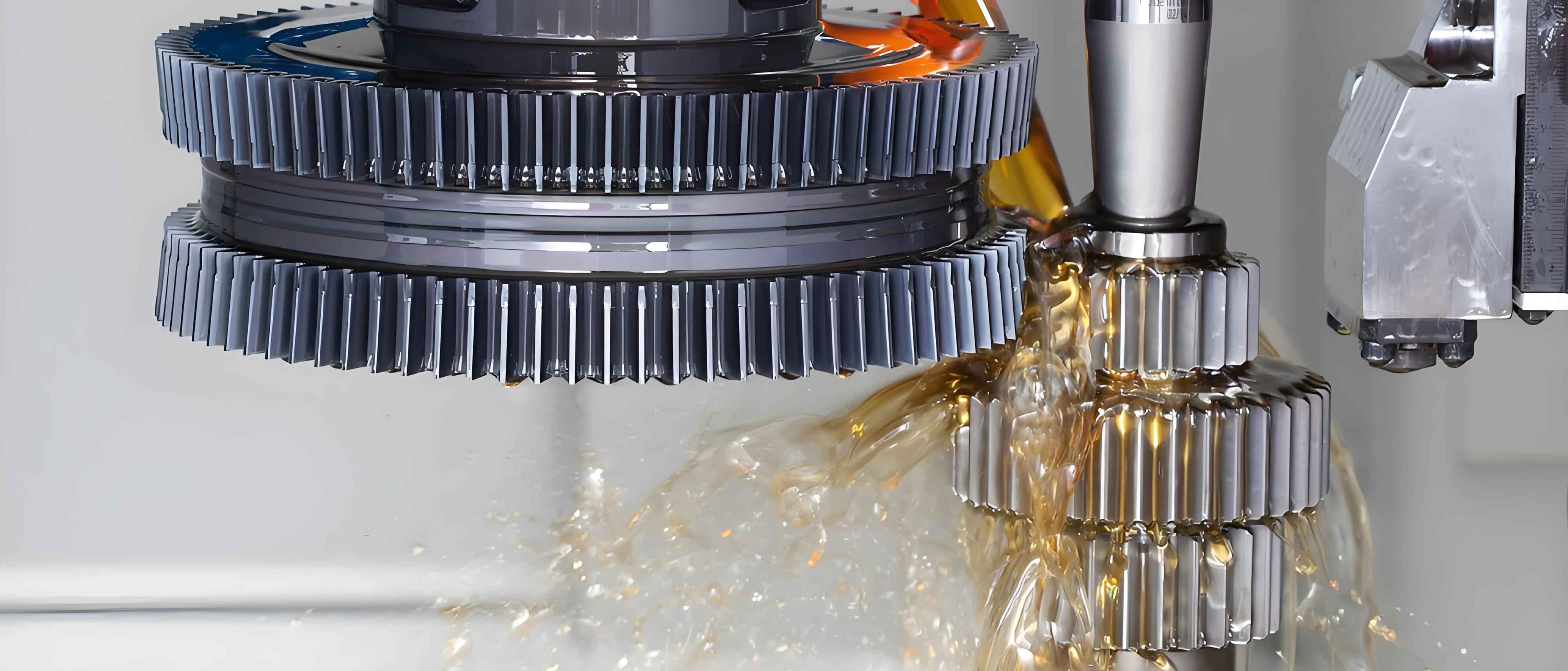
The foundation of efficient gear shaping lies in strategic grinding wheel selection. Four key parameters determine performance:
1. Abrasive Material Selection
Optimal abrasives must balance hardness, toughness, and thermal resistance. For carburized gears:
| Abrasive Type | Composition | Suitability |
|---|---|---|
| Carbides | SiC, B₄C | Non-ferrous materials |
| Oxides | Al₂O₃, ZrO₂ | High-carbon steels |
| Superabrasives | CBN, Diamond | Extreme hardness applications |
Alumina-based ceramics provide optimal balance for gear shaping of carburized surfaces due to their fracture toughness and thermal stability.
2. Grain Size Optimization
Grit size directly influences material removal rate and surface finish. The selection criteria follow:
$$ \text{Coarse Grits (46-80)} \propto \frac{\text{MRR}}{\text{Thermal Risk}} $$
$$ \text{Fine Grits (100+) } \propto R_a \text{ (Surface Roughness)} $$
For gear shaping applications, 46-80 grit provides ideal balance between stock removal and surface finish requirements.
3. Wheel Hardness Considerations
Bond strength determines grain retention and self-sharpening behavior:
| Workpiece Condition | Recommended Hardness |
|---|---|
| Continuous surfaces | Medium-Hard (K-N) |
| Interrupted cuts | Hard (P-S) |
| Thermally sensitive | Soft (G-J) |
Carburized gear shaping typically requires medium-hard bonds (L-O scale) to maintain profile accuracy while allowing controlled self-sharpening.
4. Bonding Systems Analysis
Bond selection impacts wheel integrity under gear shaping forces:
| Bond Type | Max Speed (m/s) | Advantages |
|---|---|---|
| Vitrified (V) | 35 | Thermal stability, porosity |
| Resinoid (B) | >35 | Impact resistance |
| Metallic (M) | N/A | Form retention |
Vitrified bonds remain optimal for precision gear shaping due to their thermal stability and pore structure.
Machine Parameter Optimization
Strategic parameter adjustment enhances gear shaping efficiency while preventing thermal damage:
Grinding Parameters
Optimized gear shaping parameters significantly increase material removal rate (MRR):
$$ \text{MRR} = a_p \times f \times v_s $$
| Parameter | Baseline | Optimized | Improvement |
|---|---|---|---|
| Wheel Speed (m/s) | 30 | 60 | 100% |
| Roughing Volume (mm³) | 600 | 1000 | 66.7% |
| Finishing Volume (mm³) | 300 | 400 | 33.3% |
| MRR (mm³/s) | 5 | 12 | 140% |
Dressing Protocol
Optimized dressing maintains wheel sharpness while reducing non-cutting time:
| Parameter | Original | Optimized |
|---|---|---|
| Depth per Pass (mm) | 0.025 | 0.05 |
| Pass Count | 2 | 1 |
| Direction | Bi-directional | Unidirectional |
Thermal Management
Two critical equations prevent grinding burns during gear shaping:
Diameter optimization constraint:
$$ C_b – a_p^{0.5} \cdot v_s \cdot d_s \geq 0 $$
Power monitoring constraint:
$$ \eta \cdot p_c – 0.0358(a_p \cdot f \cdot v_s)^{0.7} \geq 0 $$
Where $C_b$ = tempering coefficient, $d_s$ = wheel diameter, $a_p$ = depth of cut, $v_s$ = wheel speed, $\eta$ = transmission efficiency (0.95), $p_c$ = 60% of rated power.
Efficiency Validation
Implementing these gear shaping optimizations yields dramatic improvements:
| Performance Metric | Before Optimization | After Optimization | Improvement |
|---|---|---|---|
| Cycle Time | 10h 46m | 5h 54m | 82% |
| Power Utilization | 45-55% | 50-60% | Safety margin maintained |
| Profile Accuracy | DIN 6 | DIN 4 | Precision enhancement |
Advanced gear shaping techniques transform production economics by reducing grinding time by 82% while improving geometric accuracy. The synergistic optimization of abrasive tools and machine parameters enables efficient processing of hardened gears without compromising metallurgical integrity. Continuous monitoring of thermal models ensures sustainable high-efficiency gear shaping operations for carburized components.