
Introduction
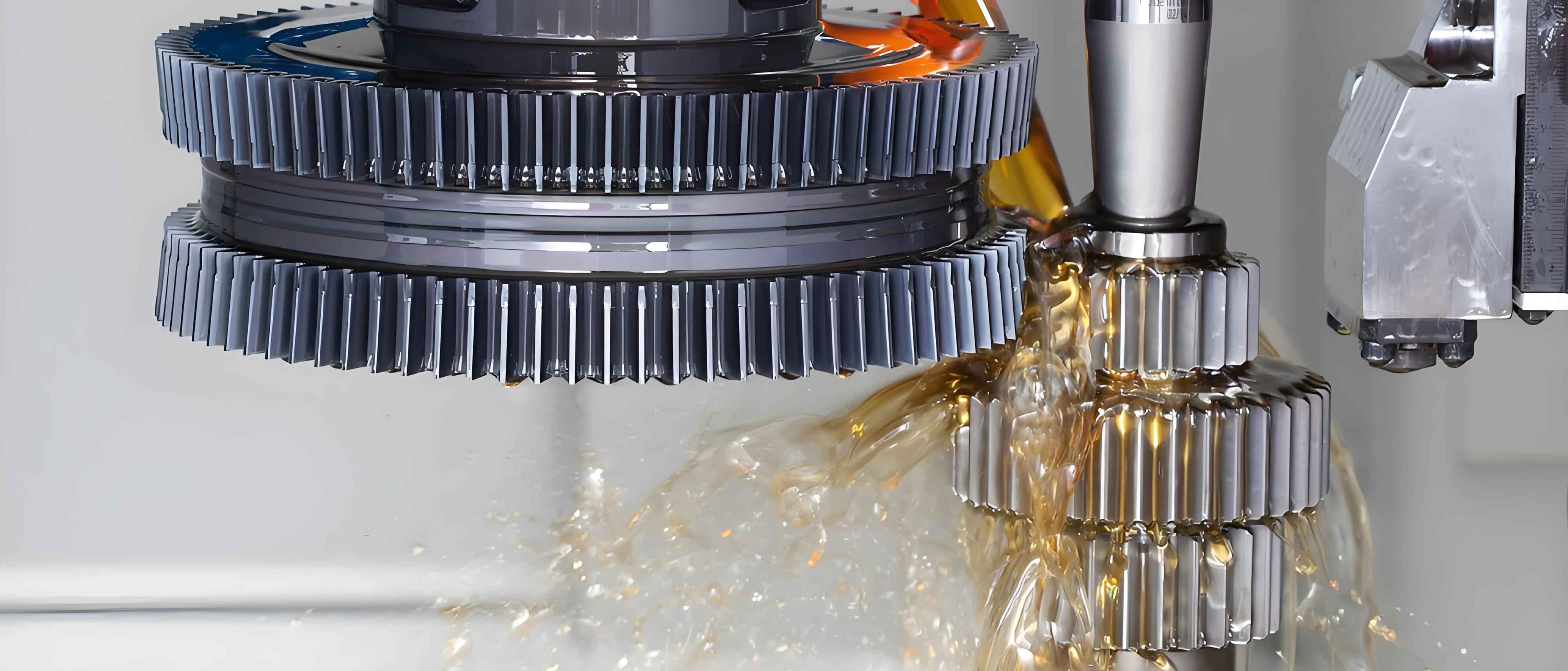
Non-circular gears are critical components in specialized mechanical transmissions requiring non-uniform motion conversion. Currently, CNC gear shaping and hobbing dominate their manufacturing. While gear shaping offers broader applicability than hobbing—particularly for gears with significant curvature variations or low tooth counts where undercutting occurs—it faces limitations in efficiency, precision, and cutting force stability. These constraints hinder the widespread adoption of non-circular gears. Feed rate stands as the most influential parameter affecting machining efficiency and quality. Cutting force fluctuations during gear shaping compromise dimensional accuracy, surface integrity, and tool longevity. Optimizing feed rates to constrain these fluctuations enhances quality, boosts efficiency, and reduces costs. Prior research by Park et al. demonstrated machining time reduction through feed velocity optimization for maximum cutting force. Similarly, Cai et al. developed feed rate optimization models based on cutting force predictions. However, methods involving continuous radial feed adjustments, like those by Rokkaku et al., accelerate wear on screws and guideways. This work introduces a variable circumferential feed optimization method for gear shaping, constrained by constant cutting force, to mitigate fluctuations without inducing mechanical wear.
Cutting Force Modeling in Gear Shaping
During non-circular gear shaping, the principal cutting force \( F_z \) dominates other force components. It determines machine power capacity, fixture design, and tool selection. Given the multi-tooth nature of shaping cutters and minimal variation in tool inclination, the process is modeled as orthogonal cutting. Force equilibrium analysis yields:
$$F_z = N_f \cos \gamma_e + F_f \sin \gamma_e$$
Applying metal cutting theory and simplifying, \( F_z \) relates directly to the shear stress \( \tau_s \) and undeformed chip area \( A_c \):
$$F_z = \tau_s A_c \frac{\cos (\beta – \gamma_e)}{\sin \psi_e \cos (\psi_e + \beta – \gamma_e)}$$
For a single machining operation, tool rake angle \( \gamma_e \), shear angle \( \psi_e \), and shear yield strength \( \tau_s \) remain constant. Thus, \( F_z \) exhibits linear proportionality to \( A_c \):
$$F_z \propto A_c$$
This establishes the foundation for controlling cutting force by regulating the undeformed chip area during gear shaping.
Non-Circular Gear Shaping Simulation
Kinematic Linkage Model
Based on the normal offset principle of the pitch curve, the shaping linkage model coordinates cutter and workpiece motion. For a non-circular gear pitch curve \( c: r = r(\phi) \), with unit tangent vector \( \mathbf{t} \) and unit normal vector \( \mathbf{n} \) at point \( m \), the cutter center \( m_1 \) lies on the normal offset curve. Key parameters include radial offset \( \Delta d \), cutter radius \( r_0 \), and angles \( \mu \), \( \beta \), \( \gamma \) defined geometrically:
$$\mu = \arctan \left( \frac{r}{dr/d\phi} \right), \quad 0 \leq \mu < \pi$$
$$\beta = \arctan \left( \frac{\Delta d \sqrt{r^2 + (dr/d\phi)^2} + r^2}{r (dr/d\phi)} \right) – \mu$$
The workpiece rotation angle \( \phi \) and cutter rotation angle \( \psi \) are derived from pure-rolling conditions and arc length equivalence:
$$\phi = \phi + \mu – \beta$$
$$\psi = \frac{s}{r_0} – \arctan \left( \frac{r (dr/d\phi)}{\Delta d \sqrt{r^2 + (dr/d\phi)^2} + r^2 \right)$$
Center distance \( a \) varies dynamically:
$$a = \sqrt{r^2 + \Delta d^2 + 2 r \Delta d \sin \mu}$$
Total radial depth \( h \) equals the sum of incremental depths per cycle \( \Delta h_i \), related to module \( m \) and tooth height coefficients:
$$\sum_{i=1}^{n} \Delta h_i = m(2h_a^* + c^*) = h, \quad \Delta d = r_0 + h – \Delta h$$
The complete shaping linkage model integrating radial feed is:
$$
\begin{cases}
\psi(\phi, \Delta h) & = \frac{1}{r_0} \int_0^\phi \sqrt{r^2 + \left( \frac{dr}{d\phi} \right)^2} d\phi – \arctan \left( \frac{r (dr/d\phi)}{(r_0 + h – \Delta h) \sqrt{r^2 + (dr/d\phi)^2} + r^2} \right) \\
\phi(\phi, \Delta h) & = \phi + \arctan \left( \frac{r}{dr/d\phi} \right) – \arctan \left( \frac{(r_0 + h – \Delta h) \sqrt{r^2 + (dr/d\phi)^2} + r^2}{r (dr/d\phi)} \right) \\
a(\phi, \Delta h) & = \sqrt{ r^2 + (r_0 + h – \Delta h)^2 + \frac{2 r^2 (r_0 + h – \Delta h)}{\sqrt{r^2 + (dr/d\phi)^2}} }
\end{cases}
$$
SolidWorks-Based Machining Simulation
A 3rd-order elliptical gear (module 3 mm, 42 teeth, eccentricity 0.1348, semi-major axis 61.1089 mm) and a 20-tooth shaping cutter were simulated. Radial infeed occurred over three cycles with parameters below:
| Infeed Cycle | Radial Depth (mm) | Radial Feed Rate (mm/sec) | Circumferential Feed per Stroke (mm) | Strokes per Cycle |
|---|---|---|---|---|
| 1 | 3.00 | 0.067 | 2.67 | 200 |
| 2 | 2.00 | 0.060 | 3.00 | 180 |
| 3 | 1.75 | 0.048 | 3.00 | 180 |
Simulation of the first infeed cycle revealed significant fluctuations in undeformed chip area (Figure 3), reflecting inherent cutting force instability. Constant circumferential feed, while operationally simple, underutilizes machine capacity and causes efficiency losses and force variations.
Variable Circumferential Feed Optimization Model
Optimization Objectives and Constraints
The primary goals are minimizing machining time \( t \) and cutting force fluctuation (quantified via chip area variance \( \sigma_A^2 \)). This is subject to:
- Machine Parameter Constraints:
Stroke count \( n \) and circumferential feed \( s_k \) must stay within machine limits:
$$n_{\min} < n < n_{\max}, \quad s_{\min} < s_k < s_{\max}$$ - Constant Cutting Area Constraint:
Chip area \( A \) must remain within ±5% of target \( A_{obj} \):
$$0.95A_{obj} \leq A \leq 1.05A_{obj}$$ - Target Area Selection:
For roughing, \( A_{obj} \) is the maximum feasible area for rapid material removal. For semi-finishing, \( A_{obj} \) is the cycle-averaged area to meet precision requirements.
Optimization Algorithm
Cumulative chip area \( A_{\text{cum}} \) over strokes is fitted to a polynomial \( A_{\text{cum}} = \sum_{i=0}^{n} a_i T^i \), where \( T \) is stroke sequence index. Target area per stroke \( k \) is \( A_{obj} \cdot k \). Approximate feed \( s_k’ \) is:
$$s_k’ = T_k s_k – \sum_{i=1}^{k-1} s_i$$
Starting with \( s_k’ \), an iterative algorithm with step size \( \Delta t \) adjusts \( s_k \) to satisfy \( A \approx A_{obj} \) while respecting machine constraints. Figure 5 illustrates optimized chip area for the first infeed cycle. While effective, this caused erratic axis velocity changes (Figure 6), risking accuracy and wear.
Segment-Based Feed Optimization
Pitch curve curvature radius \( \rho \) governs material removal geometry (Figure 7). Convex (\( \rho > 0 \)), concave (\( \rho < 0 \)), and near-linear (\( \rho \approx \infty \)) segments exhibit distinct cutting behaviors. Figure 8 shows periodic \( \rho \) variation for a 3rd-order elliptical gear, enabling segmentation (e.g., AB: constant curvature, AC: convex, BC: concave).
Within segments, feed is re-optimized with an added constraint limiting feed change between strokes \( |s_k – s_{k-1}| < \Delta s_{\max} \). This ensures smooth axis velocity transitions. Table 2 compares results for the first infeed cycle:
| Method | Chip Area Deviation (%) | Efficiency Gain (%) | Axis Velocity Stability |
|---|---|---|---|
| Constant Feed | 25.8 (Max) | 0 | High |
| Full Optimization | ≤ 5.0 | 31.2 | Low (Frequent Jumps) |
| Segment-Based | 0.03 – 3.6 | 28.3 | High (Smooth Variation) |
Segment-based optimization maintained cutting force stability (area deviation ≤ 3.6%) with significant efficiency gains (28.3%) while ensuring smooth motor operation (Figure 10). This approach balances performance and practicality for gear shaping.
Conclusion
This research establishes a variable circumferential feed optimization strategy for non-circular gear shaping constrained by constant cutting force. The cutting force model confirmed proportionality \( F_z \propto A_c \). A kinematic linkage model and SolidWorks simulation quantified chip area instability under constant feed. The optimization model minimized machining time and force variance subject to machine limits and a strict chip area tolerance (±5%). Segmenting the pitch curve based on curvature radius enabled smooth feed transitions, preventing disruptive axis velocity changes. Implementation on a 3rd-order elliptical gear demonstrated a 28.3% efficiency increase, <3.6% cutting force fluctuation, and stable kinematics. This method enhances gear shaping productivity and quality without inducing mechanical wear associated with radial feed modulation, providing a robust framework for non-circular gear manufacturing.