
In industrial applications, helical gears are widely used due to their high load capacity and smooth operation. However, in press machines operating under high-frequency and high-load conditions, helical gears often experience tooth surface spalling, which significantly affects meshing stiffness and overall system performance. This study focuses on analyzing the meshing stiffness of helical gears under various spalling conditions to improve gear meshing efficiency and reliability. I develop a contact line model for helical gear pairs, incorporate slicing algorithms and integral processes, and evaluate the impact of spalling parameters on meshing stiffness. The results demonstrate that spalling dimensions, locations, and shapes critically influence stiffness, with quadrilateral spalling leading to linear reductions, while circular and triangular spalling cause nonlinear declines. This research provides insights into optimizing helical gears for enhanced durability in press machines.
Helical gears are essential components in power transmission systems, particularly in press machines where they endure cyclic loading. The meshing stiffness of helical gears is a key parameter that determines dynamic behavior, noise, and fatigue life. Tooth surface spalling, a common failure mode, arises from subsurface fatigue cracks and material loss, altering the gear tooth profile and reducing stiffness. Traditional methods for calculating meshing stiffness often simplify gear geometry, leading to inaccuracies. In this work, I propose an improved model that accounts for the actual contact lines in helical gears, considering the slicing method and integration to compute time-varying meshing stiffness accurately. The model is validated against empirical data, showing minimal error. Furthermore, I investigate how spalling characteristics—such as length, width, axial and radial positions, and shape—affect stiffness, using mathematical formulations and comparative tables.
The contact line model for helical gear pairs is fundamental to this analysis. Unlike spur gears, helical gears have angled teeth that result in gradual engagement, leading to multiple contact points along the tooth width. The total meshing stiffness is derived by summing the stiffness contributions from all contact lines projected along the gear width. For a helical gear pair, the contact line length varies with the gear rotation, and the slicing algorithm divides the gear into discrete segments to compute stiffness incrementally. The integral process then aggregates these contributions over the meshing cycle. The mathematical representation of the contact line model involves parameters like helix angle, pressure angle, and gear geometry. For instance, the base circle radius \( R_b \) and normal pressure angle \( \alpha_n \) are used to define the tooth profile. The meshing stiffness \( k_m \) can be expressed as an integral over the contact lines:
$$ k_m = \int_{0}^{L_c} \frac{1}{\frac{1}{k_b} + \frac{1}{k_s} + \frac{1}{k_a}} dL $$
where \( L_c \) is the total contact line length, \( k_b \) is the bending stiffness, \( k_s \) is the shear stiffness, and \( k_a \) is the axial stiffness. Each component is calculated based on the gear tooth geometry, treated as a variable-section cantilever beam. The tooth profile is approximated using linear transitions between the base circle and root circle to simplify deformation calculations. The displacement \( x \) from the root circle and the effective height \( h_x \) are given by:
$$ h_x = \begin{cases}
R_b \sin \alpha_2 & \text{for } 0 \leq x \leq d_1 \\
R_b [(\alpha_2 – \alpha) \cos \alpha + \sin \alpha] & \text{for } d_1 \leq x \leq d
\end{cases} $$
$$ x = R_b [(-\alpha_2 + \alpha) \sin \alpha + \cos \alpha] – R_r \cos \alpha_3 $$
Here, \( \alpha_2 = \frac{\pi}{2Z} + \text{inv} \alpha_n \) is the base circle half-tooth angle, \( \alpha_3 = \arcsin \left( \frac{R_b \sin \alpha_2}{R_r} \right) \) is the root circle half-tooth angle, \( Z \) is the number of teeth, \( R_r \) is the root circle radius, \( d_1 \) is the distance between the base and root circles, and \( d \) is the distance from the meshing point to the root circle. These equations allow for precise stiffness computation by considering the tooth as a series of slices, each contributing to the overall meshing stiffness.
To model tooth surface spalling, I define a spalling region on the tooth surface using a coordinate system where \( T_a \) represents the radial direction and \( W_a \) the axial direction. The spalling area is characterized by its depth \( h_s \), length \( l_s \), and width \( w_s \). The boundaries of the spalling region in the sliced gear model are determined by:
$$ n_s = \text{ceil} \left( \frac{N}{2} + \frac{2 \times w_a – w_s \times \cos \beta_b}{2 \times \Delta L_i} \right) $$
$$ n_e = \text{ceil} \left( \frac{N}{2} + \frac{2 \times w_a + w_s \times \cos \beta_b}{2 \times \Delta L_i} \right) $$
where \( n_s \) and \( n_e \) are the start and end indices of the spalling region in the slice sequence, \( N \) is the total number of slices, \( \Delta L_i \) is the slice width, \( w_a \) is the axial position, and \( \beta_b \) is the base helix angle. This formulation enables the integration of spalling effects into the stiffness calculation by modifying the contact line length in affected slices.
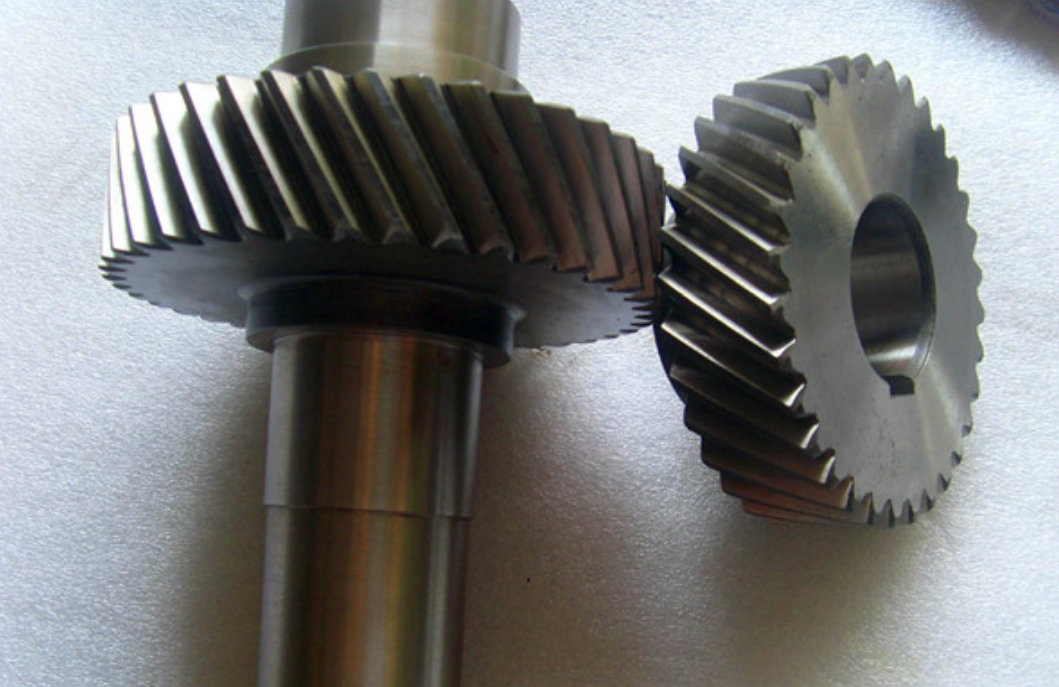
The validation of the proposed model involves comparing the computed meshing stiffness with empirical values and other methods. I calculate the average meshing stiffness under healthy conditions and compare it with finite element analysis (FEA), a method considering only gear width, and a method based on contact ratio. The results, summarized in Table 1, show that my model achieves an error of only 3.5% compared to empirical data, outperforming FEA (4.5% error), the gear-width-only method (6.9% error), and the contact-ratio method (9.1% error). This confirms the accuracy of my approach in capturing the complex behavior of helical gears.
| Method | Maximum Stiffness (10^10 N/m) | Minimum Stiffness (10^10 N/m) | Average Stiffness (10^10 N/m) | Error (%) |
|---|---|---|---|---|
| Empirical | – | – | 2.005 | – |
| Finite Element | 2.123 | 1.998 | 2.095 | 4.5 |
| Proposed Model | 2.079 | 1.976 | 2.075 | 3.5 |
| Gear Width Only | 2.195 | 2.103 | 2.144 | 6.9 |
| Contact Ratio | 2.239 | 2.125 | 2.187 | 9.1 |
Next, I analyze the influence of spalling parameters on meshing stiffness. Starting with quadrilateral spalling, I vary the spalling length \( l_s \) while keeping other parameters constant. As shown in Figure 4 (referenced descriptively), increasing \( l_s \) from 0.002 m to 0.030 m results in a continuous decrease in meshing stiffness across the meshing cycle. For instance, at \( l_s = 0.030 \) m, the stiffness drops significantly in both double-tooth and triple-tooth engagement regions, indicating that longer spalling defects exacerbate stiffness reduction. The time-varying stiffness curves illustrate that the meshing position shifts as spalling length increases, leading to prolonged periods of reduced stiffness. This is critical for helical gears in press machines, as it can cause increased vibration and noise.
The axial position of spalling also plays a role in stiffness variation. By altering \( w_a \) (axial position) while maintaining constant spalling dimensions, I observe that stiffness reduction is more pronounced when spalling occurs near the gear edges. For example, at \( w_a = -0.15 \) m and \( w_a = 0.15 \) m, the entry and exit points of the spalling region show abrupt changes in stiffness, whereas central positions (\( w_a = 0 \)) cause milder effects. This is because edge spalling disrupts a larger portion of the contact lines, affecting the load distribution. Similarly, radial position variations (\( t_a \)) reveal that spalling closer to the tooth root leads to greater stiffness loss due to higher stress concentrations. At \( t_a = -0.01 \) m, the stiffness decreases more drastically compared to \( t_a = 0.01 \) m, highlighting the sensitivity of helical gears to root-proximal defects.
To quantify these effects, I compute the percentage reduction in average meshing stiffness for different spalling parameters, as presented in Table 2. The data show that quadrilateral spalling of length 0.030 m causes a 7.8% reduction, while axial positions at ±0.15 m result in up to 5.2% reduction. Radial positions near the root (-0.01 m) lead to a 6.1% decrease, emphasizing the importance of spalling location in helical gears.
| Spalling Parameter | Value | Reduction in Stiffness (%) |
|---|---|---|
| Length \( l_s \) (m) | 0.002 | 2.1 |
| 0.005 | 3.5 | |
| 0.010 | 4.9 | |
| 0.030 | 7.8 | |
| Axial Position \( w_a \) (m) | 0 | 2.8 |
| ±0.10 | 3.7 | |
| ±0.15 | 5.2 | |
| Radial Position \( t_a \) (m) | 0.01 | 3.3 |
| -0.01 | 6.1 |
Furthermore, I explore the impact of spalling shape on meshing stiffness. Comparing circular, triangular, and quadrilateral spalling areas of equivalent size, I find that the stiffness reduction patterns differ significantly. Circular spalling causes a smooth, nonlinear decrease in stiffness, as the curved boundaries lead to gradual engagement changes. Triangular spalling results in a sharper, nonlinear decline due to its pointed edges, which cause sudden variations in contact lines. In contrast, quadrilateral spalling produces a linear reduction in stiffness, as its rectangular shape uniformly affects the meshing process. The meshing positions corresponding to each shape vary; for circular spalling, the stiffness curve resembles a circular arc, while triangular spalling shows triangular peaks and troughs. This shape-dependent behavior underscores the need for precise fault diagnosis in helical gears.
The mathematical analysis involves calculating the effective contact line length for each spalling shape. For a circular spall of radius \( r_s \), the affected contact length \( L_{c, \text{circ}} \) is proportional to the area overlap with the gear tooth. Similarly, for triangular spalling with base \( b_s \) and height \( h_s \), the stiffness contribution is integrated over the triangular region. The general formula for meshing stiffness with spalling is modified as:
$$ k_m = \int_{0}^{L_c} \left(1 – \frac{A_s}{A_t}\right) \cdot f(L) dL $$
where \( A_s \) is the spalling area, \( A_t \) is the total tooth area, and \( f(L) \) represents the stiffness per unit length. For quadrilateral spalling, \( A_s = l_s \times w_s \), leading to a linear relationship. For circular spalling, \( A_s = \pi r_s^2 \), and the integration yields a nonlinear stiffness curve. These formulations are solved numerically using the slicing algorithm, with results summarized in Table 3 for different shapes.
| Spalling Shape | Average Stiffness (10^10 N/m) | Reduction (%) | Pattern of Stiffness Reduction |
|---|---|---|---|
| None (Healthy) | 2.075 | 0 | Constant |
| Circular | 1.942 | 6.4 | Nonlinear |
| Triangular | 1.896 | 8.6 | Nonlinear |
| Quadrilateral | 1.913 | 7.8 | Linear |
In conclusion, this study presents a comprehensive analysis of meshing stiffness in helical gears under tooth surface spalling. The proposed model, based on contact line integration and slicing, accurately computes stiffness with minimal error. The findings reveal that spalling length, axial and radial positions, and shape significantly affect stiffness, with quadrilateral spalling causing linear reductions and circular/triangular spalling leading to nonlinear declines. These insights are vital for designing robust helical gears in press machines, enabling better fault detection and maintenance strategies. Future work could extend this model to include dynamic effects and experimental validation under real operating conditions.