
In my experience with gear manufacturing, gear grinding is a fundamental finishing process used to achieve high precision in gear profiles. Specifically, worm wheel gear grinding is employed to refine gear tooth surfaces after rough machining, particularly for hardened gears where heat treatment distortions must be corrected. This process enhances gear accuracy and improves surface roughness, which is critical for high-performance applications. However, during the production of a specific gear component, referred to as the C-gear in a dual-clutch transmission system, we encountered significant issues with gear grinding that led to abnormal noises during testing. This gear, a sixth-speed component, demands exceptionally high surface quality, with strict requirements on tooth surface waviness, denoted as f fa. Through detailed analysis, we identified that deviations in f fa were the primary cause of these problems, prompting a comprehensive investigation into the gear grinding process.
The gear grinding process involves using a grinding wheel shaped like a worm to machine the gear teeth, with diamond dressing rollers employed to maintain the wheel’s profile and diameter. In this case, the C-gear underwent gear profile grinding to meet precise specifications. However, post-grinding inspections revealed fluctuations in f fa, which measures the form deviation of the tooth profile and indicates smoothness—lower values correspond to smoother surfaces and higher precision. When the transmission assembly was tested, abnormal noises were detected, traced back to inaccuracies in the C-gear’s tooth surface. This led us to delve into the root causes, focusing on factors such as machine tool vibrations, fixture wear, and wheel conditions that could contribute to grinding cracks or other defects.
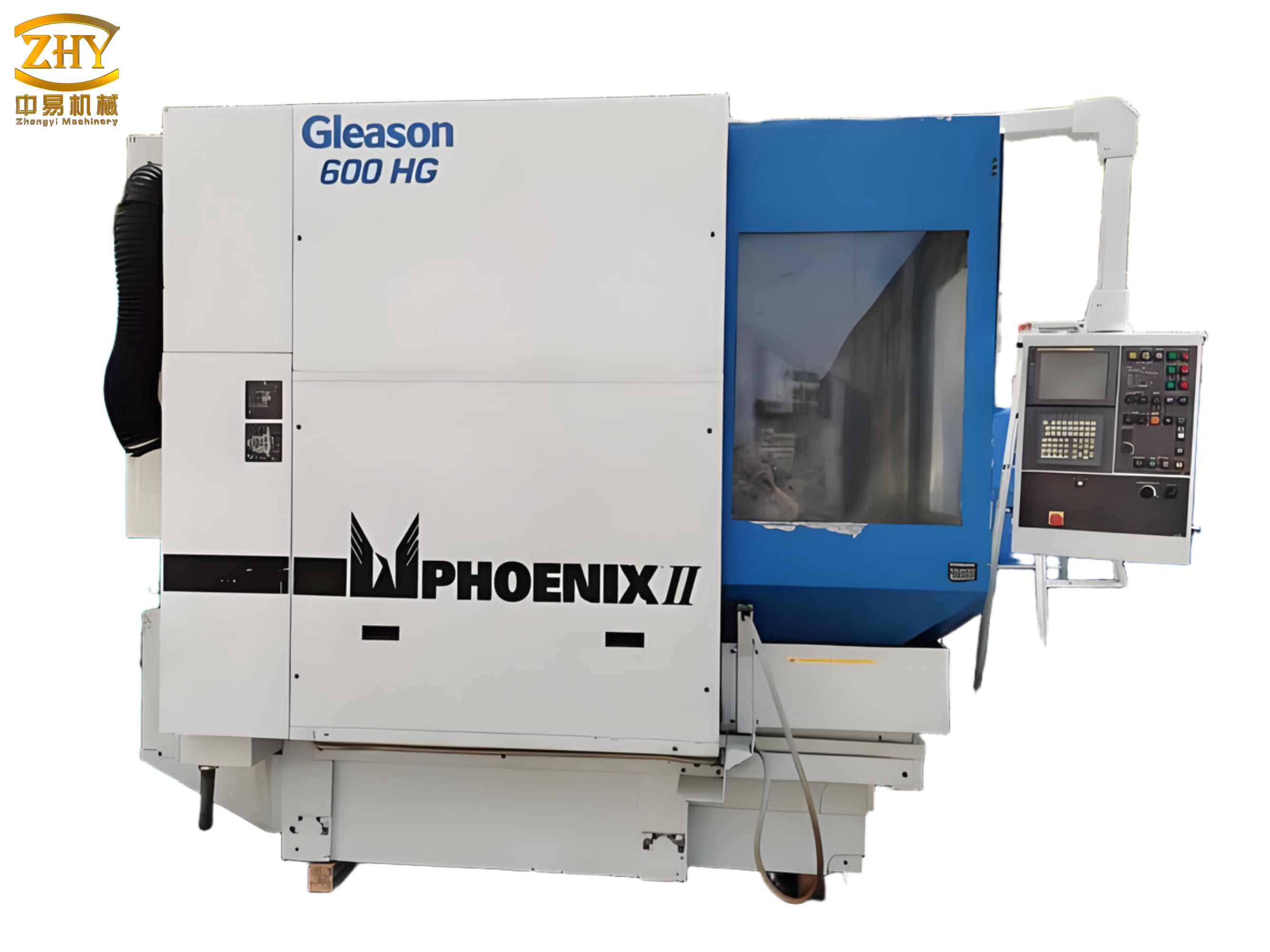
To assess the gear quality, we utilized a Gleason MM gear testing center, which evaluates multiple parameters across four teeth at 90-degree intervals. The standard test report includes 23 parameters, with 16 dedicated to profile and lead deviations. Among these, nine key parameters are commonly analyzed, including f fa, which showed notable variations between defective and acceptable gears. For instance, when comparing 10 defective units against 10合格 ones, the f fa parameter exhibited significant discrepancies, highlighting its critical role in gear performance. This emphasized the importance of rigorous monitoring in gear grinding to prevent issues like grinding cracks that can compromise gear integrity.
In gear grinding, the relationship between process parameters and surface quality can be expressed through formulas such as the theoretical surface roughness, which influences f fa. For example, the average surface roughness Ra in grinding can be approximated by:
$$ Ra = k \cdot \frac{v_w}{v_s} \cdot a_e^{1/2} $$
where \( v_w \) is the workpiece speed, \( v_s \) is the wheel speed, \( a_e \) is the depth of cut, and \( k \) is a constant dependent on wheel and material properties. In our case, adjustments to these parameters were part of the initial troubleshooting. Similarly, the risk of grinding cracks can be modeled using thermal stress equations, such as:
$$ \sigma_{th} = \alpha E \Delta T $$
where \( \sigma_{th} \) is the thermal stress, \( \alpha \) is the coefficient of thermal expansion, \( E \) is the modulus of elasticity, and \( \Delta T \) is the temperature gradient during grinding. High stresses can lead to micro-cracks, affecting f fa and overall gear life. Thus, controlling these factors is essential in gear profile grinding to achieve desired tolerances.
We conducted a systematic analysis using the “man, machine, material, method, environment, measurement” (5M1E) framework to identify factors impacting f fa in gear grinding. The following table summarizes the key influencers and our initial findings:
| Factor Category | Potential Issues | Impact on f fa |
|---|---|---|
| Machine | Fixture wear, abnormal vibrations, bearing clearance in Y and Z axes | High; causes uneven grinding and increased waviness |
| Method | Broad detection standards, improper grinding parameters | Moderate; allows defective parts to pass inspection |
| Material | Grinding wheel composition (e.g., aluminum oxide from “German Talyr”) | Low; no significant abnormalities found in batch consistency |
| Measurement | Insufficient testing frequency and precision requirements | High; leads to undetected deviations in gear grinding |
| Environment | Coolant system noise and vibrations | Moderate; contributes to machine instability |
Initially, we adjusted the gear grinding parameters to mitigate f fa issues. For example, we reduced the grinding wheel speed from 55 m/s to 50 m/s and decreased the feed rate from 140 mm/min to 100 mm/min during the final finishing passes. The theoretical effect of such changes can be estimated using the specific grinding energy equation:
$$ E_s = \frac{F_t \cdot v_s}{Q_w} $$
where \( E_s \) is the specific energy, \( F_t \) is the tangential grinding force, and \( Q_w \) is the material removal rate. Lowering wheel speed and feed rate reduces \( Q_w \), potentially decreasing thermal loads and minimizing grinding cracks. However, after implementing these adjustments, the first article inspection showed f fa improving from 4.1 μm to 3.5 μm, but the abnormal noises persisted during assembly tests. This indicated that parameter tuning alone was insufficient, necessitating further investigation into mechanical aspects of the gear grinding process.
We then focused on the “machine” factors, particularly fixture wear and abnormal vibrations. The fixture, which secures the workpiece during gear profile grinding, showed wear depths of up to 0.02 mm at the contact points with the expansion sleeve. This wear compromised clamping stability, leading to vibrations that exacerbated f fa deviations. Additionally, we identified abnormal noises in the cutting oil supply motor, which had intensified over time, causing machine-wide vibrations. Further inspection revealed clearance in the ball screws of the grinding machine’s Y and Z axes, contributing to positional inaccuracies during gear grinding. The resultant vibrations could be quantified using dynamic models, such as the equation for forced vibrations:
$$ m \ddot{x} + c \dot{x} + kx = F_0 \cos(\omega t) $$
where \( m \) is the mass, \( c \) is the damping coefficient, \( k \) is the stiffness, and \( F_0 \) and \( \omega \) are the force amplitude and frequency, respectively. Such vibrations not only affect f fa but also increase the risk of grinding cracks due to inconsistent wheel-workpiece contact. By addressing these mechanical issues, we aimed to stabilize the gear grinding process and improve surface quality.
Regarding the “material” and “method” factors, we examined the grinding wheel and dressing tools. The wheels, made of aluminum oxide from a German supplier, were initially in a blank state and custom-slottted for specific gears. Since other gears from the same batch did not exhibit f fa abnormalities, we ruled out wheel composition as a primary cause. Similarly, the dressing tools from a German brand showed no significant wear when tested on other components, and replacing them did not yield substantial improvements in f fa. This reinforced that the core issues lay in machine stability and fixture integrity, rather than consumables. In gear profile grinding, the dressing process is crucial for maintaining wheel geometry, and its effectiveness can be described by the dressing overlap ratio:
$$ U_d = \frac{v_d}{v_s} \cdot \frac{a_d}{s_d} $$
where \( v_d \) is the dressing speed, \( a_d \) is the dressing depth, and \( s_d \) is the dressing lead. Optimal dressing ensures precise wheel profiles, reducing the likelihood of grinding cracks and f fa variations.
Measurement standards were another critical area. The existing inspection protocols were too lenient, allowing gears with borderline f fa values to pass. We enhanced the frequency and precision of testing, shifting from initial to first and last article inspections after wheel dressing. Moreover, we tightened the f fa requirement from 6.5 μm to 3.5 μm to ensure higher quality. The following table illustrates the statistical comparison of f fa values before and after these interventions, based on data collected over several months:
| Period | Average f fa (μm) | Standard Deviation | Notes |
|---|---|---|---|
| Before Adjustments | 4.2 | 0.5 | High incidence of abnormal noises |
| After Parameter Changes | 3.6 | 0.3 | Minor improvement, but issues persisted |
| After Mechanical Fixes | 2.8 | 0.2 | Significant reduction in f fa and noise |
After implementing corrective measures—including fixture repairs, vibration damping, and bearing adjustments—we observed a consistent improvement in f fa values, with maxima falling below 3.5 μm. This met the assembly requirements and eliminated the abnormal noises. The success of these actions underscores the importance of holistic approaches in gear grinding, where multiple factors interact. For instance, the cumulative effect of parameter optimization and mechanical maintenance can be modeled using a multivariate regression:
$$ f_{fa} = \beta_0 + \beta_1 v_s + \beta_2 v_w + \beta_3 a_e + \beta_4 D + \epsilon $$
where \( \beta \) coefficients represent the influence of wheel speed, workpiece speed, depth of cut, and dressing parameters, respectively, and \( \epsilon \) accounts for random errors. By minimizing these variables’ variances, we achieved stable gear profile grinding outcomes.
In conclusion, the primary causes of f fa abnormalities in this gear grinding application were fixture wear, machine vibrations, and bearing clearances in the Y and Z axes. Our solutions involved regular precision checks of machines and fixtures, increased inspection frequency, and stricter f fa thresholds. Additionally, we recommend heightened vigilance during the latter stages of grinding wheel and dressing tool life, as precision tends to decline, potentially exacerbating issues like grinding cracks. Through these measures, we ensured reliable gear grinding processes, emphasizing that proactive maintenance and rigorous standards are vital for preventing defects in high-speed gear applications. This experience highlights the intricate balance required in gear profile grinding to achieve optimal performance and durability.