
In the field of high-performance applications such as aviation, gear systems must operate under extreme conditions including high speeds, heavy loads, and demanding reliability standards. As a critical component in engines and transmission systems, gears require precise manufacturing processes to ensure their integrity and longevity. One of the key processes involved is gear grinding, specifically gear profile grinding, which is used to achieve the desired tooth geometry and surface finish. However, this process is susceptible to the formation of grinding cracks, which can compromise the structural integrity of the gear and lead to catastrophic failures. In this article, I will explore the principles of gear profile grinding, the mechanisms behind grinding cracks, the factors influencing their occurrence, and the optimization strategies to prevent them. Throughout this discussion, I will emphasize the importance of understanding gear grinding, grinding cracks, and gear profile grinding to enhance manufacturing outcomes.
Gear profile grinding is a precision machining technique where a formed grinding wheel, often shaped using a diamond dressing wheel or a pre-formed CBN wheel, is used to generate the tooth profile of a gear. The process involves the radial and longitudinal movements of the grinding wheel, combined with the rotational motion of the gear workpiece, to produce an involute tooth surface. This method is widely adopted for hard-faced gears, such as those subjected to carburizing and quenching, due to its ability to achieve high accuracy and surface quality. The fundamental principle can be described by the relative motions between the wheel and the gear, which are critical for minimizing deviations and ensuring consistent tooth geometry. In gear profile grinding, the wheel’s profile must be meticulously maintained to avoid inaccuracies that could exacerbate stress concentrations and lead to defects like grinding cracks.
The formation of grinding cracks is a complex phenomenon driven by both intrinsic and extrinsic factors. Internally, the quality of the carburized and quenched layer plays a pivotal role. During carburizing, if the process parameters are not optimized, the surface layer may develop excessive carbon content, leading to the formation of networked or blocky carbides. These carbides increase the hardness and brittleness of the material, making it more prone to thermal damage during gear grinding. For instance, when the carbon concentration exceeds 1.0%, the risk of grinding cracks escalates due to the heightened susceptibility to localized overheating. Additionally, the presence of residual austenite, which can transform into untempered martensite under grinding heat, contributes to internal stresses. The transformation-induced volume changes generate tensile stresses that, when combined with external thermal loads, can initiate micro-cracks. This interplay between material microstructure and thermal effects is central to understanding grinding cracks in gear profile grinding.
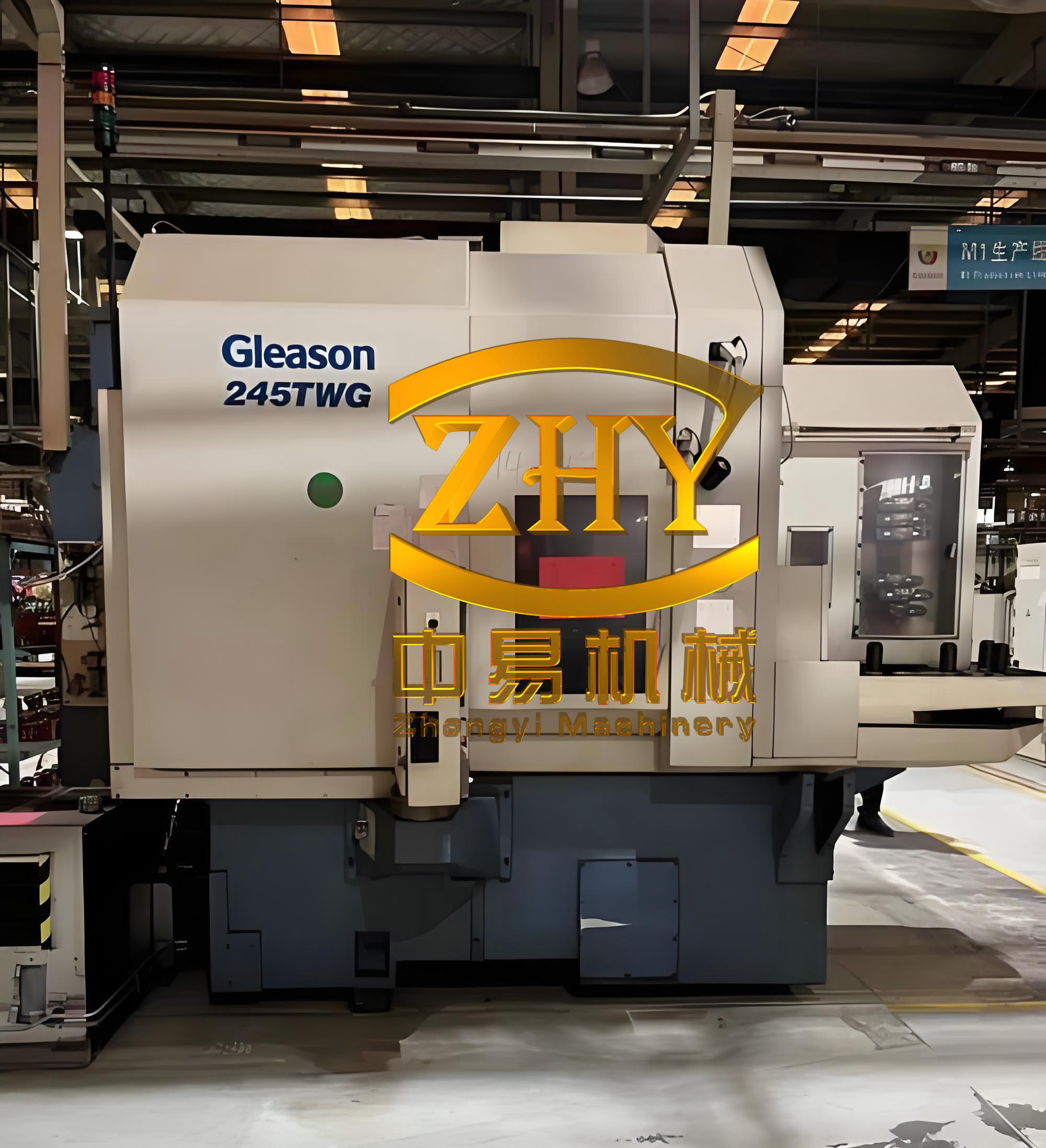
Externally, the thermal stress generated during gear grinding is a primary driver of grinding cracks. The grinding process involves high-energy interactions at the wheel-workpiece interface, where a significant amount of heat is produced. A portion of this heat is dissipated by cooling fluids, but the remainder penetrates the gear surface, causing rapid temperature rises. If the temperature surpasses the material’s original tempering temperature, it can lead to softening and microstructural alterations. In severe cases, such as when grinding parameters are overly aggressive or when workpiece deformation is pronounced, the surface temperature may reach the phase transformation range. Subsequent quenching by cooling fluids can result in secondary hardening, forming a brittle martensitic layer that is highly susceptible to cracking. The thermal gradient and associated stresses can be modeled using the following equation for thermal stress: $$ \sigma_{th} = E \cdot \alpha \cdot \Delta T $$ where $\sigma_{th}$ is the thermal stress, $E$ is the modulus of elasticity, $\alpha$ is the coefficient of thermal expansion, and $\Delta T$ is the temperature change during grinding. This equation highlights how even minor temperature fluctuations can induce significant stresses, underscoring the need for precise control in gear profile grinding to mitigate grinding cracks.
Several factors influence the occurrence of grinding cracks in gear profile grinding, and understanding these is essential for developing effective prevention strategies. The table below summarizes the key factors and their impacts:
| Factor | Description | Impact on Grinding Cracks |
|---|---|---|
| Initial Grinding Amount | The first cut in gear grinding, affected by pre-machining errors and heat treatment distortions. | Excessive initial grinding increases heat generation, raising the risk of thermal damage and grinding cracks. |
| Grinding Allowance Distribution | The uniformity of material removal across the tooth profile, influenced by online measurement systems. | Uneven distribution leads to localized over-grinding, causing hotspots and potential grinding cracks. |
| Heat Treatment Quality | Parameters such as carburizing depth, carbon concentration, and residual stress. | Poor quality results in brittle microstructures, increasing susceptibility to grinding cracks during gear grinding. |
| Grinding Wheel Parameters | Includes wheel hardness, grain size, and structure density. | Harder wheels and finer grains reduce self-sharpening, elevating heat and grinding cracks risk. |
| Cooling Conditions | Coolant type, pressure, nozzle positioning, and flow rate. | Inadequate cooling fails to dissipate heat, promoting thermal stresses and grinding cracks. |
Among these, the initial grinding amount is particularly critical in gear profile grinding. Variations in pre-grinding processes, such as hobbing or shaping, combined with heat treatment-induced distortions, can lead to non-uniform grinding allowances. This necessitates accurate alignment and measurement to prevent excessive material removal in the first pass. For example, the use of topological algorithms in modern grinding machines helps compute the remaining stock, but errors in measurement can still cause localized over-grinding. The relationship between grinding force and material removal can be expressed as: $$ F_g = k \cdot a_p \cdot v_f $$ where $F_g$ is the grinding force, $k$ is a constant dependent on material and wheel properties, $a_p$ is the depth of cut, and $v_f$ is the feed rate. Higher grinding forces correlate with increased heat generation, which, if uncontrolled, can lead to grinding cracks. Thus, optimizing the initial grinding phase is vital for preventing defects in gear grinding.
Grinding allowance distribution is another significant factor in gear profile grinding. Advanced grinding machines employ online measurement systems to assess workpiece geometry and allocate grinding paths accordingly. However, if the software’s allowance distribution logic is flawed, it can result in uneven stock removal, concentrating heat in specific areas. This is especially problematic for large-module gears with wide tooth faces, where thermal accumulation can be substantial. To quantify the allowance uniformity, one might use a standard deviation metric: $$ \sigma_a = \sqrt{\frac{1}{N} \sum_{i=1}^{N} (a_i – \bar{a})^2 } $$ where $\sigma_a$ is the standard deviation of grinding allowances, $a_i$ is the allowance at point i, $\bar{a}$ is the mean allowance, and N is the number of measurement points. A higher $\sigma_a$ indicates poor distribution, elevating the risk of grinding cracks. Therefore, refining the measurement and distribution algorithms is crucial for enhancing the reliability of gear profile grinding.
Heat treatment quality directly affects the material’s response to gear grinding. Carburizing processes must control carbon potential to avoid excessive surface carbon, which promotes carbide formation. For instance, maintaining carbon content between 0.7% and 0.9% is ideal for achieving a fine martensitic structure with minimal residual austenite. The relationship between carbon concentration and grinding crack susceptibility can be modeled empirically. Studies show that increasing carbon content from 0.7% to 1.1% can double the extent of grinding burns, which are precursors to grinding cracks. Additionally, quenching and tempering parameters influence the residual stress state. Inadequate tempering leaves high tensile stresses, making the gear surface vulnerable to cracking under thermal loads. The tempering process can be optimized by adjusting temperature and time, as described by the kinetic equation: $$ \text{Austenite Decomposition Rate} = A \cdot e^{-Q/RT} $$ where A is a pre-exponential factor, Q is the activation energy, R is the gas constant, and T is the tempering temperature. By prolonging tempering or increasing temperature, the decomposition of retained austenite and relief of stresses can reduce grinding cracks in gear profile grinding.
Grinding wheel parameters are pivotal in managing heat generation during gear grinding. Harder wheels with fine grains tend to glaze over, reducing cutting efficiency and increasing frictional heat. This can be quantified by the grinding ratio G, defined as: $$ G = \frac{\text{Volume of Material Removed}}{\text{Volume of Wheel Wear}} $$ A lower G indicates poor wheel performance, often associated with increased heat and grinding cracks. For carburized gears with hardness above HRC 58, wheels with specifications like 3SG70-G12VSP are recommended, as they balance hardness and self-sharpening. Dressing parameters also play a role; optimal dressing ensures sharp cutting edges without excessive wheel wear. The dressing feed rate $f_d$ can be correlated with surface roughness and heat generation: $$ f_d \propto \frac{1}{R_a} $$ where $R_a$ is the arithmetic average roughness. A finer dress leads to smoother surfaces but may increase heat if not matched with appropriate cooling, highlighting the interplay in gear profile grinding.
Cooling conditions are perhaps the most sensitive aspect in preventing grinding cracks. The effectiveness of coolant in dissipating heat depends on several factors, including nozzle design, pressure, and impingement angle. For gear profile grinding, a flow rate of 40-45 L/min is typical, but for large gears, higher rates may be necessary. The heat removal capacity can be estimated using: $$ Q_c = \dot{m} \cdot c_p \cdot \Delta T_c $$ where $Q_c$ is the heat removed by coolant, $\dot{m}$ is the mass flow rate, $c_p$ is the specific heat capacity, and $\Delta T_c$ is the temperature rise of the coolant. Insufficient $Q_c$ results in heat buildup, raising the gear surface temperature and promoting grinding cracks. Moreover, nozzle positioning is critical; for instance, placing the coolant jet 5-8 mm above the grinding zone ensures efficient coverage. In machines with multiple nozzles, one may be directed counter to the wheel rotation to flush away debris, while another cools the grinding zone directly. This dual approach enhances heat dissipation and reduces the incidence of grinding cracks in gear grinding.
To prevent grinding cracks, several optimization measures can be implemented, focusing on both material structure and process parameters. From a microstructural perspective, controlling surface carbon content is paramount. As previously mentioned, keeping carbon below 0.9% minimizes carbide formation and residual austenite. Additionally, optimizing quenching temperatures to around 800-830°C promotes fine martensite, improving toughness. The table below outlines key optimization strategies for gear profile grinding:
| Optimization Area | Strategy | Expected Outcome |
|---|---|---|
| Microstructural Control | Limit carbon to 0.7-0.9%; use double tempering; apply shot peening. | Reduced brittleness and residual stress, lowering grinding cracks risk. |
| Grinding Process | Adjust radial feed and stroke speed; ensure proper alignment; reserve safety margin. | Controlled heat input and uniform material removal in gear grinding. |
| Wheel and Dressing | Select appropriate wheel hardness and grain size; optimize dressing parameters. | Enhanced cutting efficiency and reduced thermal load in gear profile grinding. |
| Cooling System | Use high-pressure coolant with optimized nozzle placement; maintain filtration. | Effective heat dissipation, preventing overheating and grinding cracks. |
| Heat Treatment | Control carburizing potential; use lower quenching temperatures; incorporate cryogenic treatment. | Stable microstructure with compressive surface stresses, resistant to grinding cracks. |
In terms of grinding process optimization, selecting suitable radial feed rates and axial stroke speeds is essential. For example, on a CNC profile grinding machine, rough grinding might use a radial feed of 0.02-0.03 mm and a stroke speed of 2000-2500 mm/min, while finish grinding could employ 0.005-0.01 mm and 1500-2000 mm/min. These parameters help manage the specific energy in grinding, which is given by: $$ u = \frac{F_t \cdot v_s}{v_w \cdot b \cdot a_p} $$ where $u$ is the specific energy, $F_t$ is the tangential force, $v_s$ is the wheel speed, $v_w$ is the workpiece speed, $b$ is the width of cut, and $a_p$ is the depth of cut. Lower specific energy reduces heat generation, thereby mitigating grinding cracks. Additionally, reducing overall grinding allowance through pre-machining control and heat treatment distortion management can decrease the thermal load. For instance, implementing shot blasting to remove oxide scales after carburizing minimizes the stock to be ground, improving conditions for gear profile grinding.
Alignment and neutrality in gear grinding are critical to avoid excessive initial cuts. Modern machines use multi-point measurement systems, where the number of tooth slots measured depends on the gear tooth count. For gears with fewer than 20 teeth, measuring 4 slots is standard, while for larger counts, the number increases proportionally. The formula for determining the number of measurement slots N is: $$ N = \left\lfloor \frac{n}{5} + 0.5 \right\rfloor $$ where n is the number of teeth, and $\lfloor \cdot \rfloor$ denotes rounding to the nearest integer. This ensures accurate centering and prevents localized over-grinding. Furthermore, reserving a safety margin of 0.2-0.25 mm in the public normal line after alignment provides a buffer against errors, accounting for gear geometry and deformation variations. This approach is vital in gear profile grinding to distribute grinding stresses evenly and avoid grinding cracks.
Optimizing grinding conditions involves careful selection of wheel parameters and dressing techniques. For hard gears, wheels with medium hardness and coarse grains are preferable for roughing, while finer grains are used for finishing. The dressing process should be calibrated to maintain wheel sharpness without inducing excessive wear. The dressing depth $a_d$ can be related to the wheel’s cutting ability: $$ a_d = C \cdot f_d^{0.5} $$ where C is a constant dependent on wheel and dresser properties. A well-dressed wheel ensures efficient material removal with minimal heat, reducing the risk of grinding cracks. Additionally, cooling system adjustments, such as using traceable nozzles that adapt to wheel diameter changes, ensure consistent coolant coverage. In gear profile grinding, this is complemented by periodic maintenance of filters and pumps to maintain coolant purity and pressure, which are often overlooked factors in preventing grinding cracks.
Improving heat treatment processes is fundamental to enhancing the resistance to grinding cracks in gear profile grinding. Carburizing should be conducted at 900-930°C with controlled carbon potential to achieve a uniform, dispersed carbide distribution. The carbon gradient from surface to core must be gradual to avoid sharp transitions that act as stress concentrators. The diffusion process can be described by Fick’s second law: $$ \frac{\partial C}{\partial t} = D \frac{\partial^2 C}{\partial x^2} $$ where C is carbon concentration, t is time, D is the diffusion coefficient, and x is the depth. By optimizing the strong penetration and diffusion periods, surface carbon can be kept below 0.9%, resulting in a microstructure of fine martensite and minimal residual austenite. Quenching at lower temperatures, followed by cryogenic treatment and double tempering, stabilizes the structure and reduces retained austenite. For example, tempering at elevated temperatures for extended periods promotes martensite decomposition and stress relief. The resulting compressive surface stresses, enhanced by shot peening, can be quantified by: $$ \sigma_{res} = \sigma_0 + \Delta \sigma_{peening} $$ where $\sigma_{res}$ is the residual stress, $\sigma_0$ is the initial stress, and $\Delta \sigma_{peening}$ is the stress change due to peening. Shot peening can shift surface stresses from -100 MPa to -500 MPa, significantly lowering the susceptibility to grinding cracks in gear grinding.
In conclusion, gear profile grinding is a sophisticated process that demands meticulous attention to both material properties and machining parameters to prevent grinding cracks. By analyzing the causes, such as thermal stresses and microstructural imperfections, and implementing comprehensive optimizations—including controlled heat treatment, precise grinding parameters, and effective cooling—manufacturers can significantly reduce the incidence of grinding cracks. This not only improves gear quality and reliability but also enhances economic efficiency by minimizing scrap and rework. As I have discussed, a holistic approach that integrates insights from gear grinding, grinding cracks, and gear profile grinding is essential for advancing high-performance gear manufacturing in critical applications like aviation.