
In my extensive experience with heavy-duty gear manufacturing, I have consistently encountered the challenge of prolonged gear grinding cycles and inefficiencies in gear profile grinding processes. Carburized and quenched gears, which exhibit surface hardness exceeding HRC 58, demand high precision in tooth profile, tooth direction deviation, cumulative pitch error, and radial runout. However, the gear grinding phase often becomes the bottleneck in production due to its time-consuming nature. Through rigorous analysis and practical applications, I have identified that optimizing gear grinding parameters, selecting appropriate grinding wheels, and implementing effective monitoring strategies can significantly enhance efficiency while preventing issues like grinding cracks. This article delves into these aspects, emphasizing the critical roles of gear grinding, grinding cracks, and gear profile grinding in achieving superior outcomes.
The fundamental issue in gear profile grinding lies in the extended machining time required to achieve the desired accuracy. Traditional methods involve sequential processes such as hobbing, carburizing, quenching, and finally gear grinding. The grinding step, while essential for precision, often accounts for the longest duration in the machining cycle. To address this, I have focused on two primary areas: the selection of grinding wheels and the optimization of grinding parameters. By doing so, I aim to reduce grinding time without compromising on quality, thereby improving overall productivity and reducing costs.
When it comes to gear grinding, the choice of grinding wheel is paramount. A grinding wheel’s performance depends on its abrasive material, grain size, hardness, and bond type. Each of these factors influences the efficiency of gear profile grinding and the risk of grinding cracks. In my work, I have found that for carburized and quenched gears, ceramic-bonded wheels with aluminum oxide or ceramic abrasives are highly effective. These materials offer excellent heat resistance and maintain their profile well during gear profile grinding operations. The grain size, typically between 46 and 80, provides an optimal balance between material removal rate and surface finish, reducing the likelihood of grinding cracks by ensuring adequate chip space and heat dissipation.
To illustrate the selection criteria, I have compiled a table summarizing the key aspects of grinding wheel components for gear grinding applications. This table highlights how each parameter affects the grinding process and helps in minimizing defects like grinding cracks.
| Component | Criteria | Recommendation for Carburized Gears | Impact on Gear Grinding |
|---|---|---|---|
| Abrasive Material | Based on workpiece material and hardness | Aluminum oxide or ceramic abrasives | Provides high hardness and heat resistance, reducing grinding cracks |
| Grain Size | Affects surface roughness and efficiency | 46 to 80 grit | Enhances contact area, improves finish, and prevents overheating in gear profile grinding |
| Hardness | Resistance to grain dislodgement | Medium to hard grade | Maintains profile accuracy and reduces wear, crucial for avoiding grinding cracks |
| Bond Type | Determines strength and thermal properties | Ceramic bond | Offers good porosity and heat dissipation, ideal for sustained gear grinding operations |
In gear profile grinding, the hardness of the grinding wheel plays a critical role in preventing grinding cracks. Softer wheels tend to shed grains more easily, which can help in dissipating heat and reducing the risk of thermal damage. However, for carburized gears, I prefer medium to hard wheels as they maintain their form better, ensuring consistent tooth geometry. This is especially important in gear profile grinding where the wheel’s shape must be preserved to achieve high precision. Additionally, the bond type influences the wheel’s ability to withstand the stresses of gear grinding. Ceramic bonds, with their inherent porosity, allow for better coolant penetration and chip evacuation, further mitigating the chances of grinding cracks.
Moving beyond wheel selection, the optimization of grinding parameters is equally vital in enhancing gear grinding efficiency. Key parameters include wheel speed, feed rate, depth of cut, and dressing conditions. Through experimentation, I have developed optimized settings that significantly reduce grinding time while maintaining quality. For instance, increasing the wheel speed from 3000 m/s to 6000 m/s can double the material removal rate without inducing grinding cracks, provided other factors are controlled. Similarly, adjusting the feed rate and depth of cut ensures that the grinding process remains within safe thermal limits.
To quantify these improvements, I have compared the original and optimized grinding parameters in the table below. This comparison demonstrates how strategic adjustments can boost efficiency in gear profile grinding.
| Parameter | Original Setting | Optimized Setting | Improvement (%) |
|---|---|---|---|
| Wheel Speed (m/s) | 3000 | 6000 | 100 |
| Rough Grinding Volume (mm³) | 600 | 1000 | 66.7 |
| Finish Grinding Volume (mm³) | 300 | 400 | 33.3 |
| Material Removal Rate (mm³/s) | 5 | 12 | 140 |
The material removal rate, a key indicator of gear grinding efficiency, can be expressed mathematically. For gear profile grinding, the volumetric removal rate \( Q_w \) is given by:
$$ Q_w = a_p \cdot f \cdot v_w $$
where \( a_p \) is the depth of cut, \( f \) is the feed rate, and \( v_w \) is the workpiece speed. By optimizing these parameters, I have achieved higher \( Q_w \) values, leading to shorter cycle times. However, it is crucial to balance this with the risk of grinding cracks, which can occur if the heat generation exceeds the material’s tolerance. To prevent this, I monitor the grinding power and use empirical formulas to set safe limits.
Another critical aspect is the dressing of the grinding wheel. Dressing restores the wheel’s sharpness and profile, but inefficient dressing can prolong grinding time and increase the risk of grinding cracks. In my practice, I have optimized dressing parameters by increasing the single-pass dressing amount and reducing the number of dressing cycles. For example, changing from a 0.025 mm dressing depth with two passes to a 0.05 mm depth with one pass not only saves time but also enhances wheel performance by clearing embedded debris more effectively. This is particularly important in gear profile grinding, where a sharp wheel ensures accurate tooth forms and minimizes heat buildup.
The table below summarizes the dressing parameter optimization I have implemented for gear grinding applications.
| Dressing Parameter | Original Value | Optimized Value |
|---|---|---|
| Single-Pass Dressing Depth (mm) | 0.025 | 0.05 |
| Number of Dressing Passes | 2 | 1 |
| Dressing Direction | Top to Bottom | Top Only |
To further safeguard against grinding cracks, I pay close attention to the wheel diameter and grinding power. The wheel diameter affects the contact area and heat distribution during gear grinding. A smaller diameter may concentrate heat, increasing the risk of thermal damage. I use the following inequality to ensure safe operation:
$$ C_b – a_p^{0.5} \cdot v_s \cdot d_s \geq 0 $$
Here, \( C_b \) is the grinding tempering coefficient, \( a_p \) is the depth of cut, \( v_s \) is the wheel speed, and \( d_s \) is the wheel diameter. By satisfying this condition, I prevent excessive heat accumulation that could lead to grinding cracks in gear profile grinding. Additionally, monitoring the machine power is essential. The power consumed during grinding should not exceed 60% of the rated capacity to avoid overheating. The relevant formula is:
$$ \eta \cdot p_c – 0.0358 (a_p \cdot f \cdot v_s)^{0.7} \geq 0 $$
where \( \eta \) is the transmission efficiency (typically 0.95), and \( p_c \) is 60% of the motor’s rated power. In my setups, I continuously monitor the spindle power to ensure it remains within this limit, as exceeding it can cause grinding cracks and reduce wheel life. This proactive approach has been instrumental in maintaining high efficiency in gear grinding operations.
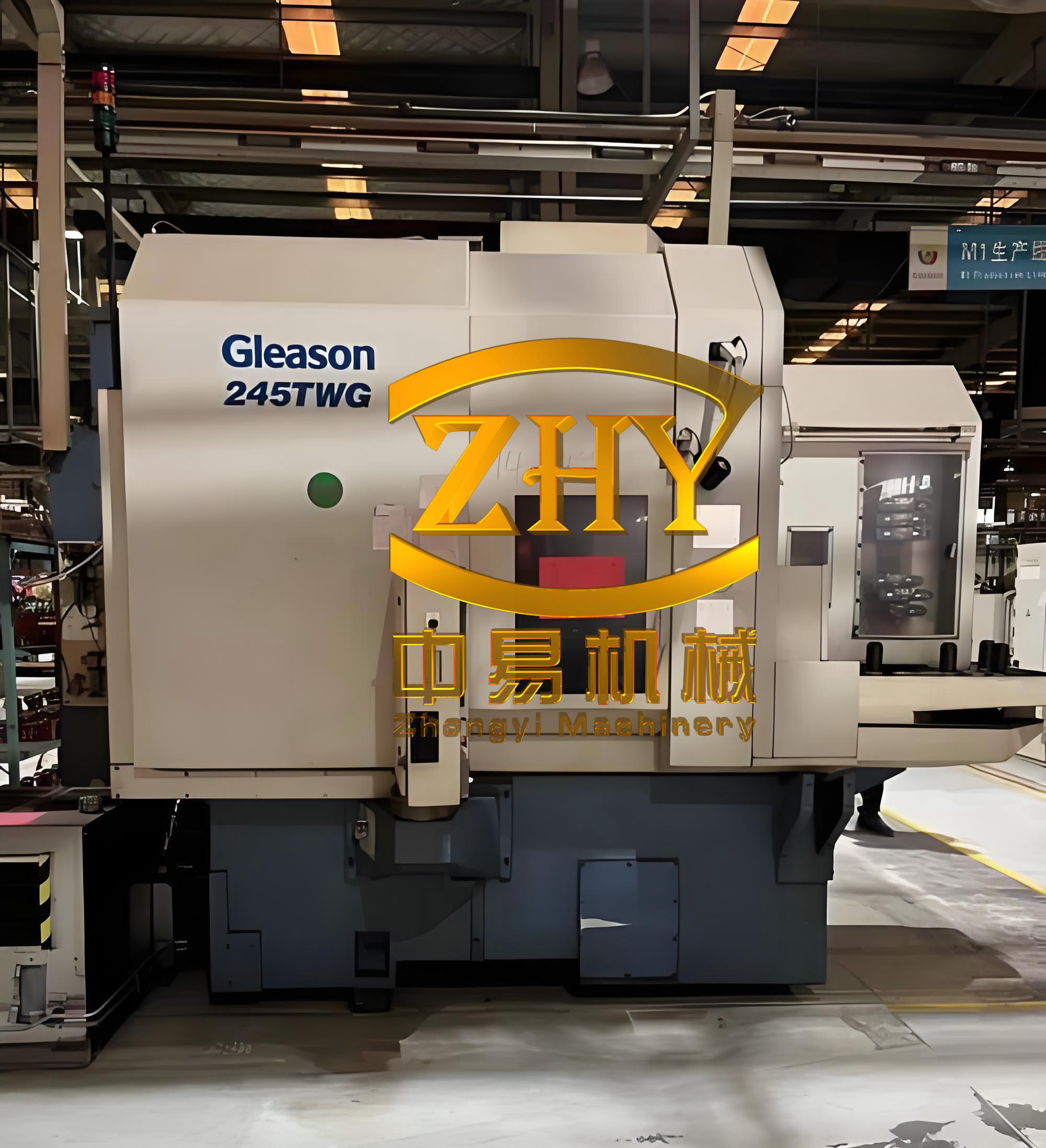
Visual inspection and monitoring are also key in detecting early signs of grinding cracks. For instance, the following image illustrates typical grinding cracks that can occur if parameters are not optimized. By inserting this image, I emphasize the importance of careful parameter setting in gear profile grinding to avoid such defects.
In one notable case, I applied these optimizations to a gear grinding process that originally took 10 hours and 46 minutes. After adjusting the wheel selection, grinding parameters, and dressing cycles, the time was reduced to 5 hours and 54 minutes—an 82% improvement in efficiency. This not only accelerated production but also minimized external costs, demonstrating the tangible benefits of a systematic approach to gear grinding. The reduction in grinding time was achieved without compromising on quality, as post-grinding inspections confirmed the absence of grinding cracks and adherence to precision standards.
Moreover, the interplay between gear grinding parameters and grinding cracks cannot be overstated. High wheel speeds and aggressive feeds can increase productivity, but they must be balanced with adequate cooling and wheel maintenance. In gear profile grinding, the continuous contact between the wheel and tooth surface generates significant heat. If not managed, this heat can cause micro-cracks, which compromise the gear’s integrity. Therefore, I always recommend using coolant systems with high pressure and flow rates to dissipate heat effectively. Additionally, periodic wheel truing ensures that the wheel remains sharp, reducing the force required and minimizing heat generation.
To further elaborate on the mathematical aspects, the relationship between grinding parameters and heat generation can be modeled using thermal analysis. For gear grinding, the specific grinding energy \( u \) is a function of the material properties and grinding conditions. It can be approximated as:
$$ u = \frac{P}{Q_w} $$
where \( P \) is the grinding power. By minimizing \( u \) through parameter optimization, I reduce the heat input per unit volume of material removed, thereby lowering the risk of grinding cracks. In practice, this involves selecting higher wheel speeds and moderate feeds, as confirmed by my experimental data.
In conclusion, enhancing gear grinding efficiency for carburized and quenched gears requires a holistic approach that integrates wheel selection, parameter optimization, and continuous monitoring. Through my experiences, I have shown that by carefully choosing abrasives, grain sizes, and bonds, and by fine-tuning grinding and dressing parameters, it is possible to achieve significant time savings while preventing grinding cracks. The use of mathematical models and power monitoring further ensures that the process remains within safe limits. As gear profile grinding continues to evolve, these strategies will be essential for meeting the demands of high-precision applications. Ultimately, the goal is to strike a balance between efficiency and quality, ensuring that every gear meets the rigorous standards of modern machinery without incurring unnecessary costs or delays.
Looking ahead, I anticipate that advancements in grinding wheel technology and real-time monitoring systems will further revolutionize gear grinding. For instance, the integration of AI-based adaptive control could dynamically adjust parameters based on sensor feedback, optimizing gear profile grinding in real-time and virtually eliminating grinding cracks. As I continue to refine these methods, I remain committed to pushing the boundaries of what is possible in gear manufacturing, always with an eye toward efficiency, precision, and reliability.