
Gear grinding is a critical process in the manufacturing of high-precision gears, especially for large-module hardened gears used in industries such as energy, aerospace, and marine engineering. The accuracy of the gear tooth surface directly influences transmission efficiency, noise, and overall performance. Among various grinding methods, gear profile grinding offers significant advantages for processing large gears due to its ability to handle complex tooth modifications and higher efficiency compared to generating grinding. However, challenges such as grinding cracks and assembly errors in large-scale CNC gear profile grinding machines can compromise surface quality. This article explores the relationship between assembly geometric errors and tooth surface errors in gear profile grinding, providing a comprehensive model to optimize machine performance and minimize defects like grinding cracks.
In gear profile grinding, the grinding wheel and workpiece engage in a conjugate motion, where the wheel’s profile is transferred to the gear tooth surface. Any deviations in the machine’s assembly, such as misalignments or offsets, can lead to tooth surface errors, including profile deviations and spiral line deviations. These errors not only affect gear accuracy but also increase the risk of grinding cracks due to uneven stress distribution during grinding. To address this, we develop a mathematical model based on the envelope theory of surface families, incorporating assembly geometric errors to predict and control tooth surface quality. The model enables precise adjustment of machine parameters to achieve desired gear specifications while mitigating issues like grinding cracks.
The kinematic chain of a typical CNC gear profile grinding machine includes multiple axes: linear axes (X, Y, Z, W) and rotational axes (A, C), along with spindles for grinding and dressing. Assembly errors in these components, such as parallelism errors, offset errors, and angular deviations, propagate through the system and manifest as tooth surface inaccuracies. For instance, errors in the alignment between the C-axis and Z-axis can cause spiral line deviations, while offsets in the X-axis may lead to profile deviations. By quantifying these effects, manufacturers can prioritize error control during assembly, reducing the occurrence of grinding cracks and improving overall gear quality.
To model the gear profile grinding process, we define the position and orientation of the grinding wheel relative to the workpiece using homogeneous coordinate transformation matrices. The grinding wheel surface, denoted as $$ \mathbf{r}_8(u, \theta) $$ in the tool coordinate system, is generated by rotating an axial profile around the wheel’s axis. Here, $$ u $$ and $$ \theta $$ are shape parameters. The transformation matrix $$ \mathbf{T}_8^2(t) $$ maps the wheel surface to the workpiece coordinate system, resulting in a one-parameter surface family $$ \mathbf{r}_2(u, \theta; t) $$, where $$ t $$ is the motion parameter. The envelope surface of this family represents the ground tooth surface, and its deviation from the theoretical surface determines the grinding accuracy.
The transformation matrix accounts for all assembly geometric errors, expressed as a product of individual transformation matrices between adjacent coordinate systems. For example, the error due to X-axis offset $$ \delta D_x $$ or C-axis parallelism error $$ \delta \alpha_{0,1s} $$ is incorporated into the matrix. The general form of the transformation is:
$$ \mathbf{T}_8^2(t) = \prod_{i=1}^{n} \mathbf{T}_{i}(t, \delta_i) $$
where $$ \delta_i $$ represents the i-th assembly error. The envelope surface $$ \mathbf{G}(u, t) $$ is derived by solving the contact condition between the wheel surface family and the workpiece, ensuring tangency at each point. This condition is given by:
$$ \frac{\partial \mathbf{r}_2}{\partial u} \times \frac{\partial \mathbf{r}_2}{\partial \theta} \cdot \frac{\partial \mathbf{r}_2}{\partial t} = 0 $$
Solving this equation yields the contact points, which form the ground tooth surface. The deviation between this surface and the theoretical surface is evaluated at grid points corresponding to profile and spiral lines, as per ISO standards (e.g., ISO 1328-1:2013). Key evaluation parameters include profile slope deviation $$ f_{H\alpha} $$, spiral slope deviation $$ f_{H\beta} $$, and tooth thickness deviation $$ f_{sn} $$. Grinding cracks often arise from localized stress concentrations due to these deviations, emphasizing the need for precise error control.
We analyze 15 common assembly geometric errors in gear profile grinding machines, as summarized in Table 1. Each error is assigned a tolerance, and its impact on tooth surface errors is quantified through simulation. For example, errors in the A-axis alignment (e.g., $$ \delta \phi_a $$) primarily affect profile deviations, while errors in the C-axis parallelism (e.g., $$ \delta \beta_{0,1s} $$) influence spiral line deviations. The linear relationship between error magnitudes and resulting deviations allows for straightforward optimization. By setting tighter tolerances for high-sensitivity errors, manufacturers can achieve higher gear accuracy without excessively tightening all tolerances, thus reducing costs and preventing grinding cracks.
| Error ID | Symbol | Description | Primary Impact | Tolerance Example |
|---|---|---|---|---|
| T1 | $$ \delta D_x $$ | X-axis offset error | Tooth thickness deviation | 0.03 mm |
| T2 | $$ \delta D_y $$ | Y-axis offset error | Profile slope deviation | 0.05 mm |
| T3 | $$ \delta y_{4d,5s} $$ | A-axis and C-axis angle error | Profile slope deviation | 0.05 mm |
| T4 | $$ \delta D_z $$ | Z-axis offset error | Negligible | 0.20 mm |
| T5 | $$ \delta z_{5d,6s} $$ | A-axis and SP1 axis angle error | Profile slope deviation | 0.20 mm |
| T6 | $$ \delta \phi_a $$ | A-axis offset error | Profile slope deviation | 50 arcsec |
| T7 | $$ \delta \alpha_{0,1s} $$ | C-axis and Z-axis parallelism in YZ plane | Spiral slope deviation | 3 arcsec |
| T8 | $$ \delta \alpha_{6d,7s} $$ | Y-axis and SP1 axis parallelism in YZ plane | Profile slope deviation | 20 arcsec |
| T9 | $$ \delta \beta_{0,1s} $$ | C-axis and Z-axis parallelism in XZ plane | Spiral slope deviation | 1.5 arcsec |
| T10 | $$ \delta \beta_{0,3s} $$ | X-axis and Z-axis perpendicularity | Negligible | 50 arcsec |
| T11 | $$ \delta \beta_{4d,5s} $$ | A-axis and Z-axis perpendicularity | Profile slope deviation | 10 arcsec |
| T12 | $$ \delta \phi_c $$ | C-axis offset error | Negligible | 2 arcsec |
| T13 | $$ \delta \gamma_{4d,5s} $$ | A-axis and XZ plane parallelism | Profile slope deviation | 20 arcsec |
| T14 | $$ \delta \gamma_{0,6s} $$ | Y-axis and X-axis perpendicularity | Profile slope deviation | 2 arcsec |
| T15 | $$ \delta \gamma_{6d,7s} $$ | Y-axis and SP1 axis parallelism in XZ plane | Profile slope deviation | 2 arcsec |
The evaluation of tooth surface errors involves calculating the difference between the ground envelope surface and the theoretical surface at discrete grid points. For each point on the theoretical surface, the corresponding point on the ground surface is found by projecting along the normal direction in the transverse plane. The error magnitude is then computed, and parameters like $$ f_{H\alpha} $$ and $$ f_{H\beta} $$ are derived by fitting and interpolating these errors. This method ensures accurate assessment of gear quality and helps identify potential sources of grinding cracks. The overall process for error evaluation is illustrated in Figure 6, which includes iterative loops for contact line calculation and error analysis.
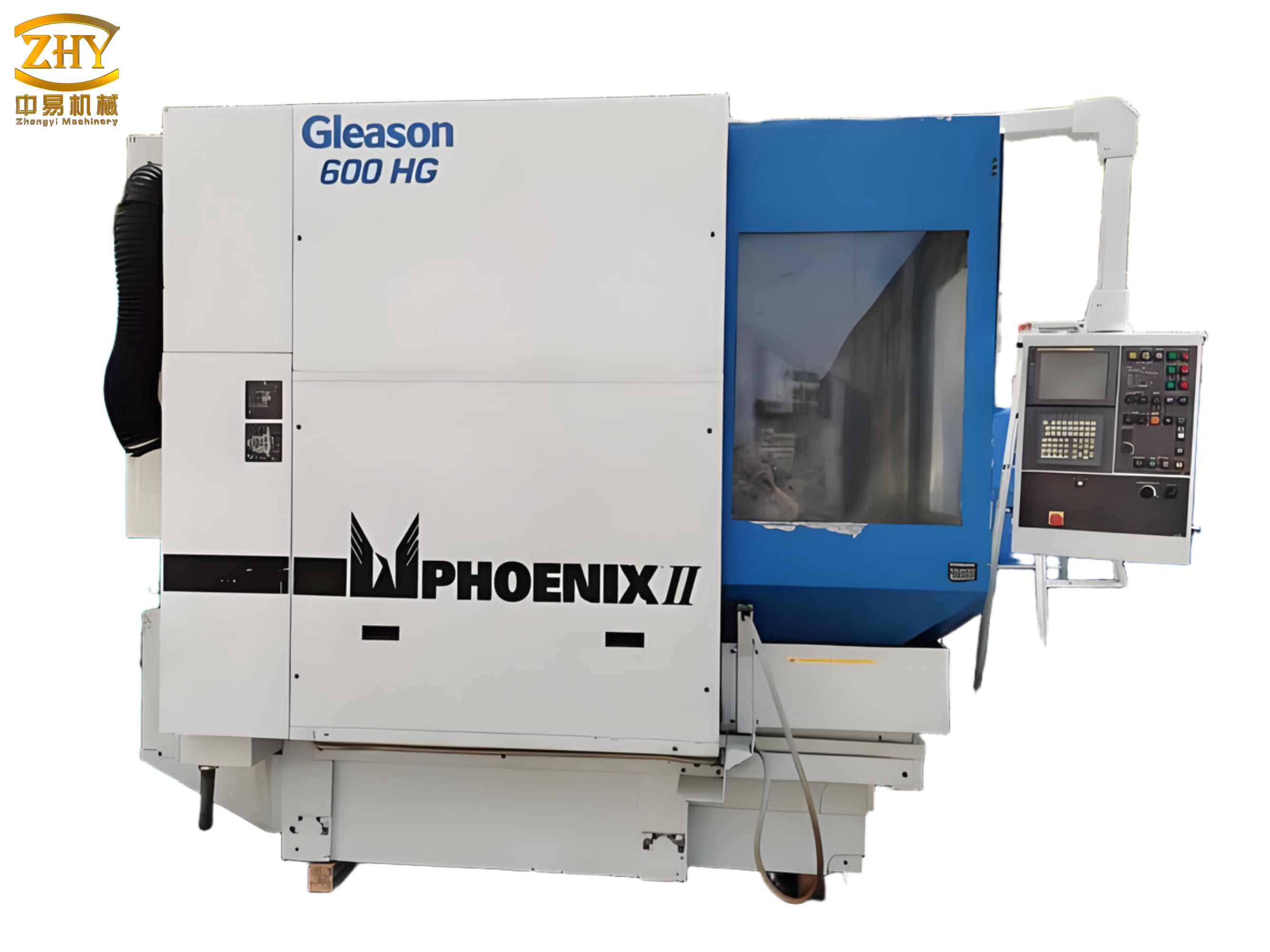
In practical applications, the model is validated through gear profile grinding experiments. For example, a large-scale CNC gear profile grinding machine is adjusted based on optimized error tolerances from Table 1. The grinding process involves dressing the wheel with a diamond roller, setting the initial positions of axes, and performing the grinding stroke with Z-axis and C-axis interpolation. After grinding, the gear is measured using a coordinate measuring machine to verify conformance to standards like GB4. Results show that profile and spiral line deviations are within acceptable limits, demonstrating the effectiveness of the error control strategy in preventing grinding cracks and achieving high precision.
The relationship between assembly errors and tooth surface deviations is linear within the studied range, allowing for superposition of multiple errors. For instance, the tooth thickness deviation $$ f_{sn} $$ is primarily influenced by the X-axis offset error $$ \delta D_x $$, following the equation:
$$ f_{sn} = k_1 \cdot \delta D_x $$
where $$ k_1 $$ is a sensitivity coefficient. Similarly, profile slope deviations $$ f_{H\alpha} $$ depend on errors like $$ \delta D_y $$ and $$ \delta \gamma_{0,6s} $$, with the combined effect given by:
$$ f_{H\alpha} = \sum_{i} k_{2i} \cdot \delta_i $$
where $$ k_{2i} $$ are coefficients for each error type. This linearity simplifies error budgeting during machine design and assembly. By focusing on high-sensitivity errors, manufacturers can achieve target gear accuracy without unnecessary cost increases. Moreover, controlling these errors reduces the risk of grinding cracks by ensuring uniform material removal and minimizing thermal and mechanical stresses during gear profile grinding.
To further illustrate, consider the impact of A-axis and C-axis errors on spiral line deviations. Errors such as $$ \delta \alpha_{0,1s} $$ and $$ \delta \beta_{0,1s} $$ cause misalignment in the workpiece rotation, leading to asymmetrical spiral lines. The resulting deviation $$ f_{H\beta} $$ can be modeled as:
$$ f_{H\beta} = k_3 \cdot \delta \alpha_{0,1s} + k_4 \cdot \delta \beta_{0,1s} $$
where $$ k_3 $$ and $$ k_4 $$ are determined through simulation. In contrast, errors like Z-axis offset $$ \delta D_z $$ have minimal impact, as they do not alter the relative orientation between the wheel and workpiece. This insight allows for efficient allocation of assembly resources, ensuring critical errors are controlled to prevent defects like grinding cracks.
In conclusion, the integration of assembly geometric errors into the gear profile grinding model provides a robust framework for optimizing machine performance. By leveraging mathematical modeling and error evaluation, manufacturers can achieve higher gear accuracy, reduce the incidence of grinding cracks, and enhance the reliability of large-scale CNC gear profile grinding machines. Future work could explore real-time error compensation and advanced monitoring techniques to further improve the gear profile grinding process.