
In the context of semi-suspended electric locomotive drive systems, the interface between the driving gear shaft and the bearing has been identified as a critical area prone to wear. Through extensive investigation, we have determined that fretting wear is the primary failure mechanism, which significantly impacts the longevity and reliability of the gear shaft. This study aims to analyze the relationship between interference fit and fretting wear, utilizing both theoretical calculations and finite element simulations to derive optimal parameters. The gear shaft, as a core component, experiences complex stresses during operation, including bending and torsion, which exacerbate wear at the bearing interface. By focusing on the interference fit, we seek to mitigate this issue and enhance the performance of the drive system.
Fretting wear occurs due to small-amplitude relative motion between contacting surfaces under cyclic loading, such as vibration or thermal cycles. In the case of the gear shaft, this manifests as circumferential banding on the shaft surface, characterized by pits and raised areas. Our analysis involved macroscopic and microscopic examinations of damaged regions, revealing consistent patterns of material transfer and deformation. For instance, the gear shaft exhibited bands approximately 12 mm wide, while the bearing inner ring showed similar features up to 25 mm wide. Microstructural analysis confirmed the presence of tempered sorbitte in the gear shaft and martensite with carbides in the bearing, indicating material interactions. Energy-dispersive X-ray spectroscopy (EDS) further revealed elemental transfers, such as oxygen, silicon, chromium, and iron, suggesting that material from the bearing inner ring had adhered to the gear shaft and vice versa. This mutual material transfer underscores the severity of fretting wear in these components.
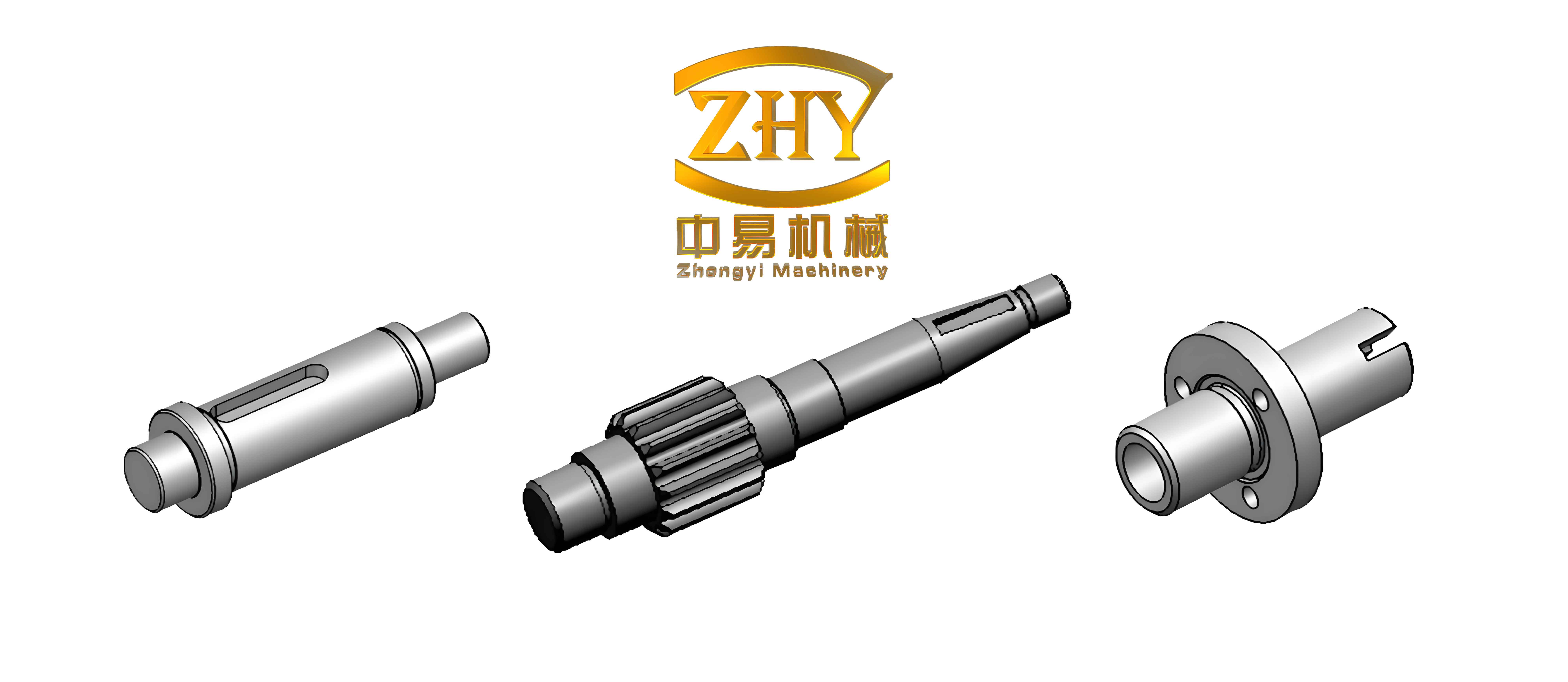
The interference fit between the gear shaft and the bearing inner ring plays a pivotal role in influencing fretting wear. Originally, the interference was designed to range from 0.023 mm to 0.065 mm, but our data indicated that shafts with lower interference (e.g., 0.023 mm to 0.040 mm) experienced higher wear rates. In contrast, those with higher interference (e.g., 0.040 mm to 0.065 mm) showed minimal damage. To quantify this, we developed theoretical models based on elastic thick-walled cylinder theory, which accounts for deformation due to interference and thermal effects. The deformation of the bearing inner ring due to interference can be expressed as:
$$ \Delta_s = \frac{2I}{D_s} \left[ \frac{ \left( \frac{D_s}{D_1} \right)^2 – 1 }{ \left( \frac{D_s}{D_1} \right)^2 + 1 } + \nu_b \right] + \frac{E_b}{E_s} \left[ \frac{ \left( \frac{D_s}{D_1} \right)^2 + 1 }{ \left( \frac{D_s}{D_1} \right)^2 – 1 } – \nu_b \right] $$
where \( \Delta_s \) is the deformation of the bearing inner ring, \( I \) is the interference amount, \( D_s \) is the outer diameter of the bearing inner ring, \( D_1 \) is the inner diameter of the bearing inner ring, \( \nu_b \) is Poisson’s ratio of the bearing, \( E_b \) is the Young’s modulus of the bearing, and \( E_s \) is the Young’s modulus of the gear shaft. For a typical scenario with an interference increase of 0.06 mm, this formula yields a deformation of approximately 0.0293 mm. This theoretical approach provides a foundation for understanding how changes in interference affect the gear shaft and bearing assembly.
To complement the theoretical analysis, we conducted finite element simulations using ANSYS software. The model simplified the gear shaft and bearing to focus on the critical contact regions, with mesh sizes set to 3 mm for accuracy. The simulations evaluated interference ranges from 0.023 mm to 0.065 mm and an optimized range of 0.040 mm to 0.082 mm. Results showed that increasing interference reduced fretting wear significantly, as it minimized relative motion at the interface. For example, at an interference of 0.06 mm, the simulated deformation of the bearing inner ring was 0.029 mm, closely matching the theoretical value with an error of only 1.024%. This consistency validates our model and highlights the importance of interference control for the gear shaft.
Temperature effects further complicate the behavior of the gear shaft and bearing system. During operation, temperatures can rise from an ambient 20°C to 90°C, causing thermal expansion that alters the interference fit and bearing clearance. The change in clearance due to temperature can be calculated as:
$$ \Delta_T = \tau_b \left[ D_h (T_o – T_a) – D_s (T_o – T_a) \right] $$
where \( \Delta_T \) is the thermal deformation, \( \tau_b \) is the thermal expansion coefficient of the bearing, \( D_h \) is the inner diameter of the bearing outer ring, \( D_s \) is the outer diameter of the bearing inner ring, \( T_o \) is the operating temperature, and \( T_a \) is the ambient temperature. For a temperature rise of 70°C, this results in a clearance change of 0.042 mm. Additionally, the expansion of bearing rollers is given by:
$$ \Delta_T = \tau_b D (T_o – T_a) $$
where \( D \) is the roller diameter. Simulations incorporating temperature fields showed deformations of 0.110 mm for the bearing inner ring, 0.143 mm for the outer ring, and 0.023 mm for the rollers, with errors under 10% compared to theoretical values. These findings emphasize the need to account for thermal effects in gear shaft design to maintain optimal bearing performance.
We also evaluated the combined effects of interference and temperature on bearing clearance. The total deformation of the bearing inner ring outer surface was 0.138 mm, and the outer ring inner surface was 0.142 mm, leading to a net clearance reduction of 0.019 mm. Given that the manufacturer’s specified working clearance is 0.04 mm to 0.15 mm, this reduction is manageable, especially if the clearance is controlled toward the upper end of the range. This insight is crucial for ensuring that adjustments to the gear shaft interference do not compromise bearing functionality.
| Parameter | Value |
|---|---|
| Bearing Outer Ring Outer Diameter \( D_2 \) (mm) | 200 |
| Bearing Inner Ring Inner Diameter \( D_1 \) (mm) | 110 |
| Bearing Thermal Expansion Coefficient \( \tau_b \) (10^{-6}°C^{-1}) | 12.5 |
| Gear Shaft Thermal Expansion Coefficient \( \tau_g \) (10^{-6}°C^{-1}) | 11.6 |
| Bearing Young’s Modulus \( E_b \) (MPa) | 208,000 |
| Gear Shaft Young’s Modulus \( E_s \) (MPa) | 210,000 |
| Bearing Poisson’s Ratio \( \nu_b \) | 0.3 |
| Gear Shaft Poisson’s Ratio \( \nu_s \) | 0.3 |
| Interference Increase \( I \) (mm) | 0.06 |
| Bearing Inner Ring Outer Diameter \( D_s \) (mm) | 132.5 |
| Bearing Outer Ring Inner Diameter \( D_h \) (mm) | 180.5 |
| Ambient Temperature \( T_a \) (°C) | 20 |
| Operating Temperature \( T_o \) (°C) | 90 |
| Gear Shaft Diameter \( d_1 \) (mm) | 110 |
| Bearing Roller Diameter \( D \) (mm) | 24 |
Experimental validation was conducted by selecting a gear shaft and bearing pair with an interference fit controlled between 0.060 mm and 0.065 mm. After subjecting the assembly to extensive running tests, including track trials, the gear shaft exhibited no abnormal wear after 1 million kilometers of operation. The dimensions and surface conditions remained within acceptable limits, confirming that the optimized interference range effectively reduces fretting wear without adversely affecting the bearing. This practical test underscores the reliability of our theoretical and simulation-based recommendations for the gear shaft.
In summary, our comprehensive study demonstrates that fretting wear in the gear shaft is highly dependent on the interference fit with the bearing. By increasing the interference to a range of 0.040 mm to 0.082 mm, we can significantly mitigate wear while maintaining bearing clearance within safe limits. The integration of theoretical models, finite element analysis, and experimental data provides a robust framework for optimizing gear shaft design in electric locomotives. This approach not only enhances the durability of the gear shaft but also contributes to the overall efficiency and safety of the drive system, offering valuable insights for similar applications in the industry.
Further considerations include the dynamic loading conditions on the gear shaft, such as those from traction motor interactions and road vibrations, which may amplify fretting wear. Future work could explore the effects of surface treatments or material coatings on the gear shaft to reduce wear. Additionally, real-time monitoring of temperature and clearance in operational environments could provide data for predictive maintenance. The formulas and tables presented here serve as a foundation for such advancements, ensuring that the gear shaft remains a focal point in reliability engineering.
| Factor | Theoretical Deformation (mm) | Simulated Deformation (mm) | Error (%) |
|---|---|---|---|
| Interference-Induced (Bearing Inner Ring) | 0.0293 | 0.029 | 1.024 |
| Temperature-Induced (Bearing Inner Ring) | 0.116 | 0.110 | 5.172 |
| Temperature-Induced (Bearing Outer Ring) | 0.158 | 0.143 | 9.493 |
| Temperature-Induced (Bearing Roller) | 0.021 | 0.023 | 8.696 |
| Combined Effects (Bearing Inner Ring) | 0.142 | 0.138 | 2.816 |
| Combined Effects (Bearing Outer Ring) | 0.140 | 0.142 | 1.408 |
The implications of this research extend beyond electric locomotives to any machinery involving gear shafts and interference fits. For instance, in automotive or aerospace systems, similar principles can be applied to reduce wear and extend component life. The key is to balance interference to minimize relative motion while accounting for thermal expansions. Our findings highlight that even small adjustments in the gear shaft interference can lead to significant improvements, making this a cost-effective strategy for enhancing mechanical systems. Continued refinement of these models will further optimize the performance and reliability of the gear shaft in various applications.