
In the oil and gas industry, mud mixers play a critical role in ensuring the homogeneity and performance of drilling fluids, which are essential for smooth drilling operations. As an engineer focused on petroleum machinery, I have undertaken the design and analysis of a mud mixer that utilizes a worm gear drive for its transmission system. This choice is driven by the inherent advantages of worm gear drives, such as compact structure, quiet operation, high transmission ratios, and ability to handle shock loads. In this article, I will detail the comprehensive design process, including structural calculations, finite element analysis, and computational fluid dynamics simulations, to validate the performance of the mixer. The goal is to create a reliable mixer for tanks with volumes of 20–30 m³, ensuring efficient mixing of additives like bentonite, barite, and polymers into the drilling mud.
The mud mixer consists of several key components: an explosion-proof motor, a reducer (based on a worm gear drive), a base, and an impeller assembly. The motor and reducer are connected via an elastic coupling, while the reducer and impeller are linked with a rigid coupling. For this design, I selected an 11 kW explosion-proof motor (model YB2-160M-4-11) to provide sufficient power. The worm gear drive was chosen over other transmission methods due to its efficiency in achieving high reduction ratios (up to 100:1) with minimal noise and vibration. This is particularly important in continuous operations, where the mixer must run for extended periods, often 8 hours daily over 10 years. The worm gear drive also offers a compact footprint, reducing the overall weight and space requirements of the equipment.
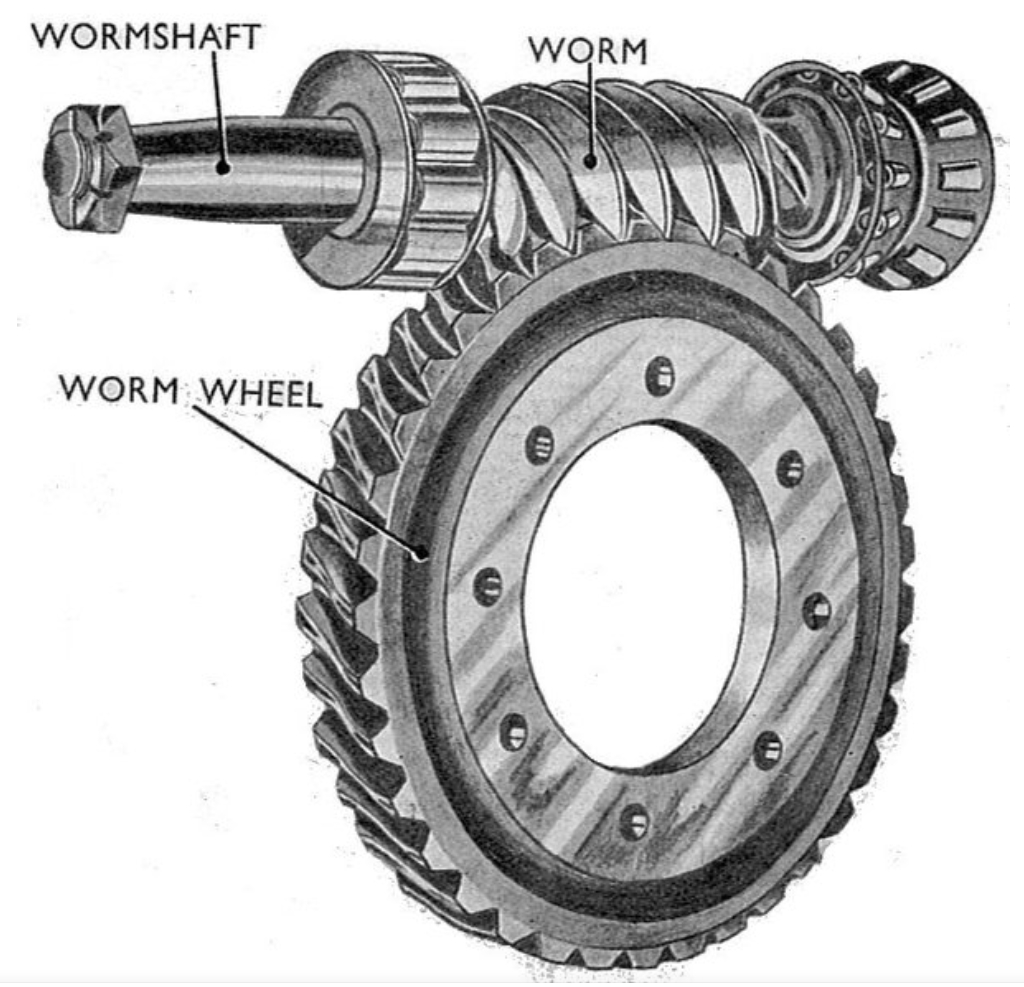
To begin the design, I focused on the worm gear reducer. The worm gear drive uses an Archimedes cylindrical worm made of 45# steel and a worm wheel made of cast tin-phosphor bronze (ZCuSn10P1) for durability. Key design parameters include a transmission ratio of i=25, with the worm having z₁=2 starts and the worm wheel having z₂=50 teeth. The module is set at m=6.3 mm. The geometric dimensions of the worm and worm wheel were calculated based on standard design equations, ensuring proper meshing and strength. For instance, the pitch diameter of the worm (d₁) is 63.00 mm, and the worm wheel pitch diameter (d₂) is 315 mm. The lead angle of the worm (γ) is 11.3°, which influences the efficiency of the worm gear drive. The design parameters are summarized in the tables below.
| Parameter Name | Symbol | Calculation Formula | Value |
|---|---|---|---|
| Pitch Diameter (mm) | d₁ | – | 63.00 |
| Tip Diameter (mm) | da1 | d₁ + 2m | 75.60 |
| Root Diameter (mm) | df1 | d₁ – 2.4m | 47.88 |
| Axial Pitch (mm) | pa1 | πm | 19.79 |
| Lead (mm) | s | – | 39.58 |
| Normal Tooth Thickness (mm) | sn | (πm/2) × cosγ | 9.70 |
| Pressure Angle (°) | αt | – | 20 |
| Worm Length (mm) | θ | ≥ (12.5 + 0.09z₂)m | 120 |
| Parameter Name | Symbol | Calculation Formula | Value |
|---|---|---|---|
| Pitch Diameter (mm) | d₂ | – | 315 |
| Tip Diameter (mm) | da2 | m(z₂ + 2) | 327.6 |
| Root Diameter (mm) | df2 | m(z₂ – 2.4) | 299.88 |
| Outside Diameter (mm) | dc2 | da2 + m | 333.9 |
| Throat Radius (mm) | rg2 | a – da2/2 | 36.2 |
| Face Width (mm) | b₂ | ≤ 0.67da1 | 50 |
| Clearance (mm) | c | 0.2m | 1.26 |
| Wrap Angle (°) | θ | 2arcsin(b₂/d₁) | 105.1 |
The strength of the worm gear drive was verified through bending stress calculations. The worm wheel’s bending stress must be below the allowable limit to prevent failure. The formula used is:
$$ \sigma_{HF} = \frac{\pi k T_2}{d_1 d_2} Y_{Fa2} Y_{\beta} \leq [\sigma_{HF}] $$
where \( \sigma_{HF} \) is the bending stress, \( k \) is the impeller coefficient (taken as 1.1 for a disc turbine impeller), \( T_2 \) is the torque on the worm wheel, \( Y_{Fa2} = 3.95 \) is the form factor, \( Y_{\beta} = 0.91 \) is the helix angle factor, and \( [\sigma_{HF}] = 24.08 \, \text{MPa} \) is the allowable bending stress. With \( T_2 \) derived from the power and speed, the calculated bending stress is:
$$ \sigma_{HF} = \frac{\pi \times 1.1 \times T_2}{63 \times 315} \times 3.95 \times 0.91 = 20.62 \, \text{MPa} $$
Since 20.62 MPa is less than 24.08 MPa, the worm gear drive meets the strength requirements. This validation ensures that the worm gear drive can handle the transmitted torque without excessive wear, highlighting the reliability of this transmission system in mud mixer applications.
Next, I designed the impeller assembly, which directly interacts with the drilling fluid to suspend solid particles and promote uniformity. The impeller type selected is a disc turbine with inclined blades, known for its effectiveness in solid-liquid mixing. The design involves determining the circulation flow rate and geometric dimensions based on tank specifications. For a tank with diameter D = 2.8 m, liquid depth H = 3 m, and mud density ρ = 1900 kg/m³, the impeller diameter dⱼ is set at 1016 mm (with dⱼ/D ≈ 0.36, within the recommended range of 0.35–0.80 for low-viscosity fluids). The blade width b is 200 mm, giving a b/dⱼ ratio of 0.20. The impeller operates at a speed of n = 58 rpm, with Z = 4 blades at an inclination angle θ = 60°.
The circulation flow rate Q_c is crucial for evaluating mixing performance. It is calculated using the following equations, which account for the discharge flow and recirculation in the tank:
$$ Q_d = N_{Qd} \cdot n \cdot d_j^3 $$
$$ Q_c = N_{Qc} \cdot n \cdot d_j^3 $$
$$ N_{Qd} = N’_{Qd} \cdot \frac{Re}{Re + 50} $$
$$ N_{Qc} = N’_{Qc} \cdot \frac{Re}{Re + 80} $$
$$ N’_{Qd} = k \cdot Z^{0.7} \cdot \left( \frac{b}{d_j} \right)^{0.7} \cdot \left( \frac{d_j}{D} \right)^{0.5} \cdot \left( \frac{H}{d_j} \right)^{0.1} $$
$$ N’_{Qc} = k \cdot Z^{0.7} \cdot \left( \frac{b}{d_j} \right)^{0.6} \cdot \left( \frac{d_j}{D} \right)^{0.1} \cdot \left( \frac{H}{d_j} \right)^{0.3} $$
where Re is the Reynolds number, given by:
$$ Re = \frac{\rho n d_j^2}{\mu} $$
Assuming a mud viscosity μ = 30 mPa·s, the Reynolds number is:
$$ Re = \frac{1900 \times (58/60) \times (1.016)^2}{0.03} \approx 0.632 \times 10^5 $$
Using k = 0.8 for the impeller type, the calculations yield \( N’_{Qc} = 0.46 \), \( N_{Qc} = 0.469 \), and:
$$ Q_c = 0.469 \times 58 \times (1.016)^3 = 0.489 \, \text{m}^3/\text{s} $$
This corresponds to a circulation frequency of 1.54 min⁻¹, meaning the entire tank volume is circulated approximately every 0.65 minutes. This rapid circulation ensures that solid particles remain suspended, preventing sedimentation during operation.
The blade thickness δ is determined from strength considerations. Using the power P = 8.16 kW (adjusted for efficiency), blade material QT600 with tensile strength Rₘ = 600 MPa, safety factor N_b = 8, and allowable stress [σ] = 75 MPa, the thickness is calculated as:
$$ \delta = 765 \sqrt{\frac{P}{b n Z [\sigma] \sin \theta}} $$
Substituting the values:
$$ \delta = 765 \times \sqrt{\frac{8.16}{0.2 \times 58 \times 4 \times 75 \times \sin 60^\circ}} = 8.67 \, \text{mm} $$
To ensure durability, I selected a blade thickness of 10 mm. The impeller is welded to a carbon steel disc, and its key dimensions are summarized in the table below.
| Parameter | Symbol | Value (mm) |
|---|---|---|
| Impeller Diameter | dⱼ | 1016 |
| Blade Width | b | 200 |
| Blade Thickness | δ | 10 |
| Blade Inclination Angle | θ | 60° |
| Number of Blades | Z | 4 |
The mixing shaft, which connects the worm gear drive to the impeller, must withstand torsional loads without excessive deformation. The shaft material is 45# steel with an allowable shear stress [τᵣ] = 45 MPa. Based on the transmitted power P = 8.16 kW and speed n = 58 rpm, the minimum shaft diameter d is calculated from torsional strength:
$$ \tau_r = \frac{T}{W_r} = \frac{9.55 \times 10^6 P}{0.2 d^3 n} \leq [\tau_r] $$
$$ d \geq A_0 \sqrt[3]{\frac{P}{n}}, \quad \text{where} \quad A_0 = \sqrt[3]{\frac{9.55 \times 10^6}{0.2 [\tau_r]}} $$
Substituting the values:
$$ A_0 = \sqrt[3]{\frac{9.55 \times 10^6}{0.2 \times 45}} \approx 103 $$
$$ d \geq 103 \times \sqrt[3]{\frac{8.16}{58}} = 63.56 \, \text{mm} $$
Considering a keyway and corrosion allowance, I chose a shaft diameter of d = 70 mm. The shaft stiffness is also checked to limit torsional deflection. The twist angle φ per unit length should be below 0.5–1.0°/m, using the formula:
$$ \varphi = \frac{T \alpha}{G_0 J_p} \times 100 \times \frac{180}{\pi} \leq [\varphi] $$
For a solid shaft, the diameter must satisfy:
$$ d \geq B \sqrt[4]{\frac{P}{n}}, \quad \text{with} \quad B = 8.5 \, \text{for} \, [\varphi] = 0.5–1.0^\circ $$
Thus:
$$ d \geq 8.5 \times \sqrt[4]{\frac{8.16}{58}} = 62.02 \, \text{mm} $$
Since 70 mm > 62.02 mm, the shaft meets both strength and stiffness criteria. This robust design ensures that the mixing shaft can reliably transmit torque from the worm gear drive to the impeller without failure.
To validate the structural integrity of key components, I performed finite element analysis (FEA) using Ansys software. The worm shaft and mixing shaft were analyzed under operational loads. For the worm shaft, constraints were applied at bearing and coupling locations, with loads at the worm wheel engagement. The stress distribution showed a maximum von Mises stress of 37.23 MPa, well below the yield strength of 45# steel (355 MPa). The strain was negligible, with a maximum deformation of 1.65 × 10⁻⁴ mm, occurring at step changes in shaft diameter. This confirms that the worm shaft in the worm gear drive is safe under torsional and bending loads.
Similarly, the mixing shaft was analyzed for torsional stress. The results indicated a maximum stress of 62.14 MPa, primarily in the smooth section of the shaft. This is within the allowable limit of 355 MPa, and the maximum deformation was 3.11 × 10⁻⁴ mm, which is insignificant relative to the shaft diameter. The FEA validates that both shafts can endure the operational demands, reinforcing the reliability of the worm gear drive system in transmitting power efficiently.
To evaluate the mixing performance, I conducted computational fluid dynamics (CFD) simulations using Fluent software. The simulation modeled a cylindrical tank with a radius of 1500 mm and height of 2500 mm, filled with mud of density 1.8 g/cm³. The impeller was positioned 350 mm above the tank bottom, rotating at 58 rpm. The multiple reference frame (MRF) method was employed to handle the rotating impeller region, and the standard k-ε turbulence model was used to capture flow dynamics. Time steps of 0.05 s ensured convergence of the transient simulation.
The results illustrated the flow patterns and solid concentration distribution. Initially, a 50 mm thick layer of settled solids was at the tank bottom. After simulation, the solids were largely suspended, with a relatively uniform concentration throughout the tank. However, in the 20 m³ tank scenario, some sedimentation was observed near the bottom due to lower circulation rates. The velocity vectors showed strong radial and axial flows induced by the inclined blades, promoting overall mixing. The flow field indicated that the impeller generated sufficient turbulence to suspend particles, but for optimal performance, a larger tank volume (e.g., 30 m³) is recommended to enhance circulation and minimize dead zones.
The CFD analysis also provided insights into power consumption and mixing efficiency. The simulated flow patterns align with theoretical predictions, demonstrating that the worm gear drive imparts consistent rotational speed to the impeller, crucial for maintaining steady mixing. This underscores the importance of the worm gear drive in ensuring stable operation, as its self-locking characteristic can prevent back-driving and maintain impeller position during shutdowns.
In conclusion, the design of a mud mixer with a worm gear drive has been thoroughly developed and validated. The worm gear drive offers significant advantages, including high reduction ratios, compactness, and smooth operation, making it ideal for continuous mixing applications. Through detailed calculations, I determined the parameters for the worm gear reducer, impeller, and mixing shaft, ensuring they meet strength and stiffness requirements. Finite element analysis confirmed the structural integrity of critical components, with stresses within safe limits. Computational fluid dynamics simulations revealed effective mixing performance, though larger tank volumes are advised to prevent solid sedimentation. This comprehensive approach demonstrates the feasibility of using a worm gear drive in mud mixers, providing a reference for future designs in the petroleum industry. The worm gear drive proves to be a robust and efficient transmission solution, contributing to reliable and long-lasting mixing equipment.
Throughout this project, the worm gear drive has been a focal point due to its mechanical benefits. Its ability to provide precise speed reduction and torque multiplication is essential for handling the viscous drilling fluids. Moreover, the worm gear drive requires minimal maintenance, which is advantageous in remote drilling sites. Future work could explore optimizing the worm gear drive for higher efficiency, perhaps by using multi-start worms or advanced materials. Additionally, integrating smart sensors with the worm gear drive could enable real-time monitoring of wear and performance, further enhancing reliability. Overall, the worm gear drive remains a cornerstone of this mud mixer design, exemplifying how traditional mechanical systems can be leveraged for modern industrial challenges.
To summarize the key equations and parameters, I have compiled them below for quick reference. These formulas are integral to the design process and highlight the analytical rigor behind the worm gear drive implementation.
| Equation Purpose | Formula | Variables Description |
|---|---|---|
| Worm Gear Bending Stress | $$ \sigma_{HF} = \frac{\pi k T_2}{d_1 d_2} Y_{Fa2} Y_{\beta} $$ | \( k \): impeller coefficient, \( T_2 \): torque, \( Y_{Fa2}, Y_{\beta} \): factors |
| Circulation Flow Rate | $$ Q_c = N_{Qc} \cdot n \cdot d_j^3 $$ | \( N_{Qc} \): flow number, \( n \): speed, \( d_j \): impeller diameter |
| Reynolds Number | $$ Re = \frac{\rho n d_j^2}{\mu} $$ | \( \rho \): density, \( \mu \): viscosity |
| Blade Thickness | $$ \delta = 765 \sqrt{\frac{P}{b n Z [\sigma] \sin \theta}} $$ | \( P \): power, \( b \): blade width, \( Z \): blade count, \( \theta \): angle |
| Shaft Diameter (Strength) | $$ d \geq A_0 \sqrt[3]{\frac{P}{n}} $$ | \( A_0 \): material constant, derived from allowable stress |
| Shaft Diameter (Stiffness) | $$ d \geq B \sqrt[4]{\frac{P}{n}} $$ | \( B \): stiffness constant, typically 8.5 for low deflection |
This article has elaborated on every aspect of the mud mixer design, emphasizing the worm gear drive’s role. From initial calculations to advanced simulations, the worm gear drive has proven to be a reliable and efficient choice. I hope this work serves as a valuable resource for engineers seeking to implement worm gear drives in similar mixing applications, ensuring robust performance and longevity in demanding environments.