
The pursuit of high precision in motion control systems for critical applications like machine tools, aerospace, and robotics has driven continuous innovation in power transmission components. Among these, the worm gear drive stands out for its unique ability to provide high reduction ratios, compact design, and smooth, quiet operation. A specific and crucial variant within this family is the split anti-backlash worm gear drive. This mechanism is designed to eliminate the inherent axial play or backlash that occurs when reversing the direction of rotation in a standard worm gear drive, a phenomenon detrimental to positioning accuracy. The split design typically consists of two worm segments—a primary worm shaft and a secondary worm sleeve—mounted on the same axis. Backlash elimination is achieved by mechanically adjusting the axial distance between these two segments, thereby forcing the worm threads to make simultaneous contact with both flanks of the worm gear teeth. While effective for play compensation, this very adjustment method and the resulting structural configuration, which can include relatively thin worm threads, introduce unique sensitivities. These sensitivities manifest as various errors that can degrade the very transmission accuracy the drive aims to uphold. Therefore, a systematic investigation into the factors influencing the transmission accuracy of split anti-backlash worm gear drives is essential for their optimal design and application. This article employs a methodology centered on virtual prototyping and dynamic simulation to dissect and quantify the impact of both structural assembly errors and operational wear-based errors on the kinematic performance of this critical drive system.
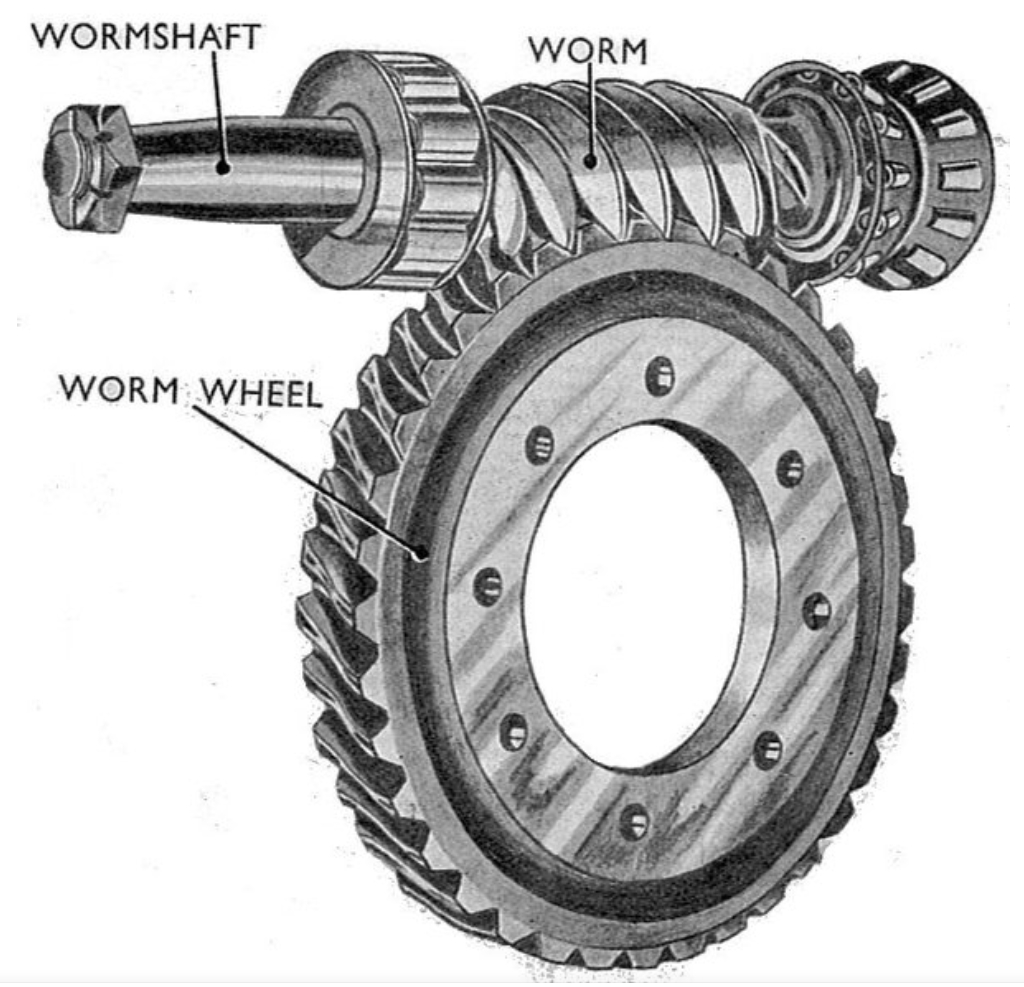
Transmission error (TE) is the primary metric for evaluating the kinematic precision of a gear pair. It is defined as the deviation of the actual angular position of the output gear from its theoretical position, assuming a perfect, rigid input rotation. For a worm gear drive, if $\varphi_1$ is the input rotation of the worm and $\varphi_2$ is the output rotation of the worm wheel, the theoretical relationship is governed by the gear ratio $i$, which is determined by the number of worm threads $z_1$ and the number of worm wheel teeth $z_2$:
$$
\varphi_{2, theoretical} = \frac{\varphi_1}{i} = \frac{z_1}{z_2} \cdot \varphi_1
$$
The transmission error $\Delta \varphi$ is then:
$$
\Delta \varphi = \varphi_{2, actual} – \varphi_{2, theoretical}
$$
In an ideal worm gear drive, $\Delta \varphi$ would be zero. In reality, it is a complex signal influenced by geometric imperfections, elastic deformations, and dynamic effects. For the split anti-backlash worm gear drive, errors can be categorized into two primary groups: Structural/Assembly Errors and Operational/Use Errors.
Structural Errors arise from imperfections in manufacturing and the assembly process of the drive itself. Due to its two-piece worm construction, this type of worm gear drive is susceptible to three specific alignment errors beyond standard gear errors:
1. Radial Error (Centre Distance Error, $\Delta_r$): This is the deviation between the actual and designed centre distance between the worm and worm wheel axes in the mid-plane of the worm wheel. It can be positive (increased centre distance) or negative.
2. Axial Error (Worm Segment Spacing Error, $\Delta_a$): This error arises from an incorrect axial gap between the two worm segments (shaft and sleeve) after the anti-backlash adjustment is made.
3. Circumferential Error (Phasing Error, $\Delta_c$): This is an angular misalignment between the thread profiles of the two worm segments around their common axis. Essentially, one segment is rotationally out of phase with respect to the other relative to the worm wheel.
Operational (Use) Errors develop during the service life of the worm gear drive. The most significant of these is wear on the worm wheel teeth. Unlike uniform wear, localized wear or surface defects (e.g., pitting, scoring) can cause significant periodic disturbances. Key wear patterns include root wear, mid-flank wear, tip wear, and localized defects at the tooth edge.
To analyze the isolated and combined effects of these errors, a virtual prototype model is developed. The process begins with the creation of precise 3D solid models of the worm (split into shaft and sleeve) and the worm wheel in CAD software, ensuring accurate tooth geometry. These models are then imported into a multi-body dynamics simulation software environment. The material properties are assigned as follows:
| Component | Material | Young’s Modulus (GPa) | Density (kg/m³) | Poisson’s Ratio |
|---|---|---|---|---|
| Worm Wheel | Tin Bronze (e.g., ZCuSn10Pb1) | 124 | 8800 | 0.30 |
| Worm Shaft/Sleeve | Alloy Steel (e.g., 40Cr) | 211 | 7850 | 0.28 |
The dynamic model is assembled by defining constraints and contacts. The worm wheel and the worm shaft are connected to the ground via revolute joints. The worm sleeve is fixed to the worm shaft, simulating their locked adjustment state. The most critical aspect is defining the contact forces between the worm threads and the worm wheel teeth. A penalty-based contact force algorithm is typically used, incorporating stiffness, damping, and friction properties based on the Hertzian contact theory for elastic bodies. This allows for the simulation of realistic meshing interaction, including the effects of impact and separation due to errors. The complete virtual model enables the simulation of the worm gear drive’s behavior under load.
Establishing a baseline is crucial. A simulation under ideal, error-free conditions is run. The worm shaft is given a rotational velocity drive of 720 rpm (4,230 °/s). A constant load torque of 10 Nm is applied to the worm wheel. The simulation runs for 0.5 seconds with a fine time step. The output worm wheel angle $\varphi_{2, actual}$ is measured and compared to its theoretical position $\varphi_{2, theoretical}$ calculated from the input. The resulting transmission error $\Delta \varphi$ is shown in the figure below (conceptual representation). Initially, a transient period with larger amplitude oscillations is observed (0-0.2 s), likely due to start-up dynamics and contact settling. After this transient phase, the transmission error settles into a steady-state periodic fluctuation around zero, with a very small amplitude (e.g., ±0.012°). This periodic fluctuation is characteristic of even perfect gear meshing due to the kinematic excitation of the teeth engaging and disengaging. The small magnitude validates the fidelity of the virtual prototype. For subsequent error analysis, data from the stable period (0.2-0.5 s) is used to calculate performance metrics like the Root Mean Square (RMS) of the transmission error:
$$
RMSE = \sqrt{\frac{1}{n}\sum_{i=1}^{n} (\Delta\varphi_i)^2}
$$
Analysis of Structural Error Influence
The impact of each structural error is investigated by intentionally introducing the deviation into the virtual prototype and comparing the resulting TE to the ideal baseline.
1. Radial Error ($\Delta_r$): This error is simulated by offsetting the worm wheel axis relative to the fixed worm axis. Simulations are conducted for both positive (increased centre distance) and negative values: $\Delta_r = \pm0.025, \pm0.050, \pm0.100, \pm0.200$ mm.
2. Axial Error ($\Delta_a$): Simulated by axially displacing one worm segment relative to its nominal position while keeping the worm wheel fixed. Values: $\Delta_a = +0.025, +0.050, +0.100, +0.200$ mm.
3. Circumferential Error ($\Delta_c$): Simulated by applying a relative rotational displacement between the worm shaft and sleeve profiles. Values: $\Delta_c = +0.10°, +0.15°, +0.25°, +0.50°$.
The RMS of the transmission error for each case is calculated. The summarized influence trends are presented in the table below.
| Error Type | Simulated Values | Effect on Transmission Error (RMS) | Key Observation |
|---|---|---|---|
| Radial ($\Delta_r$) | ±0.025 to ±0.200 mm | Strong, monotonic increase with $|\Delta_r|$. Positive $\Delta_r$ causes larger TE than negative $\Delta_r$ of same magnitude. | Most influential structural error. Highlights criticality of precise centre distance adjustment. |
| Axial ($\Delta_a$) | +0.025 to +0.200 mm | Moderate, monotonic increase with $\Delta_a$. | Less severe than radial error but still significant for precision. |
| Circumferential ($\Delta_c$) | +0.10° to +0.50° | Non-monotonic. RMS TE first decreases slightly then increases with larger $\Delta_c$. | Complex interaction due to phasing altering load sharing between worm segments. An optimal “incorrect” phase might temporarily reduce meshing impact. |
The results clearly indicate that among structural errors, the radial error (centre distance error) has the most pronounced and consistently detrimental effect on the transmission accuracy of the split anti-backlash worm gear drive. This underscores the importance of incorporating precise and stable centre distance adjustment mechanisms in the design of such drives.
Analysis of Operational (Use) Error Influence
To model wear and defects, localized geometry modifications are applied to the 3D model of the worm wheel teeth before dynamic simulation. Four conditions are modeled, each with a wear depth of 0.02 mm: wear at the tooth root, wear at the mid-flank, wear at the tooth tip, and a localized defect at the tooth edge/corner.
The simulation process is repeated for each worn model. The resulting transmission error profiles are analyzed. The RMS values for the different wear locations reveal a distinct hierarchy of impact:
$$
RMSE_{mid-flank} > RMSE_{root} > RMSE_{tip} \approx RMSE_{defect}
$$
This finding is critical: wear occurring on the mid-flank region of the worm wheel tooth has the greatest detrimental effect on transmission accuracy. This region is typically the primary contact zone under load in a correctly aligned worm gear drive. Imperfections here directly disrupt the fundamental meshing action. Given this result, a deeper analysis is conducted by varying the severity of mid-flank wear: $\text{Wear Depth} = 0.01, 0.02, 0.03, 0.04$ mm. The relationship between wear depth and transmission error RMS is found to be non-linear, showing an initial complex response followed by a clear increasing trend, emphasizing how progressive wear accelerates performance degradation.
Comparative Discussion and Synthesis
A pivotal finding emerges from comparing the magnitude of transmission error RMS values caused by typical levels of structural errors versus operational wear errors. The analysis demonstrates that for a given magnitude of deviation (e.g., 0.05 mm), the transmission error introduced by operational wear—particularly mid-flank wear—is significantly larger than that caused by structural assembly errors like axial or small radial misalignments.
This has profound implications for the lifecycle management of a precision split anti-backlash worm gear drive. It indicates that while stringent control over assembly tolerances (especially centre distance) is essential during manufacturing and installation, the long-term preservation of transmission accuracy is dominantly governed by factors that affect wear rate. These include:
- Lubrication: Ensuring a durable elastohydrodynamic lubricant film to prevent metal-to-metal contact.
- Material Pairing: Selecting worm wheel materials with excellent embeddability and wear resistance against the hardened worm steel.
- Load Spectrum: Avoiding shock loads and prolonged overloading which accelerate surface fatigue and wear.
- Contamination Control: Preventing abrasive particles from entering the mesh.
Therefore, a holistic approach to ensuring high accuracy in a worm gear drive must prioritize both precision assembly and robust operational conditions that minimize wear. The split anti-backlash design, while solving the backlash problem, does not inherently reduce sensitivity to wear; in fact, its forced dual-flank contact may make consistent lubrication of the contact zone more critical.
Conclusion
This investigation into the factors influencing the transmission accuracy of split anti-backlash worm gear drives, utilizing dynamic simulation of a virtual prototype, yields clear hierarchical conclusions regarding error sensitivity. Among structural errors inherent to the assembly and adjustment of the two-piece worm, the radial error or centre distance deviation ($\Delta_r$) exerts the strongest influence on transmission error, more so than axial ($\Delta_a$) or circumferential ($\Delta_c$) errors. The effect of circumferential error presents a non-monotonic behavior. More significantly, operational errors, specifically localized wear on the worm wheel teeth, have a substantially greater impact on degrading transmission accuracy compared to typical levels of structural misalignment. Within wear patterns, mid-flank wear is identified as the most critical, followed by root wear. The severity of transmission error increases with the depth of mid-flank wear. Consequently, the long-term precision of a high-performance split anti-backlash worm gear drive is not solely a function of its initial manufacturing and assembly precision but is dominantly governed by its resistance to operational wear. This underscores the paramount importance of selecting appropriate materials, implementing effective lubrication strategies, and controlling operational loads to maintain the exceptional positional accuracy for which these drives are designed. Future work could integrate thermo-elastic effects and more advanced wear progression models into the simulation to predict accuracy degradation over the full lifespan of the worm gear drive.