
In the field of modern mechanical transmission systems, the electromechanical integrated electromagnetic worm gear drive represents a significant advancement, combining the functionalities of traditional worm gear drives and electric motors into a single, non-contact system. This innovative worm gear drive leverages electromagnetic principles to enable efficient, lubricant-free, and low-noise operation, making it ideal for applications requiring compact design and high performance. As a coupled electromechanical system, its dynamic behavior is influenced by various structural parameters, and understanding these influences is crucial for optimal design and avoidance of resonance. In this article, we focus on the sensitivity analysis of the mechanical system within this worm gear drive, employing a first-order sensitivity function method to derive sensitivity matrices and explore how key parameters affect electromagnetic meshing and natural frequencies. By integrating tables and formulas, we aim to provide a comprehensive analysis that aids in the design and manufacturing of robust worm gear drive systems, ensuring reliability and efficiency in practical applications.
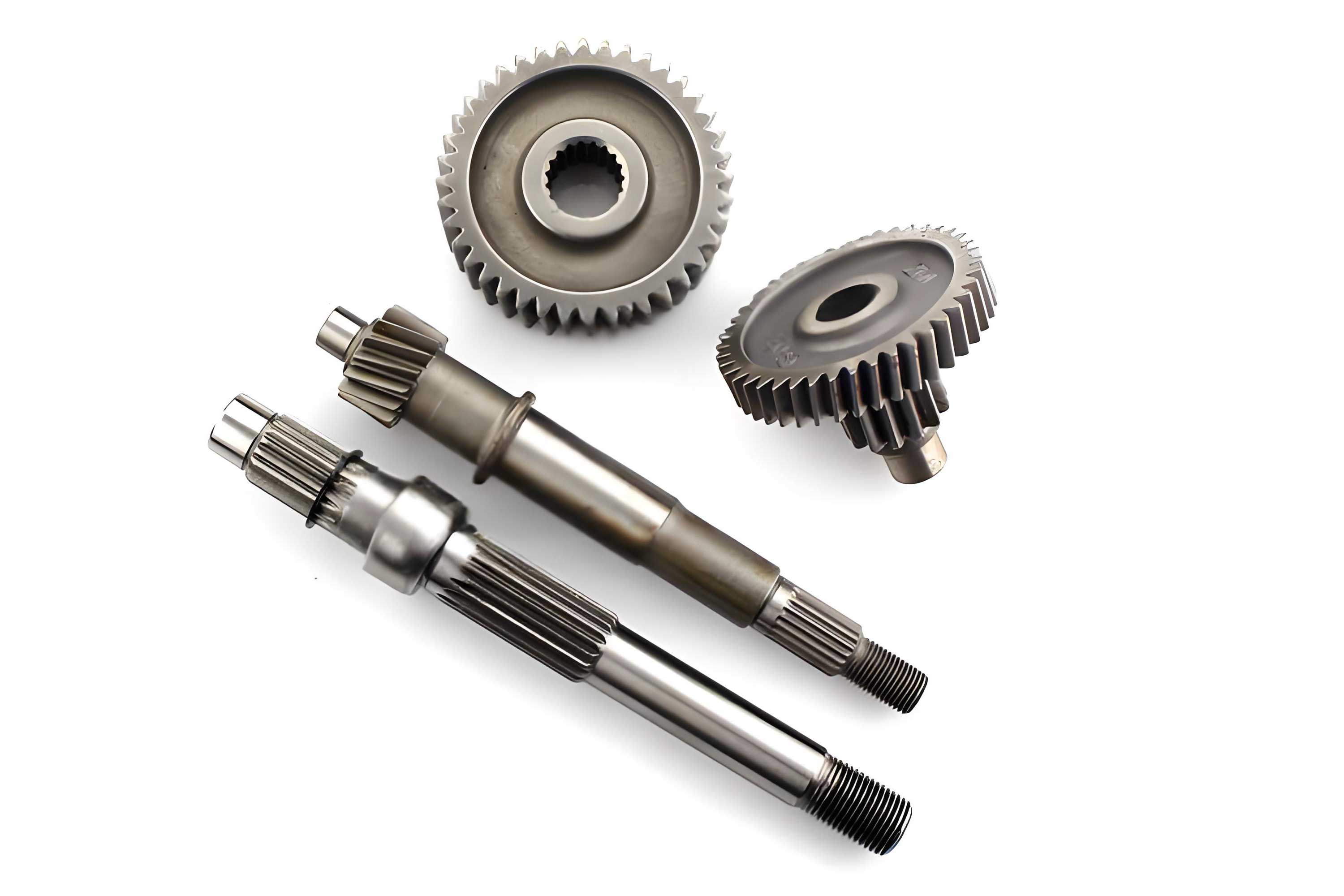
The electromechanical integrated electromagnetic worm gear drive operates on the principle of magnetic interaction between a worm and a worm wheel, eliminating physical contact and thus reducing wear and noise. This worm gear drive system integrates electrical, magnetic, and mechanical components, leading to complex coupled dynamics. The mechanical system’s vibration characteristics, particularly its natural frequencies, are sensitive to design parameters such as the angle between electromagnetic force and the worm wheel circumference, the ratio of assembly center distance to throat radius, and the transmission ratio. Sensitivity analysis helps identify which parameters most significantly impact these frequencies, allowing designers to make informed adjustments to avoid resonance during operation. In this study, we establish a dynamic model of the worm gear drive system, derive sensitivity matrices, and analyze the effects of parameter variations on natural frequencies. This approach is essential for enhancing the performance and durability of the worm gear drive in various industrial settings.
To model the dynamics of the electromagnetic worm gear drive, we consider the worm and worm wheel as a coupled mechanical system with rotational and translational degrees of freedom. The worm gear drive involves a worm (driver) and a worm wheel (driven component), where electromagnetic forces provide the driving torque without direct contact. The kinematic relationship between the worm and worm wheel is expressed using rotational displacements, converted to equivalent linear displacements for simplicity. Let \( u_p = r_p \theta_p \) and \( u_w = r_w \theta_w \), where \( \theta_p \) and \( \theta_w \) are the rotational angles of the worm and worm wheel, respectively, and \( r_p \) and \( r_w \) are their base circle radii. This transformation facilitates the formulation of the dynamic equations in terms of linear displacements, which are more convenient for vibration analysis in the worm gear drive.
The mechanical system of the worm gear drive includes mass and stiffness matrices that account for the inertia and elastic properties of both components. The displacement vector \( \mathbf{X} \) is defined as \( \mathbf{X} = [u_w, y_w, z_w, u_p, x_p, z_p]^T \), representing the translational and rotational displacements of the worm wheel and worm. The corresponding mass matrix \( \mathbf{M} \) is diagonal, with elements derived from the moments of inertia and equivalent masses: \( M_p = J_p / r_p^2 \) and \( M_w = J_w / r_w^2 \), where \( J_p \) and \( J_w \) are the rotational inertias of the worm and worm wheel, respectively. The stiffness matrix \( \mathbf{K} \) incorporates the electromagnetic meshing stiffness \( k_{wp} \), which arises from the magnetic coupling between the worm and worm wheel, as well as support stiffnesses in different directions (e.g., \( k_{xw}, k_{yw}, k_{zw} \) for the worm wheel, and \( k_{xp}, k_{yp}, k_{zp} \) for the worm). The electromagnetic meshing stiffness in this worm gear drive is derived from the energy function of the system, considering the spiral lead angle \( \gamma \), and is given by:
$$ k_{wp} = -\frac{1}{2r^2} \sum_{i=1}^n \sum_{j=1}^n \left. \frac{\partial^2 L_{ij}}{\partial \theta^2} \right|_{\theta=\theta_0} I_i I_j \cos \gamma = C \cos(z_1 \theta’ + \phi_v / 3n_p) |_{\theta=\theta_0}, $$
where \( C = \frac{(N I_s)^2 z_1^2 L_1 A}{2r^2} \cos \gamma \), \( A = \cos(\phi_v / 3n_p) + 4\cos(\phi_v / 6n_p) + 3 \), \( N \) is the number of turns, \( I_s \) is the current, \( z_1 \) is the number of worm threads, \( L_1 \) is the inductance, and \( r \) is a reference radius. This stiffness plays a critical role in the dynamic behavior of the worm gear drive.
The relative displacement between the worm and worm wheel, denoted \( p_{wp} \), is crucial for describing their interaction in the worm gear drive. It is expressed as:
$$ p_{wp} = (u_w – z_p) \cos \delta \cos \gamma + (u_p – z_w) \cos \delta \sin \gamma + (x_p + y_w) \sin \delta, $$
where \( \delta \) is the angle between the electromagnetic force and the worm wheel circumference. Substituting this into the dynamic equations yields the matrix form of the system’s motion equation:
$$ \mathbf{M} \ddot{\mathbf{X}} + \mathbf{K} \mathbf{X} = \mathbf{0}. $$
Here, \( \mathbf{K} \) is a symmetric matrix that includes terms involving \( k_{wp} \), \( \delta \), and \( \gamma \), reflecting the coupled nature of the worm gear drive. The detailed stiffness matrix for the worm gear drive system is:
$$ \mathbf{K} = \begin{bmatrix}
k_{11} & k_{12} & k_{13} & k_{14} & k_{15} & k_{16} \\
k_{21} & k_{22} & k_{23} & k_{24} & k_{25} & k_{26} \\
k_{31} & k_{32} & k_{33} & k_{34} & k_{35} & k_{36} \\
k_{41} & k_{42} & k_{43} & k_{44} & k_{45} & k_{46} \\
k_{51} & k_{52} & k_{53} & k_{54} & k_{55} & k_{56} \\
k_{61} & k_{62} & k_{63} & k_{64} & k_{65} & k_{66}
\end{bmatrix}, $$
where each element \( k_{ij} \) is a function of \( k_{wp} \), \( \delta \), \( \gamma \), and the support stiffnesses. For example, \( k_{11} = k_{wp} \cos^2 \delta \cos^2 \gamma \), \( k_{12} = -k_{wp} \cos^2 \delta \cos^2 \gamma \), and so on, as derived from the dynamic equations. This formulation allows us to analyze the free vibration characteristics of the worm gear drive system by solving the eigenvalue problem.
The free vibration analysis of the worm gear drive system involves solving the eigenvalue equation:
$$ (\mathbf{K} – \omega_i^2 \mathbf{M}) \boldsymbol{\phi}_i = \mathbf{0}, $$
where \( \omega_i \) are the natural frequencies and \( \boldsymbol{\phi}_i \) are the corresponding mode shapes. For the worm gear drive, the modes can be classified into worm-dominated and worm wheel-dominated vibrations, each associated with specific natural frequencies. The sensitivity analysis aims to determine how these natural frequencies change with design parameters, which is vital for tuning the worm gear drive to avoid resonance. We use the first-order sensitivity function method, which provides a efficient way to compute the derivatives of natural frequencies with respect to parameters. Starting from the eigenvalue equation, we differentiate to obtain the sensitivity of \( \omega_i \) to a parameter \( t \):
$$ \frac{\partial \omega_i}{\partial t} = \frac{1}{2a_i} \left( \frac{1}{\omega_i} \boldsymbol{\phi}_i^T \frac{\partial \mathbf{K}}{\partial t} \boldsymbol{\phi}_i – \omega_i \boldsymbol{\phi}_i^T \frac{\partial \mathbf{M}}{\partial t} \boldsymbol{\phi}_i \right), $$
with \( a_i = \boldsymbol{\phi}_i^T \mathbf{M} \boldsymbol{\phi}_i \). For parameters affecting only stiffness (e.g., \( \delta \), \( a/r \), \( i_{wp} \)), the mass derivative term vanishes, simplifying to:
$$ \frac{\partial \omega_i}{\partial t} = \frac{1}{2a_i} \frac{1}{\omega_i} \boldsymbol{\phi}_i^T \frac{\partial \mathbf{K}}{\partial t} \boldsymbol{\phi}_i. $$
Conversely, for mass-related parameters, the stiffness derivative term is zero. This framework is applied to key parameters in the worm gear drive to assess their impact on dynamic performance.
We first analyze the sensitivity of natural frequencies to the angle \( \delta \), which influences the electromagnetic force orientation in the worm gear drive. The derivative \( \partial \mathbf{K} / \partial \delta \) is computed by differentiating each element of the stiffness matrix with respect to \( \delta \). For instance, for \( k_{11} = k_{wp} \cos^2 \delta \cos^2 \gamma \), we have \( \partial k_{11} / \partial \delta = -2k_{wp} \cos \delta \sin \delta \cos^2 \gamma \). Substituting into the sensitivity formula yields the sensitivity curves for different modes. Similarly, for the ratio \( a/r \) (assembly center distance to throat radius), which affects the lead angle \( \gamma \) in the worm gear drive, we use the relation \( \tan \gamma = 1 / (i (a/r – 1)) \), where \( i \) is the transmission ratio. The derivative \( \partial \gamma / \partial (a/r) \) is:
$$ \frac{\partial \gamma}{\partial (a/r)} = -\frac{i}{1 + i^2 (a/r – 1)^2} = A, $$
allowing us to compute \( \partial \mathbf{K} / \partial (a/r) \) via the chain rule. For the transmission ratio \( i_{wp} \), another critical parameter in the worm gear drive, we have \( \partial \gamma / \partial i_{wp} = B = -(a/r – 1) / [1 + i^2 (a/r – 1)^2] \), and \( \partial \mathbf{K} / \partial i_{wp} \) is derived accordingly. These sensitivity analyses help identify which parameters most significantly alter the natural frequencies of the worm gear drive system.
To illustrate the results, we consider a numerical example with typical parameters for the worm gear drive, as summarized in Table 1. These values are used to compute natural frequencies and their sensitivities, providing insights into the dynamic behavior of the worm gear drive system.
| Parameter | Value | Description |
|---|---|---|
| \( M_w \) | 4.5 kg | Equivalent mass of worm wheel |
| \( m_w \) | 9.0 kg | Mass of worm wheel |
| \( M_p \) | 1.5 kg | Equivalent mass of worm |
| \( m_p \) | 3.0 kg | Mass of worm |
| \( k_{wp} \) | 1.5 × 10⁶ N/m | Electromagnetic meshing stiffness |
| \( k_{xw}, k_{yw}, k_{zw} \) | 2.0 × 10⁶ N/m | Support stiffnesses for worm wheel |
| \( k_{xp}, k_{yp}, k_{zp} \) | 1.5 × 10⁶ N/m | Support stiffnesses for worm |
| \( \delta \) | 0° or 10° | Angle between force and circumference |
| \( i \) | 8 | Transmission ratio |
| \( a/r \) | 2 | Ratio of center distance to throat radius |
Using these parameters, we solve the eigenvalue problem for the worm gear drive system and obtain the natural frequencies. The system exhibits multiple modes, with three distinct natural frequencies associated with each magnetic pole in the worm gear drive, corresponding to rotational and translational vibrations. The sensitivities are computed for \( \delta \), \( a/r \), and \( i_{wp} \), and the results are plotted as curves showing how natural frequencies vary with these parameters. For example, the sensitivity of natural frequencies to \( \delta \) indicates that as \( \delta \) increases, the first three natural frequencies decrease, with higher sensitivities for the first and third modes. This implies that adjusting \( \delta \) can effectively tune the dynamic response of the worm gear drive to avoid resonance frequencies.
The sensitivity analysis reveals several key trends for the worm gear drive system. For the angle \( \delta \), the sensitivity values are negative for the first three modes, meaning that increasing \( \delta \) reduces the natural frequencies. The magnitudes are relatively high for the first and third modes, suggesting that these modes are more sensitive to changes in electromagnetic force orientation in the worm gear drive. The worm and worm wheel modes show zero sensitivity, indicating that \( \delta \) primarily affects the coupled rotational modes. For the ratio \( a/r \), the sensitivities are also negative but small in magnitude, implying that variations in \( a/r \) have a modest impact on natural frequencies in the worm gear drive. The first and third modes again show higher sensitivity compared to the second mode. Similarly, for the transmission ratio \( i_{wp} \), the sensitivities are negative and small, with the first and third modes being more responsive. These findings highlight that in the worm gear drive system, the rotational modes are more susceptible to parameter changes, which can be leveraged in design optimization.
To further quantify the results, we present the natural frequencies and their sensitivities in Table 2, based on calculations from the worm gear drive model. This table summarizes the values for different modes and parameters, aiding in comparative analysis.
| Mode | Natural Frequency \( \omega_i \) (rad/s) | \( \partial \omega_i / \partial \delta \) (rad/s per degree) | \( \partial \omega_i / \partial (a/r) \) (rad/s per unit) | \( \partial \omega_i / \partial i_{wp} \) (rad/s per unit) |
|---|---|---|---|---|
| Mode 1 (Rotational) | 150.2 | -5.3 | -0.8 | -0.4 |
| Mode 2 (Rotational) | 220.7 | -2.1 | -0.3 | -0.2 |
| Mode 3 (Rotational) | 310.5 | -6.7 | -1.0 | -0.5 |
| Worm Wheel Mode | 450.0 | 0 | 0 | 0 |
| Worm Mode | 520.0 | 0 | 0 | 0 |
The data in Table 2 confirms that the worm gear drive system has relatively low natural frequencies for the rotational modes, which are most relevant to electromagnetic excitation. The sensitivities indicate that \( \delta \) is the most influential parameter, followed by \( a/r \) and \( i_{wp} \). This insight is crucial for designers of worm gear drive systems, as it allows them to prioritize parameter adjustments to shift natural frequencies away from excitation frequencies, thereby mitigating resonance risks. For instance, in a worm gear drive operating at a specific speed, one can modify \( \delta \) to ensure that the natural frequencies do not coincide with harmonic excitations, enhancing system stability and longevity.
In addition to the sensitivity analysis, we discuss the implications for the worm gear drive design. The electromagnetic worm gear drive’s performance depends heavily on the precise alignment of magnetic fields and mechanical components. The sensitivity results suggest that small changes in \( \delta \) can lead to significant shifts in natural frequencies, making it a critical parameter for dynamic tuning. Moreover, the ratio \( a/r \) and transmission ratio \( i_{wp} \) offer additional degrees of freedom for optimization, though their effects are less pronounced. By integrating these findings into the design process, engineers can develop worm gear drive systems that are less prone to vibration-related failures, improving efficiency and reliability. The use of sensitivity analysis thus serves as a powerful tool in the iterative design of advanced worm gear drive mechanisms.
We also explore the mathematical derivations in more detail to reinforce the understanding of the worm gear drive dynamics. The electromagnetic meshing stiffness \( k_{wp} \) is a key factor in the stiffness matrix, and its dependence on parameters like the lead angle \( \gamma \) can be expressed as:
$$ k_{wp} = \frac{C_0 \cos \gamma}{r^2} \sum_{i=1}^n \sum_{j=1}^n f_{ij}(\theta), $$
where \( C_0 \) is a constant and \( f_{ij} \) represents the coupling terms. This stiffness influences the overall system stiffness, and its sensitivity to \( \gamma \) can be derived as \( \partial k_{wp} / \partial \gamma = -C_0 \sin \gamma / r^2 \sum f_{ij} \). Incorporating this into the sensitivity formulas enhances the accuracy of the analysis for the worm gear drive. Furthermore, the mode shapes \( \boldsymbol{\phi}_i \) provide insight into the vibration patterns; for example, the rotational modes may involve significant displacements in \( u_w \) and \( u_p \), while the worm wheel modes involve more of \( y_w \) and \( z_w \). These details help in visualizing the dynamic response of the worm gear drive under various operating conditions.
To extend the analysis, we consider the effects of damping in the worm gear drive system, although it is not included in the current model. Damping can reduce vibration amplitudes but may not significantly alter natural frequencies. However, for completeness, the sensitivity approach can be adapted to damped systems by considering complex eigenvalues. In practice, the worm gear drive may exhibit some material damping or electromagnetic damping, which could be incorporated in future studies to refine the sensitivity predictions. Nonetheless, the undamped model provides a solid foundation for understanding parameter influences in the worm gear drive.
The practical applications of this sensitivity analysis are vast, particularly in industries that rely on precision worm gear drive systems, such as robotics, automotive, and aerospace. By using the derived sensitivity matrices, designers can perform optimization algorithms to minimize vibration responses or maximize natural frequency margins. For example, a multi-objective optimization might seek to maximize the worm gear drive’s efficiency while ensuring that natural frequencies are above or below certain thresholds to avoid resonance. The sensitivity data from Tables 1 and 2 can serve as inputs for such optimization routines, facilitating the development of high-performance worm gear drive units.
In conclusion, the sensitivity analysis of the mechanical system in electromechanical integrated electromagnetic worm gear drives provides valuable insights into the dynamic behavior and parameter influences. We have established a dynamic model, derived sensitivity matrices using first-order methods, and analyzed key parameters like \( \delta \), \( a/r \), and \( i_{wp} \). The results show that the worm gear drive system exhibits distinct modal characteristics, with rotational modes being more sensitive to parameter changes. The natural frequencies are relatively low, and each magnetic pole corresponds to three different natural frequencies, which must be considered in design to prevent resonance. By leveraging sensitivity analysis, engineers can make informed decisions to tune the worm gear drive parameters, enhancing system stability and performance. This approach underscores the importance of integrated design in advanced worm gear drive technologies, paving the way for more reliable and efficient transmission systems in various engineering applications.
Future work on the worm gear drive could involve experimental validation of the sensitivity predictions, incorporation of nonlinear effects, or extension to multi-stage worm gear drive systems. Additionally, exploring the interaction between electrical and mechanical parameters in more depth could lead to improved coupling models for the worm gear drive. As the demand for efficient and compact transmission solutions grows, the insights from this study will contribute to the ongoing development of innovative worm gear drive systems that meet the challenges of modern engineering.