
As an instructor in mechanical engineering, I have often reflected on the challenges and rewards of teaching the worm gear drive section in the Mechanical Design Foundations course. This course serves as a critical bridge between theoretical knowledge and practical application for vocational students, and the worm gear drive, with its unique spatial motion transmission, consistently emerges as a pivotal yet demanding topic. My goal is to foster not only design competence but also innovative thinking among students. Through years of instruction, I have developed a multifaceted approach to demystify the worm gear drive, emphasizing its core principles while adapting to diverse learning styles. This article shares my insights, methodologies, and detailed analyses, aiming to contribute to more effective pedagogical practices for this essential mechanical system.
The worm gear drive is a mechanism designed to transmit motion and power between two non-intersecting, typically perpendicular, axes. Its operation, where a threaded worm engages with a specially designed worm wheel, creates a compact and highly efficient drive system. Understanding the worm gear drive is fundamental for students as it finds extensive applications in industries requiring high reduction ratios, such as conveyor systems, lifting equipment, and precision instruments. The complexity arises from its three-dimensional force interactions and unique geometrical relationships, which can be daunting for learners. Therefore, a structured, engaging, and illustrative teaching strategy is paramount.
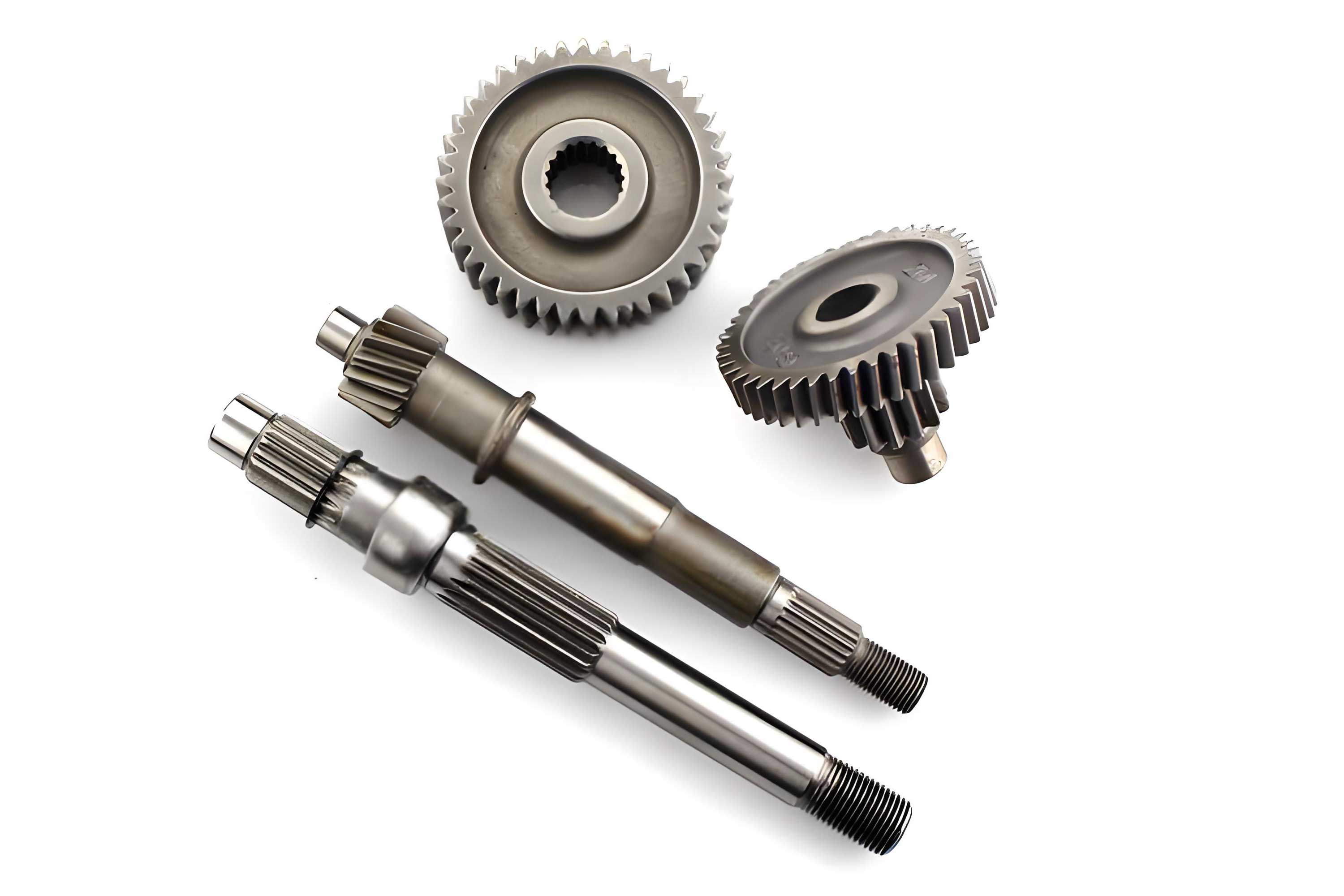
In my curriculum, the worm gear drive unit encompasses several core components. First, we explore the fundamental characteristics and applications of the worm gear drive, contrasting it with other传动 systems like spur and helical gears. The primary allure of the worm gear drive lies in its ability to achieve exceptionally high speed reduction ratios in a single stage, often exceeding 100:1 and reaching up to 1000:1 in indexing mechanisms. This is mathematically expressed by the传动比 formula, which is a cornerstone of our lessons:
$$ i = \frac{n_1}{n_2} = \frac{z_2}{z_1} $$
where \( i \) is the传动比, \( n_1 \) and \( n_2 \) are the rotational speeds of the worm and worm wheel respectively, and \( z_1 \) and \( z_2 \) are the number of threads on the worm (often called starts) and the number of teeth on the worm wheel. It is crucial to stress that for a worm gear drive, \( i \neq \frac{d_2}{d_1} \), unlike in parallel shaft齿轮传动s, which underscores its unique kinematic design.
Second, we delve into the main parameters and几何尺寸s. The geometry of a worm gear drive is defined in the so-called mid-plane, where the worm thread profile is trapezoidal. Key parameters include the axial module \( m_x \), the蜗杆分度圆直径 \( d_1 \), the蜗轮分度圆直径 \( d_2 \), the lead angle \( \gamma \), and the pressure angle \( \alpha \), typically standardized at 20°. While students need not memorize all尺寸al formulas, they must understand the interrelationships. I often present these in a concise table to facilitate comprehension.
| Parameter | Symbol | Formula / Relationship |
|---|---|---|
| Axial Module | \( m_x \) | Standardized value, defines size |
| Worm Pitch Diameter | \( d_1 \) | Often related to \( m_x \) via \( d_1 \approx q \cdot m_x \), where \( q \) is the diameter factor |
| Worm Gear Pitch Diameter | \( d_2 \) | \( d_2 = m_x \cdot z_2 \) |
| Lead Angle of Worm | \( \gamma \) | \( \tan \gamma = \frac{z_1 \cdot m_x}{d_1} = \frac{z_1}{q} \) |
| Center Distance | \( a \) | \( a = \frac{d_1 + d_2}{2} \) |
The third and most challenging segment is force analysis and失效形式s. The forces acting on both the worm and the worm wheel are three-dimensional and interdependent. Proper force analysis is critical for component sizing, bearing selection, and efficiency calculation. The primary forces are the tangential force \( F_t \), the axial force \( F_a \), and the radial force \( F_r \). For a worm gear drive with the worm as the driving element, the force relationships are derived from power transmission and geometry. Let \( T_1 \) and \( T_2 \) be the torques on the worm and worm wheel, respectively. The force magnitudes are:
For the worm:
$$ F_{t1} = \frac{2 T_1}{d_1} $$
$$ F_{a1} = \frac{2 T_2}{d_2} $$
$$ F_{r1} = F_{t2} \tan \alpha $$
For the worm wheel:
$$ F_{t2} = \frac{2 T_2}{d_2} $$
$$ F_{a2} = \frac{2 T_1}{d_1} $$
$$ F_{r2} = F_{t2} \tan \alpha $$
Note that \( F_{t1} = F_{a2} \) and \( F_{a1} = F_{t2} \), illustrating the action-reaction pairs between the worm and the worm wheel. The radial forces on both components are equal and directed towards their respective axes. Determining the direction of these forces is a common stumbling block. I teach a systematic approach: first, identify the worm’s rotation direction and handedness (right-hand or left-hand). For a right-hand worm, use the right-hand rule: curl the fingers of your right hand in the direction of the worm’s rotation; your thumb points in the direction of the worm’s axial force \( F_{a1} \). Consequently, the worm wheel’s tangential force \( F_{t2} \) is opposite to \( F_{a1} \). The worm wheel’s rotation direction is then determined by \( F_{t2} \). The remaining force directions follow logically. This step-by-step method, reinforced with numerous examples, builds student confidence in analyzing any worm gear drive configuration.
Regarding失效形式s, the worm gear drive is prone to wear, pitting, and胶合 (scuffing) due to significant sliding action between the worm threads and worm wheel teeth. Efficiency is also a key discussion point, given by:
$$ \eta = \frac{\tan \gamma}{\tan (\gamma + \rho’)} $$
where \( \rho’ \) is the equivalent friction angle. This formula highlights that efficiency increases with lead angle \( \gamma \) but is limited by friction. Self-locking, a unique feature where the drive cannot be back-driven, occurs when \( \gamma \leq \rho’ \).
To convey these concepts effectively, I employ a blend of teaching methodologies tailored to the vocational student’s profile. Our students often possess strong practical intuition but may find abstract theory challenging. Therefore, engagement and clarity are paramount.
1. Integrated Multimedia and Blackboard Instruction: I leverage the strengths of both tools. For introducing the worm gear drive’s structure, types (e.g., cylindrical, double-enveloping), applications, and failure modes, multimedia is indispensable. Animations and simulations vividly展示 the meshing action, assembly process, and real-world applications, capturing attention and building spatial understanding. For instance, a 3D animation showing force vectors developing during operation makes the abstract tangible. However, for derivations and force analysis, I prefer the blackboard. Writing formulas step-by-step, sketching force diagrams in real-time, and pacing the explanation allows students to follow the logical flow, ask questions, and take notes simultaneously. This hybrid approach caters to both visual and sequential learners.
2. Discussion-Based Learning: Active participation transforms passive recipients into engaged thinkers. I pose provocative questions to spark discussion. For example, “Why can a worm gear drive achieve a much higher reduction ratio than a comparable spur gear set?” or “What are the practical implications of self-locking in a worm gear drive for a lifting mechanism?” Students brainstorm in small groups, share ideas, and debate. I facilitate, guiding them toward the core principles. This not only reinforces the material but also develops critical communication and problem-solving skills—essential for their future careers. Discussions around the selection of materials for the worm (typically hardened steel) and the worm wheel (often bronze) to minimize friction and wear are particularly fruitful.
3. Hands-On, Field-Based Instruction: Nothing substitutes for tactile experience. I organize sessions in our mechanical design laboratory, where students examine physical models and actual worm gear drive assemblies. They can disassemble and reassemble units, measure parameters with calipers, and observe wear patterns on used components. This direct contact cements theoretical knowledge. Furthermore, visiting local manufacturing plants where worm gear drives are employed in machinery provides context, showing students the real-world stakes of their learning. This method aligns perfectly with vocational education’s emphasis on practical competence.
4. Practice-Intensive Pedagogy: Mastery of force analysis requires repetition. After explaining the theory, I present a series of progressively challenging problems. These involve varying the worm’s handedness, rotation direction, or identifying which component is driving. Students solve these individually and on the whiteboard. Peer teaching is encouraged—students explain their reasoning to the class. This “learn by doing” approach identifies misconceptions early and builds procedural fluency. I emphasize that in professional practice, while software may aid calculation, the fundamental understanding of force directions is crucial for troubleshooting and innovation.
To structure the vast information, I frequently use comparative tables. For instance, contrasting the worm gear drive with other common传动s helps students appreciate its niche.
| Feature | Worm Gear Drive | Spur Gear Drive | Helical Gear Drive |
|---|---|---|---|
| 轴 Arrangement | Non-parallel, non-intersecting (usually 90°) | Parallel | Parallel or crossed |
| Typical Reduction Ratio (Single Stage) | High (5:1 to 100:1, even 1000:1) | Low to Moderate (up to 10:1) | Low to Moderate (up to 10:1) |
| Compactness | Very High | Moderate | Moderate |
| Efficiency | Lower (due to sliding friction) | High | High |
| Self-Locking Potential | Yes | No | No |
| Primary Motion | Rolling and Sliding | Mostly Rolling | Rolling with axial slide |
Another critical aspect is design and verification. For vocational students, detailed stress calculations and rigorous design procedures might be overwhelming. Instead, I focus on the conceptual design流程. We discuss the design sequence: 1) Determine operational requirements (power, speed, ratio, service life). 2) Select materials based on wear resistance and strength. 3) Choose initial parameters (\( z_1, z_2, m_x \)) from standards. 4) Check for geometric constraints (center distance, housing size). 5) Perform preliminary force analysis to estimate loads for bearings and shafts. 6) Refer to design manuals or software for final verification of contact stress (\( \sigma_H \)) and bending stress (\( \sigma_F \)) using formulas like:
$$ \sigma_H = Z_E \sqrt{ \frac{F_{t2}}{d_1 d_2} \cdot K_A K_V K_\beta } $$
where \( Z_E \) is the elasticity coefficient, and \( K_A, K_V, K_\beta \) are application, dynamic, and load distribution factors. I stress that these calculations are iterative and often supported by handbooks—the goal is to understand the logic, not perform complex arithmetic manually.
In my experience, assessing student learning through diverse methods is vital. Besides traditional exams with calculation and analysis problems, I include practical assessments: identifying components in a lab setup, sketching force directions for a given worm gear drive, or proposing a worm gear drive for a simple device. This multifaceted evaluation ensures that both theoretical knowledge and applied skills are measured.
Reflecting on challenges, the abstract nature of spatial forces remains the biggest hurdle. To overcome this, I developed a simple physical model using a threaded rod (worm) and a cardboard gear (worm wheel) that students can manipulate. Seeing and feeling the force directions as they turn the rod makes the concept click. Additionally, integrating software tools like CAD or basic simulation allows students to model a worm gear drive and visualize forces dynamically, bridging the gap to modern engineering practice.
The worm gear drive is more than just a传动 component; it is a fascinating study in mechanical efficiency, spatial geometry, and design compromise. Its teaching, therefore, must be equally multidimensional. By combining clear theoretical exposition with visual aids, active discussion, hands-on practice, and contextual examples, we can transform this challenging topic into an engaging and accessible learning experience. The ultimate reward is seeing students confidently analyze and apply worm gear drive principles in their projects, laying a solid foundation for their journey as skilled mechanical technicians and designers. This continuous refinement of teaching practice for the worm gear drive is a cornerstone of effective mechanical engineering education.
To further enrich the curriculum, I periodically incorporate case studies. For example, analyzing the worm gear drive in a common car jack or a conveyor system调速 mechanism. Students reverse-engineer the design requirements, estimate forces, and discuss potential failure modes. This project-based learning reinforces all aspects: characteristics, parameters, force analysis, and material selection for the worm gear drive.
In conclusion, the pedagogy surrounding the worm gear drive must evolve with educational technology and industry trends, but its core—clear explanation, practical relevance, and student engagement—remains constant. Through persistent innovation in method and a deep commitment to student understanding, we can ensure that every learner masters the intricacies of the worm gear drive, empowering them to harness its unique capabilities in their future technical endeavors.