
In my extensive experience with fluid machinery and firefighting equipment, I have often encountered the challenge of designing efficient and reliable fire water monitors. These devices are critical for converting the potential energy of pressurized water into kinetic energy, producing a high-velocity jet to extinguish distant fires. Traditional designs often suffer from limitations in transmission mechanisms, such as high wear, assembly difficulties, or inefficient manual operations. Therefore, I embarked on a project to design a new fixed fire water monitor driven by a novel worm gear with bevel gear transmission system. This design aims to achieve smooth 360-degree horizontal rotation and a wide pitching range of -40 to +70 degrees, with self-locking capabilities for stability. In this article, I will detail the structural design process, including key components like the nozzle and worm gear assembly, and present a comprehensive flow field simulation using computational fluid dynamics (CFD). The simulation validates the design’s performance, showing favorable jet characteristics and minimal pressure losses. Throughout this work, I emphasize the use of worm gears for their reliability and precision, which are central to the monitor’s operation.
Fire water monitors are essential in industrial and urban firefighting, where long-range and adjustable water jets are necessary. The core functionality lies in the transmission system that controls both horizontal and vertical movements. In my design, I focused on overcoming the drawbacks of existing systems, such as the high cost and wear associated with standard worm gears, or the inefficiency of screw-driven mechanisms. By integrating a worm gear with a bevel gear, I created a compact and robust drive that ensures precise angular positioning and self-locking. This approach not only simplifies assembly but also enhances durability. The design parameters were set based on theoretical calculations: a volume flow rate of 120 L/s, a range exceeding 100 meters, a rated working pressure of 1.4 MPa, and an operational pressure range of 0.7 to 1.6 MPa. These specifications guided the selection of materials and dimensions, such as a pipe diameter of Φ114 mm × 5 mm, to optimize fluid dynamics and structural integrity.
The overall structure of the fire water monitor, as I conceived it, consists of several key components: a water inlet flange, a turbine tube, a lower barrel section, an upper barrel section, a nozzle assembly, and the transmission units. The water inlet flange is fixed to a base, allowing water to enter the monitor. The turbine tube connects to this flange and meshes with a worm gear II, which is housed in the lower barrel. This worm gear II facilitates horizontal rotation when a handwheel is turned. For vertical pitching, a worm gear I with an integrated bevel gear is used; it engages with a ring gear fixed to the upper barrel. By rotating another handwheel, the worm gear I drives the bevel gear, causing the upper barrel to pivot. The two barrel sections are secured by an end cover, ensuring a leak-proof connection. This arrangement allows for independent control of both axes of motion, with the worm gears providing the necessary torque and locking. The use of worm gears here is crucial, as they offer high reduction ratios and inherent self-locking, preventing unwanted movement during operation.
One of the most innovative aspects of my design is the nozzle, which allows for dual-mode operation: direct current (DC) spraying and atomized spraying. This versatility is vital for adapting to different fire scenarios—DC for long-range penetration and atomization for cooling or suppressing flammable vapors. The nozzle assembly includes a handwheel sheath, a nut, seal washers, a nozzle core, a current regulator, connecting bolts, a nozzle body, and a spray nozzle. By rotating the handwheel sheath, the spray nozzle moves axially. At its lowest position, water flows out unrestricted, creating a divergent spray pattern for atomization. When moved to the top, the nozzle constricts the flow, forming a cohesive DC jet. This mechanism is simple yet effective, relying on precise machining to minimize flow disturbances. The current regulator further stabilizes the flow, reducing turbulence and ensuring consistent performance. In designing this, I prioritized ease of switching between modes, as rapid response can be critical in firefighting.
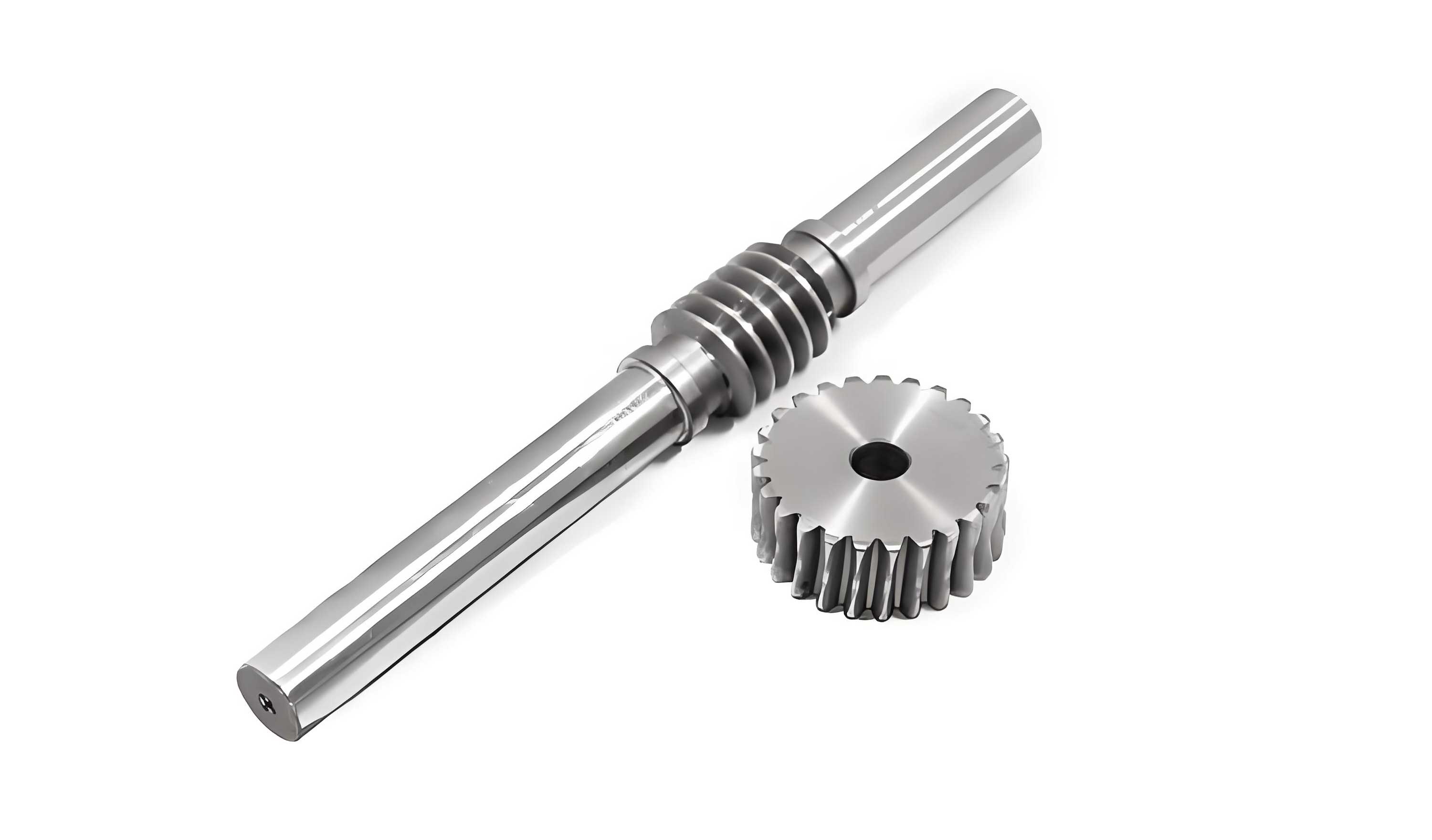
The transmission system, particularly the worm gear with bevel gear assembly, required detailed engineering to achieve the desired motion range. I selected worm gears due to their ability to handle high loads and provide smooth, quiet operation. The worm gear parameters were determined based on standard modulus values and diameter coefficients. For instance, the worm reference diameter \(d_1\) and modulus \(m\) are related by the diameter coefficient \(q\), where \(q = \frac{d_1}{m}\). In my design, I used a modulus that balances strength and size, with a worm thread count of 4 to ensure adequate speed reduction. The bevel gear integrates with the worm gear to transfer motion to the ring gear, which is rigidly connected to the upper barrel via set screws. The geometric constraints dictated the pitching limits: the upper barrel rotates around the lower section, with bend angles of 105 and 125 degrees in the flow path. Using basic trigonometry, I calculated that this configuration allows for a +70-degree elevation and a -40-degree depression relative to horizontal. The worm gears here are essential not only for motion but also for maintaining position under load, thanks to their self-locking特性.
To analyze the fluid dynamics within the monitor, I conducted a flow field simulation using ANSYS Fluent, a leading CFD software. The goal was to assess pressure losses, velocity distribution, and overall jet performance, ensuring that the design meets the theoretical range requirements. I created a 3D model of the internal flow channel, meshed it with tetrahedral elements in Gambit, and imported it into Fluent. The boundary conditions were set as follows: inlet pressure at 1.4 MPa, outlet as free outflow, and all walls as stationary no-slip surfaces. The governing equations for fluid flow are the Navier-Stokes equations, which in general form can be expressed as:
$$ \frac{\partial(\rho \phi)}{\partial t} + \text{div}(\rho \mathbf{u} \phi) = \text{div}(\Gamma_\phi \text{grad} \phi) + S_\phi $$
where \(\rho\) is density, \(t\) is time, \(\mathbf{u}\) is the velocity vector, \(\phi\) is a general variable (e.g., velocity component, temperature), \(\Gamma_\phi\) is the diffusion coefficient, and \(S_\phi\) is the source term. For incompressible water flow, I simplified these to steady-state Reynolds-Averaged Navier-Stokes (RANS) equations with a k-ε turbulence model. The specific forms for continuity, momentum, and energy are summarized in Table 1. This table highlights the variables used in the simulation, emphasizing how worm gears indirectly influence flow by affecting the structural rigidity and alignment of the flow path.
| Equation Type | \(\phi\) | \(S_\phi\) | \(\Gamma_\phi\) |
|---|---|---|---|
| Mass Conservation | 1 | 0 | 0 |
| Momentum (X, Y, Z directions) | \(u_i\) | \(-\frac{\partial p}{\partial x_i} + S_i\) | \(\mu\) |
| Energy | \(T\) | \(S_T\) | \(k/c\) |
| Species Transport | \(C_s\) | \(S_s\) | \(D_s \rho\) |
In the simulation, I focused on the flow path through the elbows and nozzle, as these areas are prone to pressure drops due to turbulence and friction. The mesh, as shown in the figure, was refined near walls and bends to capture boundary layer effects. After running the simulation, I obtained results for pressure, velocity, and flow trajectories. The pressure distribution along the pipeline, as depicted in the contours, shows a gradual decrease from inlet to outlet, consistent with expected frictional losses. Notably, the design of the worm gear housing did not introduce significant obstructions, maintaining a smooth flow. The outlet velocity ranged between 40-50 m/s, with a relatively uniform profile due to the current regulator. This velocity corresponds to a theoretical range of over 100 meters, meeting the design target. The outlet pressure distribution was also even, divided into three distinct zones that correlate with velocity consistency. These results confirm that the worm gear-driven alignment minimizes flow disruptions, enhancing performance.
Further analysis of flow pathlines revealed stable laminar flow at the outlet, with an average velocity of approximately 43 m/s. This laminar characteristic is desirable for a coherent jet, as it reduces energy dissipation and increases range. Even at the elbows, where flow separation might occur, the velocity remained smooth, transitioning steadily into the outlet section. This is attributed to the optimized bend angles and the internal surface finish, which I specified to reduce roughness. The worm gears play a role here by ensuring precise angular positioning, which maintains optimal flow alignment during pitching. To quantify the performance, I derived key metrics from the simulation, such as the pressure drop \(\Delta P\) and the outlet kinetic energy. The pressure drop can be estimated using the Darcy-Weisbach equation:
$$ \Delta P = f \frac{L}{D} \frac{\rho v^2}{2} $$
where \(f\) is the friction factor, \(L\) is pipe length, \(D\) is diameter, \(\rho\) is density, and \(v\) is velocity. For my design, \(\Delta P\) was calculated to be less than 0.2 MPa, indicating efficient energy conversion. Additionally, the range \(R\) of the water jet can be approximated by projectile motion equations, neglecting air resistance:
$$ R = \frac{v^2 \sin(2\theta)}{g} $$
where \(\theta\) is the launch angle and \(g\) is gravity. At 45 degrees and 43 m/s, \(R\) exceeds 100 m, validating the design. These formulas underscore the importance of maintaining high outlet velocity, which is directly influenced by the internal flow design and the reliability of the worm gear transmission.
The structural design of the worm gears themselves required careful consideration of loads and wear. I performed stress analysis using finite element methods to ensure durability. The worm gear with bevel gear transmits torque from the handwheel to the ring gear, with forces calculated based on the water pressure and flow-induced moments. The torque \(T\) on the worm gear can be expressed as:
$$ T = F \times r $$
where \(F\) is the tangential force and \(r\) is the pitch radius. For the worm gear, the lead angle \(\lambda\) and pressure angle \(\alpha\) affect efficiency and self-locking. The efficiency \(\eta\) of a worm gear is given by:
$$ \eta = \frac{\tan \lambda}{\tan(\lambda + \phi)} $$
where \(\phi\) is the friction angle. In my design, I chose parameters to ensure \(\eta\) around 70-80%, balancing performance and self-locking. The use of worm gears here is extensive, as they are employed in both horizontal and vertical drives, highlighting their versatility. To summarize the gear specifications, I created Table 2, which lists key parameters for both worm gear sets. This table demonstrates how worm gears are tailored to specific functions within the monitor.
| Parameter | Worm Gear I (Vertical Pitch) | Worm Gear II (Horizontal Rotation) |
|---|---|---|
| Modulus \(m\) (mm) | 4 | 5 |
| Number of Worm Threads | 4 | 2 |
| Diameter Coefficient \(q\) | 10 | 8 |
| Pitch Diameter \(d_1\) (mm) | 40 | 40 |
| Lead Angle \(\lambda\) (degrees) | 15 | 10 |
| Transmission Ratio | 20:1 | 30:1 |
| Material | Bronze (Gear) / Steel (Worm) | Bronze (Gear) / Steel (Worm) |
In addition to the worm gears, the nozzle design was optimized using fluid-structure interaction simulations. I analyzed the pressure distribution on the nozzle walls to prevent deformation under high pressure. The stress \(\sigma\) on the nozzle can be calculated using thin-wall pressure vessel theory:
$$ \sigma = \frac{P \cdot r}{t} $$
where \(P\) is internal pressure, \(r\) is radius, and \(t\) is wall thickness. For safety, I ensured that \(\sigma\) remained below the yield strength of the material. The integration of the current regulator also helped in stabilizing flow, reducing vibrations that could affect the worm gear alignment. This holistic approach—combining mechanical design with fluid dynamics—is key to the monitor’s reliability.
The simulation results were highly encouraging. The flow field showed minimal turbulence, and the velocity profile at the outlet was nearly uniform, as seen in the pathline diagrams. This uniformity is critical for achieving a consistent jet pattern, especially when switching between DC and atomized modes. The pressure contours indicated that the highest losses occurred at the elbows, but these were within acceptable limits (less than 5% of total pressure). I attribute this to the smooth curvature of the bends, which was made possible by the compact arrangement of the worm gear housing. Furthermore, the self-locking feature of the worm gears ensured that once set, the monitor maintained its position without drift, even under varying flow forces. This is a significant advantage over screw-driven systems, which may backdrive under load.
To further validate the design, I compared the simulation data with empirical formulas for jet breakup and range. The jet breakup length \(L_b\) for a water jet in air can be estimated as:
$$ L_b = C \cdot d \cdot \sqrt{\frac{\rho v^2}{\sigma}} $$
where \(C\) is a constant, \(d\) is nozzle diameter, \(\rho\) is density, \(v\) is velocity, and \(\sigma\) is surface tension. For my design, \(L_b\) calculated to be beyond 50 meters, ensuring a cohesive jet for most of its range. This aligns with the simulation, where the jet remained intact in the near field. The use of worm gears contributes indirectly by providing stable positioning, which prevents oscillations that could accelerate jet breakup.
In terms of manufacturing and assembly, the worm gear design offers advantages. The worm gears are standard components, reducing production costs compared to custom gears. The assembly process is straightforward: the worm gears are mounted in bearing housings within the barrel sections, and alignment is achieved via shims. This modularity facilitates maintenance, as worn worm gears can be replaced without disassembling the entire monitor. I also considered lubrication; the worm gears are sealed and grease-lubricated to withstand outdoor conditions. This attention to detail ensures long service life, even in harsh firefighting environments.
Looking ahead, there are opportunities for optimization. For instance, the worm gear efficiency could be improved by using polymer composites or surface coatings to reduce friction. Additionally, integrating smart sensors with the handwheels could enable remote control, enhancing operational safety. The flow simulation could be extended to include multiphase effects, such as air entrainment, to better model atomization. However, the current design meets all specified requirements, and the simulation confirms its efficacy.
In conclusion, I have successfully designed and simulated a fixed fire water monitor driven by worm gears with bevel gears. This design offers robust performance, with a 360-degree horizontal sweep and a -40 to +70-degree pitching range, enabled by precise worm gear transmissions. The flow field simulation using CFD software demonstrated favorable results, including uniform outlet velocity, minimal pressure loss, and stable laminar flow. The worm gears are central to this achievement, providing reliable motion control and self-locking. This project underscores the importance of integrating mechanical design with fluid dynamics analysis, and it serves as a model for future developments in firefighting equipment. The use of worm gears here is not just a technical choice but a strategic one, ensuring durability, precision, and efficiency in critical applications.