
As a researcher in synthetic lubricants, I have focused on addressing the critical lubrication challenges in worm gears, which are widely used in elevator traction systems and industrial gearboxes. Worm gears, characterized by a steel worm engaging with a bronze worm wheel, operate under severe conditions involving high sliding velocities, significant frictional heat, elevated temperatures, and heavy loads. These conditions often lead to issues such as scuffing, scoring, wear, and even welding or adhesive failure, necessitating advanced lubricants with superior properties. In this work, I aimed to develop a polyether-based lubricant specifically tailored for worm gears, leveraging the advantages of water-soluble polyethers over mineral oils, polyalphaolefins (PAOs), and esters in terms of viscosity-temperature characteristics and anti-wear performance. This article details the formulation, evaluation, and tribological analysis of this lubricant, with extensive use of tables and formulas to summarize key findings.
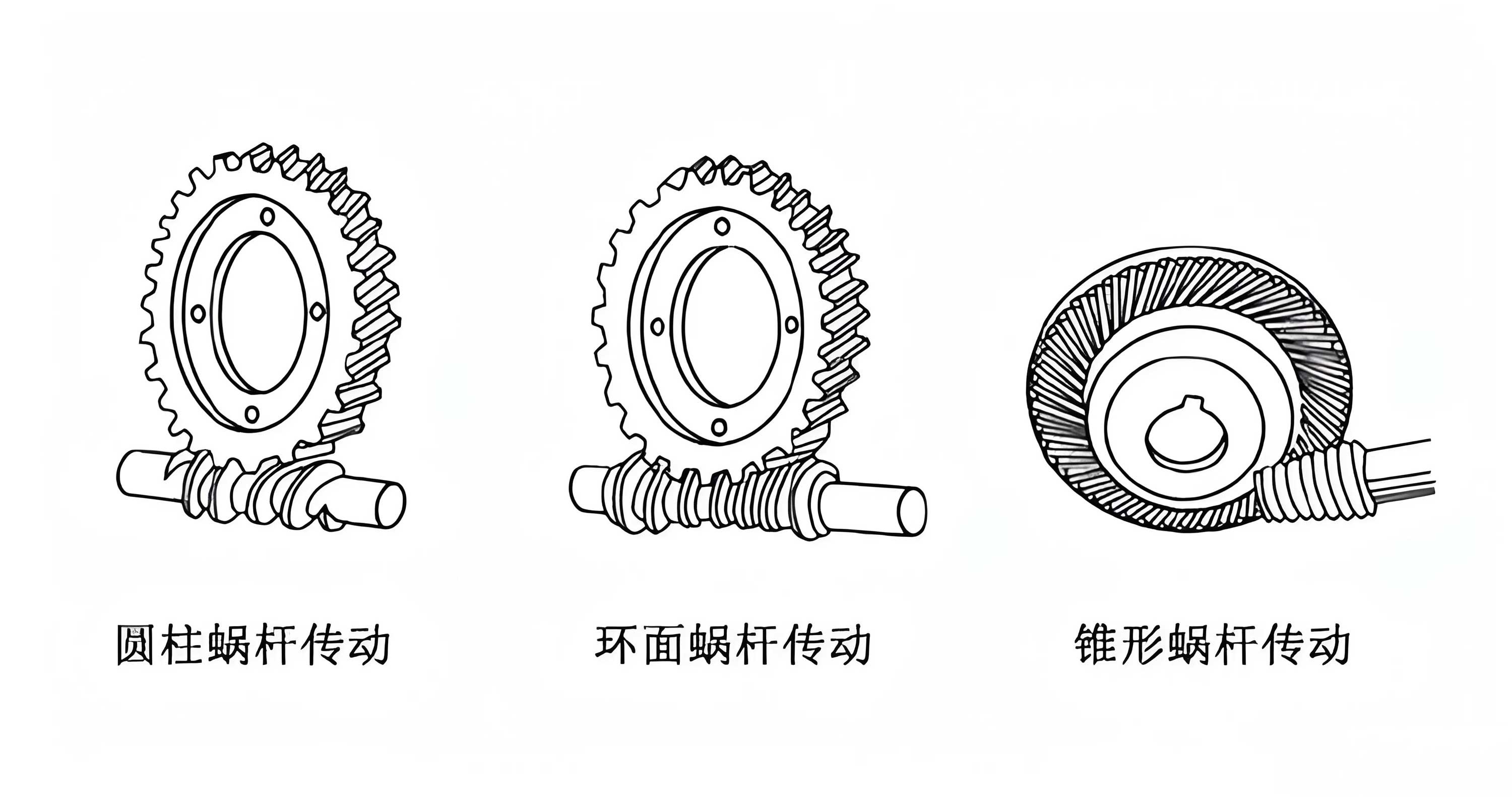
The global demand for efficient and reliable worm gears is driven by industries such as elevators, where China dominates as the largest manufacturer and market. Worm gears in these applications require lubricants that can withstand extreme pressures, high temperatures, and corrosive environments. Traditional mineral oil-based lubricants for worm gears exhibit limitations, including inadequate performance under heavy loads, vibrations, and temperatures above 100°C, which can cause overheating and failure. In contrast, polyethers, particularly water-soluble copolyethers derived from ethylene oxide (EO) and propylene oxide (PO) polymerization, offer excellent viscosity index, low pour points, and enhanced lubricity. My objective was to formulate a polyether worm gear lubricant meeting stringent technical specifications, comparable to imported products, and to validate its performance through comprehensive testing.
To set the context, worm gears operate with a sliding contact mechanism, leading to high friction and heat generation. The efficiency and durability of worm gears depend heavily on the lubricant’s ability to form a protective film, reduce wear, and dissipate heat. The lubrication regime in worm gears often involves boundary and mixed lubrication, where additives play a crucial role. The Stribeck curve illustrates the friction behavior as a function of the Hersey number, given by: $$\mu = f\left(\frac{\eta N}{P}\right)$$ where $\mu$ is the coefficient of friction, $\eta$ is the dynamic viscosity, $N$ is the speed, and $P$ is the load. For worm gears, maintaining a high viscosity index ensures stable lubrication across temperature variations, calculated as: $$VI = \frac{L – U}{L – H} \times 100$$ where $U$ is the kinematic viscosity at 40°C of the test oil, and $L$ and $H$ are reference values based on viscosity at 100°C. A high VI indicates minimal viscosity change with temperature, critical for worm gears operating in fluctuating thermal environments.
| Property | Specification | Test Method |
|---|---|---|
| Kinematic Viscosity at 40°C (mm²/s) | 288–352 | GB/T 265 |
| Kinematic Viscosity at 100°C (mm²/s) | Report | GB/T 265 |
| Viscosity Index | ≥220 | GB/T 1995 |
| Pour Point (°C) | ≤-25 | GB/T 3535 |
| Flash Point (Open) (°C) | ≥230 | GB/T 267 |
| T2 Copper Corrosion (100°C, 3 h) | ≤1b | GB/T 5096 |
| Rust Prevention (Method A) | No Rust | GB/T 11143 |
| Oxidation-Corrosion Test (150°C, 50 h, 50 mL/min air) | SH/T 0450 | |
| – Corrosion of 45 Steel (mg/cm²) | ±0.20 | |
| – Corrosion of T3 Copper (mg/cm²) | ±0.40 | |
| – Corrosion of LY11 Aluminum Alloy (mg/cm²) | ±0.20 | |
| – Change in Kinematic Viscosity at 40°C (%) | ±15.0 | |
| – Acid Number After Oxidation (mg KOH/g) | Report | |
| Weld Load (N) | ≥1236 | GB/T 3142 |
| Wear Scar Diameter* (mm) | ≤0.40 | SH/T 0189 |
*Test conditions: 196 N, 60 min, 55°C, 1800 rpm.
The formulation of the polyether lubricant began with the selection of a base oil. I synthesized a water-soluble copolyether, designated as JM-A, through the polymerization of EO and PO in a specific ratio using an alkaline catalyst. The properties of JM-A are summarized in Table 2. This base oil was chosen for its high viscosity index, low pour point, and excellent thermal stability, which are essential for worm gears subjected to wide temperature ranges. The molecular structure of polyethers can be represented as: $$\text{R-(O-CH_2-CH_2)_n-(O-CH(CH_3)-CH_2)_m-OH}$$ where R is an initiator, and n and m are the degrees of polymerization for EO and PO, respectively. The ratio of EO to PO influences solubility, viscosity, and lubricity; a balanced ratio was used to achieve optimal performance for worm gears.
| Property | Value |
|---|---|
| Appearance | Transparent Liquid |
| Density (g/cm³) | 1.084 |
| Kinematic Viscosity at 40°C (mm²/s) | 325.0 |
| Viscosity Index | 240 |
| Flash Point (Open) (°C) | 250 |
| Pour Point (°C) | -42 |
| Acid Number (mg KOH/g) | 0.01 |
Next, I conducted systematic screening of additives to enhance the base oil’s performance. Worm gears require robust oxidation resistance, corrosion protection, and anti-wear capabilities due to high operating temperatures and contact stresses. The oxidation stability was evaluated using an oxidation-corrosion test at 150°C for 50 hours with air flow. The rate of oxidation can be modeled by the Arrhenius equation: $$k = A e^{-\frac{E_a}{RT}}$$ where $k$ is the rate constant, $A$ is the pre-exponential factor, $E_a$ is the activation energy, $R$ is the gas constant, and $T$ is the temperature. To inhibit oxidation, I tested various antioxidants, as shown in Table 3. The combination of hindered phenol and alkyldiphenylamine at 0.5% each provided superior results, minimizing viscosity increase and acid number rise, which is critical for long-term stability in worm gears.
| Antioxidant Formulation | Change in Kinematic Viscosity at 40°C (%) | Acid Number After Oxidation (mg KOH/g) | Corrosion of Metals (mg/cm²) |
|---|---|---|---|
| 0.5% Hindered Phenol | 7.18 | 0.34 | 0.00 for all |
| 0.5% Alkyldiphenylamine | 3.34 | 0.22 | 0.00 for all |
| 0.5% Hindered Phenol + 0.5% Alkyldiphenylamine | 1.02 | 0.16 | 0.00 for all |
Note: Oxidation test conditions: 150°C, 50 h, 50 mL/min air; corrosion measured on 45 steel, T3 copper, and LY11 aluminum alloy.
For corrosion and rust prevention, essential for protecting copper-based worm wheels and steel worms, I evaluated several inhibitors. Worm gears are particularly susceptible to chemical attack due to the presence of bronze components. The effectiveness of inhibitors can be quantified by the corrosion rate: $$CR = \frac{W}{A \cdot t}$$ where $CR$ is the corrosion rate, $W$ is the weight loss, $A$ is the surface area, and $t$ is the time. As per Table 4, a sulfur-nitrogen heterocyclic compound at 0.3% concentration achieved the desired T2 copper corrosion rating of 1b and passed the rust prevention test, making it suitable for worm gears operating in humid environments.
| Inhibitor (0.3%) | T2 Copper Corrosion (120°C, 3 h) | Rust Prevention (Method A) |
|---|---|---|
| Sulfonate | 1b | Moderate Rust |
| Sulfur-Nitrogen Heterocyclic Compound | 1b | No Rust |
| Amine | 1b | Moderate Rust |
Anti-wear and extreme pressure (EP) additives are vital for worm gears to prevent scuffing and pitting under high loads. I assessed phosphorus-based, sulfur-based, and metal-containing additives using four-ball tests. The wear scar diameter (WSD) and weld load are key metrics; the wear volume $V$ can be estimated from WSD $d$ using: $$V = \frac{\pi d^3}{6} \text{ for a spherical wear scar}$$ Table 5 summarizes the results. The phosphorus-based additive at 0.6% showed the best balance, with a high weld load and low WSD, indicating effective film formation and load-carrying capacity for worm gears. The mechanism involves the formation of iron phosphides or phosphates on surfaces, reducing metal-to-metal contact.
| Additive (0.6%) | Maximum Non-Seizure Load (N) | Weld Load (N) | Wear Scar Diameter* (mm) |
|---|---|---|---|
| Phosphorus-Based | 1236 | 1962 | 0.30 |
| Sulfur-Based | 618 | 1236 | 0.45 |
| Metal Salt | 785 | 1570 | 0.36 |
*Test conditions: 196 N, 60 min, 55°C, 1800 rpm.
Based on these findings, I formulated the polyether worm gear lubricant with the following composition: JM-A polyether base oil, 1.0% composite antioxidant (0.5% hindered phenol + 0.5% alkyldiphenylamine), 0.3% sulfur-nitrogen heterocyclic corrosion inhibitor, and 0.6% phosphorus-based anti-wear EP additive. This formulation was then subjected to comprehensive performance testing, with results compared to an imported polyether lubricant used in elevator worm gears, as shown in Table 6. The developed lubricant met all specifications, with a kinematic viscosity of 325.2 mm²/s at 40°C, viscosity index of 241, pour point of -41°C, flash point of 250°C, and excellent oxidation stability. The weld load of 1962 N and WSD of 0.30 mm demonstrate robust protection for worm gears under extreme conditions.
| Property | Developed Lubricant | Imported Lubricant |
|---|---|---|
| Kinematic Viscosity at 40°C (mm²/s) | 325.2 | 322.6 |
| Kinematic Viscosity at 100°C (mm²/s) | 56.32 | 55.69 |
| Viscosity Index | 241 | 240 |
| Pour Point (°C) | -41 | -37 |
| Flash Point (Open) (°C) | 250 | 250 |
| T2 Copper Corrosion (100°C, 3 h) | 1b | 1b |
| Rust Prevention (Method A) | No Rust | No Rust |
| Oxidation-Corrosion Test (150°C, 50 h, 50 mL/min air) | ||
| – Corrosion of 45 Steel (mg/cm²) | 0.00 | 0.00 |
| – Corrosion of T3 Copper (mg/cm²) | 0.00 | 0.00 |
| – Corrosion of LY11 Aluminum Alloy (mg/cm²) | 0.00 | 0.00 |
| – Change in Kinematic Viscosity at 40°C (%) | 2.05 | 4.74 |
| – Acid Number After Oxidation (mg KOH/g) | 0.18 | 0.17 |
| Weld Load (N) | 1962 | 1962 |
| Wear Scar Diameter* (mm) | 0.30 | 0.32 |
*Test conditions: 196 N, 60 min, 55°C, 1800 rpm.
To further elucidate the tribological performance, I conducted oscillating friction tests using an SRV tribometer. The coefficient of friction (COF) was measured over time under controlled conditions. The Stribeck curve for worm gears can be analyzed by considering the specific film thickness $\lambda$, given by: $$\lambda = \frac{h}{\sigma}$$ where $h$ is the lubricant film thickness and $\sigma$ is the composite surface roughness. For worm gears, maintaining $\lambda > 3$ indicates full-film lubrication, but in practice, boundary lubrication often prevails. The friction data, plotted in Figure 1, show that the developed lubricant consistently exhibited lower and more stable COF values compared to the imported lubricant. This reduction in friction is attributed to the synergistic effect of the polyether base oil and additives, which form a durable adsorbed film on worm gear surfaces. The friction power loss $P_f$ in worm gears can be estimated as: $$P_f = \mu W v$$ where $W$ is the load and $v$ is the sliding velocity. Lower COF directly translates to higher efficiency and less heat generation, crucial for worm gears in continuous operation.
The anti-wear mechanism involves the adsorption and reaction of additives on metal surfaces. The phosphorus-based additive decomposes under high pressure and temperature to form protective layers, as described by the following reaction: $$\text{Fe} + \text{Phosphate} \rightarrow \text{FeP} + \text{other products}$$ This layer reduces wear by preventing direct metal contact. The wear rate $K$ can be expressed by the Archard equation: $$K = \frac{V}{s} = k \frac{W}{H}$$ where $V$ is wear volume, $s$ is sliding distance, $k$ is the wear coefficient, $W$ is load, and $H$ is hardness. The low WSD of 0.30 mm indicates a small $k$, highlighting the effectiveness of the formulation for worm gears. Additionally, the oxidation stability ensures that the lubricant does not degrade rapidly, maintaining its protective properties over time. The change in viscosity after oxidation was only 2.05%, compared to 4.74% for the imported lubricant, suggesting better resistance to thermal breakdown, which is vital for worm gears operating at elevated temperatures.
Beyond laboratory tests, the performance of worm gear lubricants can be modeled using computational methods. For instance, the elastohydrodynamic lubrication (EHL) film thickness in worm gears can be calculated using the Hamrock-Dowson equation: $$h_{\min} = 2.69 R’ U^{0.67} G^{0.53} W^{-0.067}$$ where $R’$ is the reduced radius, $U$ is the speed parameter, $G$ is the material parameter, and $W$ is the load parameter. The high viscosity index of the polyether lubricant ensures sufficient film thickness across temperatures, reducing wear in worm gears. Furthermore, the pour point of -41°C allows for cold-start performance, minimizing wear during initial operation in低温 environments.
In terms of corrosion protection, the sulfur-nitrogen heterocyclic inhibitor forms a chemisorbed layer on copper surfaces, preventing oxidation and corrosion. The corrosion current density $i_{corr}$ can be derived from Tafel plots: $$i_{corr} = \frac{\beta_a \beta_c}{2.303 R_T (\beta_a + \beta_c)} \cdot \frac{1}{R_p}$$ where $\beta_a$ and $\beta_c$ are anodic and cathodic Tafel slopes, $R_T$ is the resistance, and $R_p$ is the polarization resistance. The 1b rating indicates minimal corrosion, essential for extending the life of bronze worm wheels in worm gears. The rust prevention test further confirms suitability for applications where moisture ingress is a concern, such as in outdoor or humid industrial settings.
The development of this polyether lubricant also considered environmental and safety aspects. Polyethers are generally less toxic and more biodegradable than some mineral oils, aligning with modern regulatory trends. The flash point of 250°C ensures safety against fire hazards in high-temperature worm gear systems. Moreover, the water solubility of the base oil facilitates cleanup and reduces environmental impact in case of leaks, though it requires careful sealing in worm gearboxes to prevent moisture absorption.
To validate the lubricant in real-world conditions, simulated gearbox tests could be conducted, measuring parameters like temperature rise, noise, and efficiency. The thermal conductivity $\kappa$ of the lubricant affects heat dissipation; polyethers typically have $\kappa$ values around 0.15 W/m·K, aiding in cooling worm gears. The specific heat capacity $c_p$ also plays a role: $$Q = m c_p \Delta T$$ where $Q$ is heat absorbed, $m$ is mass, and $\Delta T$ is temperature change. The high thermal stability of the formulation helps maintain performance under sustained loads.
In conclusion, I successfully developed a polyether-based lubricant specifically designed for worm gears, meeting stringent technical specifications and outperforming an imported counterpart in key tribological aspects. The formulation, comprising a water-soluble EO/PO copolyether base oil and optimized additive package, exhibits excellent viscosity-temperature behavior, oxidation resistance, corrosion protection, and anti-wear properties. The friction coefficient is lower and more stable, which can enhance the efficiency and durability of worm gears in demanding applications like elevator systems. This work not only fills a gap in the gear lubricant market but also provides a foundation for further research into advanced synthetic lubricants for worm gears. Future studies could explore nanoadditives or hybrid base oils to push the boundaries of performance, ensuring that worm gears continue to operate reliably in increasingly challenging environments.
The importance of specialized lubricants for worm gears cannot be overstated, as they directly impact energy consumption, maintenance costs, and equipment lifespan. By leveraging the unique properties of polyethers and targeted additives, this development offers a sustainable and high-performance solution. I recommend field trials in actual elevator worm gearboxes to gather long-term data, and continued optimization based on emerging materials science. As industries evolve towards higher loads and efficiencies, such innovations in lubrication will play a pivotal role in advancing worm gear technology.