
In recent years, the rapid growth in the number of elevators in use has been accompanied by an increase in safety incidents, such as top overrun, falling, collision, crushing, and shearing. As an expert in elevator safety, I have observed that worm gear driven elevators are particularly susceptible to top overrun due to factors like fatigue wear, pitting, and tooth breakage in the worm gears, combined with failures in brakes and safety protection devices. This article aims to provide a comprehensive analysis of the causes of top overrun in worm gear driven elevators, along with preventive measures, to offer a theoretical foundation and analytical methods for inspectors and clear direction for users. I will explore the motion process, regulatory requirements, root causes, and mitigation strategies, emphasizing the critical role of worm gears throughout the discussion.
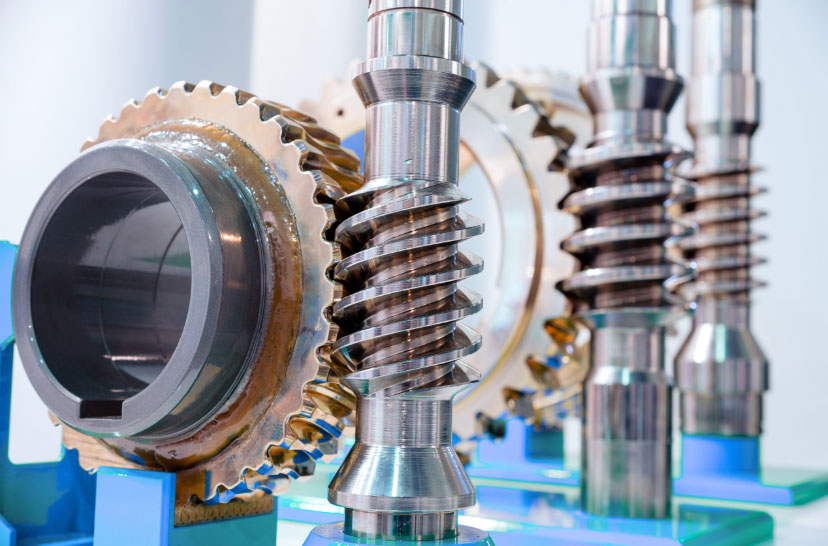
Top overrun in worm gear driven elevators refers to the phenomenon where the elevator car, moving at normal speed, continues upward past the top landing floor and impacts the top of the hoistway. This occurs primarily when the counterweight’s mass exceeds the car’s自重, leading to accelerated upward motion due to gravity. In elevators without speed limiter and safety gear linkage protection on the counterweight side, the counterweight descends rapidly, causing the car to overspeed upward. For worm gear driven elevators, the upward overspeed protection device typically acts on the rope system, commonly using a rope gripper. When the upward speed exceeds the electrical switch activation speed of the speed limiter, the switch triggers the rope gripper to clamp the traction ropes and stop the car. If this protection fails, the car continues to accelerate upward until the counterweight buffer is compressed by the counterweight hitting the buffer stop. The sudden deceleration of the counterweight can cause the car to be thrown vertically upward, potentially disengaging the traction ropes from the grooves. If the upward acceleration is excessive or the clearance between the car’s top components and the hoistway roof is insufficient, a collision occurs, followed by free fall. Once the downward speed surpasses the mechanical action speed of the speed limiter, it grips the governor rope to activate the car safety gear and bring the car to a stop on the guide rails.
The motion process can be modeled using Newton’s second law. Let \( m_c \) be the mass of the car, \( m_{cw} \) be the mass of the counterweight, \( g \) be the acceleration due to gravity, and \( F_f \) be the frictional force in the system. During overrun, the net force acting on the car upward can be expressed as:
$$ F_{net} = (m_{cw} – m_c)g – F_f $$
The resulting upward acceleration \( a \) is:
$$ a = \frac{F_{net}}{m_c} = \frac{(m_{cw} – m_c)g – F_f}{m_c} $$
This acceleration increases the car’s velocity \( v \) over time \( t \):
$$ v = v_0 + at $$
where \( v_0 \) is the initial velocity. The distance traveled \( s \) during overrun is:
$$ s = v_0 t + \frac{1}{2} a t^2 $$
These equations highlight how imbalances in mass and friction, often linked to worm gear inefficiencies, contribute to overrun dynamics.
Preventing top overrun in worm gear driven elevators relies heavily on the brake and upward overspeed protection device, as per standards like GB7588-2003. The brake must be capable of stopping the drive machine with 125% of the rated load descending at rated speed, with deceleration not exceeding that from safety gear activation or buffer impact. The brake’s mechanical components should be arranged in two independent sets, so if one fails, sufficient braking force remains. Electrically, cutting off the brake current requires at least two independent devices, and if a contactor fails to open, further operation must be prevented until the next direction change. The upward overspeed protection device includes speed monitoring and deceleration elements, activating at 115% of rated speed up to a specified limit. It must stop the car or reduce speed to within the counterweight buffer’s design range, acting on the car, counterweight, rope system, or traction sheave. For worm gear drives, common implementations involve brake linkage or rope grippers.
The effectiveness of these protections is often compromised by failures in worm gear components. I will now analyze the root causes in detail, focusing on how worm gear degradation intertwines with other factors.
Brake Failure: Brake failure or insufficient braking capacity is a primary cause of top overrun in worm gear driven elevators. This can stem from multiple issues, as summarized in Table 1. Worm gears play a subtle role here; for instance, wear in the worm gear transmission can lead to vibrations that affect brake alignment.
| Failure Mode | Description | Relation to Worm Gears |
|---|---|---|
| Spring Relaxation or Fracture | Brake tension springs lose elasticity or break, reducing clamping force. | Indirect: Worm gear wear increases load on brakes. |
| Electrical Contact Welding | Contacts stick, preventing brake electromagnet release. | None directly, but worm gear overheating may cause electrical issues. |
| Excessive Clearance | Brake shoe gap too large, delaying or weakening braking. | Worm gear backlash can exacerbate clearance problems. |
| Overheating and Jamming | Friction heats brake components, reducing efficiency or causing seizure. | Worm gear inefficiencies increase heat generation in the system. |
| Mechanical Disconnection | Keys, bearings, or bolts in the worm gear transmission fail, decoupling brake from sheave. | Direct: Worm gear components like teeth or bolts are critical. |
Mathematically, braking torque \( T_b \) must counteract the torque from the imbalance. For a worm gear drive, the output torque \( T_o \) relates to input torque \( T_i \) via the gear ratio \( i \) and efficiency \( \eta \):
$$ T_o = T_i \cdot i \cdot \eta $$
If the worm gears wear, efficiency \( \eta \) drops, increasing the required braking torque. The brake torque required to prevent overrun is:
$$ T_b \geq (m_{cw} – m_c) g r $$
where \( r \) is the traction sheave radius. Failure occurs if \( T_b \) is insufficient due to any listed issues.
Speed Limiter and Brake/Rope Gripper Linkage Failure: This involves failures in the speed monitoring or deceleration elements. Table 2 outlines common failures, often exacerbated by worm gear wear that causes speed fluctuations.
| Failure Type | Details | Worm Gear Influence |
|---|---|---|
| Incorrect Speed Setting | Speed limiter action speed non-compliant, delaying activation. | Worm gear slippage can alter perceived speed. |
| Electrical Switch Failure | Switches fail to open control circuit, preventing brake action. | Vibrations from worn worm gears may loosen connections. |
| Rope Gripper Misadjustment | Insufficient clamping force or improper resetting. | None directly, but overall maintenance neglect includes worm gears. |
| Governor Sheave Wear | Reduced friction between rope and sheave, hindering activation. | Similar wear mechanisms as in worm gears. |
| Safety Gear Switch Failure | Contacts stick or mechanisms jam, preventing car stopping. | Corrosion or dirt from worm gear oil leaks may affect switches. |
The speed limiter activation depends on centrifugal force. For a governor with mass \( m_g \) at radius \( r_g \), the force \( F_c \) at angular velocity \( \omega \) is:
$$ F_c = m_g r_g \omega^2 $$
If worm gear wear causes irregular motion, \( \omega \) may not accurately reflect car speed, leading to mistiming.
Insufficient Traction Capacity: Traction ability depends on the friction between ropes and sheave grooves, often compromised by wear. Worm gears indirectly affect this through load distribution. Table 3 summarizes key factors.
| Factor | Impact | Connection to Worm Gears |
|---|---|---|
| Sheave Groove Wear | Ropes sink, reducing friction and traction. | Worm gear wear increases rope slippage, accelerating sheave wear. |
| Rope Diameter Reduction | Thinner ropes decrease grip in grooves. | Similar abrasive wear as in worm gear teeth. |
| Incorrect Balance Coefficient | Imbalance favors counterweight, promoting upward slip. | Worm gear efficiency loss alters load dynamics. |
The traction condition is given by the Euler-Eytelwein formula:
$$ \frac{T_1}{T_2} \leq e^{\mu \theta} $$
where \( T_1 \) and \( T_2 \) are rope tensions on either side, \( \mu \) is the friction coefficient, and \( \theta \) is the wrap angle. Wear from worm gear-induced vibrations can reduce \( \mu \), leading to slip.
Terminal Protection Device Failure: These devices include forced slowdown, limit, and final limit switches. Failure often results from misalignment or electrical issues, but worm gear wear can cause positioning errors due to car drift. Table 4 lists common failures.
| Device | Failure Mode | Worm Gear Role |
|---|---|---|
| Forced Slowdown Switch | Misaligned actuator or stuck contacts. | Worm gear backlash affects car positioning accuracy. |
| Limit Switch | Similar misalignment or electrical failure. | 同上。 |
| Final Limit Switch | Failure to cut power in extreme overrun. | Worm gear failure may cause rapid overrun beyond switch response time. |
Upward Overspeed Protection Failure: Elevators manufactured before 2005 may lack this protection. Even when installed, failures occur in speed monitors or deceleration elements. Worm gear wear can cause speed sensor inaccuracies. Table 5 highlights issues.
| Component | Failure | Worm Gear Link |
|---|---|---|
| Speed Monitor (Governor) | Calibration drift or mechanical jam. | Worm gear vibrations affect governor stability. |
| Deceleration Element (Brake/Gripper) | Insufficient force or delayed action. | Worm gear efficiency losses increase required deceleration force. |
The upward overspeed protection activates at \( v \geq 1.15 v_{rated} \). If worm gears cause erratic speed profiles, activation may be delayed.
Based on this analysis, I propose the following preventive measures, emphasizing regular inspection and maintenance of worm gear components. These are summarized in Table 6 for clarity.
| Measure | Actions | Focus on Worm Gears |
|---|---|---|
| Install/Upgrade Protection | Add upward overspeed protection to pre-2005 elevators; ensure compliance. | Verify worm gear compatibility with new devices. |
| Brake System Maintenance | Check springs, contacts, clearances, and shoe condition; test regularly. | Inspect for worm gear wear that may affect brake alignment. |
| Transmission Inspection | Examine keys, bearings, bolts; replace worn worm gears; manage lubrication. | Direct focus on worm gear teeth, backlash, and oil leaks. |
| Speed Limiter and Safety Tests | Test linkage; calibrate governors; clean safety gears; adjust rope grippers. | Ensure worm gear motion does not interfere with governor ropes. |
| Traction System Check | Measure sheave groove and rope wear; maintain balance coefficient. | Monitor worm gear performance to prevent excessive rope slippage. |
| Terminal Device Verification | Align switches and actuators; test electrical circuits. | Account for worm gear-induced positioning errors during alignment. |
| Management and Training | Implement robust maintenance protocols; train staff on worm gear specifics. | Emphasize worm gear inspection in training programs. |
To quantify maintenance intervals, we can use reliability models. For worm gear wear, the failure rate \( \lambda(t) \) might follow a Weibull distribution:
$$ \lambda(t) = \frac{\beta}{\alpha} \left( \frac{t}{\alpha} \right)^{\beta – 1} $$
where \( \alpha \) is the scale parameter and \( \beta \) is the shape parameter. Regular inspections at time intervals based on this can prevent failures.
In conclusion, top overrun in worm gear driven elevators stems from a combination of brake failures, protection linkage failures, traction insufficiencies, terminal device failures, and upward overspeed protection failures, all often linked to the degradation of worm gears. Through detailed analysis and proactive measures—such as upgrading protection systems, rigorous maintenance of brakes and worm gear transmissions, and comprehensive testing—this risk can be significantly mitigated. As an advocate for elevator safety, I stress the importance of focusing on worm gear health, as their smooth operation is pivotal to preventing catastrophic events like top overrun. By adhering to these guidelines, stakeholders can ensure safer elevator operations and extend the lifespan of worm gear driven systems.