
The pursuit of quieter machinery is a fundamental aspect of modern mechanical design, driven by ergonomic, environmental, and regulatory demands. Among various power transmission systems, worm gear drives are prized for their high reduction ratios, compactness, and self-locking capabilities, finding extensive use in automotive systems (like window lifters and seat adjusters), industrial machinery, and consumer appliances. However, the very meshing action that enables their smooth power transmission can also be a significant source of vibration and acoustic noise. This article delves into the application of advanced computational methods, specifically transient finite element analysis (FEA), to understand, predict, and ultimately mitigate noise generation in worm gear pairs. The methodology bridges theoretical mechanics, numerical simulation, and experimental validation to provide a robust framework for low-noise design.
Noise in gear systems is a complex phenomenon originating from dynamic excitations during meshing. Research categorizes the contributors to gear noise as follows: design (≈35%), manufacturing (≈30%), assembly (≈15%), and operational conditions (≈20%). This underscores that design is the most significant controllable factor. Noise is characterized by its intensity (amplitude) and frequency content. The sound pressure level is directly related to the vibrational amplitude of the sound source, while the tonal quality or perceived pitch is governed by the dominant frequencies of vibration. Therefore, a successful noise reduction strategy must address both the magnitude of dynamic forces (amplitude) and the system’s vibrational response (frequency).
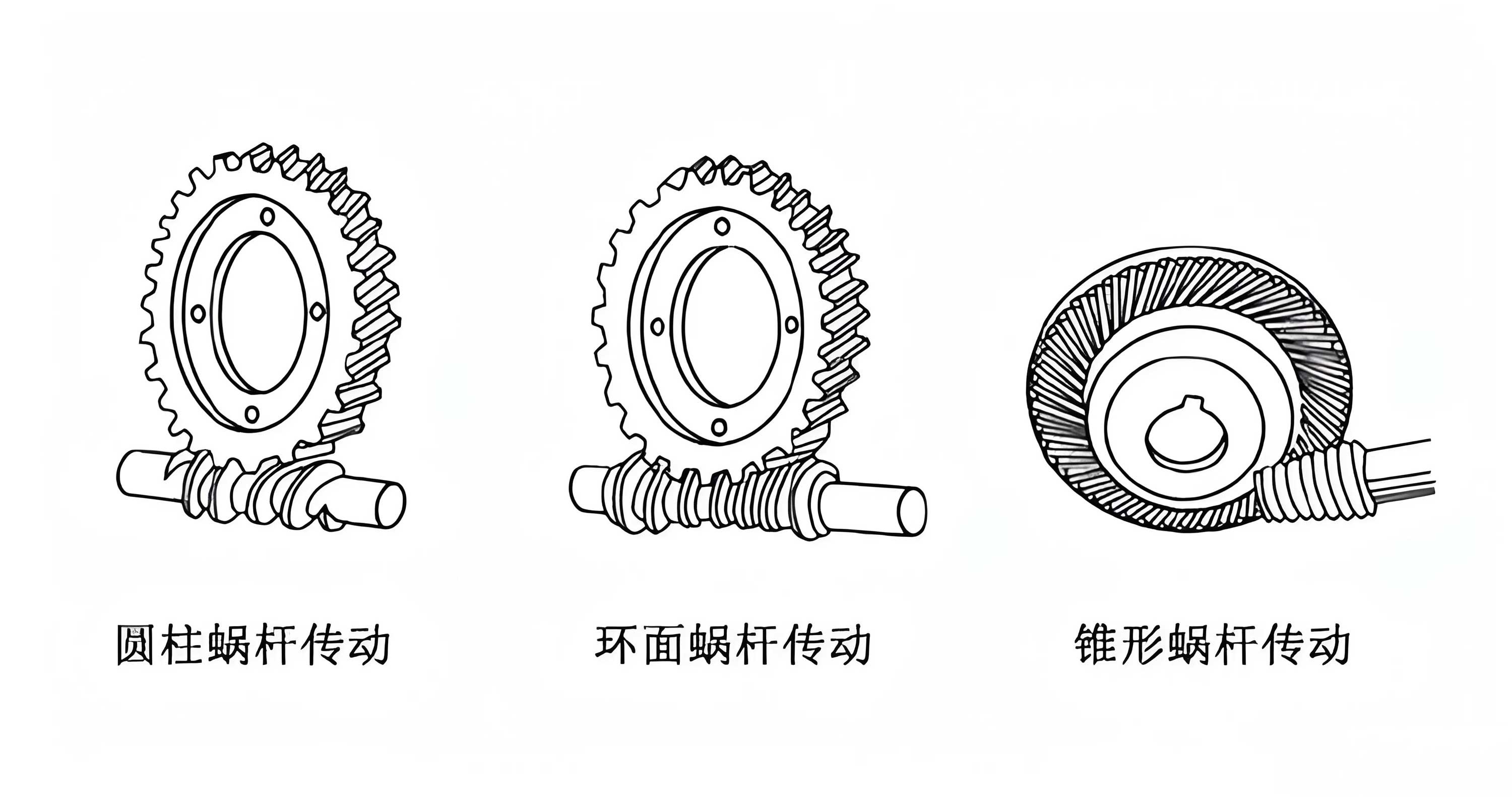
Traditional approaches to quieting worm gears have included experimental testing, parametric optimization of geometric parameters, and analysis of transmission error. While valuable, these methods can be time-consuming and costly when exploring numerous design iterations. The finite element method offers a powerful alternative, enabling a virtual, quantitative analysis of the dynamic contact forces between the worm and gear teeth under realistic operating conditions. This allows engineers to probe the relationship between geometric design, applied load, rotational speed, and the resulting dynamic response before physical prototyping.
Theoretical Foundation for Worm Gear Mechanics
A thorough understanding of the static force distribution within worm gears is prerequisite to dynamic analysis. The geometry of a standard cylindrical worm gear pair is defined by several key parameters which form the basis for parametric design studies aimed at noise reduction. The forces acting on the worm and gear can be derived from the transmitted torque. The primary force component for contact stress and bending analysis is the normal force acting on the tooth flanks.
The axial force on the worm, $F_{x1}$, is related to the transmitted torque on the gear, $T_2$. The normal force, $F_n$, can be calculated from this axial force, the lead angle $\gamma$, and the pressure angle. The fundamental formulas are:
$$F_{x1} = \frac{2000 T_2}{d_2}$$
$$F_n = \frac{F_{x1}}{\cos \gamma \cos \alpha_x} = \frac{2000 T_2}{d_2 \cos \gamma \cos \alpha_x}$$
where $d_2$ is the pitch diameter of the worm gear, $\alpha_x$ is the axial pressure angle on the worm, and $T_2$ is in N·m. The relationship between the normal pressure angle ($\alpha_n$) and the axial pressure angle is given by:
$$\tan \alpha_n = \tan \alpha_x \cos \gamma$$
These equations provide the benchmark average force values against which dynamic finite element analysis results can be validated. The following table summarizes critical geometric parameters for two distinct worm gear designs considered in a parametric study.
| Parameter | Design A (Coarse) | Design B (Fine) |
|---|---|---|
| Number of Worm Threads, $z_1$ | 1 | 1 |
| Number of Gear Teeth, $z_2$ | 70 | 82 |
| Normal Module, $m_n$ (mm) | 0.7875 | 0.775 |
| Normal Pressure Angle, $\alpha_n$ | 10.5° | 10° |
| Lead Angle, $\gamma$ | 4.3682° | 3.3299° |
| Worm Pitch Diameter, $d_1$ (mm) | 11.074 | 13.343 |
| Gear Pitch Diameter, $d_2$ (mm) | 63.184 | 63.657 |
The material properties of the worm and gear significantly influence the contact stiffness and damping, thereby affecting vibration. A typical configuration uses a hardened steel worm mating with a polymer or composite gear for noise reduction. Sample material properties are listed below.
| Property | Worm (Stainless Steel) | Gear (Engineering Plastic) |
|---|---|---|
| Density, $\rho$ (kg/m³) | 7750 | 1420 |
| Young’s Modulus, $E$ (GPa) | 193 | 2.4 |
| Poisson’s Ratio, $\nu$ | 0.31 | 0.39 |
| Tensile Yield Strength (MPa) | 207 | 70 |
Finite Element Methodology for Transient Dynamics
Transient structural analysis using FEA is the cornerstone of this investigation. Unlike static analysis, it simulates the system’s response over a period of time, capturing the time-varying contact forces, impacts, and vibrations as the worm rotates and teeth engage and disengage. The process involves several critical steps to ensure accuracy and reliability.
First, a parameterized three-dimensional solid model of the worm gear pair is created using CAD software. This model is then imported into a preprocessor, typically within an FEA environment like ANSYS Workbench, where necessary geometry simplifications (like removing non-essential fillets for meshing efficiency) are made. The core of the setup lies in defining the physical interactions:
- Contact Definition: A frictional contact formulation is applied between the tooth flanks of the worm and the gear. The contact algorithm must handle potentially large deformations and sliding. A “bonded” contact may be used initially to ensure proper alignment, but for dynamic analysis, a “frictional” or “no-separation” contact is essential.
- Joints and Constraints: A revolute joint is applied to the worm shaft, defining its axis of rotation. A cylindrical or revolute joint may be applied to the gear shaft. The housing or supports are typically modeled as fixed constraints on the outer surfaces of the bearing seats or the gear hub.
- Loads and Boundary Conditions: The driving motion is applied as a prescribed rotational velocity (in RPM or rad/s) to the worm’s revolute joint. The load torque is applied as a moment on the gear’s shaft or as a force on its inner circumference, simulating the resistive load from the driven mechanism.
- Meshing Strategy: A high-quality, fine mesh is crucial, especially in the contact region and at the tooth roots where stress concentrations occur. Hex-dominant or tetrahedral elements with curvature refinement are commonly used. The mesh density is iteratively refined until the solution (e.g., maximum stress, reaction force) converges.
The transient setup requires defining the total simulation time and the time step size. The total time should span several complete mesh cycles to establish a periodic response. The time step must be small enough to resolve the highest frequency of interest, often governed by the Nyquist criterion (at least two points per period of the highest frequency). A common rule is to set the time step based on the contact time between teeth. The general workflow is systematized below:
| Step | Action | Key Considerations |
|---|---|---|
| 1. Geometry | Import/Generate parametric CAD model. | Ensure clean, watertight geometry for robust meshing. |
| 2. Materials | Assign isotropic material properties (E, $\nu$, $\rho$). | Include damping if known (Rayleigh coefficients). |
| 3. Connections | Define frictional contact between teeth; insert joints. | Set appropriate friction coefficient and contact stiffness. |
| 4. Mesh | Generate a refined 3D solid mesh, focusing on contact zones. | Perform mesh sensitivity study. |
| 5. Analysis Settings | Define transient duration and time step; enable large deflection. | Time step $\Delta t \leq 1/(20 f_{max})$ where $f_{max}$ is max expected frequency. |
| 6. Loads & Constraints | Apply rotation to worm, torque to gear, and fix supports. | Use ramped loading to avoid numerical shock. |
| 7. Solve | Run the transient dynamic solver. | Monitor solution convergence and result stability. |
| 8. Post-process | Extract reaction forces, stresses, displacements vs. time. | Calculate FFT of reaction forces to obtain frequency spectra. |
The primary output of interest is the time-history of reaction forces at key locations, such as the worm shaft bearings. This force signal, $F(t)$, encapsulates the dynamic excitation caused by the meshing process. Its characteristics—mean value, amplitude (peak-to-peak or RMS), and frequency content—are direct indicators of noise performance.
Linking Vibration Response to Noise Generation
The reaction force curve $F(t)$ is the gateway to understanding noise. The mean value of this oscillating force should align with the theoretical static force $F_n$ calculated earlier, providing a primary validation of the FEA model’s load transfer accuracy. The dynamic component, $F_{dynamic}(t) = F(t) – \bar{F}$, is what drives vibration and radiates noise.
Amplitude and Sound Intensity: The amplitude of the oscillating force is proportional to the vibrational acceleration of the worm gear housing and shafts. According to acoustic theory, for a radiating structure, the sound pressure level $L_p$ is related to the vibrational velocity. For a given frequency, a higher force amplitude leads to greater structural vibration and consequently higher sound intensity. Therefore, comparing the peak-to-peak amplitude of the reaction force $F_{pp}$ between different worm gear designs offers a direct, quantitative metric for ranking their acoustic performance under identical operating conditions. A design with a lower $F_{pp}$ is expected to generate less noise.
Frequency Analysis: The time-domain force signal can be transformed into the frequency domain using a Fast Fourier Transform (FFT). The resulting spectrum reveals the dominant meshing frequencies and their harmonics. The fundamental meshing frequency $f_m$ is calculated as:
$$f_m = \frac{z_2 \cdot N}{60}$$
where $z_2$ is the number of teeth on the worm gear and $N$ is the worm rotational speed in RPM. However, the system’s dynamic response is not just at $f_m$; it also includes the natural frequencies of the worm and gear structures, and the excitation of these modes by meshing harmonics leads to resonance and amplified noise. The FEA-predicted dominant frequency from the reaction force FFT can be compared to experimental noise spectra. The relationship between frequency and perceived noise is critical; tonal noises at certain frequencies are more annoying to the human ear than broadband noise.
Parametric Influence: The FEA model allows us to investigate how changes in design parameters affect $F_{pp}$ and the frequency spectrum. For instance:
- Lead Angle ($\gamma$): Affects the contact ratio and sliding velocity. An optimal lead angle can improve load sharing and reduce peak meshing force.
- Pressure Angle ($\alpha_n$): A higher pressure angle increases tooth stiffness and bending strength but may also increase bearing forces. It influences the contact pattern and thus the force distribution.
- Module and Number of Teeth: These define the gear size and contact ratio. A higher contact ratio generally leads to smoother force transmission and lower amplitude vibrations.
- Material Damping: Using a polymer gear introduces significant material damping, which attenuates vibration amplitudes compared to a metal-on-metal worm gear pair.
Simulation Case Studies and Experimental Correlation
To demonstrate the methodology, a series of transient FEA simulations were conducted on worm gear pairs, varying design and operational parameters. The objective was to correlate simulation predictions with physical test data. The studied cases are defined in the following matrix.
| Case ID | Worm Gear Design | Load Torque, $T_2$ (N·m) | Worm Speed, $N$ (RPM) |
|---|---|---|---|
| Case 1 | Design A (Coarse) | 3.0 | 5300 |
| Case 2 | Design A (Coarse) | 3.0 | 4500 |
| Case 3 | Design A (Coarse) | 5.0 | 5300 |
| Case 4 | Design B (Fine) | 3.0 | 5300 |
For each case, the transient analysis was performed, and the reaction force on the worm shaft support was extracted. The mean values were first compared to the theoretical normal force $F_n$. The results showed excellent agreement, typically within 2-5%, confirming the FEA model’s accuracy in load transfer. This step is crucial for establishing confidence in the subsequent dynamic predictions.
The dynamic force curves were then analyzed. The frequency of oscillation was determined by identifying the periodicity in the time-domain signal or directly from its FFT. The table below compares the FEA-predicted dominant frequency with frequencies obtained from experimental vibration tests conducted on physical prototypes using accelerometers and a B&K PULSE analyzer system.
| Case ID | FEA-Predicted Frequency (Hz) | Experimentally Measured Frequency (Hz) | Deviation |
|---|---|---|---|
| Case 1 | ~1820 | ~1782 | ≈ +2.1% |
| Case 2 | ~1762 | ~1710 | ≈ +3.0% |
| Case 3 | ~2120 | ~2082 | ≈ +1.8% |
The close correlation validates the FEA model’s ability to capture the fundamental dynamic excitation frequency of the worm gear system. The analysis reveals that increasing load torque (Case 1 vs. Case 3) causes a noticeable increase in the system’s effective stiffness, leading to a higher predominant frequency. Changing speed (Case 1 vs. Case 2) also alters the frequency proportionally, as expected from $f_m = (z_2 \cdot N)/60$.
Most importantly for noise assessment, the amplitude of the reaction force curves was compared. A qualitative comparison of the force-time plots clearly indicated that Case 2 exhibited the smallest peak-to-peak force amplitude ($F_{pp}$), followed by Case 1 and Case 3. Case 4 (the fine-pitch Design B) showed a significantly larger $F_{pp}$ than Design A under the same load and speed. This suggests that, among these options, the worm gear in Case 2 (Design A at 4500 RPM) would generate the lowest noise intensity, while Design B in this specific configuration would be louder. This amplitude-based ranking provides a direct guide for selecting a quieter design.
Application in Design Optimization and Conclusions
The integration of transient FEA into the worm gear design process enables a proactive, simulation-driven approach to noise reduction. The methodology can be systematically applied as follows:
- Baseline Model Validation: Build and validate an FEA model against theoretical static forces and simple experimental frequency data.
- Parameter Screening: Use the parameterized model to run design of experiments (DOE) studies, varying $m_n$, $\alpha_n$, $\gamma$, profile modification, etc., and simulate their transient response under rated operating conditions.
- Response Surface & Optimization: Based on DOE results, construct response surfaces linking design parameters to key noise indicators: reaction force amplitude ($F_{pp}$) and the magnitude of excitation at critical frequencies. Formulate a multi-objective optimization problem to minimize $F_{pp}$ while meeting constraints on strength, efficiency, and size.
- Virtual Prototyping: Evaluate the top candidate designs from optimization with full transient FEA, examining not just shaft forces but also housing vibration and radiated sound power (using coupled acoustic-structural simulations).
The conclusions drawn from this comprehensive study are robust:
- Transient finite element analysis is a reliable and effective tool for predicting the dynamic behavior of worm gear drives, with validated accuracy in both force magnitude and frequency content.
- The amplitude of the dynamic meshing forces, readily obtained from FEA results, serves as a direct and quantitative proxy for assessing the potential noise intensity of different worm gear designs.
- The vibrational frequency spectrum derived from FEA correlates well with experimental measurements, allowing designers to identify and avoid excitation of critical structural resonances.
- Load torque has a more pronounced effect on increasing the system’s dynamic stiffness and meshing frequency than rotational speed does within typical operational ranges for these worm gears.
- Parametric design optimization, guided by FEA, is a powerful strategy for developing quieter worm gear systems, potentially reducing the need for costly and lengthy physical testing cycles.
Future work in this domain could involve more advanced simulations incorporating system-level effects like bearing compliance, housing flexibility, and full acoustic radiation models. Furthermore, the integration of wear modeling and lubrication effects into the transient contact analysis would provide even more life-cycle accurate predictions of noise generation in worm gear sets. The continued refinement of these computational techniques solidifies their role as indispensable tools in the quest for high-performance, low-noise mechanical power transmission.