
Worm gear drives, comprising a worm and a worm wheel with typically crossed axes at 90°, transmit motion and power primarily through sliding friction. This unique mechanism offers distinct advantages, including high single-stage reduction ratios ranging from 5:1 to 100:1 and the potential for self-locking. Consequently, worm gears are indispensable components across a spectrum of applications, from precision instruments to heavy-duty machinery. The global market for these components is substantial and growing, with significant contributions from manufacturing hubs worldwide. Despite this growth, a persistent performance gap remains between standard and high-end products, particularly in terms of precision, material science, and operational reliability.
A critical vulnerability of worm gear drives stems from their inherent sliding action. The high interfacial sliding velocities and concentrated contact stresses can lead to significant frictional heat generation. This thermal loading poses a severe challenge to the lubrication film, increasing the risk of its collapse. Lubrication failure is a primary driver for several catastrophic wear modes, such as scoring (adhesive wear), abrasive wear, and accelerated oxidative degradation of the lubricant itself. Studies indicate that over 60% of premature worm gear failures are directly attributable to inadequate lubrication. Therefore, the pursuit of enhanced lubrication technologies is not merely an incremental improvement but a fundamental requirement for boosting transmission efficiency, operational lifespan, and overall system reliability in worm gear applications.
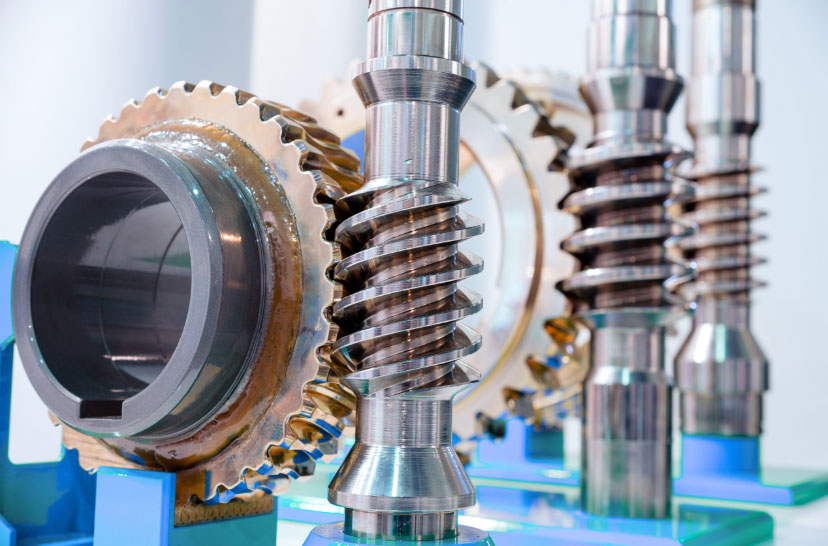
The application domains for worm gears are extensive and critical. In mechanical engineering, they are pivotal in machine tool indexing heads and heavy machinery transmission systems, accounting for a significant portion of usage. The automotive industry relies on them for steering system actuators and wiper motors, where their compactness and high ratio are invaluable; implementations have reportedly reduced component failure rates to remarkably low levels. Within energy and logistics, worm gears are key enablers in wind turbine pitch control systems and automated material handling equipment, representing a multi-billion dollar market segment. The most demanding applications are found in aerospace and defense, where ultra-high-precision worm gears with minimal transmission error are used in satellite positioning mechanisms. Geographically, production is concentrated, with major clusters accounting for the majority of global output and demonstrating strong export growth.
Technological Evolution and Innovation Trajectory
The ongoing development of worm gear technology focuses on three interconnected pillars: materials and manufacturing, transmission design, and lubrication systems.
Material and Manufacturing Innovations: The traditional reliance on bronze worm wheels is being supplemented and sometimes replaced by advanced materials. Alloy steels, babbitt metals, and novel aluminum-zinc base alloys are gaining traction. Engineering plastics are also being adopted for specific applications, offering weight reductions of up to 30% while maintaining necessary wear resistance. Concurrently, precision manufacturing has taken a leap forward. The use of CNC grinding machines and 5-axis machining centers has enabled the production of worm threads with surface finishes as smooth as Ra=0.2 µm and accuracy levels meeting IT4 grade standards.
Transmission Design Advancements: Design philosophy itself is evolving. Enveloping worm gear sets, which employ a double-enveloping technique to achieve multi-tooth contact, are increasingly replacing traditional single-enveloping designs. This innovation can increase load-carrying capacity by over 50% and extend service life significantly. Furthermore, the integration of smart technologies is giving rise to intelligent drive systems. By embedding sensors for vibration, temperature, and torque, these systems enable real-time condition monitoring and predictive maintenance, with fault预警 accuracy rates reaching high levels in industrial settings.
Lubrication and Maintenance Technology: This area is perhaps the most dynamic in addressing the core weaknesses of worm gears. The development of high-performance lubricants, specifically greases formulated with full synthetic base oils and advanced thickeners, has been transformative. These greases offer drop points exceeding 260°C and demonstrate wear protection capabilities that can be 40% better than conventional mineral oil-based greases, thereby extending re-lubrication intervals. Complementing this is the rise of automated lubrication systems. These systems provide precise, controlled delivery of lubricant, often integrated with thermal management controls. Documented case studies, for instance in metallurgical processing equipment, show that such smart lubrication systems can reduce frictional power losses by 15% and contribute to an overall energy consumption reduction of 20%.
Tribological Fundamentals and Failure Modes of Worm Gears
Understanding the lubrication challenges requires a grasp of the fundamental tribology. The dominant motion in a worm gear mesh is sliding. The coefficient of sliding friction (μ) is defined as the ratio of the frictional force (F_f) to the normal load (F_n):
$$ \mu = \frac{F_f}{F_n} $$
This sliding occurs at high velocity, especially on the worm thread. The sliding velocity (V_s) at the pitch line can be calculated using the worm’s geometry and rotational speed:
$$ V_s = \frac{\pi d_1 n_1}{60 \cos \gamma} $$
where \( d_1 \) is the worm pitch diameter, \( n_1 \) is the worm rotational speed in rpm, and \( \gamma \) is the lead angle of the worm. In many applications, V_s exceeds 1 m/s, generating substantial heat in the contact zone. Local flash temperatures can reach 100–150°C or higher, directly threatening the stability of the lubricant film.
The high contact stress in the conjunction area, often modeled using Hertzian contact theory, further exacerbates the situation. The maximum Hertzian contact stress (σ_H) is given by:
$$ \sigma_H = \sqrt[2]{\frac{F_n E^*}{\pi R}} $$
Here, \( E^* \) is the equivalent elastic modulus of the worm and wheel materials, and \( R \) is the equivalent radius of curvature at the contact point. The combination of high stress and high sliding velocity creates an extremely demanding environment for the lubricant.
When lubrication fails under these conditions, specific damage modes occur:
- Scoring (Adhesive Wear/Galling): This is the most severe failure mode. High temperatures cause the protective lubricant film to rupture, allowing direct metal-to-metal contact. This leads to localized welding and tearing of surface asperities.
- Abrasive Wear: Hard contaminant particles (e.g., dust, wear debris, oxidized lubricant residue) enter the mesh and act as cutting agents, progressively removing material from the tooth surfaces.
- Oxidative Degradation of the Lubricant: The operational heat accelerates the chemical breakdown of the lubricant. Base oils oxidize, forming sludge and acidic compounds. Thickeners can break down, leading to loss of consistency (softening or hardening). This degradation is thermally accelerated, following an Arrhenius-type relationship where the oxidation rate constant (k) doubles for approximately every 10°C rise in temperature:
$$ k = A \cdot e^{-\frac{E_a}{RT}} $$
where \( A \) is the pre-exponential factor, \( E_a \) is the activation energy, \( R \) is the universal gas constant, and \( T \) is the absolute temperature.
Critical Factors Influencing Grease Performance for Worm Gears
Selecting the correct lubricant is paramount. For worm gears, grease is often preferred due to its sealing and retention properties. Key grease performance parameters and their significance are summarized below:
| Performance Indicator | Typical Target for Worm Gears | Key Influencing Components |
|---|---|---|
| Extreme Pressure (EP) / Anti-wear (AW) | ≥ 600 N (Four-ball test weld point) | Sulfur-phosphorus based EP/AW additive packages. Must be non-corrosive to yellow metals like bronze. |
| High-Temperature Stability | Dropping Point ≥ 260°C | Full synthetic base oil (e.g., PAO, PAG) paired with a high-performance thickener (e.g., complex soap, polyurea). |
| Adhesion & Coherence | Oil Separation (e.g., DIN 51817) ≤ 3% | High viscosity index base oils and shear-stable thickeners ensure the grease stays in place on the gears. |
| Oxidation Stability | Rotating Pressure Vessel Oxidation Test (RPVOT) ≥ 300 min | High-quality base oils fortified with amine/phenolic antioxidant packages. |
| Base Oil Viscosity | ISO VG 150 – 680 (Highly application-dependent) | Must be sufficiently high to form an EHD film at operating temperature but not so high as to cause excessive churning losses. |
Operational conditions directly dictate these requirements. The temperature factor, as shown by the Arrhenius equation, is critical. Load and sliding speed determine the severity of the contact, influencing the required EP performance and film-forming capability. Environmental factors like moisture and dust ingress necessitate good corrosion protection and sealing properties from the grease.
Integrated Strategies for Enhancing Lubrication Performance
Addressing the lubrication challenge requires a multi-faceted approach encompassing grease formulation, system design, and maintenance strategy.
1. Development of Advanced Grease Formulations:
The core strategy lies in formulating greases specifically engineered for the severe conditions within worm gears. This involves:
- Base Oil Selection: Full synthetic oils, such as Polyalkylene Glycols (PAG) or specially formulated Polyalphaolefins (PAO), are superior to mineral oils. They offer a broader usable temperature range (e.g., -30°C to 150°C), higher thermal-oxidative stability, and better inherent lubricity.
- Additive Optimization: The choice of EP/AW additives is crucial. Sulfur-phosphorus chemistries provide excellent load-carrying capacity while being relatively non-corrosive to bronze worm wheels, making them preferable to older chlorine-based additives. Solid lubricants like molybdenum disulfide (MoS2) or graphite can provide an additional safety layer under boundary lubrication conditions.
- Thickener System: Complex soap thickeners (lithium, calcium) or polyurea offer high-temperature durability and excellent shear stability, ensuring the grease maintains its structure in the highly sheared environment of a gear mesh.
2. Lubrication System Design and Integration:
Optimal grease performance cannot be realized with a poor delivery system. Design optimizations include:
- Dedicated Lubrication Devices: Patented mechanisms that ensure continuous, metered delivery of fresh grease to the worm mesh, such as felt pad applicators or micro-pumps, can prevent starved lubrication conditions.
- Enhanced Sealing: Multi-lip seals or labyrinth seals are essential to prevent grease leakage and, more importantly, to exclude abrasive contaminants and moisture from the gear housing.
- Condition Monitoring Integration: Embedding sensors (vibration, acoustic emission, infrared thermography) allows for real-time assessment of lubrication effectiveness and gear health, enabling condition-based maintenance instead of fixed intervals.
3. Experimental Validation and Comparative Data:
The superiority of advanced formulations must be proven through rigorous testing. Accelerated life tests under controlled, severe conditions provide compelling evidence. The following table contrasts the performance of a conventional mineral oil-based grease with a full-synthetic, high-performance grease designed for worm gears:
| Grease Type | Test Duration to Failure (h) | Maximum Housing Temperature Rise (°C) | Worm Wheel Weight Loss (mg) | Post-test Surface Condition |
|---|---|---|---|---|
| Mineral Oil-based (Li-complex) | 1,200 | 45 | 15.2 | Moderate scoring, visible wear tracks |
| Full Synthetic PAG-based (High EP) | 1,800 | 32 | 8.7 | Minor polishing, no visible scoring |
Test Conditions: Worm gear reducer, Input Torque = 50 N·m, Input Speed = 50 rpm, continuous operation.
4. Life-Cycle Cost and Economic Analysis:
While advanced synthetic greases for worm gears may carry a 30-50% higher initial cost per unit compared to standard products, the total cost of ownership is often significantly lower. This is due to:
- Extended re-lubrication intervals (often by 50-100%), reducing labor and downtime costs.
- Reduced wear and tear on components, leading to longer service life for the worm gears themselves.
- Lower operating temperatures, which improve overall transmission efficiency and reduce energy consumption.
A comprehensive analysis typically shows a total cost reduction of 15-25% over the operational lifecycle of the equipment when using optimized lubrication.
Industry Challenges and Strategic Imperatives
Despite progress, the worm gear industry faces significant hurdles that must be overcome to capture greater value and ensure long-term competitiveness.
| Challenge Category | Specific Issue | Impact / Consequence |
|---|---|---|
| Technical Bottlenecks | Precision & Reliability Deficit | Fatigue life under high-speed/heavy-load conditions can lag behind leading international products. Dependence on imported high-end manufacturing equipment for critical processes. |
| Material Development Lag | Industrial-scale application of next-gen materials (e.g., ceramic composites, advanced surface coatings like DLC) for worm gears remains in R&D or niche stages, limiting performance ceilings. | |
| Market Structure | Concentration & Import Dependence | A handful of global manufacturers dominate the high-performance segment. A significant portion of the market for premium, highly reliable worm gears, especially in critical applications, still relies on imports. |
| Sustainability Pressure | Energy Efficiency & Green Manufacturing | Increasing regulatory and customer demand for energy-efficient drives and environmentally friendly production processes (e.g., reduced waste, lower carbon footprint). |
Future Trajectories and Strategic Recommendations
The path forward for worm gear technology and its lubrication is defined by convergence: the convergence of precision and durability, of intelligence and mechanics, and of performance and sustainability.
1. Technology Development Vectors:
- Precision-Heavy Duty Convergence: Developing next-generation worm gear sets that do not force a trade-off between ultra-high precision (e.g., for robotics) and extreme load capacity (e.g., for mining). This includes designs with adjustable backlash and advanced profile modifications.
- Green and Smart Manufacturing: Widespread adoption of low-energy, low-emission heat treatment processes like vacuum carburizing. Furthermore, the integration of IoT capabilities will become standard, with worm gear drives reporting their own health, load, and lubrication status.
- Nanotechnology in Lubrication: The next frontier in grease formulation lies in engineered nano-additives (e.g., nano-diamonds, functionalized ceramics) that can provide surface mending, ultra-low friction, and enhanced thermal conductivity at the molecular level.
2. Market and Competitive Strategies:
- High-End Market Penetration: This requires focused R&D partnerships between manufacturers and academic institutions to develop proprietary technologies, such as advanced nano-coatings or novel gear geometries, specifically aimed at displacing imported high-value products.
- Global Supply Chain Integration: Leveraging international trade frameworks to expand market reach, aiming to significantly increase the export share of high-value-added worm gear products.
3. Policy and Ecosystem Synergy:
- Targeted Support Mechanisms: Government policies can accelerate innovation through R&D tax incentives and grants specifically for foundational industrial components like worm gears. Funding for industry-academia collaborative projects is vital.
- Vertical Integration and Collaboration: Stronger partnerships along the value chain—from specialty steel producers developing tailored alloys for worm fabrication to lubricant companies co-engineering greases for specific gear designs—can reduce lead times, improve quality, and foster innovation.
In conclusion, the performance and longevity of worm gear drives are inextricably linked to the science and practice of lubrication. A holistic approach—combining advanced grease chemistry tailored for high-sliding contacts, intelligent system design that ensures optimal lubricant delivery and condition, and data-driven maintenance strategies—delivers transformative gains in efficiency, reliability, and cost-effectiveness. The future of worm gears is intelligent, efficient, and integrated, with continued research into areas like nano-lubrication and self-monitoring smart systems poised to unlock further potential. By systematically addressing both the technical challenges and the strategic market realities, the industry can ensure that this venerable yet vital mechanical component continues to power innovation across the global industrial landscape.