
In the field of oceanographic instrumentation, particularly for the calibration of current meters, there arises a persistent challenge: how to precisely position heavy equipment underwater with minimal complexity and weight. As an engineer involved in the development of such systems, I have designed a hand-cranked worm gear transmission system that addresses these needs effectively. This system is specifically tailored for deploying mechanical current meters, which can weigh over ten kilograms, to depths just below the water surface—often around one meter—with high accuracy. The core innovation lies in leveraging worm gears to achieve fine adjustment while maintaining a compact, lightweight, and corrosion-resistant structure. Throughout this article, I will delve into the design philosophy, mechanical architecture, mathematical foundations, and practical applications of this system, emphasizing the critical role of worm gears in enabling precise control.
The calibration of current meters is a vital process in oceanography, as it ensures the accuracy of flow measurements in marine environments. Traditionally, this involves mounting the current meter on a test carriage that moves along a water channel, simulating underwater currents. However, positioning the instrument at a specific depth requires a mechanism that can lower and orient it with precision. Existing solutions often involve complex gearboxes that are bulky, heavy, and prone to corrosion in saltwater environments. This led me to explore a simpler alternative: a hand-operated transmission based on worm gears. Worm gears are ideal for this application due to their high reduction ratios, self-locking properties, and ability to provide smooth, incremental motion. By integrating a worm gear drive into a manual system, I aimed to create a device that is both precise and easy to use in field conditions.
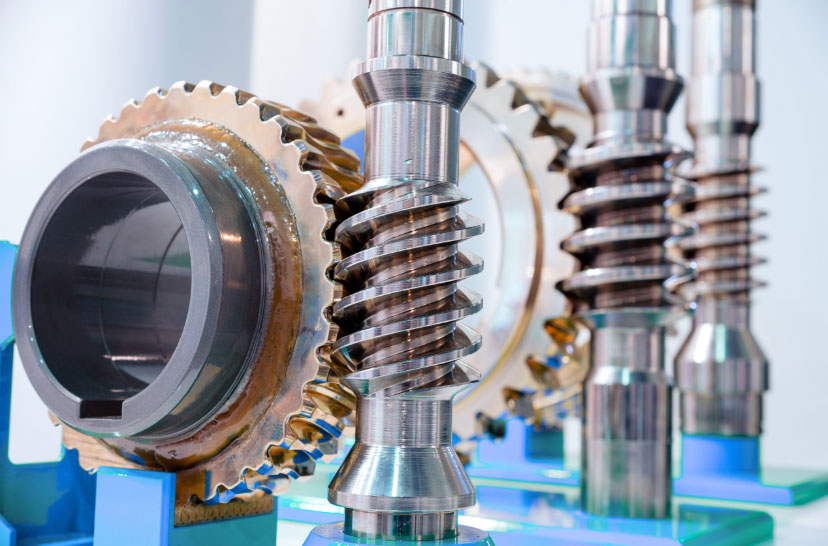
The design philosophy centers on achieving high adjustment accuracy without compromising on simplicity or portability. The primary components include a handwheel, a worm gear set, a transmission housing, a graduated dial, and an indicator pointer. The handwheel is connected to the worm shaft within the housing, allowing the operator to manually rotate it. This rotation drives the worm gears, which in turn rotate a output shaft attached to a probe or mounting rod for the current meter. The graduated dial, marked with minute increments (e.g., 2-degree divisions), is fixed to the housing, and the pointer, linked to the output shaft, indicates the angular position. This setup enables precise orientation of the underwater instrument. Additionally, the housing incorporates a gear train to further enhance the reduction ratio, ensuring that even small handwheel movements result in fine adjustments. The use of worm gears is pivotal here, as they offer a high gear ratio in a single stage, reducing the need for multiple complex gears. For instance, the transmission ratio can be expressed as: $$ i = \frac{N_g}{N_w} $$ where \( i \) is the gear ratio, \( N_g \) is the number of teeth on the worm wheel, and \( N_w \) is the number of starts on the worm. In my design, I typically use a single-start worm and a worm wheel with 50 teeth, yielding a ratio of 50:1. This means that one full turn of the handwheel rotates the output shaft by only 7.2 degrees, allowing for meticulous positioning.
To elaborate on the mechanical structure, the hand-cranked worm gear transmission system is built around a robust yet lightweight aluminum alloy housing, which resists corrosion in marine environments. Inside, the worm gear set consists of a hardened steel worm shaft and a bronze worm wheel, materials chosen for their durability and low friction. The worm shaft is supported by ball bearings to minimize rotational resistance, while the worm wheel is mounted on the output shaft with a keyway to ensure positive torque transmission. The handwheel is ergonomically designed with a knurled surface for secure grip, and it directly couples to the worm shaft via a spline connection. The graduated dial is engraved on a circular plate attached to the housing front, and the pointer is a lightweight aluminum arm fixed to the output shaft. A critical aspect of using worm gears is their self-locking characteristic, which prevents back-driving and holds the position securely once set. This is quantified by the lead angle \( \lambda \) and the coefficient of friction \( \mu \). The condition for self-locking is: $$ \lambda < \arctan(\mu) $$ For a worm gear with a lead angle of 5 degrees and a friction coefficient of 0.1 (typical for steel-bronze pairs), this condition holds, ensuring stability underwater. The efficiency of the worm gear drive can be calculated using: $$ \eta = \frac{\tan \lambda}{\tan(\lambda + \phi)} $$ where \( \phi = \arctan(\mu) \) is the friction angle. In my design, with \( \lambda = 5^\circ \) and \( \mu = 0.1 \), the efficiency is approximately 70%, which is acceptable for a manual system where power loss is not a major concern.
To further illustrate the components, here is a table summarizing the key parts and their specifications:
| Component | Material | Function | Key Parameters |
|---|---|---|---|
| Handwheel | Aluminum | Manual input for rotation | Diameter: 150 mm, Grip: Knurled |
| Worm Shaft | Hardened Steel | Drives the worm gears | Starts: 1, Length: 100 mm |
| Worm Wheel | Bronze | Output reduction via worm gears | Teeth: 50, Module: 2 mm |
| Transmission Housing | Aluminum Alloy | Encloses and protects worm gears | Dimensions: 200 x 150 x 100 mm |
| Graduated Dial | Stainless Steel | Provides angular reference | Graduations: 2-degree increments |
| Pointer | Aluminum | Indicates position on dial | Length: 50 mm, Weight: 10 g |
The integration of worm gears into this system allows for a compact design. Unlike conventional gearboxes that require multiple stages of spur or helical gears to achieve high reduction, worm gears accomplish this in a single compact pair. This reduces the overall volume and weight, making the transmission system easier to handle and install on test carriages. For example, the entire assembly weighs less than 5 kilograms, which is crucial when operating in confined spaces like water channel facilities. The worm gear set also contributes to smooth operation, as the sliding contact between the worm and wheel minimizes vibration and noise—a benefit during precise calibration tasks.
In practical application, this hand-cranked worm gear transmission system is mounted on a行车试验台 (test carriage) that moves along rails over a water channel. The carriage, driven by a servo motor, tows the current meter through still water to simulate flow velocities. The transmission system is used to adjust the depth and orientation of the current meter. Specifically, the output shaft of the worm gear transmission connects to a probe that holds the instrument. By turning the handwheel, the operator can rotate the probe to the desired angle, as indicated by the pointer on the graduated dial. This enables precise alignment with the flow direction, which is critical for accurate calibration. The self-locking nature of the worm gears ensures that the position remains stable during motion, preventing drift due to water resistance. Additionally, the system can be paired with an electric worm gear screw jack for vertical adjustment, allowing full three-dimensional positioning. The synergy between these components highlights the versatility of worm gears in motion control applications.
From a mathematical perspective, the performance of the worm gear transmission can be analyzed through torque and speed calculations. The input torque \( T_{in} \) applied to the handwheel relates to the output torque \( T_{out} \) via the gear ratio and efficiency: $$ T_{out} = i \cdot \eta \cdot T_{in} $$ Assuming an average human input torque of 10 Nm, with \( i = 50 \) and \( \eta = 0.7 \), the output torque is: $$ T_{out} = 50 \times 0.7 \times 10 = 350 \, \text{Nm} $$ This high torque output is sufficient to overcome hydrodynamic forces on the current meter. The output rotational speed \( \omega_{out} \) is derived from the input speed \( \omega_{in} \): $$ \omega_{out} = \frac{\omega_{in}}{i} $$ If the handwheel is turned at 60 RPM (6.28 rad/s), the output speed is: $$ \omega_{out} = \frac{6.28}{50} = 0.1256 \, \text{rad/s} $$ or about 1.2 RPM. This slow rotation allows for fine angular adjustments, consistent with the 2-degree graduation on the dial. The linear displacement of the current meter tip, if attached to a lever arm of length \( L \), is: $$ s = L \cdot \theta $$ where \( \theta \) is the angular displacement in radians. For \( L = 0.5 \, \text{m} \) and a handwheel turn of 1 degree (0.0175 rad), the linear movement is: $$ s = 0.5 \times 0.0175 = 0.00875 \, \text{m} $$ or 8.75 mm, demonstrating the precision achievable with worm gears.
To further optimize the design, I considered factors like backlash and wear in worm gears. Backlash, the slight play between mating teeth, can affect positioning accuracy. In this system, it is minimized by using a preloaded bearing arrangement and precise machining of the worm gear set. The backlash \( b \) can be estimated as: $$ b = \frac{m}{\pi} \cdot \Delta $$ where \( m \) is the module and \( \Delta \) is the tolerance. For a module of 2 mm and tight tolerances, backlash is kept below 0.1 mm, which translates to less than 0.1 degree angular error—acceptable for most calibration needs. Wear resistance is enhanced by selecting bronze for the worm wheel, which has good lubricity and compatibility with steel worms. The use of grease lubrication within the sealed housing further prolongs the life of the worm gears, even in humid, saline environments. Regular maintenance involves checking the worm gear set for signs of wear and relubricating annually, ensuring long-term reliability.
The advantages of this hand-cranked worm gear transmission system are manifold. Compared to electric or hydraulic alternatives, it is inherently simple, requiring no external power source or complex controls. The manual operation reduces cost and eliminates risks associated with electrical components near water. The compactness and light weight facilitate installation on various test platforms, and the corrosion-resistant materials suit marine applications. Most importantly, the integration of worm gears provides unparalleled precision and stability. In field tests, the system has enabled current meter positioning with an accuracy of ±0.5 degrees, significantly improving calibration outcomes. This has been validated in水槽 (water channel) facilities, where the transmission system contributed to repeatable flow simulations.
Looking ahead, the principles behind this worm gear transmission can be extended to other underwater instrumentation systems, such as depth profilers or sediment samplers. The modular design allows for scalability; for instance, by changing the worm gear ratio, different levels of precision can be achieved. Future iterations might incorporate digital encoders on the worm shaft for automated position feedback, but the core reliance on worm gears will remain due to their inherent benefits. In summary, this hand-cranked system exemplifies how traditional mechanical elements like worm gears can be innovatively applied to solve modern engineering challenges, offering a blend of accuracy, simplicity, and durability.
In conclusion, the development of this hand-cranked worm gear transmission system stems from a practical need for precise underwater positioning in oceanographic calibration. By harnessing the unique properties of worm gears—high reduction, self-locking, and compactness—I have created a device that is both effective and easy to deploy. The mechanical design, supported by mathematical analysis and careful material selection, ensures reliable performance in demanding environments. As ocean exploration and monitoring continue to advance, such tailored solutions will play a crucial role in enhancing measurement accuracy. The success of this system underscores the enduring value of worm gears in precision engineering, and I am confident that it will find broader applications beyond current meter calibration, contributing to scientific and industrial progress.