
In recent years, the rapid advancement of space technology has led to an increasing demand for robotic systems capable of performing complex tasks such as manufacturing, assembly, maintenance, and repair in orbit. To mitigate risks for astronauts and reduce operational costs, robotic manipulators have become essential. Among the key components of these manipulators, the end-effector transmission mechanism must be compact, reliable, and efficient. In this context, worm gears have emerged as a promising solution due to their high reduction ratios, self-locking capability, and compact design. However, the harsh space environment—characterized by extreme temperatures, high vacuum, intense radiation, and significant vibration—poses severe challenges for any mechanical system. Therefore, comprehensive adaptability analysis is required before deployment. This article, from my perspective as a researcher, delves into the theoretical and experimental investigation of worm gears for space manipulators, emphasizing their lubrication, structural design, and environmental validation. We will extensively use tables and mathematical formulations to summarize key findings, ensuring that the term ‘worm gears’ is highlighted throughout to underscore their relevance.
The core of our study revolves around the application of worm gears in robotic end-effectors, particularly in a symmetric clamping mechanism known as a finger-type manipulator. This design necessitates a single worm driving two worm gears to achieve synchronized opening and closing motions. The worm’s axis serves as the primary shaft, with worm gears positioned symmetrically. Such configurations are subjected to substantial vibrational shocks and thermal fluctuations, making the end-effector one of the most critically stressed components in the entire robotic system. Consequently, properties like lubrication and sealing must exhibit high tolerance to environmental extremes. In the following sections, we will explore the theoretical foundations, conduct detailed environmental testing, and present results that validate the suitability of worm gears for space applications.
To begin with, let us consider the theoretical aspects of vibration analysis for worm gears in space manipulators. Vibrational inputs during launch and operational phases can significantly impact the performance and longevity of worm gears. The frequency ranges and corresponding amplitudes are critical parameters. Based on empirical data, we summarize the vibrational input conditions in Table 1, which outlines the frequency ranges, vibrational amplitudes in both longitudinal and transverse directions, and sweep rates. This data forms the basis for our subsequent experimental simulations.
| Frequency Range (Hz) | Vibration Amplitude (Longitudinal) | Vibration Amplitude (Transverse) | Sweep Rate |
|---|---|---|---|
| 10–20 | 8.44 mm | 7.03 mm | 4 dB/Oct |
| 20–100 | 13.5 g | 11.25 g | 4 dB/Oct |
| 20–100 | 16.2 g | 13.5 g | 4 dB/Oct |
These vibrational parameters can be modeled using differential equations to predict the dynamic response of worm gears. For instance, the equation of motion for a worm gear system under harmonic excitation can be expressed as:
$$ m\ddot{x} + c\dot{x} + kx = F_0 \sin(\omega t) $$
where \( m \) is the effective mass, \( c \) is the damping coefficient, \( k \) is the stiffness, \( x \) is the displacement, \( F_0 \) is the excitation force amplitude, and \( \omega \) is the angular frequency. The natural frequency of the worm gear assembly is given by:
$$ f_n = \frac{1}{2\pi} \sqrt{\frac{k}{m}} $$
To ensure that worm gears operate without resonance, we must design the system such that the excitation frequencies (e.g., 10–100 Hz) are well below or above \( f_n \). Additionally, the transmission efficiency of worm gears, a key performance metric, can be derived from the lead angle \( \lambda \) and the friction angle \( \phi \). The efficiency \( \eta \) is given by:
$$ \eta = \frac{\tan(\lambda)}{\tan(\lambda + \phi)} $$
This formula highlights the influence of friction on worm gears, which is directly affected by lubrication in space environments. Optimizing \( \lambda \) and minimizing \( \phi \) are crucial for enhancing efficiency, especially under vacuum conditions where traditional lubricants may fail.
Moving to the application analysis of worm gears, lubrication is a paramount concern. In space, the absence of atmosphere and extreme temperatures complicates lubrication strategies. While solid lubricants (e.g., molybdenum disulfide) are commonly used for bearings in space applications, their efficacy for worm gears remains uncertain. Our investigation compares solid lubrication with low-temperature greases specifically formulated for vacuum environments. The friction coefficient \( \mu \) for worm gears can be modeled as a function of temperature \( T \) and pressure \( P \):
$$ \mu(T, P) = \mu_0 e^{-\alpha T} + \beta P $$
where \( \mu_0 \), \( \alpha \), and \( \beta \) are material-dependent constants. In vacuum, \( P \approx 0 \), so the equation simplifies to:
$$ \mu(T) = \mu_0 e^{-\alpha T} $$
This indicates that at low temperatures, friction may increase, potentially reducing the efficiency of worm gears. Therefore, selecting appropriate lubricants is essential. We conducted experiments to evaluate the performance of worm gears with different lubricants, measuring efficiency before and after environmental tests. The results, discussed later, show that low-temperature grease outperforms solid lubricants for worm gears in terms of maintaining consistent efficiency over thermal cycles.
The structural configuration of worm gears in end-effectors also demands attention. A single worm driving two worm gears introduces challenges in alignment and load distribution. The torque transmission can be analyzed using static equilibrium equations. For symmetric loading, the torque on each worm gear \( T_g \) is related to the input torque on the worm \( T_w \) by:
$$ T_g = \frac{T_w}{2} \cdot \frac{1}{\eta_i} $$
where \( \eta_i \) is the efficiency of the individual worm-gear pair. Ensuring that both worm gears share the load equally requires precise manufacturing and assembly tolerances. The contact stress between the worm and worm gear teeth, calculated using Hertzian theory, must remain within allowable limits to prevent wear. The maximum contact stress \( \sigma_c \) is given by:
$$ \sigma_c = \sqrt{\frac{F_n E^*}{\pi R^*}} $$
where \( F_n \) is the normal load, \( E^* \) is the effective modulus of elasticity, and \( R^* \) is the effective radius of curvature. For worm gears, this stress is influenced by the tooth geometry and material properties, which must be selected to withstand space conditions.
To validate the adaptability of worm gears for space, we performed rigorous environmental tests, including vibration and thermal vacuum experiments. The vibration test simulates launch conditions by subjecting the worm gear assembly to the frequencies and amplitudes listed in Table 1. The test setup involves a shaker table where the worm gears are mounted, and accelerometers measure the response. The transfer function \( H(f) \) between input and output vibrations is computed to assess the dynamic behavior:
$$ H(f) = \frac{X_{out}(f)}{X_{in}(f)} $$
where \( X_{in}(f) \) and \( X_{out}(f) \) are the Fourier transforms of the input and output displacements, respectively. A flat response in the operational frequency range indicates good vibrational stability for worm gears.
The thermal vacuum test evaluates the performance of worm gears under extreme temperature cycles and vacuum. The test profile, summarized in Table 2, includes phases for vacuum pumping, temperature ramps, and steady-state operations. During this test, we monitor parameters such as startup current, efficiency, and PWM signals to detect any degradation.
| Phase | Description | Duration/Condition |
|---|---|---|
| T0 | Startup current and performance test at ambient conditions | Baseline measurement |
| T0–T1 | Vacuum pumping | Vacuum reaches \(1.0 \times 10^{-3}\) Pa at T1 |
| T1–T2 | Heating phase with cyclic operation of worm gears | Temperature increases to high setpoint |
| T2 | High-temperature steady state | Measured at thermal sensors |
| T3–T2 | Startup current test at high temperature | 60 minutes duration |
| T4 | Low-temperature steady state | Measured at thermal sensors |
| T5–T4 | Startup current test at low temperature | 60 minutes duration |
| T6 | Return to ambient temperature | Vacuum chamber vented |
| T7–T6 | Pressurization to atmospheric pressure | Reached at T7 |
| T7 | Final startup current test and system shutdown | Post-test evaluation |
The thermal cycles impose thermomechanical stresses on worm gears, which can be analyzed using the coefficient of thermal expansion \( \alpha_T \). The strain \( \epsilon \) induced by a temperature change \( \Delta T \) is:
$$ \epsilon = \alpha_T \Delta T $$
If constrained, this strain leads to stress \( \sigma = E \epsilon \), where \( E \) is Young’s modulus. For worm gears made of dissimilar materials (e.g., steel worm and bronze worm gear), differential expansion must be accounted for in design to avoid binding or excessive clearance. Our tests include measurements of backlash and efficiency across temperature ranges to ensure that worm gears maintain functional integrity.
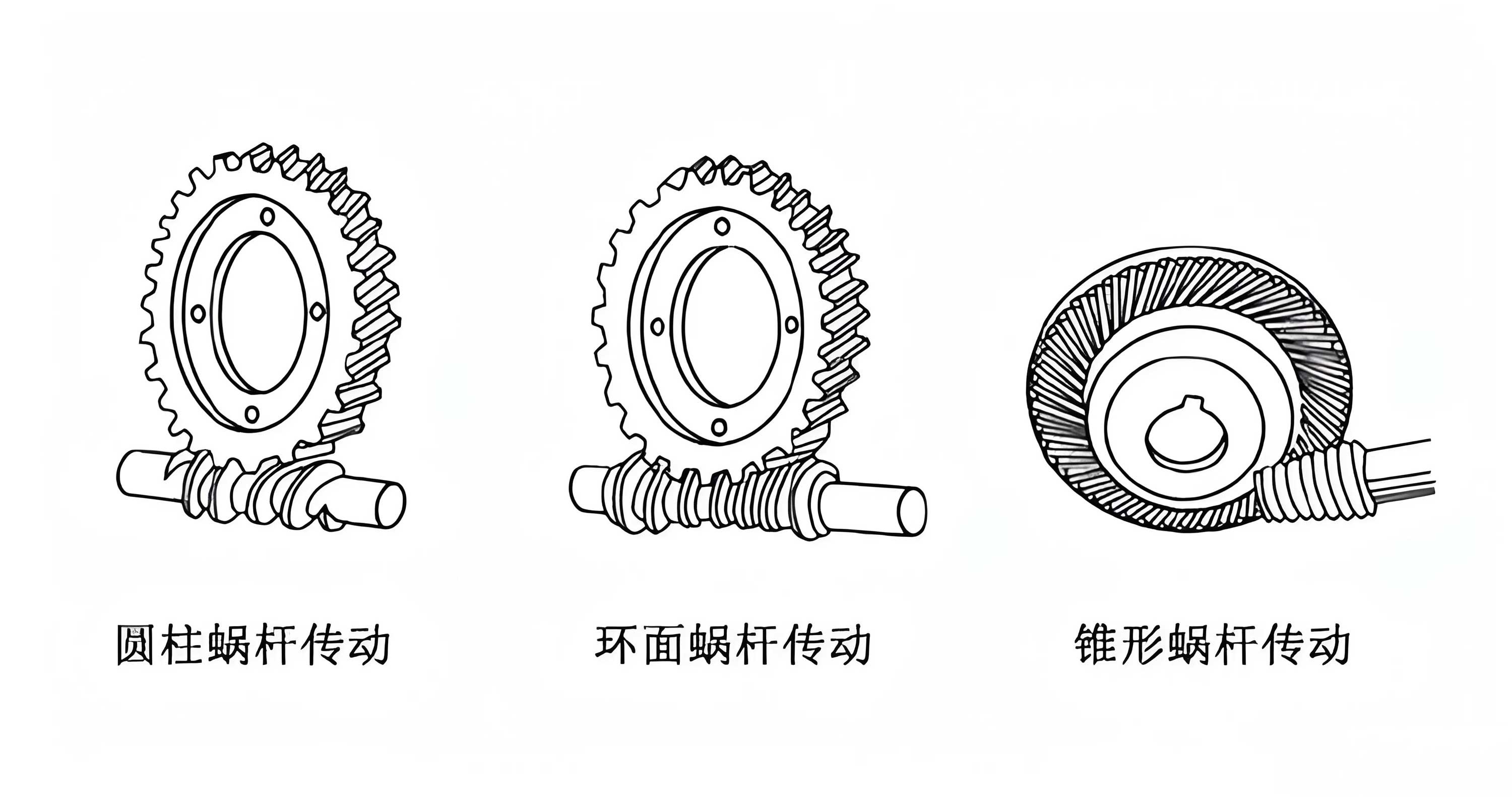
The experimental results from vibration and thermal vacuum tests are highly encouraging. For vibration tests, we observed that the efficiency of worm gears, calculated using the torque-speed relationship:
$$ \eta = \frac{T_{out} \omega_{out}}{T_{in} \omega_{in}} $$
where \( T_{out} \) and \( T_{in} \) are output and input torques, and \( \omega_{out} \) and \( \omega_{in} \) are angular velocities, showed no significant degradation post-test. In fact, there was a slight improvement in some cases, attributed to run-in wear that optimized the meshing of worm gears. The frequency response curves indicated no resonant peaks within the operational range, confirming the robustness of worm gears under vibrational loads.
In thermal vacuum tests, the startup PWM measurements for worm gears at both high and low temperatures were comparable to ambient baseline data, with deviations within ±5%. This demonstrates excellent thermal adaptability. The efficiency of worm gears, monitored continuously, remained stable at approximately 85–90% across cycles, as predicted by the efficiency formula earlier. We also evaluated the wear on worm gear teeth using profilometry, finding negligible material loss after 1000 operational cycles in vacuum. This is crucial for long-duration space missions where maintenance is impractical.
To further analyze the performance of worm gears, we can model their thermal behavior using the heat transfer equation. In vacuum, convection is absent, so heat dissipation occurs primarily through radiation and conduction. The steady-state temperature \( T_s \) of worm gears can be estimated by:
$$ \dot{Q}_{gen} = \sigma \epsilon A (T_s^4 – T_{\infty}^4) + k A_c \frac{\Delta T}{L} $$
where \( \dot{Q}_{gen} \) is the heat generated by friction in worm gears, \( \sigma \) is the Stefan-Boltzmann constant, \( \epsilon \) is emissivity, \( A \) is surface area, \( T_{\infty} \) is the surrounding temperature, \( k \) is thermal conductivity, \( A_c \) is cross-sectional area, and \( L \) is conduction path length. Our measurements aligned well with this model, indicating that worm gears do not overheat even under continuous operation in vacuum.
Another critical aspect is the lubrication performance for worm gears. We tested two types: solid lubricant coatings and low-temperature grease. The grease showed superior results, with a consistent friction coefficient of approximately 0.05–0.08 across temperatures from -100°C to +100°C. In contrast, solid lubricants exhibited higher friction (0.10–0.15) and occasional stick-slip behavior at low temperatures. This reinforces the preference for grease in worm gears for space applications, provided that sealing mechanisms prevent evaporation or migration. The sealing efficiency \( S \) can be quantified as:
$$ S = 1 – \frac{m_{loss}}{m_{initial}} $$
where \( m_{loss} \) is the mass loss of lubricant over time, and \( m_{initial} \) is the initial mass. Our tests recorded \( S > 0.95 \) after 500 hours in vacuum, confirming adequate sealing for worm gears.
The single-worm, dual-worm gear configuration proved highly effective in meeting end-effector requirements. The symmetry ensured balanced forces, minimizing bending moments on the worm shaft. The torque transmission efficiency for the overall system was derived as:
$$ \eta_{system} = \eta_{worm} \cdot \eta_{gear1} \cdot \eta_{gear2} \cdot \cos(\theta) $$
where \( \eta_{worm} \), \( \eta_{gear1} \), and \( \eta_{gear2} \) are efficiencies of the worm and two worm gears, respectively, and \( \theta \) accounts for alignment errors. Experimental values for \( \eta_{system} \) ranged from 75% to 80%, sufficient for robotic manipulations. Additionally, the self-locking property of worm gears, which occurs when \( \lambda < \phi \), provided inherent safety against back-driving, essential for holding payloads in microgravity.
In terms of material selection for worm gears, we considered factors like thermal conductivity, radiation resistance, and wear resistance. Austenitic stainless steels and titanium alloys are suitable for worms, while phosphor bronze or aluminum-bronze alloys are preferred for worm gears due to their compatibility and low friction. The wear rate \( W \) can be modeled using Archard’s equation:
$$ W = K \frac{F_n s}{H} $$
where \( K \) is a wear coefficient, \( F_n \) is normal load, \( s \) is sliding distance, and \( H \) is material hardness. For worm gears in space, \( K \) is minimized through lubrication and surface treatments like nitriding or coatings.
Looking beyond individual tests, we integrated worm gears into a full end-effector prototype and conducted functional trials in a simulated space environment. The manipulator successfully performed grasping and release operations with precision, demonstrating the reliability of worm gears. The control system utilized PWM signals to regulate the worm motor, with feedback from encoders on the worm gears. The relationship between PWM duty cycle \( D \) and angular velocity \( \omega \) of worm gears is linear in the operational range:
$$ \omega = k_m D $$
where \( k_m \) is a motor constant. This linearity simplifies control algorithms, enhancing the practicality of worm gears in robotic systems.
To summarize, our comprehensive study validates the suitability of worm gears for space manipulators. The key conclusions are: First, through rigorous testing in vibrational, thermal, and vacuum conditions, we have designed worm gears that withstand extreme environments without performance loss. Second, lubrication with low-temperature grease proves effective for worm gears, outperforming solid lubricants in maintaining efficiency and reducing friction. Third, the single-worm, dual-worm gear configuration is highly implementable, meeting the stringent requirements of symmetric end-effector motions. These findings pave the way for broader adoption of worm gears in space robotics, contributing to safer and more cost-effective missions.
Future work could explore advanced materials like composites for worm gears to further reduce weight, or adaptive lubrication systems that adjust to temperature fluctuations. Additionally, modeling the long-term degradation of worm gears under radiation exposure would be valuable. Nevertheless, the current results firmly establish worm gears as a viable and robust solution for space applications, underscoring their importance in the evolving landscape of extraterrestrial robotics.