
In modern manufacturing, the demand for high-performance components in sectors such as automotive and aerospace has intensified, particularly for parts that minimize spatial footprint and weight while maximizing strength. Aluminum alloys, especially LY12, are widely favored due to their excellent plasticity, high strength, and lightweight properties, making them ideal for applications like car transmissions and aircraft structures. Among these components, worm gears play a critical role in motion transmission systems, and their housing—the worm gear shell—is a core element with complex, thin-walled features that pose significant machining challenges. This shell typically exhibits irregular shapes, compact design, high precision requirements, and thin-walled sections near the end faces, complicating clamping and processing. As a result, machining worm gear shells, especially in single-piece trial production, demands meticulous process planning to avoid deformation, vibration, and accuracy loss. In this article, I explore the single-piece processing technology for a representative servo worm gear and worm shell, focusing on machining methods, tool selection, cutting parameters, and fixture design. By establishing a simulation model for milling and conducting experimental verification, I aim to develop an efficient, high-precision CNC machining strategy that addresses the unique difficulties of worm gear housing fabrication.
The worm gear shell, as analyzed, is characterized by its asymmetrical geometry, internal cylindrical cavities, and thin-walled structures adjacent to end faces. These end faces feature small holes and grooves, further complicating clamping. From a dimensional perspective, key accuracy metrics include the center distance between the worm gear and worm holes, the diameter and positional tolerances of the worm gear holes, and the coaxiality of the worm holes. For instance, the center distance of 54.0 ± 0.025 mm is paramount, as it directly affects the meshing accuracy and operational lifespan of the worm gears. Similarly, the worm gear face holes, such as φ97-0.05 and φ96.6H7, along with bearing holes like φ55, require tight tolerances within 0.05 mm for proper assembly. The worm holes, φ47H7 and φ30H7, must maintain coaxiality within 0.02 mm to ensure smooth rotation. These requirements underscore the need for a process that minimizes errors from clamping, tool deflection, and material deformation.
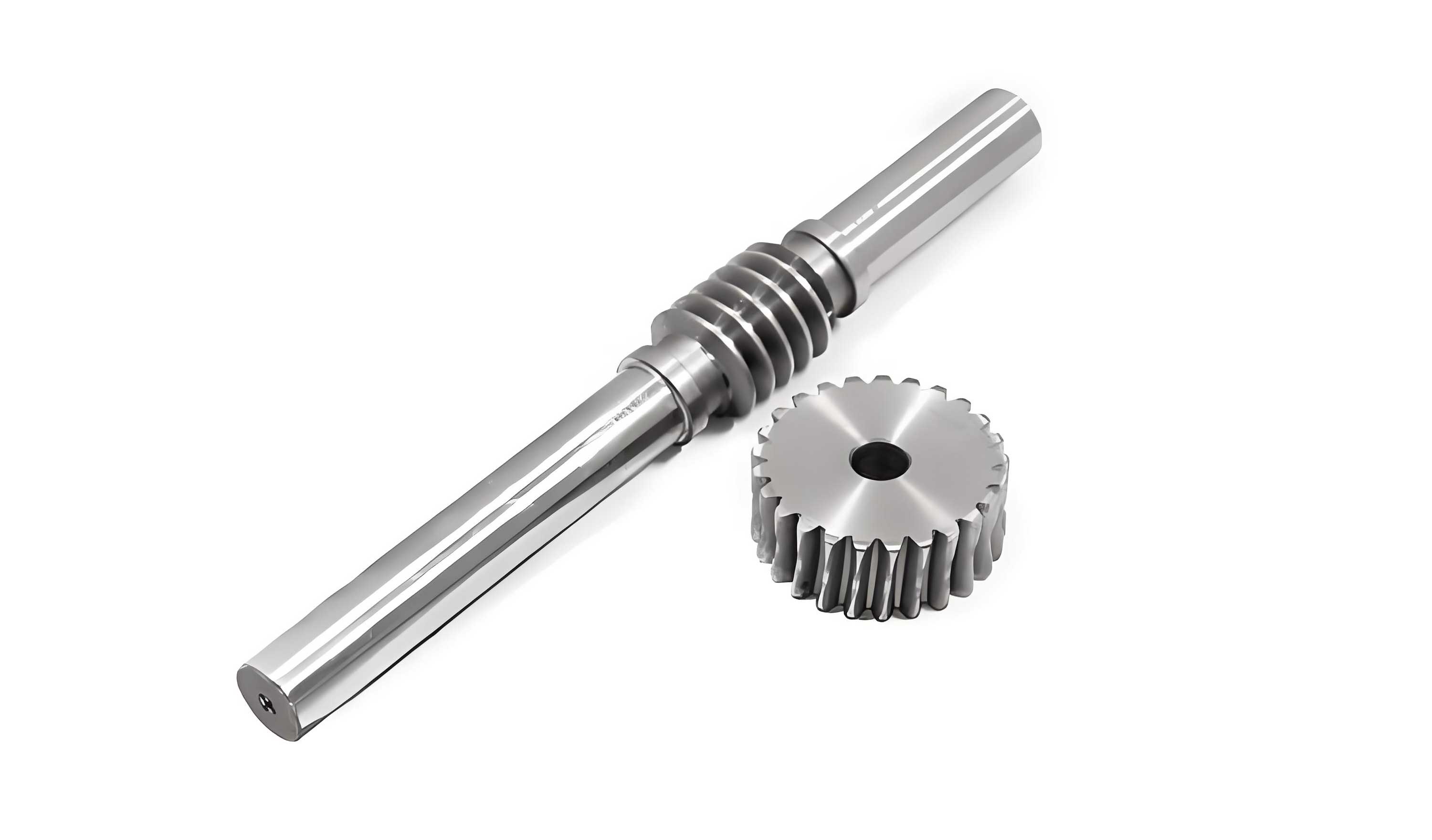
Machining difficulties for worm gear shells arise from multiple fronts. First, the irregular shape hinders conventional clamping, often necessitating custom fixtures. Second, the thin-walled regions are prone to deformation during cutting, leading to inaccuracies and surface defects. Third, the high precision of worm gear and worm holes, coupled with stringent spatial relationships, introduces numerous variables that can compromise quality. Fourth, the LY12 material, while machinable, tends to adhere to tools and deform under stress, exacerbating these issues. To overcome these, I formulated two processing schemes. The preferred approach involves: using a 212×180×120 mm LY12 aluminum block as raw material; roughing on a three-axis vertical machining center; and finishing on a four-axis machine with a rotary table, where a process cylinder is clamped for machining the worm gear face and side steps. Subsequently, a mandrel fixture, referenced to the worm gear hole, is employed for machining the worm holes. This method reduces setups, enhancing accuracy for worm gears.
Fixture design is crucial for maintaining the center distance between worm gear and worm holes. I developed a mandrel-based fixture, where the mandrel engages with the machined worm gear hole for secondary positioning. To minimize errors, I focused on improving mandrel manufacturing precision, ensuring geometric and配合 accuracy, and employing rigid clamping to prevent deformation. The positioning error can be quantified using the synthesis method, where the total error ΔD is the sum of datum misalignment error ΔB and datum displacement error ΔY:
$$ \Delta_D = \Delta_Y + \Delta_B $$
For the worm gear hole φ55-0.042-0.072 and mandrel diameter φ55-0.03-0.05, with the center distance tolerance of ±0.025 mm, ΔB = 0 due to datum coincidence. The displacement error is calculated from the hole and mandrel tolerances:
$$ \Delta_Y = \frac{\delta_D}{2} + \frac{\delta_d}{2} $$
where δD is the hole tolerance (0.03 mm) and δd is the mandrel tolerance (0.02 mm), yielding:
$$ \Delta_Y = \frac{0.03}{2} + \frac{0.02}{2} = 0.025 \, \text{mm} $$
However, by tightening tolerances to φ55-0.042-0.062 for the hole and φ55-0.03-0.04 for the mandrel, the error reduces to 0.015 mm, which is within one-third of the workpiece tolerance (0.0167 mm), meeting machining requirements for worm gears.
The machining of worm gear holes and worm holes presents specific challenges. For worm gear holes, I used a four-axis machine with a dividing head clamping the process cylinder. The coordinate origin was set at the cylinder end face center, with the worm gear face leveled as the A-axis zero. Tools were programmed to avoid interference, leaving 0.2 mm allowance for finish machining. The key is to ensure coaxiality of step holes like φ96.6H7 and φ55, achieved through single-setup boring. For worm holes, after machining the worm gear face, I employed the mandrel fixture for positioning. The part was referenced to the φ97H7 hole, with a diamond pin for rotation orientation, and the upper flange face as the A0 plane. Roughing used wave-edge tools, followed by finish boring with optimized parameters to control vibration and deformation.
Cutting parameters were refined through experiments to balance efficiency and accuracy. The table below summarizes the optimized boring parameters for key holes, which are critical for worm gear shell integrity:
| Hole Diameter | Spindle Speed (r/min) | Feed Rate (mm/min) | Depth of Cut (mm) |
|---|---|---|---|
| Φ97H7 | 950 | 90 | 0.1 |
| Φ96.65-0.05 | 1000 | 90 | 0.1 |
| Φ55 -0.042/-0.072 | 1700 | 120 | 0.08 |
| Φ46.47H7 | 2100 | 130 | 0.08 |
| Φ30H7 | 3200 | 150 | 0.05 |
These parameters mitigate issues like tool adhesion and thin-wall deflection, common in worm gear machining. Additionally, the cutting force Fc can be estimated using the empirical formula for aluminum alloys:
$$ F_c = K_c \times a_p \times f_z \times z $$
where Kc is the specific cutting force (approximately 700 N/mm² for LY12), ap is the depth of cut, fz is the feed per tooth, and z is the number of teeth. For instance, with a 0.1 mm depth and two teeth, the force is kept low to prevent deformation. Surface roughness Ra is also critical for worm gear performance, related to feed rate and tool radius R:
$$ R_a \approx \frac{f^2}{8R} $$
By optimizing feed rates, I achieved Ra values below 1.6 µm, ensuring smooth operation of worm gears.
To validate the process, I conducted coordinate measuring machine (CMM) inspections on the machined worm gear shell. The results, shown in the table below, confirm that all key dimensions fall within tolerance ranges, demonstrating the effectiveness of the approach for worm gear housing production:
| Feature | Tolerance Range | Measured Value | Conformance |
|---|---|---|---|
| Center Distance | 54.0 ± 0.025 mm | 54.01 mm | Yes |
| Worm Gear Hole Φ96.6H7 | 0.030/0 mm | Φ96.62 mm | Yes |
| Bearing Hole Φ55 | -0.042/-0.072 mm | Φ54.95 mm | Yes |
| Worm Hole Φ47H7 | 0.025/0 mm | Φ47.015 mm | Yes |
| Worm Hole Φ30H7 | 0.021/0 mm | Φ30.01 mm | Yes |
| Flange Hole Φ89 | -0.03/-0.065 mm | Φ88.96 mm | Yes |
The success hinges on several factors. First, using multi-axis machines minimizes setups, reducing cumulative errors for worm gear and worm hole relationships. Second, careful fixture design, with error analysis, ensures precise location. Third, parameter optimization controls forces and temperatures, critical for thin-walled worm gear shells. For example, the material removal rate Q can be expressed as:
$$ Q = v_f \times a_p \times a_e $$
where vf is the feed rate, ap is the depth of cut, and ae is the width of cut. By keeping Q moderate, I avoided excessive heat that could warp the LY12 alloy. Additionally, tool path strategies in CAD/CAM software, such as arc transitions, reduced machine vibration, further enhancing accuracy for worm gears.
Looking ahead, there are avenues for improvement. The deformation during clamping remains partially unpredictable; future work could integrate finite element analysis (FEA) to model stresses and optimize support. For instance, the deformation δ under clamping force F can be approximated for thin walls using beam theory:
$$ \delta = \frac{F L^3}{3EI} $$
where L is the wall length, E is Young’s modulus (about 70 GPa for LY12), and I is the moment of inertia. By simulating this, clamping points could be adjusted to minimize δ. Moreover, advanced tool coatings and adaptive control systems could further enhance machining of worm gear shells, especially for single-piece production where cost-effectiveness is key.
In conclusion, the single-piece processing of servo worm gear and worm shells requires a holistic approach that addresses geometry, material behavior, and precision demands. Through systematic process planning, fixture design with error calculation, and parameter optimization, I achieved high-precision machining that meets stringent automotive and aerospace standards. The methodology emphasizes reducing setups, leveraging multi-axis capabilities, and validating outcomes via simulation and measurement. This approach not only solves immediate challenges for worm gear housing but also provides a framework for similar thin-walled components, contributing to efficient, reliable manufacturing in high-tech industries.