
Deep space exploration represents a pivotal strategic endeavor, and the Mars rover serves as the critical platform for such missions. The transit between Earth and Mars imposes severe constraints on the rover’s mass due to launch vehicle limitations. Furthermore, the challenging Martian terrain necessitates that all subsystems, including the optical pointing mechanism, be as lightweight as possible. Reducing the mass of the payload directly contributes to the overall mission feasibility and scientific return.
The optical payload turret is a key subsystem responsible for the precise orientation of instruments such as panoramic cameras, spectrometers, and communication antennas. To achieve the high-resolution angular positioning required for scientific observations, a high reduction ratio is essential between the drive motor and the output stage. Furthermore, to eliminate pointing errors during bidirectional rotation, the transmission must operate with zero backlash. The Martian environment introduces extreme challenges: operating temperatures can plummet to -95°C, rendering conventional lubricants ineffective, while large diurnal thermal cycles can cause dimensional changes in components, potentially introducing variable transmission gaps that degrade precision.
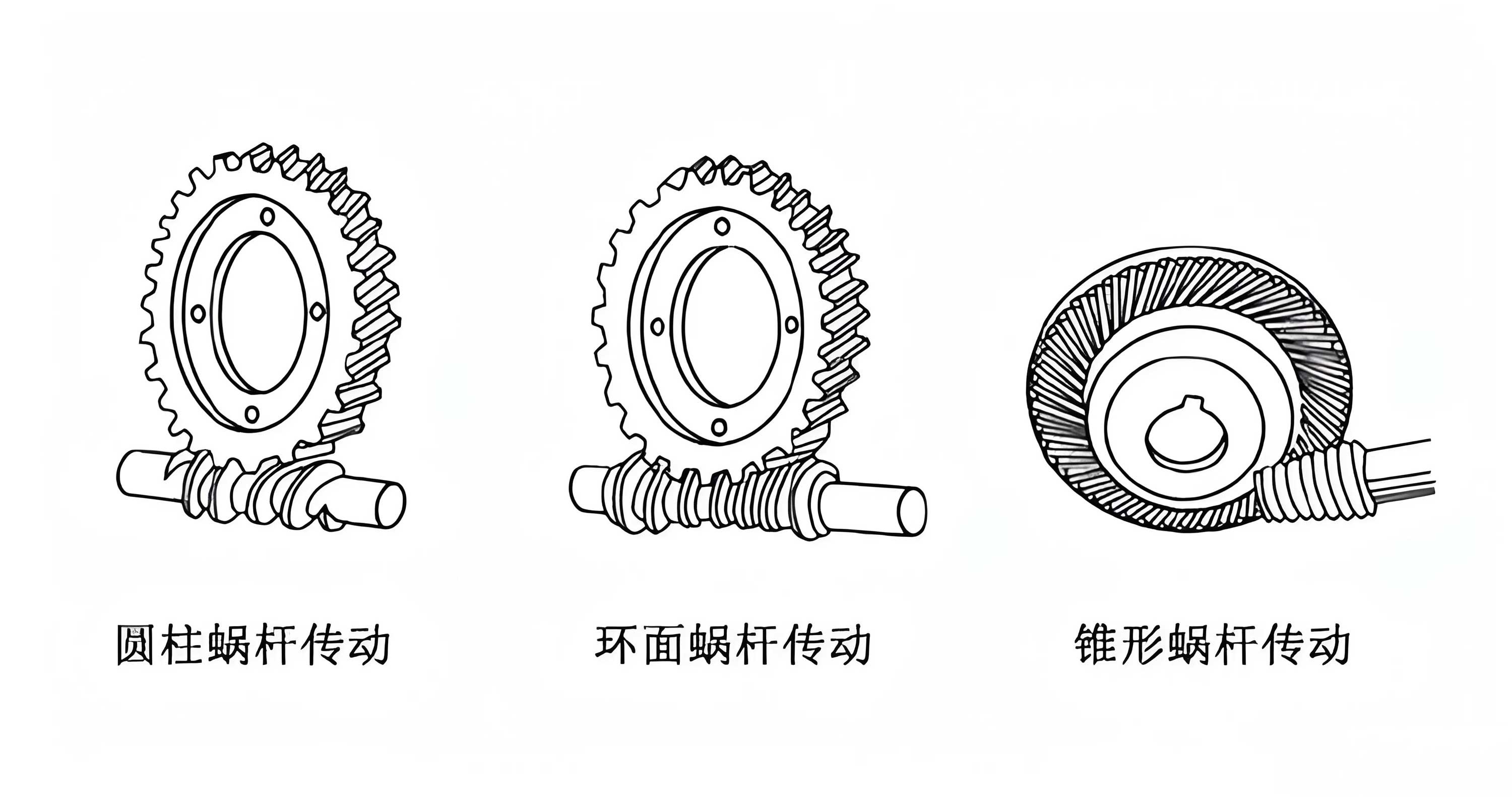
Traditional solutions have limitations. Direct-drive stepper motors can provide high precision but require large, heavy motors to deliver sufficient torque at low temperatures. Multi-stage planetary or spur gear reducers can achieve high ratios, but they involve many components, increasing mass and complexity. In contrast, a single-stage worm gears drive offers a compelling solution, providing a high reduction ratio (e.g., 80:1 or higher) in a compact package. However, standard worm gears assemblies inherently possess backlash. While dual-motor preloading methods exist to eliminate this backlash, they add significant mass, complexity, and power consumption—luxuries not afforded on a mass-constrained interplanetary mission.
To meet the stringent requirements of high precision and low mass for the Mars rover’s optical turret, our team designed a novel dual-segment, self-adjusting backlash-eliminating worm gears drive. This design mechanically ensures continuous tooth contact, employs advanced lightweight materials for self-lubrication, and has been rigorously validated through analysis and environmental testing.
Operating Principle of the Dual-Segment Backlash-Eliminating Worm Gear Drive
The drive system forms the core of the azimuth axis. A drive motor and a high-resolution encoder are mounted on either end of the dual-segment worm shaft assembly, which is fixed to the base structure. The worm wheel is rigidly attached to the rotating payload platform, which is supported on the base via a precision bearing. The meshing of the worm and wheel creates a high-ratio speed reduction, translating the motor’s rotation into precise platform pointing.
The key innovation lies in the backlash elimination mechanism. The system comprises a nut, preload springs, a two-piece (dual-segment) worm shaft, an adjustment shim, and the worm wheel. The worm shaft is split into a solid worm section and a hollow sleeve section, connected via a locking collar (e.g., a shrink disc) that ensures synchronous rotation under torque. The two segments are preloaded apart by springs at both ends. A precisely ground adjustment shim is placed between the inner faces of the two worm segments.
The assembly process is critical for achieving zero backlash. The nut is used to compress the springs. By carefully selecting the thickness of the central adjustment shim, the two worm segments are forced to move axially away from each other. This axial displacement causes the left-hand and right-hand flanks of the dual-start worm thread to press firmly against the corresponding flanks of the worm wheel teeth. Once properly adjusted, any inherent axial clearance from manufacturing or assembly is taken up, and the worm wheel is gripped between the two opposing helical faces of the worm. During operation, reversing the direction of rotation simply transfers the driving force from one flank to the other with no lost motion, effectively eliminating backlash. The preload force from the springs maintains this contact under varying loads and temperatures.
Detailed Design of the Worm Gear System
The performance of the entire transmission hinges on the design of the worm gears pair. Our design focuses on material selection for extreme environments and lightweighting, followed by detailed geometrical parameter design and preload calculation.
Material Selection for Extreme Environments
Conventional steel worm gears are prohibitively heavy. We evaluated advanced aerospace materials based on specific strength, specific stiffness, thermal properties, and suitability for unlubricated operation. Key candidates included carbon fiber composites, titanium alloys, beryllium, and high-performance polymers.
Beryllium has excellent specific stiffness but poses health hazards during machining and has a high thermal conductivity, making the assembly more sensitive to thermal gradients. Our analysis led to the selection of a polymer-metal combination. The worm wheel is manufactured from a carbon-reinforced polyimide composite. This material offers a very low density, good mechanical strength, and inherently low friction properties, especially when compounded with solid lubricants like carbon. The worm shaft is made from titanium alloy Ti-6Al-4V (TC4), which provides high strength, good fatigue resistance, and a lower density than steel. This combination results in a very lightweight assembly with adequate wear resistance and self-lubricating capability in the vacuum and cold of Mars. The relevant properties are summarized below.
| Property | Carbon-Polyimide Composite (Worm Wheel) | Titanium Alloy TC4 (Worm Shaft) | Beryllium | Aluminum 7075 |
|---|---|---|---|---|
| Density (g/cm³) | 1.48 | 4.43 | 1.85 | 2.81 |
| Young’s Modulus (GPa) | 3.5 | 114 | 303 | 71.7 |
| Tensile Strength (MPa) | 130 | 950 | 243 | 572 |
| Thermal Conductivity (W/m·K) | 0.2 | 6.7 | 216 | 130 |
| Coeff. of Thermal Expansion (10⁻⁶/K) | 3.0 | 8.6 | 11.3 | 23.6 |
Worm and Wheel Geometric Design
The design requirements for the turret drive were: a transmission ratio of 80:1, an output speed range of 2 to 100 rpm, and a required starting output torque of 0.5 N·m. The design process involved standard worm gear design calculations for bending strength, contact (wear) strength, and thermal capacity, with a strong emphasis on minimizing inertia and mass. The primary design parameters are listed in the following table.
| Parameter | Worm Wheel | Worm Shaft |
|---|---|---|
| Center Distance (mm) | 73 | |
| Module (mm) | 1.6 | |
| Number of Teeth / Starts | 80 | 1 |
| Reference Diameter (mm) | 128 | 18 |
| Tip Diameter (mm) | 130.56 | 20.56 |
| Face Width / Length (mm) | 35 | 15 |
| Lead Angle | 5° 4′ 47″ | |
The final calculated mass for the polyimide worm wheel was approximately 68.6 grams, and the titanium worm shaft was 60.5 grams. A dedicated gear design software (KISSsoft) was used for verification. The safety factors were found to be more than adequate: a bending safety factor of 15.6 and a wear safety factor of 9.7. The predicted transmission efficiency was approximately 34%, which is acceptable given the high reduction ratio and the primary goals of precision and reliability over power efficiency.
Adjustment Shim and Spring Preload Calculation
The thickness of the central adjustment shim is the master variable for setting zero backlash. At assembly (room temperature, ~25°C), the shim is ground to a thickness that, when the springs are compressed, perfectly positions the two worm segments to clamp the wheel. However, thermal expansion must be accounted for to maintain zero backlash across the operational temperature range (-95°C to +70°C).
The side clearance $ \Delta_j $ at any temperature is a function of the thermal expansion of the worm wheel, the worm shaft, and the housing (made of aluminum silicon carbide). The change in clearance from the assembly temperature $ T_a $ to an operational temperature $ T $ can be estimated by:
$$ \Delta_j(T) = [\alpha_w \cdot D_w \cdot (T – T_a) – \alpha_s \cdot D_s \cdot (T – T_a)] – \alpha_h \cdot C \cdot (T – T_a) $$
Where:
- $ \alpha_w, \alpha_s, \alpha_h $ are the coefficients of thermal expansion for the worm wheel (polyimide), worm shaft (Ti), and housing (AlSiC), respectively.
- $ D_w, D_s $ are characteristic diameters related to tooth thickness.
- $ C $ is the center distance.
Applying the material properties and dimensions:
- From 25°C to -95°C ($\Delta T = -120$ K): Clearance increases by $ \Delta_{j,cold} \approx +3.5 \mu m$.
- From 25°C to +70°C ($\Delta T = +45$ K): Clearance decreases by $ \Delta_{j,hot} \approx -1.6 \mu m$.
Therefore, to ensure contact is maintained at the coldest temperature, the assembly must be preloaded at room temperature by an amount equal to the cold clearance increase. This is achieved by grinding the adjustment shim thinner by precisely $ \Delta_{j,cold} $ (approx. 3.5 µm) from its nominal “room-temperature zero-backlash” thickness. This creates a slight interference at room temperature that relaxes to perfect, zero-backlash contact at the minimum operational temperature.
The spring preload must be sufficient to maintain this adjustment under operational loads. The tangential force on the worm wheel at the rated output torque (0.5 N·m) is:
$$ F_t = \frac{T_{out}}{r_w} = \frac{0.5}{0.064} \approx 7.8 \, \text{N} $$
This translates to an axial force on the worm shaft of the same magnitude (for a single-start worm). To prevent the worm segments from being pushed apart under load, the spring force $ F_s $ must satisfy:
$$ F_s > F_t $$
We selected springs providing a preload force of approximately 10 N when compressed to their operating length, which is adequate. The starting torque was also checked. With a coefficient of friction $ \mu \approx 0.11 $ between polyimide and titanium, the friction torque at the worm gears interface due to preload is:
$$ T_{friction} \approx \mu \cdot F_s \cdot r_{worm} \approx 0.11 \cdot 10 \cdot 0.009 \approx 9.9 \, \text{mN·m} $$
This is well below the motor’s available starting torque, ensuring reliable initiation of motion. The worm shaft was also super-finished to a very low surface roughness to minimize this friction torque further.
Finite Element Analysis and Simulation
Prior to manufacturing, a Finite Element Analysis (FEA) was conducted to verify the structural and thermal integrity of the design. Given the light loads, stress-induced deformation was negligible. The primary concern was the effect of the large thermal excursions on the assembly, potentially causing binding or excessive clearance.
A coupled thermal-structural simulation was performed. The model included the titanium worm shaft, the polyimide worm wheel, and the AlSiC housing. Material properties from the table above were assigned. The operational environment was simulated with a natural convection boundary condition (h=20 W/m²·K) to space, with the ambient temperature following a profile: 25°C (0s) → 65°C (1800s) → -60°C (3600s) → 65°C (5400s).
The simulation results confirmed the design’s robustness. The temperature distribution across the worm gears pair followed the ambient profile with a slight lag, as expected. The maximum and minimum temperatures reached by the components remained within their respective operational limits. Most importantly, the predicted thermal deformations did not lead to interference that would cause binding at high temperatures, nor did they create a clearance larger than the spring preload could compensate for at low temperatures. The FEA validated that the selected materials and the designed preload strategy would maintain functional integrity across the thermal cycle.
Experimental Validation Program
For a mission-critical component operating in an unrecoverable environment, analytical and simulation results alone are insufficient. A comprehensive test campaign was undertaken to qualify the dual-segment worm gears drive under conditions mimicking or exceeding those expected on Mars.
Run-in and Backlash Adjustment Test
Manufacturing imperfections mean each worm gears pair has unique contact characteristics. A run-in procedure was essential to improve the contact pattern, stabilize friction, and perform the final precision adjustment for zero backlash. The process flow was as follows:
- Initial Assembly: Assemble the drive with a preliminary adjustment shim.
- Light Run-in: Operate the drive under low load for several thousand cycles to wear in the contact surfaces.
- Contact Pattern Inspection: Check the tooth contact pattern using marking compound.
- Backlash Measurement & Shim Adjustment: Measure transmission backlash. Disassemble, lap the adjustment shim to a new thickness based on the measurement and thermal preload calculation, and reassemble.
- Final Verification: Re-measure backlash at room temperature (should be slightly negative due to preload) and verify starting torque meets specification.
This iterative process ensured each flight unit was optimized for performance.
Thermal-Vacuum Environment Testing
The assembly was subjected to qualification-level thermal-vacuum testing to simulate the combined space and Martian surface environment. Tests were performed in a dedicated space simulation chamber. The drive was mounted on a fixture, connected to its drive electronics, and placed under vacuum. A resistive load simulated the output torque. The following profile was executed:
| Test Phase | Temperature Range | Chamber Pressure | Cycles / Duration | Unit Activity |
|---|---|---|---|---|
| Thermal Cycle (Atm.) | -75°C to +70°C | Ambient | 6 cycles, ≥4 hr dwells | Oscillated 360° at each stable temp |
| Thermal-Vacuum Cycle | -75°C to +70°C | ≤ 6×10⁻³ mbar | 6.5 cycles, ≥4 hr dwells | Oscillated 360° at each stable temp |
| Cold Soak (Storage) | -145°C | ≤ 6×10⁻³ mbar | ≥4 hours | Non-operational |
The unit successfully completed all thermal-vacuum testing. Post-test inspection and performance checks confirmed no degradation in backlash, starting torque, or mechanical integrity.
Mechanical Environment Testing
To survive the launch vibrations and potential shocks on the Martian surface, the drive assembly underwent rigorous mechanical testing. The unit was mounted on a vibration shaker and subjected to prescribed profiles.
First, Sinusoidal Vibration tests were conducted to identify resonant frequencies and verify workmanship. The profile covered a frequency sweep from 5 Hz to 2000 Hz with specified acceleration levels.
Second, Random Vibration tests were performed to simulate the high-frequency, broadband random excitation experienced during launch. The test profile covered the range from 20 Hz to 2000 Hz with a defined Power Spectral Density (PSD) level, as outlined in the following specification.
| Frequency (Hz) | Power Spectral Density (PSD) (g²/Hz) | Slope |
|---|---|---|
| 20 | 0.026 | |
| 80 | 0.026 | +3 dB/oct |
| 350 | 0.16 | |
| 2000 | 0.16 | -3 dB/oct |
| Overall RMS Acceleration | ~ 14.1 grms | |
The drive assembly was tested in three orthogonal axes. Pre- and post-test functional checks and visual inspections confirmed no fasteners loosened, no structural damage occurred, and the backlash and torque performance remained unchanged. The worm gears transmission demonstrated excellent survivability under dynamic loads.
Conclusion
The optical payload turret is a vital component for the success of Mars exploration missions. This paper detailed the design, analysis, and validation of a specialized dual-segment backlash-eliminating worm gears drive developed to meet the extreme demands of this application. The design successfully integrates several key innovations: a mechanical preloading mechanism that guarantees zero-backlash operation without the mass penalty of dual motors; a material combination of carbon-polyimide and titanium that achieves significant mass reduction while enabling self-lubricated operation in a cold, vacuum environment; and a detailed thermal preload calculation that ensures consistent performance across the wide Martian temperature range.
Extensive finite element analysis provided confidence in the thermal-mechanical behavior of the design. A comprehensive qualification test program, including run-in adjustment, thermal-vacuum cycling, and mechanical vibration testing, rigorously demonstrated the drive’s performance and reliability under simulated mission conditions. The successful completion of this development program confirms that this worm gears drive technology is mature, reliable, and suitable for integration into Mars exploration rovers and other deep-space platforms where high-precision pointing and extreme lightweight design are paramount.