
As a mechanical engineer specializing in transmission systems, I have always been fascinated by the unique capabilities of harmonic drive gears. These components, known for their compactness, high reduction ratios, and precision, are indispensable in applications ranging from robotics and aerospace to medical devices. However, their design is fraught with uncertainties stemming from material properties, manufacturing tolerances, and operational loads. Traditional deterministic approaches often lead to over-conservative designs, resulting in unnecessary weight and cost. In this article, I present a comprehensive reliability-based optimization framework for harmonic drive gears that integrates probabilistic models, genetic algorithms, and sensitivity analysis. My goal is to demonstrate how engineers can achieve optimal, lightweight designs while ensuring robust performance under real-world variability.
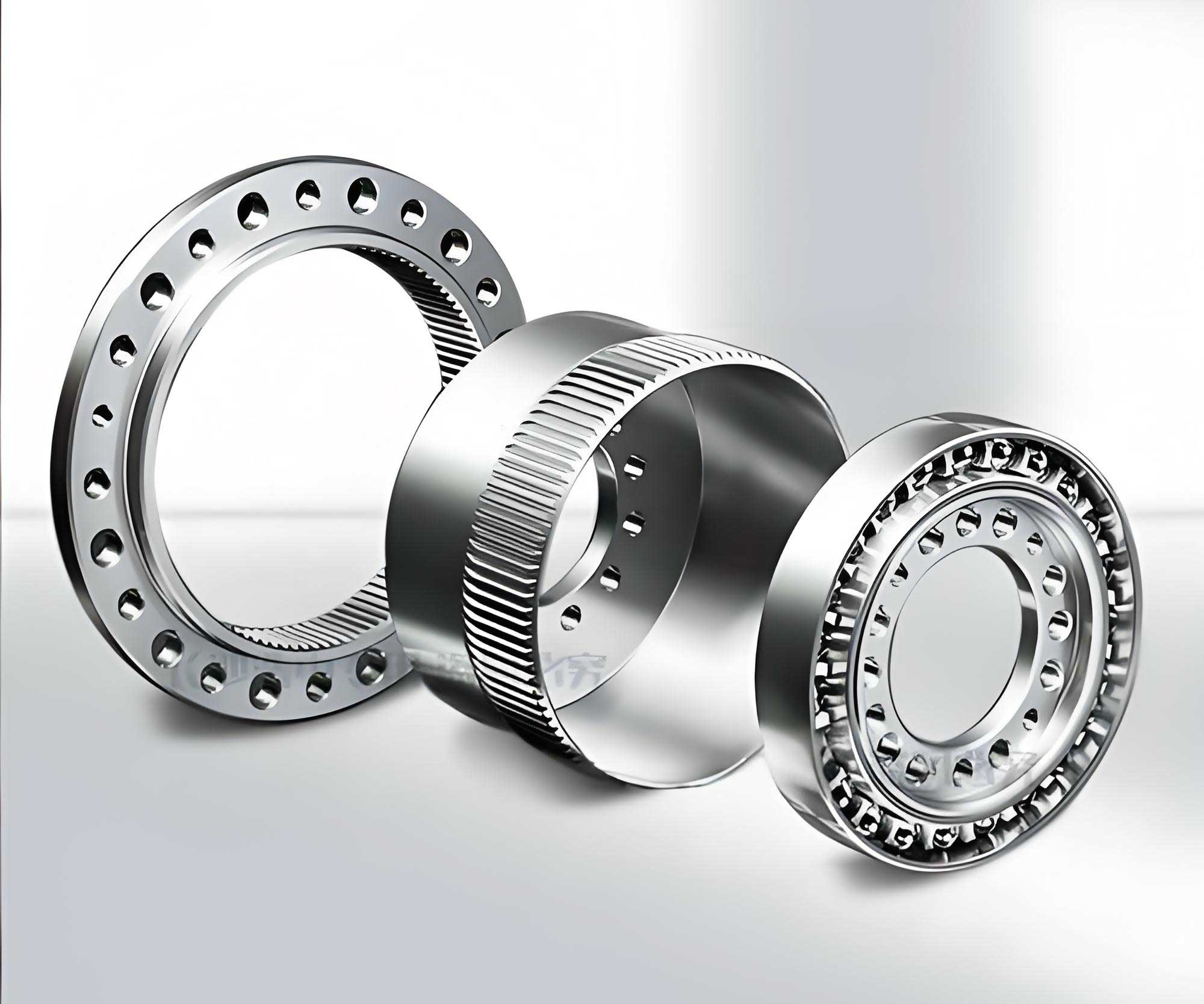
The harmonic drive gear system consists of three primary components: the flexspline (a thin-walled elastic cup with external teeth), the circular spline (a rigid ring with internal teeth), and the wave generator (an elliptical cam that deforms the flexspline). This configuration allows for significant speed reduction in a single stage. Despite its advantages, the harmonic drive gear is susceptible to failures such as tooth wear, flexspline fatigue, and buckling instability. These failure modes are influenced by numerous random factors, making reliability analysis essential. I begin by establishing mathematical models for each failure mode based on stress-strength interference theory.
For tooth surface wear, the state function defines the condition where contact stress exceeds the allowable specific pressure. The model incorporates geometric and load parameters as random variables. The state function is expressed as:
$$g_1(X) = m – \frac{2T K}{\varepsilon \phi_d Z_1^2 m^2 [P]}$$
Here, \(m\) is the module, \(Z_1\) is the number of teeth on the flexspline, \(\varepsilon\) is the meshing teeth percentage, \(\phi_d\) is the face width coefficient, \(T\) is the torque, \(K\) is the load factor, and \([P]\) is the allowable specific pressure. The vector \(X = ([P], T, K, \varepsilon, \phi_d, m)^T\) contains random variables with known mean and variance. When \(g_1(X) > 0\), the design is safe against wear.
To prevent flexspline cylindrical instability under high torque, I derive a state function based on critical shear stress. The model considers elastic buckling and includes parameters like elastic modulus \(E\), wall thickness \(\delta\), and shell length \(L\). The state function is:
$$g_2(X) = \tau_{cr} – \tau_T$$
where \(\tau_{cr}\) is calculated from:
$$\tau_{cr} = \frac{E \delta^2}{3(1-\mu^2) L r_0}$$
and \(\tau_T\) is the applied shear stress from torque. The random variables include \(E\), \(\delta\), \(L\), \(\mu\), and others.
Fatigue failure of the flexspline is a major concern due to cyclic loading. The state function combines bending and shear fatigue limits with actual stress amplitudes. It is given by:
$$g_3(X) = \frac{\sigma_{-1}}{\sigma_a} + \frac{\tau_{-1}}{\tau_a} – 1$$
where \(\sigma_{-1}\) and \(\tau_{-1}\) are material fatigue limits, and \(\sigma_a\) and \(\tau_a\) are stress amplitudes influenced by geometric and load factors. This model accounts for stress concentration coefficients, load distribution factors, and wave generator effects.
To manage these reliability models, I use the first-order second-moment (FOSM) method. The mean \(\mu_g\) and standard deviation \(\sigma_g\) of each state function are computed using random perturbation techniques. Assuming normality, the reliability index \(\beta\) and reliability \(R\) are:
$$\beta = \frac{\mu_g}{\sigma_g}, \quad R = \Phi(\beta)$$
where \(\Phi(\cdot)\) is the standard normal cumulative distribution function. For non-normal distributions, transformations can be applied, but for simplicity, I assume normal distributions in this study.
With the reliability models established, I formulate an optimization problem to minimize the harmonic drive gear’s volume while meeting target reliabilities for all failure modes. The design variables are key geometric parameters: wall thickness \(\delta\), module \(m\), face width \(b\), and shell length \(L\). The optimization model is:
$$\min f(Y) = \text{Volume of flexspline}$$
$$\text{subject to: } R_i(Y) \geq R_0, \quad i = 1,2,3$$
$$h_j(Y) \geq 0, \quad j = 1,\ldots,8$$
where \(Y = (\delta, m, b, L)^T\), \(R_0\) is the target reliability (e.g., 0.95), and \(h_j(Y)\) are geometric constraints (e.g., minimum thickness, aspect ratios). The volume objective function is derived from cylindrical geometry and tooth dimensions.
Solving this constrained nonlinear optimization problem requires advanced techniques. I employ a genetic algorithm (GA) due to its ability to handle complex, multi-modal objective functions and constraints. GA is a population-based evolutionary algorithm inspired by natural selection. It works by iteratively evolving a set of candidate solutions through selection, crossover, and mutation operations. To handle constraints, I incorporate a penalty function method that adds penalty terms for constraint violations to the objective function. The penalized objective is:
$$H(Y) = f(Y) + \omega \sum_{i=1}^{3} [\min(0, R_i – R_0)]^2 + \omega \sum_{j=1}^{8} [\min(0, h_j(Y))]^2$$
where \(\omega\) is a large penalty coefficient (e.g., 500,000). This ensures that infeasible solutions are heavily penalized, guiding the GA toward feasible regions.
The GA parameters are set as follows: population size of 100, crossover rate of 0.8, mutation rate of 0.1, and maximum generations of 500. Design variables are encoded as binary strings. The algorithm proceeds by evaluating the fitness of each individual (based on \(H(Y)\)), selecting parents via tournament selection, performing crossover to create offspring, applying mutation to introduce diversity, and replacing the population for the next generation. Convergence is monitored by tracking the best fitness over generations.
After optimization, it is crucial to understand how reliability responds to changes in design parameters. Reliability sensitivity analysis quantifies the influence of each random variable on the system reliability. Using matrix differential calculus, I compute the sensitivity of reliability \(R\) to the mean vector \(\mu_X\) and variance-covariance matrix \(\text{Var}(X)\) of the random variables. The derivatives are:
$$\frac{\partial R}{\partial \mu_X} = \frac{\partial R}{\partial \beta} \frac{\partial \beta}{\partial \mu_g} \frac{\partial \mu_g}{\partial \mu_X}$$
$$\frac{\partial R}{\partial \text{Var}(X)} = \frac{\partial R}{\partial \beta} \frac{\partial \beta}{\partial \sigma_g} \frac{\partial \sigma_g}{\partial \text{Var}(X)}$$
where \(\partial R/\partial \beta = \phi(\beta)\) (the standard normal probability density function). These sensitivities help identify critical parameters that dominate reliability, informing design adjustments and tolerance specifications.
To illustrate the entire methodology, I present a detailed numerical example. Consider a harmonic drive gear reducer with an output torque of 600 N·m, transmission ratio of 100, and initial design parameters: \(\delta = 2.2 \, \text{mm}\), \(m = 0.8 \, \text{mm}\), \(b = 28 \, \text{mm}\), \(L = 158 \, \text{mm}\). The random variables are assumed normally distributed with probabilistic characteristics summarized in Table 1.
| Variable | Symbol | Mean | Standard Deviation |
|---|---|---|---|
| Module | \(m\) | 0.8 mm | 0.02 mm |
| Face Width | \(b\) | 28 mm | 0.7 mm |
| Wall Thickness | \(\delta\) | 2.2 mm | 0.055 mm |
| Shell Length | \(L\) | 158 mm | 3.95 mm |
| Torque | \(T\) | 600 N·m | 30 N·m |
| Elastic Modulus | \(E\) | 206 GPa | 10.3 GPa |
| Allowable Specific Pressure | \([P]\) | 200 MPa | 10 MPa |
| Bending Fatigue Limit | \(\sigma_{-1}\) | 500 MPa | 25 MPa |
| Shear Fatigue Limit | \(\tau_{-1}\) | 300 MPa | 15 MPa |
| Load Factor | \(K\) | 1.5 | 0.075 |
Additional variables like stress concentration factors and meshing percentages are also randomized but omitted for brevity. The target reliability is set at \(R_0 = 0.95\) for each failure mode.
Running the genetic algorithm with the penalty function, I obtain the optimized design parameters: \(\delta = 2.000 \, \text{mm}\), \(m = 0.863 \, \text{mm}\), \(b = 9.351 \, \text{mm}\), \(L = 92.644 \, \text{mm}\). Compared to the initial design, the volume reduction is 28.46%, indicating significant material savings. The optimization process converges within 500 generations, with the best fitness stabilizing after about 300 generations.
To validate the reliability of the optimized harmonic drive gear, I perform Monte Carlo simulation (MCS) with 1,000,000 random samples drawn from the distributions of all random variables. For each sample, I evaluate the state functions \(g_1(X)\), \(g_2(X)\), and \(g_3(X)\) and check if all are positive (safe). The reliability estimate from MCS is \(R_{\text{MCS}} = 0.9999\), which comfortably exceeds the target of 0.95. This confirms that the optimized design is not only lighter but also highly reliable.
Next, I conduct sensitivity analysis for the two primary reliability models: tooth surface wear and flexspline fatigue. For tooth wear, the sensitivity of reliability to the mean of each random variable is computed. The results, shown in Table 2, indicate that reliability is most sensitive to the module \(m\), with a positive sensitivity coefficient. This means increasing the module improves wear resistance. Other parameters have negligible sensitivity, suggesting that wear reliability is robust to their variations.
| Variable | Sensitivity \(\partial R / \partial \mu_X\) |
|---|---|
| Module \(m\) | \(4.471 \times 10^{-5}\) |
| Torque \(T\) | \(-2.968 \times 10^{-6}\) |
| Load Factor \(K\) | \(-1.280 \times 10^{-2}\) |
| Allowable Pressure \([P]\) | \(1.819 \times 10^{-2}\) |
| Meshing Percentage \(\varepsilon\) | \(2.426 \times 10^{-2}\) |
| Face Width Coefficient \(\phi_d\) | \(1.769 \times 10^{-2}\) |
For flexspline fatigue reliability, the sensitivities are more pronounced and varied, as summarized in Table 3. Parameters like fatigue limits (\(\sigma_{-1}\), \(\tau_{-1}\)) and geometry (\(L\), \(m\)) have positive sensitivities, meaning higher values enhance reliability. Conversely, parameters like stress concentration factors (\(K_\sigma\), \(K_\tau\)), load factors (\(K_d\), \(K_M\)), and torque (\(T\)) have negative sensitivities, indicating they reduce reliability when increased.
| Variable | Sensitivity \(\partial R / \partial \mu_X\) |
|---|---|
| Bending Fatigue Limit \(\sigma_{-1}\) | \(4.471 \times 10^{-5}\) |
| Shear Fatigue Limit \(\tau_{-1}\) | \(2.968 \times 10^{-6}\) |
| Shell Length \(L\) | \(-1.280 \times 10^{-2}\) |
| Module \(m\) | \(-1.819 \times 10^{-2}\) |
| Stress Concentration Factor \(K_\sigma\) | \(-2.426 \times 10^{-2}\) |
| Load Factor \(K_d\) | \(1.769 \times 10^{-2}\) |
| Torque \(T\) | \(-1.386 \times 10^{-7}\) |
| Wall Thickness \(\delta\) | \(-1.664 \times 10^{-3}\) |
These sensitivity results provide actionable insights. For instance, to improve fatigue reliability, one should select materials with higher fatigue limits, increase the module or shell length, and minimize stress concentrators through design modifications. Additionally, controlling torque variations during operation can enhance reliability.
The overall methodology highlights the synergy between reliability analysis and optimization. By treating design parameters as random variables, I account for real-world uncertainties that deterministic methods ignore. The genetic algorithm efficiently navigates the design space to find optimal solutions that balance performance and safety. Moreover, sensitivity analysis adds a layer of understanding, enabling designers to focus on critical factors.
In practice, implementing this approach requires computational tools. I have developed MATLAB scripts that automate the reliability evaluation, GA optimization, and sensitivity analysis. The workflow is as follows: define random variables and their distributions, specify state functions, set target reliability, run GA to optimize design variables, validate with MCS, and compute sensitivities. This process can be adapted to other mechanical components beyond harmonic drive gears.
It is worth discussing the assumptions and limitations. The assumption of normal distribution for all random variables simplifies calculations but may not hold for some parameters, such as fatigue limits which often follow Weibull distributions. Future work could incorporate more general probability distributions using advanced reliability methods like the first-order reliability method (FORM) or second-order reliability method (SORM). Additionally, the models assume static or quasi-static loading; dynamic effects like vibrations and shock loads could be included for more comprehensive analysis.
Another consideration is the computational cost. The GA combined with reliability analysis requires multiple function evaluations, which can be time-consuming for complex models. However, with modern computing power and parallel processing, this is manageable. For industrial applications, surrogate models (e.g., response surface methods) could be used to speed up evaluations.
The harmonic drive gear design also depends on lubrication, temperature, and wear progression over time. These factors can be integrated as additional random variables or through degradation models. Reliability-based optimization can then be extended to include time-dependent reliability (e.g., reliability over the gear’s lifespan), leading to predictive maintenance strategies.
From a broader perspective, this work contributes to the field of reliability-based design optimization (RBDO). RBDO is increasingly adopted in aerospace, automotive, and energy sectors where safety and performance are critical. The harmonic drive gear serves as an excellent example due to its precision and high-stakes applications. By demonstrating RBDO on this component, I hope to encourage its use in other mechanical systems.
In conclusion, I have presented a robust framework for reliability optimization of harmonic drive gears using genetic algorithm. The approach combines probabilistic failure models, evolutionary optimization, and sensitivity analysis to achieve designs that are both lightweight and reliable. The numerical example confirms that significant volume reduction (over 28%) is possible while meeting reliability targets, validated by Monte Carlo simulation. Sensitivity analysis further identifies key parameters that influence reliability, guiding design improvements. This methodology not only enhances the performance of harmonic drive gears but also promotes a probabilistic mindset in engineering design, leading to safer and more efficient products.
Looking ahead, I envision integrating machine learning techniques with RBDO to handle even more complex design spaces. For instance, neural networks could approximate state functions, reducing computational effort. Additionally, multi-objective optimization could balance reliability, cost, and weight simultaneously. As harmonic drive gears continue to evolve for next-generation robotics and space exploration, reliability will remain paramount, and methods like the one described here will be essential tools for engineers.
I encourage practitioners to adopt these probabilistic approaches in their design processes. By embracing uncertainties rather than avoiding them, we can create innovative solutions that push the boundaries of mechanical systems. The harmonic drive gear, with its unique blend of elegance and utility, exemplifies the power of reliability engineering in achieving excellence.