
The precision and reliability of a planetary roller screw assembly are paramount for its successful application in demanding fields such as aerospace, robotics, and high-performance machine tools. As a mechanical designer specializing in high-lead power transmission components, I have consistently found that one of the most critical, yet nuanced, aspects of designing a robust planetary roller screw assembly is the selection of modification coefficients for the internal gear ring and the roller end gears. An improper choice can lead to premature failure, reduced load capacity, or unacceptable noise and vibration, undermining the superior potential of the planetary roller screw assembly over alternatives like ball screws. This article details a comprehensive methodology, developed from first principles and practical experience, for optimizing these coefficients to maximize performance and longevity.
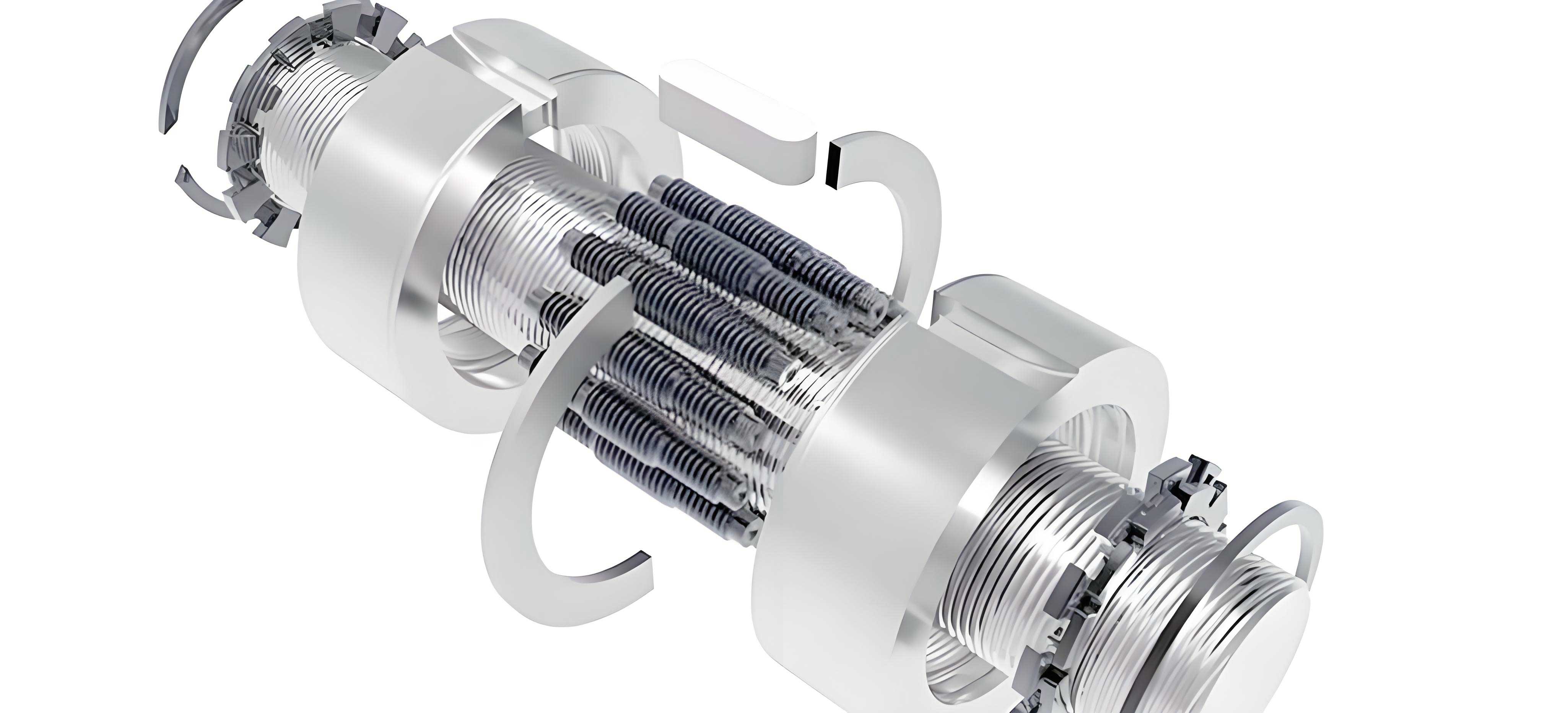
The fundamental operation of a planetary roller screw assembly involves the conversion of rotary motion to linear motion through a multi-body rolling contact mechanism. At its core are the threaded screw, the nut, and a set of planetary rollers. The rollers are not simple cylinders; they feature a threaded section that meshes with both the screw and the nut, and crucially, they have a spur or helical gear machined on one or both ends. This end gear meshes with a stationary internal gear ring housed within the nut. This gear train ensures perfect synchronization of the rollers’ planetary motion, preventing kinematic interference and distributing the load evenly. The entire system, comprising the screw (acting as a sun gear), the rollers (planetary gears), and the internal ring gear, forms a precise epicyclic gear system superimposed on a set of threaded engagements. Therefore, the health of the gear mesh directly impacts the smoothness, efficiency, and load-sharing capability of the entire planetary roller screw assembly.
Principles Governing Modification Coefficient Selection
The primary purpose of applying profile shift (modification) to gears in a planetary roller screw assembly is to avoid the standard gear’s shortcomings and tailor the tooth geometry to specific operational demands. The selection is not arbitrary but must be guided by principles aimed at preventing specific failure modes common in high-load, precision gear trains.
1. Maximizing Contact Strength (Avoiding Pitting): The contact stress at the meshing tooth flanks is a primary driver for surface fatigue failures like pitting. According to Hertzian contact theory, the contact stress $$ \sigma_H $$ is inversely proportional to the square root of the equivalent radius of curvature at the contact point. By applying positive profile shift (where applicable), the tooth profiles become less curved (fuller) in the critical contact region. This increases the radii of curvature, thereby reducing the contact stress. Consequently, to enhance the pitting resistance of the gear pair in a planetary roller screw assembly, the sum of the modification coefficients $$ x_{\Sigma} = x_1 + x_2 $$ should be as large as possible, pushing the operating pressure angle $$ \alpha’ $$ higher than the standard value.
2. Balancing and Maximizing Bending Strength (Avoiding Tooth Breakage): Root bending stress is the leading cause of catastrophic tooth failure. The bending stress $$ \sigma_F $$ is highly influenced by the tooth shape factor, which in turn depends on the modification. A positive shift generally thickens the tooth root, increasing its bending strength. However, the internal gear and the planetary roller gear often have vastly different numbers of teeth. An unoptimized shift can lead to one gear being significantly weaker than the other. The goal is to equalize the safety factors against bending fatigue for both gears, making the system fail-safe rather than having a single point of failure. This principle places an upper bound on the permissible modification for each gear.
3. Minimizing and Equalizing Sliding (Avoiding Scoring and Wear): During the meshing cycle, the tooth flanks experience sliding motion, which can lead to adhesive wear (scoring) and abrasive wear. The specific sliding coefficients, $$ \eta_1 $$ and $$ \eta_2 $$, quantify this effect at the approach and recess points. High and unequal sliding coefficients generate more heat and accelerate wear. For optimal scuffing resistance and wear life in a planetary roller screw assembly, the specific sliding coefficients should be minimized and, ideally, made equal at both the pinion and gear. This requirement imposes a specific relationship between the two modification coefficients.
| Design Principle | Target (Mathematical Goal) | Primary Failure Mode Addressed | Effect on Modification Coefficients |
|---|---|---|---|
| Maximize Contact Strength | Maximize $$ x_{\Sigma} = x_1 + x_2 $$ | Surface Pitting (Contact Fatigue) | Pushes coefficients to increase sum. |
| Balance Bending Strength | Minimize $$ | \sigma_{F1} – \sigma_{F2} | $$ | Tooth Bending Fatigue (Breakage) | Constrains individual coefficients to achieve balance. |
| Minimize & Equalize Sliding | Minimize $$ | \eta_1 – \eta_2 | $$ | Scuffing (Adhesive Wear) & Abrasive Wear | Defines a specific optimal ratio between coefficients. |
Establishing the Comprehensive Mathematical Optimization Model
To translate the qualitative principles into a quantitative design tool, we must construct a formal optimization problem. The design variables are the profile shift coefficients: $$ x_1 $$ for the internal ring gear and $$ x_2 $$ for the planetary roller end gear. Since they are related through the fixed center distance and tooth numbers, we can choose $$ x_1 $$ as the independent variable, with $$ x_2 $$ calculated from the tooth geometry.
Development of Objective Functions
Each design principle yields a distinct objective function.
Contact Strength Objective ($$ f_1 $$): Derived from the fundamental geometry of meshing gears, the relationship between the sum of modification coefficients and the operating pressure angle is given by the no-backlash meshing equation:
$$ x_1 + x_2 = \frac{z_1 + z_2}{2 \tan \alpha} (\text{inv} \alpha’ – \text{inv} \alpha) $$
where $$ z_1, z_2 $$ are tooth numbers, $$ \alpha $$ is the standard pressure angle (typically 20°), and $$ \text{inv} \alpha = \tan \alpha – \alpha $$. To maximize contact strength, we aim to maximize this sum. Thus, our first objective is:
$$ \text{max } f_1(x_1) = x_1 + x_2(x_1) $$
Bending Strength Balance Objective ($$ f_2 $$): The bending stress for each gear is calculated using the Lewis formula enhanced with modern correction factors (ISO 6336):
$$ \sigma_{Fi} = \frac{F_t}{b m_n} K_A K_V K_{F\beta} K_{F\alpha} Y_{Fa_i} Y_{Sa_i} Y_{\epsilon} Y_{\beta} $$
Where:
- $$ F_t $$: Transverse tangential load at the reference cylinder.
- $$ b $$: Face width.
- $$ m_n $$: Normal module.
- $$ K_A, K_V, K_{F\beta}, K_{F\alpha} $$: Application, dynamic, face load, and transverse load factors.
- $$ Y_{Fa_i} $$: Tooth form factor (depends heavily on modification and virtual tooth number).
- $$ Y_{Sa_i} $$: Stress correction factor.
- $$ Y_{\epsilon}, Y_{\beta} $$: Contact ratio and helix angle factors.
The goal is to minimize the difference in bending stress. Therefore, the second objective is:
$$ \text{min } f_2(x_1) = | \sigma_{F1}(x_1) – \sigma_{F2}(x_1) | $$
Sliding Performance Objective ($$ f_3 $$): The specific sliding coefficients at the tip of the gear and pinion are defined as:
$$ \eta_1 = \frac{(u+1)(\tan \alpha_{a2} – \tan \alpha’)}{u \tan \alpha’ – \tan \alpha_{a2}} \quad \text{(for the ring gear tip)} $$
$$ \eta_2 = \frac{(u+1)(\tan \alpha_{a1} – \tan \alpha’)}{\tan \alpha’ – u \tan \alpha_{a1}} \quad \text{(for the roller gear tip)} $$
where $$ u = z_2 / z_1 $$ is the gear ratio, and $$ \alpha_{a1}, \alpha_{a2} $$ are the pressure angles at the tip circles. To promote even wear and reduce scoring risk, we minimize their difference:
$$ \text{min } f_3(x_1) = | \eta_1(x_1) – \eta_2(x_1) | $$
Formulating the Multi-Objective Function: We now face a multi-objective optimization problem. A practical and effective method is the weighted sum approach, combining the three objectives into a single scalar function. However, the objectives have different units and scales. They must first be normalized. A robust normalization function maps each objective to a range [0,1]:
$$ f_{r_i}(x_1) = \frac{f_i(x_1) – p_i}{q_i – p_i} – \frac{1}{2\pi}\sin\left(2\pi \cdot \frac{f_i(x_1) – p_i}{q_i – p_i}\right) $$
where $$ p_i $$ and $$ q_i $$ are estimates of the lower and upper bounds for each objective $$ f_i $$ over the feasible design space. The sine term helps preserve the convexity properties of the original functions.
Next, we assign weights $$ w_i $$. The “tolerance method” is suitable here, where the weight is inversely proportional to the square of the objective’s range: $$ w_i = 1 / (q_i – p_i)^2 $$. This automatically gives less weight to objectives with a large natural variation and more weight to those that are sensitive. The final, aggregate objective function to be minimized is:
$$ \text{min } F(x_1) = -w_1 f_{r1}(x_1) + w_2 f_{r2}(x_1) + w_3 f_{r3}(x_1) $$
Note the negative sign for $$ f_{r1} $$ because we wish to maximize the original $$ f_1 $$ (contact strength).
Definition of Geometric and Performance Constraints
The search for the optimal $$ x_1 $$ is not unbounded. It must satisfy a set of hard constraints derived from the geometry and functional requirements of the planetary roller screw assembly.
1. Tooth Tip Thickness Constraint: Excessive positive shift can lead to a pointed tooth tip, which is weak and prone to overheating. A minimum allowable tip thickness ($$ s_a $$) must be maintained, typically $$ s_a \geq 0.25 m_n $$. This constraint is checked after calculating the tip circle geometry.
2. Transverse Contact Ratio Constraint ($$ \epsilon_{\alpha} $$): For smooth and continuous power transmission, the contact ratio must exceed a minimum value, usually 1.2. The formula is:
$$ \epsilon_{\alpha} = \frac{1}{2\pi} \left[ z_1 (\tan \alpha_{a1} – \tan \alpha’) – z_2 (\tan \alpha_{a2} – \tan \alpha’) \right] \geq 1.2 $$
For an internal mesh, the second term is subtracted. This constraint often limits how large the sum of modification coefficients can be, as a high $$ \alpha’ $$ reduces the contact ratio.
3. Interference Avoidance Constraints: Several types of geometric interference must be prevented.
- Trochoidal Interference: The tip of the planet gear must not undercut the root fillet of the internal gear during engagement. The condition is:
$$ z_1(\delta_1 + \text{inv} \alpha_{a1}) – z_2(\delta_2 + \text{inv} \alpha_{a2}) + (z_2 – z_1)\text{inv} \alpha’ \geq 0 $$
where $$ \delta_i = \arccos((r_{ai}^2 – r_{bi}^2)^{1/2} / r_{ai}) $$. A small safety margin (e.g., 0.05) is added. - Tip Clearance Constraint: There must be adequate radial clearance between the tip of the planet gear and the root of the internal gear, and vice versa.
$$ g_1(x_1) = R_{a2} – R_{f1} – a’ \geq 0.1 m_n $$
$$ g_2(x_1) = R_{a1} – R_{a2} – a’ \geq 0.1 m_n \quad \text{(For internal mesh, this checks radial gap)} $$
Here, $$ R_a $$ and $$ R_f $$ are tip and root radii, and $$ a’ $$ is the operating center distance.
4. Radial Assembly Constraint for Multiple Planets: In a multi-roller planetary roller screw assembly, the rollers must be able to be assembled radially between the screw and the nut. This imposes a kinematic condition relating the number of teeth and the number of rollers ($$ N $$):
$$ \frac{z_1 – z_2}{N} = \text{Integer} $$
While this doesn’t directly affect $$ x_1 $$, it is a prerequisite for selecting $$ z_1 $$ and $$ z_2 $$.
| Constraint Name | Mathematical Form | Physical Rationale |
|---|---|---|
| Contact Ratio | $$ \epsilon_{\alpha} \geq 1.2 $$ | Ensures smooth, continuous meshing action. |
| Tip Thickness | $$ s_{a1}, s_{a2} \geq 0.25m_n $$ | Prevents weak, pointed tooth tips. |
| Trochoidal Interference | $$ g_{troch}(x_1) \geq 0.05 $$ | Prevents fillet undercutting during mesh. |
| Radial Tip Clearance | $$ R_{a2} – R_{f1} – a’ \geq 0.1m_n $$ | Ensures physical space for lubrication and tolerance. |
| Internal Gear Tip Clearance | $$ R_{a1} – R_{a2} – a’ \geq 0.1m_n $$ | Prevents the planet tips from contacting the ring gear “roof”. |
Solution via the Complex Method
The formulated problem is a single-variable nonlinear optimization with inequality constraints. While various methods exist, the Complex (or Box) method is particularly well-suited. It is a direct search method, an extension of the Simplex method, that handles constraints explicitly by working within the feasible region. It does not require derivative information, making it robust for problems with discontinuous or noisy constraint boundaries, which can occur in gear geometry checks.
Step-by-Step Algorithm for the Planetary Roller Screw Assembly Problem:
- Initialization: Define the gear parameters ($$ z_1, z_2, m_n, \alpha, a’ $$). Set the number of vertices for the complex, typically $$ k = 2n $$ where $$ n=1 $$ (our variable count), so $$ k=9 $$ provides a good search pattern.
- Generate Feasible Starting Complex:
- Generate a random point $$ x_1^{(1)} $$ within reasonable bounds (e.g., [-1, 1]).
- Check all constraints $$ g_u(x_1^{(1)}) \leq 0 $$. If violated, move the point towards the center of the feasible region (initially estimated) until it is feasible. This center can be found by a simple bisection search along the line from the infeasible point to a known feasible point (e.g., $$ x_1=0 $$).
- Repeat to generate all $$ k $$ distinct, feasible vertices: $$ x_1^{(1)}, x_1^{(2)}, …, x_1^{(k)} $$.
- Evaluation and Reflection (Main Loop):
- Evaluate the objective function $$ F(x_1) $$ at all $$ k $$ vertices.
- Identify the worst vertex $$ x_1^{(h)} $$ with the highest (least optimal) $$ F $$ value.
- Calculate the centroid $$ \bar{x}_1 $$ of the remaining $$ k-1 $$ vertices (excluding the worst):
$$ \bar{x}_1 = \frac{1}{k-1} \sum_{i=1, i \neq h}^{k} x_1^{(i)} $$ - Compute the reflection of the worst point through the centroid:
$$ x_1^{(r)} = \bar{x}_1 + \beta (\bar{x}_1 – x_1^{(h)}) $$
where the reflection coefficient $$ \beta > 0 $$ is typically set to 1.3. - Feasibility Check and Adjustment: This is the critical step for the planetary roller screw assembly problem.
- If $$ x_1^{(r)} $$ is feasible (satisfies all $$ g_u $$), proceed.
- If $$ x_1^{(r)} $$ is infeasible, move it halfway back towards the centroid: $$ x_1^{(r)} := (\bar{x}_1 + x_1^{(r)})/2 $$. Repeat until feasibility is achieved. This ensures the complex remains within the feasible geometric domain.
- Acceptance: Compare $$ F(x_1^{(r)}) $$ with $$ F(x_1^{(h)}) $$.
- If $$ F(x_1^{(r)}) < F(x_1^{(h)}) $$ (better), replace $$ x_1^{(h)} $$ with $$ x_1^{(r)} $$.
- If not better, try a contraction: $$ x_1^{(c)} = \bar{x}_1 + \gamma (x_1^{(h)} – \bar{x}_1) $$ with $$ \gamma=0.5 $$. If $$ F(x_1^{(c)}) < F(x_1^{(h)}) $$, replace the worst vertex with the contracted point.
- If contraction also fails, shrink the entire complex towards the best vertex by a factor (e.g., 0.5) and restart the vertex generation process locally.
- Convergence Check: The loop continues until the complex collapses sufficiently. A standard termination criterion is when the standard deviation of the objective function values across all vertices falls below a small tolerance $$ \epsilon $$:
$$ \sqrt{ \frac{1}{k} \sum_{i=1}^{k} (F(x_1^{(i)}) – \bar{F})^2 } < \epsilon $$
where $$ \bar{F} $$ is the mean objective value. The vertex with the lowest $$ F $$ value is declared the optimal solution $$ x_1^* $$.
Application Case Study and Results
To demonstrate the efficacy of this methodology, let’s apply it to the design of a high-load planetary roller screw assembly. The core geometric parameters are derived from a known configuration.
| Parameter | Symbol | Value |
|---|---|---|
| Screw Pitch Diameter | $$ d_s $$ | 15.0 mm |
| Lead / Pitch | $$ P_h $$ | 2.0 mm |
| Internal Ring Gear Teeth | $$ z_1 $$ | 100 |
| Planet Roller Gear Teeth | $$ z_2 $$ | 20 |
| Normal Module | $$ m_n $$ | 0.25 mm |
| Standard Pressure Angle | $$ \alpha $$ | 20° |
| Operating Center Distance | $$ a’ $$ | 10.0 mm |
Pre-optimization Analysis: The initial, unshifted design ($$ x_1 = x_2 = 0 $$) results in an operating pressure angle equal to the standard 20°. Analysis shows a moderate contact ratio, but the bending stress in the planet gear (with only 20 teeth) is significantly higher than in the robust 100-tooth internal gear, creating a weak link. The sliding coefficients are also unequal.
Optimization Execution: Implementing the Complex Method algorithm with the constraints and objective function described yields the following results:
- Objective Function Bounds Determined: $$ p_1=2.68, q_1=5.38 $$; $$ p_2=0, q_2=33.2 $$ (MPa difference); $$ p_3=0, q_3=3.08 $$.
- Calculated Weights: $$ w_1 = 1/(5.38-2.68)^2 \approx 0.35 $$, $$ w_2 \approx 0.01 $$, $$ w_3 \approx 0.81 $$. The high weight for $$ w_3 $$ indicates that sliding performance is the most sensitive and critical objective for this specific set of parameters and bounds.
Optimal Solution: The algorithm converges to:
$$ x_1^* = +0.21, \quad x_2^* = -0.16 $$
This gives a sum $$ x_{\Sigma} = +0.05 $$, a modest increase that slightly raises the contact pressure angle, improving contact strength. The negative shift on the planet gear and positive shift on the internal gear work to balance their root thicknesses, dramatically reducing the bending stress disparity. Most importantly, this combination optimally adjusts the tip geometries to nearly equalize the specific sliding coefficients, thereby minimizing the risk of scuffing and ensuring even wear across the highly stressed gear mesh of the planetary roller screw assembly. All geometric constraints, including contact ratio > 1.2 and clearances > 0.1*m_n, are satisfied.
| Performance Metric | Standard Gears (x1=0, x2=0) | Optimized Gears (x1=+0.21, x2=-0.16) | Improvement |
|---|---|---|---|
| Sum of Modification Coefficients ($$ x_{\Sigma} $$) | 0.00 | +0.05 | Increased contact strength |
| Operating Pressure Angle ($$ \alpha’ $$) | 20.00° | 20.25° | Slightly increased |
| Bending Stress Difference ($$ |\sigma_{F1}-\sigma_{F2}| $$) | 28.5 MPa | 4.1 MPa | ~85% reduction (Balanced) |
| Specific Sliding Difference ($$ |\eta_1 – \eta_2| $$) | 2.45 | 0.22 | ~91% reduction (Equalized) |
| Transverse Contact Ratio ($$ \epsilon_{\alpha} $$) | 1.45 | 1.38 | Still above 1.2 minimum |
Conclusion
The design of a high-performance planetary roller screw assembly demands a holistic approach where every subsystem is optimized. The gear train responsible for synchronization is not merely an auxiliary component but a critical element determining overall reliability. The systematic methodology presented—translating failure mode analysis into quantified objective functions, incorporating precise geometric and assembly constraints, and solving the resulting model with a robust algorithm like the Complex Method—provides a powerful framework for determining the optimal profile shift coefficients. This process moves beyond trial-and-error or rule-of-thumb selections, enabling the design of a planetary roller screw assembly where the gear mesh exhibits maximized contact strength, balanced bending strength, and minimized wear potential. The result is a more reliable, durable, and predictable component, fully leveraging the inherent advantages of the planetary roller screw principle for the most demanding mechanical applications.