
This article presents a comprehensive investigation into the service life of a standard-type planetary roller screw assembly, a critical component in modern electro-mechanical actuation systems. The focus is on establishing a robust life prediction methodology and analyzing the influence of key design parameters, specifically the screw lead (and its related thread lead angle) and the number of rollers. The life of the planetary roller screw assembly is determined through two complementary approaches: an analytical model derived from mechanical contact theory and a detailed finite element analysis (FEA) simulation. The results from both methods are compared and validated. Subsequently, a parametric study is conducted to understand how modifications to the screw lead and the number of rollers affect the predicted lifespan of the assembly, providing valuable insights for optimizing the design of high-reliability, long-life planetary roller screw assemblies.
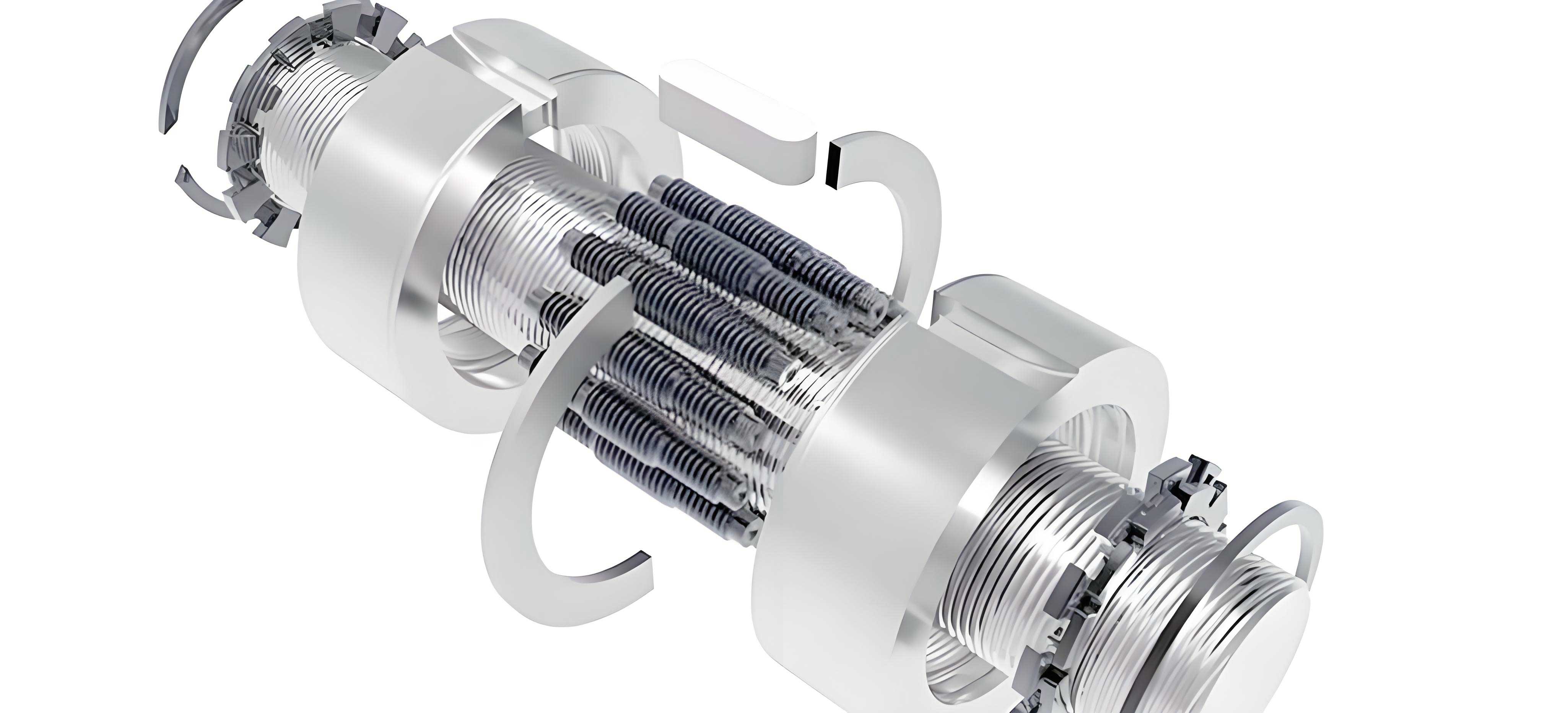
The planetary roller screw assembly is a mechanical device that converts rotational motion into linear motion, or vice-versa, offering significant advantages over traditional ball screws. These advantages include a higher power-to-weight ratio, greater load capacity, higher permissible speeds, and superior longevity and reliability. The standard configuration, which is the subject of this analysis, typically features a rotating screw, multiple threaded rollers distributed around it, and a translating nut. The rollers engage with both the screw and the nut threads, and their planetary motion is synchronized via gear rings at the ends of the nut. The performance and durability of this planetary roller screw assembly are paramount for applications in aerospace, robotics, and machine tools, where failure is not an option.
Theoretical Life Prediction Model for the Planetary Roller Screw Assembly
The foundational approach to predicting the life of a planetary roller screw assembly is based on rolling contact fatigue theory, analogous to bearing life calculation but adapted for the unique geometry of the screw thread contacts. The life is defined as the number of revolutions (or cycles) the assembly can endure before the first signs of fatigue spalling appear on the contact surfaces of the screw, nut, or rollers. The core of the model is the calculation of the basic dynamic axial load rating, which represents the constant axial load that a group of identical planetary roller screw assemblies can withstand for one million revolutions with a 90% survival probability.
The life calculation requires several geometric and material parameters. For this study, a specific planetary roller screw assembly design is used as a baseline. Its key structural parameters are summarized in the table below.
| Parameter Type | Symbol | Value | Unit |
|---|---|---|---|
| Screw Pitch Diameter | \( d_s \) | 8.00 | mm |
| Nut Pitch Diameter | \( d_n \) | 16.00 | mm |
| Roller Pitch Diameter | \( d_r \) | 4.00 | mm |
| Number of Screw Thread Starts | \( N \) | 4 | – |
| Screw Lead | \( P_s \) | 2.00 | mm |
| Roller Thread Length | \( L_r \) | 8.00 | mm |
| Contact Angle | \( \alpha \) | 45 | ° |
| Number of Rollers | \( n \) | 8 | – |
| Thread Profile Radius | – | 3.1357 | mm |
The step-by-step analytical procedure for life estimation of the planetary roller screw assembly is as follows:
1. Roller Thread Pitch: The pitch of the roller thread is determined by the screw lead and the number of screw starts.
$$ p_r = \frac{P_s}{N} $$
For the baseline design: \( p_r = \frac{2.00}{4} = 0.50 \text{ mm} \).
2. Contact Point Diameter: This is a critical parameter representing the effective diameter for Hertzian contact calculation between the roller and screw/nut threads. A standard empirical relation is used.
$$ D_w = 2.5 \sqrt{p_r} \sqrt[4]{d_r^2} $$
3. Structural Coefficient: This dimensionless coefficient relates the contact geometry.
$$ \gamma = \frac{D_w \cos \alpha}{D_{pw}} $$
where \( D_{pw} \) is the pitch diameter of the thread engagement, approximately \( (d_s + d_n)/2 \).
4. Geometry Factor: A complex factor \( f_c \) that encapsulates the influence of thread profile, contact angle, and structural coefficient on the load-carrying capacity. It is derived from empirical fits to extensive test data for the planetary roller screw assembly.
$$ f_c = 93.2 \left(1 – \frac{\sin \alpha}{3}\right) \left( \frac{2 f_{rs}}{2 f_{rs} – 1} \right)^{0.41} \frac{\gamma^{0.3} (1-\gamma)^{1.39}}{(1+\gamma)^{1/3}} $$
Here, \( f_{rs} \) is the conformity ratio of the thread groove. For a standard double-arc profile, a typical value of 0.555 is used.
5. Screw Lead Angle: The helix angle of the screw thread at its pitch diameter.
$$ \phi = \arctan\left( \frac{P_s}{\pi d_s} \right) $$
6. Total Number of Contact Points: This is a major advantage of the planetary roller screw assembly. The load is shared across multiple contact points simultaneously.
$$ Z_1 = n \cdot \frac{L_r}{p_r} $$
This calculates the number of roller threads in contact with the screw/nut along the engaged length. For the baseline: \( Z_1 = 8 \cdot \frac{8.00}{0.50} = 128 \) contact points.
7. Basic Dynamic Axial Load Rating (\( C_a \)): The fundamental capacity of the planetary roller screw assembly.
$$ C_a = f_c (\cos \alpha)^{0.86} Z_1^{\,2/3} D_w^{\,1.8} \tan \alpha (\cos \phi)^{1/3} $$
This equation shows the strong, non-linear influence of the number of contact points \( Z_1 \) and the contact point diameter \( D_w \) on the load rating.
8. Modified Dynamic Axial Load Rating (\( C_{am} \)): The basic rating is adjusted for material hardness, manufacturing accuracy, and material quality.
$$ C_{am} = f_h \cdot f_{ac} \cdot f_m \cdot C_a $$
where:
- \( f_h \): Hardness factor. For a through-hardened material like GCr15 steel with a hardness of 697 HV, \( f_h = \left( \frac{697}{654} \right)^3 \approx 1.21 \).
- \( f_{ac}, f_m \): Accuracy and material factors, typically taken as 1.0 for standard commercial quality.
9. Equivalent Axial Load (\( F_m \)): For a constant applied load \( F \), the equivalent load is simply \( F_m = F \).
10. Life Calculation (in revolutions): The final life of the planetary roller screw assembly is given by the standard Lundberg-Palmgren fatigue life formula, adjusted with application factors.
$$ L_{10} = \left( \frac{C_{am}}{f_F \cdot F_m} \right)^3 \times 10^6 \text{ revolutions} $$
where:
- \( L_{10} \): Life in revolutions with 90% reliability (10% probability of failure).
- \( f_F \): Load factor accounting for shock and vibration. For smooth operation, \( f_F = 1.1 \).
If one complete back-and-forth cycle of the nut corresponds to \( N_{cycle} \) screw revolutions, the life in cycles is:
$$ \text{Life (cycles)} = \frac{L_{10}}{N_{cycle}} $$
For the baseline assembly moving 30 mm per stroke with a 2 mm lead, \( N_{cycle} = 30 \) revolutions.
Finite Element Analysis of the Planetary Roller Screw Assembly
To complement and validate the analytical model, a detailed 3D finite element analysis (FEA) was performed. This approach allows for the visualization of stress fields and the identification of critical fatigue locations within the complex geometry of the planetary roller screw assembly, which are not immediately apparent from the analytical formulas.
Model Simplification and Meshing: Due to the high computational cost of modeling all 8 rollers and their contacts, a symmetry approach was employed. Given the periodic nature of the planetary roller screw assembly, a 1/8th sector model (45-degree segment) containing one roller was created. Accordingly, the applied axial load was scaled to 1/8th of the full load. Components not primarily involved in load bearing, such as the synchronizing gear rings, were omitted to simplify the model. The core components—screw, nut, and one roller—were imported into ANSYS Workbench.
The material properties for all components (GCr15 steel) were assigned as follows:
| Material | Elastic Modulus (GPa) | Poisson’s Ratio | Density (g/cm³) |
|---|---|---|---|
| GCr15 | 208 | 0.3 | 7.8 |
A high-quality, hex-dominant mesh was generated with local refinement in the critical thread contact regions to capture the high stress gradients accurately. The final meshed model consisted of approximately 73,500 nodes and 40,800 elements.
Boundary Conditions and Loading: The following boundary conditions were applied to simulate the standard operating mode of the planetary roller screw assembly (screw rotating, nut translating):
- Contacts: Frictional contacts were defined between the roller threads and both the screw and nut threads.
- Screw: Fixed in all translational degrees of freedom. Only rotation about its axis was permitted. A rotational displacement was applied to simulate driving torque.
- Nut: Fixed in all rotational degrees of freedom. Only translation along its axis (the screw axis) was permitted.
- Roller: Its planetary motion (rotation + revolution) was constrained by the thread contacts and the symmetry faces.
- Load: A scaled axial force (Full Load / 8) was applied to the nut in the direction opposing its motion.
Fatigue Life Post-Processing: A stress-life (S-N) approach was used for fatigue evaluation within the FEA software. The “SN-None” method was selected, and a fatigue strength factor \( K_f \) of 1.0 was assumed, implying no derating for surface finish or other effects beyond the basic S-N curve of the material. A fully reversed stress cycle was assumed. The software calculates the life (in cycles) for each node based on the local alternating stress.
The FEA results clearly identified the root of the roller threads at the contact interface with the screw as the location of minimum life (highest stress concentration), which aligns with practical failure modes observed in planetary roller screw assembly testing. This critical area is where fatigue spalling is most likely to initiate.
Comparison of Analytical and FEA Results for the Planetary Roller Screw Assembly
The reliability of the design process for a planetary roller screw assembly depends on having accurate predictive tools. To validate the analytical model, its life predictions were compared against the FEA simulation results for the baseline design under a range of axial loads. The results are presented in the graph and table below.
Life vs. Axial Load for the Baseline Planetary Roller Screw Assembly
| Axial Load, \( F \) (N) | Analytical Life, \( L_{10} \) (cycles) | FEA Life (cycles) | Deviation (%) |
|---|---|---|---|
| 1000 | 3.82 x 10⁷ | 3.91 x 10⁷ | +2.4% |
| 1500 | 1.13 x 10⁷ | 1.16 x 10⁷ | +2.7% |
| 2000 | 4.78 x 10⁶ | 4.88 x 10⁶ | +2.1% |
| 2500 | 2.45 x 10⁶ | 2.38 x 10⁶ | -2.9% |
| 3000 | 1.41 x 10⁶ | 1.36 x 10⁶ | -3.5% |
| 3500 | 8.92 x 10⁵ | 8.65 x 10⁵ | -3.0% |
| 4000 | 5.97 x 10⁵ | 5.78 x 10⁵ | -3.2% |
| 4500 | 4.19 x 10⁵ | 4.03 x 10⁵ | -3.8% |
The agreement between the analytical model and the FEA simulation is excellent across the entire load range. The maximum deviation observed is less than 5%, which is well within acceptable limits for engineering design and life prediction of a planetary roller screw assembly. This close correlation validates the analytical formulas as a reliable and efficient tool for the preliminary design and sizing of the planetary roller screw assembly. The FEA further confirms the location of the critical stress region, providing additional insight for detailed design refinement, such as optimizing thread root fillets.
Parametric Study: Influence of Screw Lead / Lead Angle
The screw lead \( P_s \) is a fundamental design parameter that directly determines the linear displacement per screw revolution and the mechanical advantage of the planetary roller screw assembly. It also defines the screw’s lead angle \( \phi \). This study investigates how varying the screw lead, while keeping the screw pitch diameter (\( d_s \)) and number of starts (\( N \)) constant, affects the predicted fatigue life.
From the analytical model, the influence is multifaceted. The screw lead appears in several key equations:
- It directly sets the roller pitch: \( p_r = P_s / N \).
- It affects the contact point diameter: \( D_w \propto \sqrt{p_r} \).
- It defines the lead angle: \( \phi = \arctan(P_s / (\pi d_s)) \).
- It inversely affects the total number of contact points for a fixed roller length: \( Z_1 = n \cdot (L_r / p_r) \). A larger lead means fewer threads (and thus fewer contact points) along the same roller length.
The modified dynamic load rating can be expressed as a function of screw lead by combining the relevant equations:
$$ C_{am} \propto \left( \frac{L_r}{P_s} \right)^{2/3} \cdot (P_s)^{0.9} \cdot \left[ \cos\left( \arctan\left( \frac{P_s}{\pi d_s} \right) \right) \right]^{1/3} \cdot (\text{Other Constants}) $$
This relationship is complex. While \( Z_1 \) decreases with \( P_s \) (reducing life), \( D_w \) and the \( \cos \phi \) term increase. The net effect was calculated analytically for a constant axial load of 1500 N.
The results, showing life as a function of both screw lead and its corresponding lead angle, are tabulated below.
| Screw Lead, \( P_s \) (mm) | Lead Angle, \( \phi \) (degrees) | Predicted Life, \( L_{10} \) (cycles) |
|---|---|---|
| 1.0 | 2.28 | 6.45 x 10⁶ |
| 1.5 | 3.41 | 8.71 x 10⁶ |
| 2.0 (Baseline) | 4.55 | 1.13 x 10⁷ |
| 2.5 | 5.68 | 1.35 x 10⁷ |
| 3.0 | 6.80 | 1.55 x 10⁷ |
| 3.5 | 7.91 | 1.73 x 10⁷ |
| 4.0 | 8.98 | 1.89 x 10⁷ |
Conclusion: For the planetary roller screw assembly under study, increasing the screw lead (and consequently the lead angle) results in a significant increase in the predicted fatigue life. The life improves because the positive effects of a larger contact point diameter \( D_w \) and a more favorable load direction (accounted for in the \( (\cos \phi)^{1/3} \) term) outweigh the negative effect of having fewer total contact points \( Z_1 \). However, this life increase comes with trade-offs: a larger lead requires higher input torque to generate the same axial force and may reduce positioning resolution. Therefore, the selection of the optimal lead for a planetary roller screw assembly must balance lifespan requirements with the dynamic performance and control needs of the specific application.
Parametric Study: Influence of the Number of Rollers
The number of rollers \( n \) is a key design freedom in a planetary roller screw assembly. It directly scales the total number of load-bearing contact points \( Z_1 \), which intuitively should improve load sharing and life. However, there is a physical limitation: the rollers must fit around the screw without interfering with each other.
The geometric constraint for fitting \( n \) rollers of diameter \( d_r \) around a screw of diameter \( d_s \) can be derived. The center-to-center distance between adjacent rollers is \( (d_s + d_r)/2 \). The chordal distance between their centers must be greater than the roller diameter \( d_r \) to prevent physical interference. This leads to the following inequality:
$$ n < \frac{180^\circ}{\arcsin\left( \frac{d_r}{d_s + d_r} \right)} $$
For the baseline geometry (\( d_s = 8.00 \) mm, \( d_r = 4.00 \) mm):
$$ n < \frac{180^\circ}{\arcsin\left( \frac{4.00}{8.00 + 4.00} \right)} = \frac{180^\circ}{\arcsin(1/3)} \approx 9.06 $$
Therefore, the maximum number of rollers that can be physically fitted is 9. A minimum of 3 rollers is required for stable, statically determinate support.
The life of the planetary roller screw assembly was calculated analytically for roller counts from 3 to 9, keeping all other parameters (including roller length \( L_r \)) constant. The total number of contact points \( Z_1 \) scales linearly with \( n \).
| Number of Rollers, \( n \) | Total Contact Points, \( Z_1 \) | Predicted Life, \( L_{10} \) (cycles) | Life Relative to n=3 |
|---|---|---|---|
| 3 | 48 | 1.41 x 10⁶ | 1.00x |
| 4 | 64 | 2.52 x 10⁶ | 1.79x |
| 5 | 80 | 3.95 x 10⁶ | 2.80x |
| 6 | 96 | 5.68 x 10⁶ | 4.03x |
| 7 | 112 | 7.69 x 10⁶ | 5.45x |
| 8 (Baseline) | 128 | 1.13 x 10⁷ | 8.01x |
| 9 | 144 | 1.53 x 10⁷ | 10.85x |
Conclusion: The analysis conclusively shows that increasing the number of rollers is one of the most effective ways to dramatically enhance the life of a planetary roller screw assembly. Since life is proportional to \( (Z_1)^{2} \) (from \( C_a \propto Z_1^{\,2/3} \) and \( L \propto C_a^{\,3} \)), doubling the number of contact points nearly quadruples the life. Moving from 3 to 9 rollers increases the life by an order of magnitude. From a pure longevity perspective, the planetary roller screw assembly should be designed with the maximum possible number of rollers that the envelope allows. Other considerations, such as increased complexity, cost, and potential for uneven load distribution if manufacturing tolerances are poor, must also be weighed in the final design decision.
Summary and Design Implications
This detailed analysis provides a validated framework for predicting and optimizing the fatigue life of a standard planetary roller screw assembly. The close agreement (within 5%) between the analytical life model and the 3D FEA simulation establishes confidence in using the analytical formulas for rapid design iteration and sizing of the planetary roller screw assembly. The FEA offers the added benefit of pinpointing the exact location of peak stress, typically at the root of the roller threads, guiding detailed feature optimization.
The parametric studies yield clear, actionable guidelines for designers:
- Screw Lead / Lead Angle: Increasing the screw lead generally increases the life of the planetary roller screw assembly. Designers can leverage this to meet longevity targets, but must concurrently evaluate the impact on required drive torque, system stiffness, and linear speed.
- Number of Rollers: This is a highly powerful parameter. Maximizing the number of rollers within the geometric constraints is the single most effective way to boost the load rating and life of the planetary roller screw assembly. The design should always aim for the highest feasible roller count.
Future work on the planetary roller screw assembly could involve extending this analysis to other structural parameters, such as the contact angle \( \alpha \), the thread profile conformity \( f_{rs} \), and the effect of preload. Furthermore, analyzing the dynamic and thermal effects under realistic duty cycles would provide an even more comprehensive understanding of the planetary roller screw assembly’s performance limits in demanding applications like aerospace actuation.