
In the realm of precision mechanical transmissions, the planetary roller screw assembly stands out as a critical component for converting rotary motion into linear actuation with high efficiency, load capacity, and accuracy. My interest lies in extending this technology to multi-stage configurations, which offer significant advantages in applications requiring large strokes, high thrust forces, and compact installation spaces, such as in aerospace, robotics, and industrial machinery. This article delves into the rigid-body dynamic modeling and analysis of a multi-stage planetary roller screw assembly, providing a comprehensive framework to understand its motion, forces, and performance under various operational conditions. The need for such analysis stems from the growing demand for reliable and efficient long-stroke actuators, where traditional single-stage systems may fall short due to space constraints or performance limitations. Through this work, I aim to establish a foundational dynamic model that accounts for the interactions between multiple stages, enabling designers to optimize these assemblies for specific applications while ensuring robustness and longevity.
The multi-stage planetary roller screw assembly consists of several individual planetary roller screw mechanisms coupled in series, each comprising a screw, a set of rollers, a nut, and a cage. In this configuration, the rotary input is typically applied to the first-stage screw, while the final-stage nut delivers the linear output. The intermediate stages are interconnected via threaded couplings and bearings, allowing for cumulative linear displacement. Understanding the kinematics and dynamics of such a system requires a detailed analysis of each component’s motion and the forces transmitted between stages. This complexity is compounded by the presence of multiple contact points, friction effects, and inertial forces, making a rigorous dynamic model essential for predicting behavior under load. My approach focuses on developing a rigid-body model that neglects elastic deformations and manufacturing errors initially, to isolate the fundamental dynamic characteristics. This model serves as a stepping stone for more advanced analyses incorporating flexibility and imperfections.
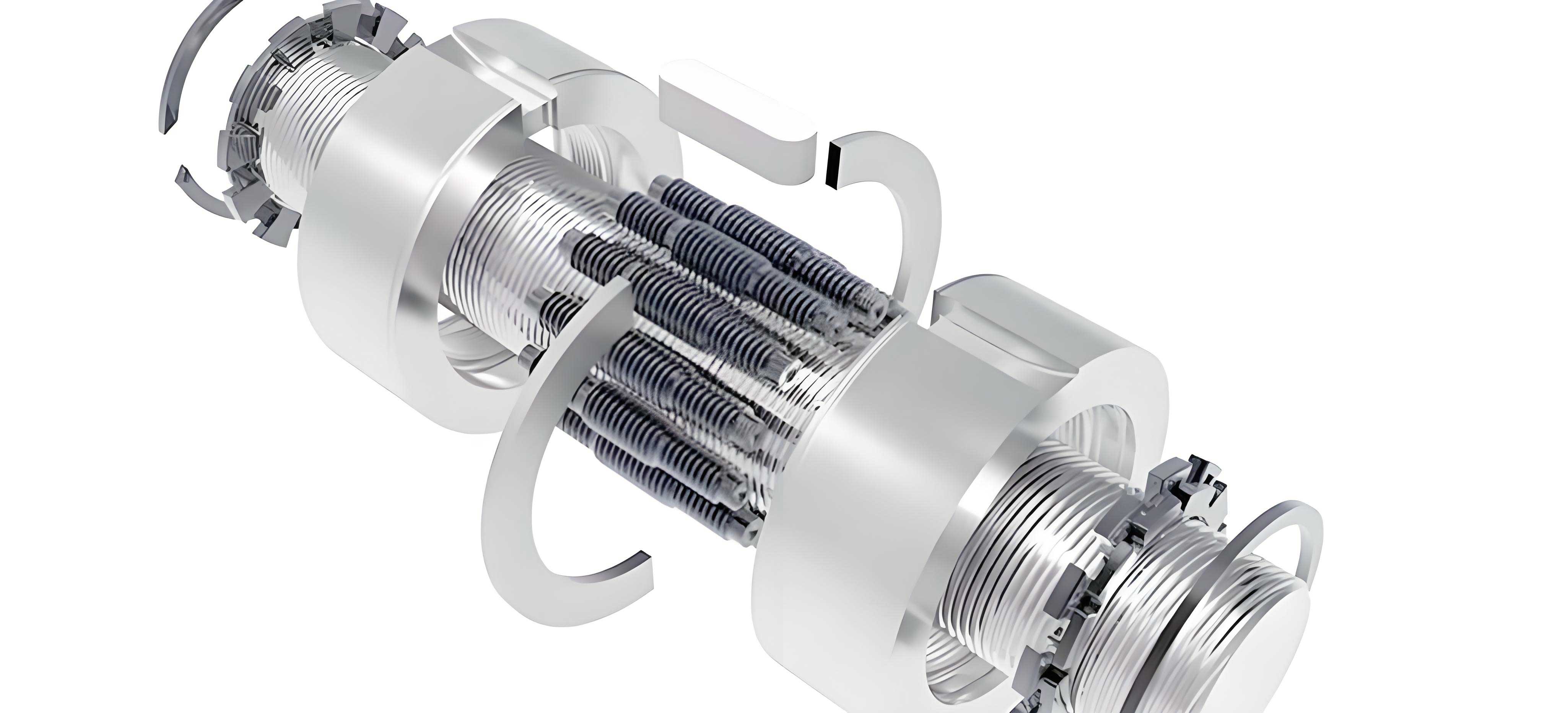
The structural composition of a multi-stage planetary roller screw assembly is pivotal to its function. Each stage operates on the principle of a planetary gear system, where rollers act as planets meshing with both the screw and nut threads. The rollers are held in place by a cage that ensures proper spacing and synchronization. In a multi-stage setup, the nut of one stage is connected to the screw of the next stage via thrust bearings and splined couplings, facilitating torque transmission and axial load support. This arrangement allows for a telescopic extension, where each additional stage contributes to the total stroke without a proportional increase in envelope size. Key parameters include the screw lead, roller diameter, number of threads, and helix angles, all of which influence the kinematic and dynamic behavior. For instance, the lead determines the linear displacement per revolution, while the helix angle affects the contact forces and efficiency. In my analysis, I consider a general multi-stage assembly with n stages, labeled from 1 to n, where stage 1 is the input stage and stage n is the output stage. The following table summarizes the primary geometric parameters for a typical two-stage planetary roller screw assembly, which I will use as a reference throughout this article.
| Parameter | Stage 1 | Stage 2 |
|---|---|---|
| Screw Nominal Radius (mm) | 9.75 | 16.50 |
| Roller Nominal Radius (mm) | 3.25 | 5.50 |
| Nut Nominal Radius (mm) | 16.25 | 27.50 |
| Screw Lead (mm) | 10 | 10 |
| Number of Screw Threads | 5 | 5 |
| Helix Angle (degrees) | 9.27 | 5.51 |
| Number of Rollers | 7 | 7 |
| Pressure Angle (degrees) | 20 | 20 |
Kinematic analysis forms the basis for understanding the motion relationships within a multi-stage planetary roller screw assembly. Assuming all threads are right-handed and there is no slip at the contacts, the rotational speed of all screws is identical due to their mechanical coupling. This can be expressed as:
$$ \dot{\theta}_{S1} = \dot{\theta}_{S2} = \cdots = \dot{\theta}_{Sn} = \dot{\theta}_S $$
where $\dot{\theta}_S$ is the common screw rotational speed. The axial velocity of the screw in stage k (for k > 1) equals the axial velocity of the nut in stage k-1, since they are directly connected. This relationship is given by:
$$ v_{Sk} = v_{N(k-1)} \quad \text{for} \quad k = 2, 3, \ldots, n $$
The axial velocity of the nut in stage k depends on the cumulative lead of all preceding screws. For a system with screw leads $L_{Si}$ for stage i, the nut velocity is:
$$ v_{Nk} = -\frac{\dot{\theta}_S}{2\pi} \sum_{i=1}^{k} L_{Si} $$
The negative sign indicates that the nut moves in the opposite direction to the screw rotation for a right-handed thread. The rollers exhibit both rotation about their own axes and revolution around the screw, governed by the cage rotation. The rotational speed of a roller in stage k is related to the cage speed by:
$$ \dot{\theta}_{Rk} = -(n_{Sk} – 1) \dot{\theta}_{Pk} $$
where $n_{Sk}$ is the number of screw threads and $\dot{\theta}_{Pk}$ is the cage rotational speed. The axial velocity of the rollers equals that of the nut in the same stage, i.e., $v_{Rk} = v_{Nk}$. These kinematic equations establish the foundation for dynamic modeling, as they define the velocities and accelerations needed for Newton’s second law.
Force analysis is crucial for determining the loads on each component in a multi-stage planetary roller screw assembly. The forces include contact normal forces, friction forces, and inertial forces. At each contact point—between screw and roller, roller and nut, roller and cage, and roller and internal gear ring—the forces must be resolved into components. For the roller in stage k, the contact forces from the screw and nut are denoted as $\mathbf{F}_{RSk}$ and $\mathbf{F}_{RNk}$, respectively. These forces act along the normals to the thread surfaces at the contact points. Using local coordinate systems attached to the cage, the normal vectors can be derived based on the thread geometry. For instance, the normal vector at the screw-roller contact point, with meshing radius $r_{RSk}$ and bias angle $\phi_{RSk}$, is given by:
$$ \mathbf{n}_{RSk}^P = \begin{bmatrix} \cos\phi_{RSk} \tan\beta_{RSk} – \sin\phi_{RSk} \tan\lambda_{RSk} \\ -\sin\phi_{RSk} \tan\beta_{RSk} – \cos\phi_{RSk} \tan\lambda_{RSk} \\ -1 \end{bmatrix} $$
where $\beta_{RSk}$ and $\lambda_{RSk}$ are the tooth flank angle and helix angle at the contact point, respectively. The force magnitude $F_{RSk}$ scales this vector to yield the contact force. Similarly, the nut-roller contact force is derived from the nut thread normal vector. Friction forces arise due to relative sliding at the contacts. For the screw-roller interface, the sliding velocity $\mathbf{v}_{RSk}^P$ is computed from the kinematic relations, and the friction force is modeled using Coulomb friction with coefficient $\mu_{RS}$:
$$ \mathbf{f}_{RSk}^P = F_{RSk} \mu_{RS} \frac{\mathbf{v}_{RSk}^P}{\|\mathbf{v}_{RSk}^P\|} \quad \text{for} \quad \dot{\theta}_S \neq 0 $$
Additional forces include those between the roller and the cage ($\mathbf{F}_{RPk}$) and between the roller and the internal gear ring ($\mathbf{F}_{RGk}$), which are essential for maintaining roller alignment and load distribution. The gear ring force typically has components related to the pressure angle $\alpha_{RG}$. Furthermore, inter-stage connections introduce friction at the screw-screw and nut-screw joints. For stage k, the friction force on the screw due to splined coupling is:
$$ f_{Sk} = -\mu_{SS} \frac{|M_{Sk}|}{r_{SSk}} \text{sign}(v_{Sk}) $$
where $\mu_{SS}$ is the friction coefficient, $M_{Sk}$ is the driving torque on the screw, $r_{SSk}$ is the effective coupling radius, and $\text{sign}()$ denotes the sign function. Similarly, the friction torque at the nut-screw connection is:
$$ M_{Nk} = \mu_{NS} |F_{Nk}| r_{NSk} \text{sign}(\dot{\theta}_S) $$
with $\mu_{NS}$ as the friction coefficient, $F_{Nk}$ the axial load on the nut, and $r_{NSk}$ the effective radius. These forces collectively influence the dynamic equilibrium of each component.
To develop the rigid-body dynamic model, I apply Newton’s second law to each component of the multi-stage planetary roller screw assembly. The model assumes rigid bodies, neglecting elastic deformations and manufacturing errors, and focuses on the translational and rotational motions. For a roller in stage k, with mass $m_{Rk}$ and moment of inertia $J_{Rk}$, the equations of motion in the local cage coordinate system are:
$$ \mathbf{F}_{RSk}^P + \mathbf{f}_{RSk}^P + \mathbf{F}_{RNk}^P + 2\mathbf{F}_{RPk}^P + 2\mathbf{F}_{RGk}^P – m_{Rk} \begin{bmatrix} \dot{\theta}_{Pk}^2 (r_{Sk} + r_{Rk}) \\ \ddot{\theta}_{Pk} (r_{Sk} + r_{Rk}) \\ -\ddot{\theta}_S L_{Sk} / (2\pi) \end{bmatrix} = \mathbf{0} $$
$$ r_{Rk} F_{RNyk} – r_{RSk} \cos\phi_{RSk} (F_{RSyk} + f_{RSyk}) – r_{RSk} \sin\phi_{RSk} (F_{RSxk} + f_{RSxk}) + 2r_{RGk} F_{RGyk} – J_{Rk} \ddot{\theta}_{Rk} = 0 $$
Here, $r_{Sk}$ and $r_{Rk}$ are the screw and roller nominal radii, and $r_{RGk}$ is the gear ring radius. The first equation represents force balance in three directions, while the second is the moment balance about the roller axis. For the screw in stage k, with mass $m_{Sk}$ and moment of inertia $J_{Sk}$, the equations are:
$$ -F_{N(k-1)} + f_{Sk} – f_{S(k+1)} + F_{S Rzk} + f_{S Rzk} – m_{Sk} \ddot{z}_{Sk} = 0 $$
$$ r_{S Rk} \left[ \cos\phi_{S Rk} (F_{S Ryk} + f_{S Ryk}) – \sin\phi_{S Rk} (F_{S Rxk} + f_{S Rxk}) \right] – M_{N(k-1)} + M_{Sk} – M_{S(k+1)} – J_{Sk} \ddot{\theta}_{Sk} = 0 $$
where $F_{N(k-1)}$ is the axial load from the previous stage nut, $M_{Sk}$ is the input torque, and $F_{S Rzk}$, $f_{S Rzk}$ are the axial components of the roller contact and friction forces on the screw. For the nut in stage k, with mass $m_{Nk}$, the equations are:
$$ -n_{\text{roller}} F_{R Nzk} + F_{Nk} + m_{Nk} \frac{\ddot{\theta}_S L_{Sk}}{2\pi} = 0 $$
$$ M_{Nk} + M_{Ck} – r_{Nk} F_{R Nyk} – r_{N Gk} F_{R Gyk} = 0 $$
where $n_{\text{roller}}$ is the number of rollers, $M_{Ck}$ is the constraint torque preventing nut rotation, and $r_{Nk}$ and $r_{N Gk}$ are the nut and gear ring radii. For the cage in stage k, with moment of inertia $J_{Pk}$, the moment equation is:
$$ -n_{\text{roller}} F_{R Pyk} (r_{Sk} + r_{Rk}) – J_{Pk} \ddot{\theta}_{Pk} = 0 $$
These equations form a system of ordinary differential equations that describe the dynamics of the multi-stage planetary roller screw assembly. The variables include the linear and angular accelerations, as well as the contact force magnitudes, which must be solved simultaneously.
The solution of the dynamic equations requires a systematic approach due to the coupling between stages. I propose a sequential solution method that starts from the output stage and proceeds backward to the input stage, leveraging the known boundary conditions. The process is outlined as follows:
- Input the geometric parameters, material properties, and operational conditions (e.g., screw speed $\dot{\theta}_S$, output load $F_{Nn}$).
- Compute the meshing characteristics, such as contact radii and angles, using thread geometry formulas.
- Initialize the cage angular velocities and accelerations for all stages to zero or estimated values.
- For stage k = n down to 1:
- Solve the dynamic equations for stage k to obtain the contact forces, accelerations, and inter-stage loads (e.g., $F_{N(k-1)}$, $M_{Sk}$).
- Use these loads as inputs for stage k-1, noting that for k=1, the screw-screw friction $f_{S1}$ is zero, and for k=n, the nut-screw friction torque $M_{Nn}$ is zero.
- Iterate if necessary to ensure consistency in accelerations and velocities, especially if friction effects are velocity-dependent.
- Output the time histories of motions and forces for all components.
This method effectively decouples the stages by treating the inter-stage loads as known boundary conditions once computed from the adjacent stage. It assumes that the system reaches steady-state or transient behavior based on the input conditions. For numerical implementation, standard ODE solvers can be employed, with careful handling of friction discontinuities using sign functions. The following table summarizes the key variables solved at each stage, highlighting the interdependence.
| Stage k | Known Inputs | Solved Variables | Outputs to Stage k-1 |
|---|---|---|---|
| n (Output) | $\dot{\theta}_S$, $F_{Nn}$, $M_{Nn}=0$ | $F_{RSn}$, $F_{RNn}$, $\ddot{\theta}_{Pn}$, etc. | $F_{N(n-1)}$, $M_{Sn}$ |
| n-1 | $\dot{\theta}_S$, $F_{N(n-1)}$, $M_{Sn}$ | $F_{RS(n-1)}$, $F_{RN(n-1)}$, $\ddot{\theta}_{P(n-1)}$, etc. | $F_{N(n-2)}$, $M_{S(n-1)}$ |
| … | … | … | … |
| 1 (Input) | $\dot{\theta}_S$, $F_{N0}=0$, $M_{S1}$ (driving torque) | $F_{RS1}$, $F_{RN1}$, $\ddot{\theta}_{P1}$, etc. | None |
To validate the dynamic model and explore its implications, I conduct numerical simulations for a two-stage planetary roller screw assembly. The parameters are as listed in the earlier table, with additional data: roller mass $m_{R1}=0.014$ kg, $m_{R2}=0.039$ kg; screw mass $m_{S1}=0.051$ kg (approximated), $m_{S2}=0.761$ kg; nut mass $m_{N1}=2.2$ kg, $m_{N2}=20$ kg; moments of inertia $J_{R1}=0.077$ kg·mm², $J_{R2}=0.471$ kg·mm², $J_{S1}=51.94$ kg·mm², $J_{S2}=172.3$ kg·mm², $J_{P1}=2.95$ kg·mm², $J_{P2}=19.88$ kg·mm². The friction coefficients are set as $\mu_{RS}=0.05$ for roller-screw contacts, and I vary $\mu_{SS}$ and $\mu_{NS}$ to study their effects. The input is a step rotational speed of $\dot{\theta}_S = 100$ rad/s, and the output load is $F_{N2} = 7000$ N. The efficiency of the assembly is defined as:
$$ \eta = \frac{F_{N2} \cdot (L_{S1} + L_{S2})}{2\pi M_{S1}} $$
where $M_{S1}$ is the input torque on the first-stage screw. The cage speed ratio $\zeta_{PSk} = \dot{\theta}_{Pk} / \dot{\theta}_S$ indicates the kinematic behavior. The contact forces $F_{RGk}$ (gear ring-roller) and $F_{RPk}$ (cage-roller) are computed from the dynamic equations. Results show that during transient start-up, the efficiency initially drops to around 0.60 due to high friction forces when cage speeds are zero, then rises in a step-wise manner as each stage’s cage reaches steady state, eventually stabilizing at approximately 0.87. This step-wise increase corresponds to the settling times of the first and second stages, as seen in the cage speed ratios. The contact forces exhibit similar transients: $F_{RGk}$ decreases initially, then rises slightly to a steady value, while $F_{RPk}$ quickly increases to its steady state. Notably, the first-stage forces are larger than those in the second stage despite the smaller screw radius, due to the higher loads transmitted through the initial stage.
The influence of inter-stage friction coefficients on the dynamics is significant. When varying $\mu_{SS}$ from 0.10 to 0.20 while keeping $\mu_{NS}=0.005$ and $\mu_{RS}=0.05$, the efficiency decreases only slightly, from about 0.872 to 0.870. This minimal impact is attributed to the small helix angles of the screws (9.27° and 5.51°), which make the efficiency less sensitive to screw-screw friction, as approximated by the formula:
$$ \eta_{SS} \approx \frac{1}{1 + \frac{\mu_{SS} \tan\lambda_{S1} \tan\lambda_{S2}}{\tan\lambda_{S1} + \tan\lambda_{S2}}} $$
In contrast, varying $\mu_{NS}$ from 0.005 to 0.105 with $\mu_{SS}=0.10$ and $\mu_{RS}=0.05$ causes a more pronounced efficiency drop, from 0.872 to 0.832. This is because nut-screw friction directly increases the input torque required. However, other dynamic characteristics, such as cage speeds and contact forces, remain relatively unaffected by $\mu_{NS}$ changes. These findings underscore the importance of minimizing nut-screw friction in multi-stage planetary roller screw assemblies to enhance efficiency, while screw-screw friction has a lesser effect for designs with small helix angles. The following table summarizes the steady-state results for different friction scenarios, illustrating these trends.
| Scenario | $\mu_{SS}$ | $\mu_{NS}$ | Steady-State Efficiency $\eta$ | $\zeta_{PS1}$ (Stage 1 Cage Ratio) | $\zeta_{PS2}$ (Stage 2 Cage Ratio) | $F_{RG1}$ (N) | $F_{RG2}$ (N) |
|---|---|---|---|---|---|---|---|
| Base | 0.10 | 0.005 | 0.872 | 0.195 | 0.198 | 12.3 | 8.7 |
| High $\mu_{SS}$ | 0.20 | 0.005 | 0.870 | 0.195 | 0.198 | 12.4 | 8.7 |
| High $\mu_{NS}$ | 0.10 | 0.105 | 0.832 | 0.195 | 0.198 | 12.3 | 8.7 |
Further analysis reveals the transient dynamics in detail. The differential equations were solved using a numerical integration scheme with a time step of 0.001 seconds over a duration of 0.5 seconds. The initial conditions assume all components are at rest. The acceleration phase shows that the first-stage cage reaches steady state within about 0.05 seconds, while the second-stage cage takes around 0.15 seconds due to its larger inertia. The input torque $M_{S1}$ peaks at the start due to static friction and inertial effects, then settles to a steady value proportional to the load and friction losses. The contact forces between rollers and threads, $F_{RSk}$ and $F_{RNk}$, also exhibit transient overshoots, which could impact fatigue life in real applications. These dynamics highlight the need for controlled start-up sequences in high-performance systems to mitigate stress peaks.
The rigid-body model presented here serves as a foundation for more advanced analyses. In practice, a planetary roller screw assembly may experience elastic deformations, thermal effects, and manufacturing errors, which can alter the load distribution and dynamic response. Future work could extend this model to include finite element methods for flexibility, or incorporate wear models to predict long-term behavior. Additionally, the model can be integrated into system-level simulations for electromechanical actuators, enabling optimization of control strategies. From a design perspective, the insights gained—such as the dominance of nut-screw friction on efficiency—suggest that attention should be paid to the selection of bearing and coupling types at inter-stage connections. Using low-friction coatings or lubricants at these junctions could yield significant performance improvements.
In conclusion, the multi-stage planetary roller screw assembly represents a sophisticated transmission solution for long-stroke, high-thrust applications. Through rigid-body dynamic modeling, I have derived a comprehensive set of equations that capture the motion and force interactions across multiple stages. The solution method enables efficient computation of transient and steady-state behaviors, providing valuable data for design and analysis. Key findings include the step-wise efficiency evolution during start-up, the larger forces in the first stage compared to subsequent stages, and the differential impact of inter-stage friction coefficients. Specifically, nut-screw friction substantially affects efficiency, while screw-screw friction has a minimal effect for small helix angles. These results underscore the importance of tailored friction management in multi-stage designs. As the demand for compact, high-performance linear actuators grows, such dynamic models will be indispensable for advancing the planetary roller screw technology toward more reliable and efficient implementations.