
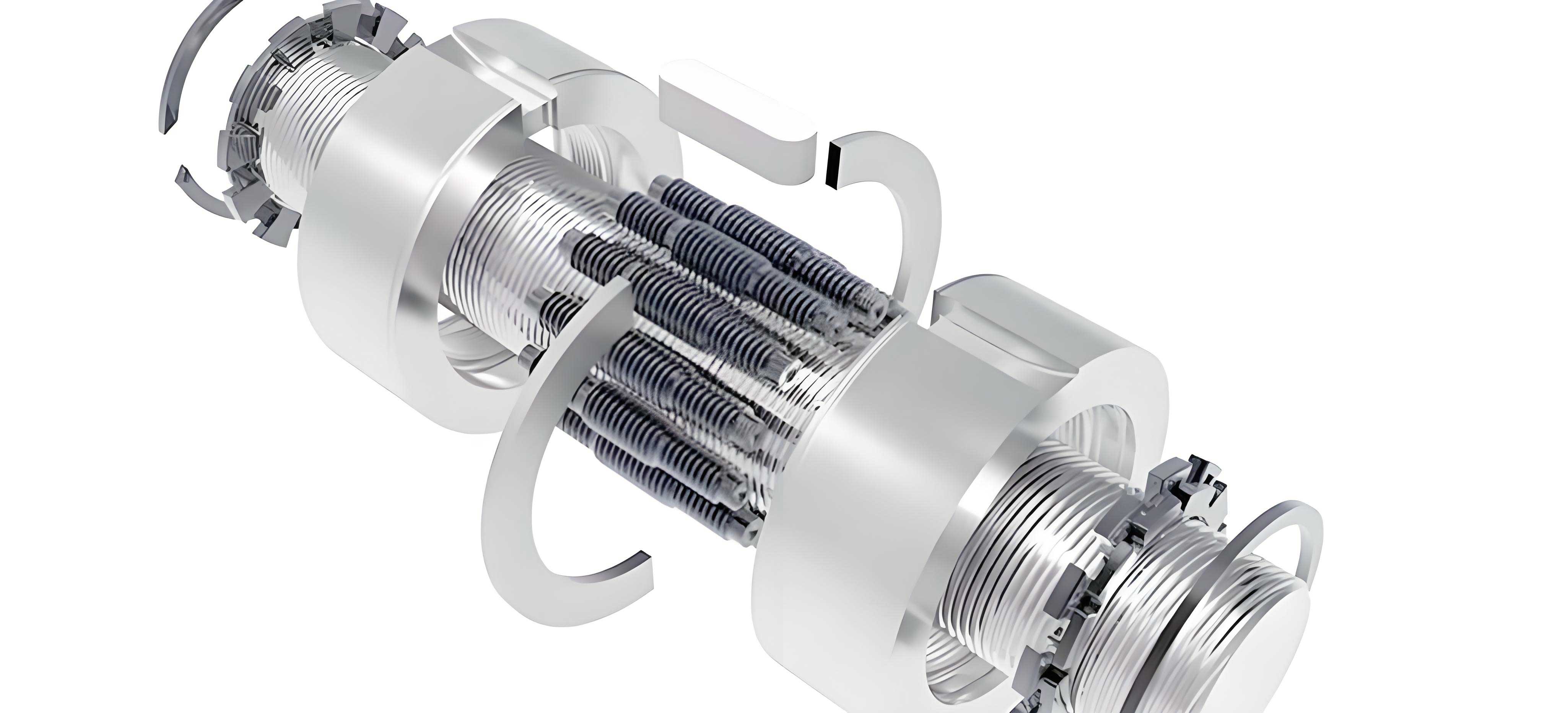
As a high-end transmission component, the planetary roller screw assembly holds significant application value in critical fields such as robotics, CNC machine tools, and aerospace. Its performance metrics—including precision, load capacity, and service life—are directly determined by the capabilities of its core manufacturing equipment: the planetary roller screw grinding machine. The design and technological advancement of these specialized grinders are therefore paramount for industrial competitiveness. This article synthesizes the current global technological landscape to delve deeply into the essential design considerations for planetary roller screw grinding machines, encompassing structural design, precision control, and process optimization. Through analysis of practical design paradigms, it proposes future innovation directions, aiming to provide a reference for the development of domestically produced, high-end grinding equipment. The planetary roller screw assembly, with its superior power density and rigidity, represents a pivotal technology where manufacturing prowess dictates market leadership.
Analysis of Design Requirements for Planetary Roller Screw Grinding Machines
The manufacturing of a high-performance planetary roller screw assembly imposes exceptionally stringent demands on its dedicated grinding equipment. These requirements stem from the need for extreme geometrical accuracy, the ability to handle challenging workpiece materials, and the economic necessity of viable production rates.
Ultra-High Precision Machining Specifications
The lead accuracy of a planetary roller screw assembly is typically graded according to international standards (e.g., ISO 3408-3 for ball screws, often used as a reference). Achieving the higher grades is a fundamental goal for premium applications.
| Accuracy Grade | Lead Error over 300 mm | Typical Application |
|---|---|---|
| G1 | ≤ 6 μm | Ultra-precision machine tools, aerospace actuators |
| G3 | ≤ 12 μm | High-end robotics, medical devices |
| G5 | ≤ 23 μm | General industrial automation |
To consistently produce a planetary roller screw assembly at the G1 level, the grinding machine’s kinematic chain must exhibit exceptional fidelity. The workpiece spindle (C-axis) requires a rotational repeatability better than ±3 arcseconds. Simultaneously, the linear axes (e.g., Z-axis for longitudinal travel) must provide nanometer-level positioning resolution and outstanding dynamic stability to accurately generate long, precise threads and complex profiles like modified involutes on the rollers.
Adaptability to Complex Machining Conditions
The components of a planetary roller screw assembly are typically manufactured from high-strength alloy steels (e.g., 42CrMo) or bearing steels (e.g., GCr15). After heat treatment, hardness can reach HRC 58-62, presenting a significant challenge for abrasive machining. The high specific energy involved in grinding these hardened steels can induce substantial thermal loads, leading to workpiece distortion, metallurgical damage (burning, cracking), and undesirable residual stresses. Consequently, the machine tool must integrate a highly effective coolant delivery system and, more importantly, possess sophisticated mechanisms for thermal error compensation to nullify the effects of heat generated both in the workpiece and within the machine structure itself.
Production Efficiency and Cost Considerations
Traditional methods like single-point threading or honing are often too slow and costly for volume production. While cold rolling is a productive alternative for certain geometries, it has high initial tooling costs and technical barriers, especially for high-precision, multi-start threads characteristic of a planetary roller screw assembly. Therefore, a modern grinding machine must strike an optimal balance between precision and throughput. This necessitates designs featuring multi-axis interpolation, automated in-process gauging, and robotic loading/unloading to minimize non-cutting time and reduce per-unit cost, making the domestic production of precision planetary roller screw assemblies economically viable.
Core Design Elements of Planetary Roller Screw Grinding Machines
Structural Design & Machining Practice: Multi-Axis Synchronization and Modular Integration
The foundational requirement for machining a planetary roller screw assembly is a mechanically robust and kinematically sophisticated structure. Advanced grinder designs typically revolve around a multi-axis, CNC-controlled platform. A common configuration includes:
- C-axis: A high-torque, direct-drive rotary table for precise workpiece rotation.
- Z-axis: A long-travel linear axis for moving the workpiece along its length.
- X-axis: A linear axis for radial infeed of the grinding wheel.
- A-axis/B-axis: Rotary axes for tilting the grinding wheelhead to match the thread helix angle.
The synergy between these axes is critical. For instance, the perfect synchronization of the C and Z axes is paramount for generating an accurate lead. To achieve this, high-performance linear motors are often employed for the X and Z axes. A cross-coupling control algorithm can be implemented to minimize synchronous error between two digitally slave-driven axes (e.g., two rails of a gantry-style Z-axis). The compensating control signal \( u_{comp} \) is calculated as:
$$
u_{comp} = K_p(e_1 – e_2) + K_i \int (e_1 – e_2) dt
$$
where \( K_p \) and \( K_i \) are the synchronization proportional and integral gains, and \( e_1 \), \( e_2 \) are the tracking errors of the two axes. This can reduce the synchronization error to ≤ 0.8 μm over a 300 mm travel.
Core components demand exceptional quality:
- High-Speed Electro-Spindle: Must provide speeds up to 6,000 rpm or higher for CBN grinding, with radial/axial runout ≤ 1 μm and high dynamic stiffness (>100 N/μm) to suppress chatter.
- Direct-Drive C-axis: A torque motor eliminating mechanical transmission backlash is essential. It should offer positioning accuracy ≤ 3 arcseconds and repeatability ≤ 2 arcseconds.
- Automated Workpiece Handling: An automated tailstock with force control and integrated length measurement probe allows for consistent part setup, monitors thermal elongation in real-time, and enables automatic compensation, significantly boosting productivity for batch processing.
The control system forms the brain of the operation. A powerful CNC (e.g., Siemens 840D sl) with multi-channel processing capabilities is standard. It must execute complex synchronous motion, integrate probing cycles, and run specialized grinding software. This software is a key differentiator, often featuring:
- CAD/CAM Integration: Importing 3D models (STEP/IGES) and automatically recognizing thread features to generate grinding paths.
- Adaptive Control: Algorithms that dynamically adjust feed rates or paths based on real-time sensor data (power, acoustic emission) to optimize cycle time and prevent damage.
- Advanced Dressing Cycles: Software modules for precise profiling and truing of complex wheel forms necessary for the planetary roller screw assembly profile.
Precision Control: Dynamic Compensation and Closed-Loop Systems
Sustaining sub-micron accuracy in a production environment requires actively combating various error sources. The most significant of these is thermomechanical deformation.
Thermal Error Compensation: A network of temperature sensors (PT100, thermocouples) is strategically embedded in the machine structure—spindle housing, bed, ball screws, etc. The data feeds a real-time thermal model that predicts thermal drift at the tool-center-point (TCP). The compensation model can be based on multiple linear regression or neural networks, relating temperature changes \( \Delta T_i \) at key points to resulting geometric errors \( \Delta E \) in multiple axes:
$$
\Delta E_{x,y,z} = f(\Delta T_1, \Delta T_2, …, \Delta T_n)
$$
This predicted error is then converted into offset values for the CNC’s axis controllers, dynamically correcting the tool path. A well-implemented system can reduce thermally induced error by 80-95%.
Full Closed-Loop Feedback: While the CNC operates on the feedback from integrated linear scales, an additional layer of verification can be added using laser interferometers or high-accuracy touch probes to measure the actual workpiece geometry in-process or post-process. This data can be used for adaptive offset updates or statistical process control.
Structural Integrity: The machine bed must provide a stable, vibration-dampening foundation. Materials like polymer concrete or granite composites are favored for their superior damping properties and thermal stability compared to traditional cast iron.
Process Optimization: Grinding Parameters and Tooling Selection
The final quality of the planetary roller screw assembly is a direct result of the grinding process parameters. Optimization is multi-faceted.
Abrasive Wheel Selection: Cubic Boron Nitride (CBN) super-abrasive wheels are predominant due to their high hardness, wear resistance, and ability to maintain a sharp cutting profile, which reduces grinding forces and heat generation. The bond type (vitrified, metal, resin) and wheel porosity are selected based on the workpiece material and required surface finish.
Parameter Matching: An optimal parameter window must be identified to balance metal removal rate, surface integrity, and wheel life. Critical parameters include:
| Parameter | Influence | Consideration for Planetary Roller Screw |
|---|---|---|
| Wheel Speed (\( v_s \)) | Surface finish, heat generation | High speed (80-120 m/s) with CBN for cooler cutting. |
| Workpiece Speed (\( v_w \)) | Lead accuracy, pattern | Synchronized with axial feed to define thread lead. |
| Depth of Cut (\( a_e \)) | Productivity, forces | Small depths for finishing; may use spark-out cycles. |
| Coolant Type & Flow | Heat dissipation, lubrication | High-pressure, directed flow is crucial for thread grooves. |
In-Process Monitoring: Integrating sensors for spindle power, vibration, and acoustic emission provides insights into the grinding state. This data can be used to detect wheel dulling, the onset of chatter, or the completion of a spark-out cycle, enabling condition-based process control.
Technological Challenges and Future Innovation Pathways
Current Technological Bottlenecks
The development of world-class planetary roller screw grinding machines faces several hurdles:
- Import Dependence for Core Components: Critical subsystems such as ultra-precision spindles, nanometer-resolution linear encoders, high-performance CNC systems, and even high-grade linear guideways often rely on international suppliers, affecting cost and supply chain security.
- Material and Process Limitations: The consistent quality of domestic high-performance bearing steels can be a variable. Furthermore, alternative high-productivity processes like precision cold rolling for planetary roller screw assembly preforms are not yet mature at scale, keeping grinding as the primary, albeit slower, route for high-precision parts.
- System Integration and Software Gap: Developing the deeply integrated, smart grinding software that seamlessly handles complex thread forms, adaptive dressing, and thermal compensation remains a significant challenge, often requiring specialized knowledge beyond standard CNC programming.
Future Trajectories for Innovation
To overcome these challenges and lead the next generation of manufacturing for the planetary roller screw assembly, several innovation paths are critical:
- Intelligentization and Digital Twins: Implementing AI and machine learning algorithms to optimize grinding parameters in real-time, predict wheel wear, and suppress chatter. Creating a full Digital Twin of the grinding process allows for virtual debugging, process simulation, and performance prediction before physical machining, reducing setup time and scrap.
- Hybrid and Compound Machining: Developing multi-tasking platforms that combine turning, milling, and grinding in a single setup. A “turn-grind” center could machine the shaft blank and then precision-grind the threads without re-chucking, dramatically improving overall accuracy and reducing process time for a complete planetary roller screw assembly component.
- Domestic Substitution and Advanced R&D: A concerted effort is needed to indigenize core components: manufacturing high-DN value spindles, developing advanced linear motor systems, and producing ultra-stable machine bed materials. Parallel R&D in sustainable processes like Minimum Quantity Lubrication (MQL) grinding and CBN wheel reconditioning technologies can reduce environmental impact and operating costs.
- Standardization and Metrology: Establishing comprehensive domestic standards and calibration methodologies specifically tailored for the planetary roller screw assembly will provide a reliable foundation for quality assurance and performance benchmarking.
Conclusion
The planetary roller screw grinding machine stands as a cornerstone technology in the advanced manufacturing ecosystem. Its design philosophy must holistically integrate mechanical rigidity, dynamic control precision, and intelligent process management. The pathway to mastering the production of the highest-grade planetary roller screw assembly lies not in incremental improvement but in embracing synergistic innovations: the fusion of precision mechatronics with AI-driven process control, the development of compound machining solutions, and the determined localization of critical technologies. As global demand surges in robotics, aerospace, and automation, the nations and enterprises that lead in the design and deployment of these sophisticated grinding platforms will secure a decisive advantage in producing the high-performance planetary roller screw assemblies that will drive future innovation.