
In modern engineering applications, the planetary roller screw assembly has emerged as a critical component for converting rotary motion into linear motion with high precision and load capacity. Compared to traditional ball screws, the planetary roller screw assembly offers superior performance in terms of durability, accuracy, and efficiency, making it indispensable in aerospace, robotics, medical devices, and precision machinery. However, under high-speed operations or variable external loads, the dynamic behavior of the planetary roller screw assembly can significantly impact its performance, leading to vibrations, deformations, and potential resonance issues. Therefore, understanding the dynamic characteristics of the planetary roller screw assembly through advanced simulation techniques is essential for optimizing its design and ensuring reliable operation. In this study, we employ finite element simulation to analyze the modal properties of a planetary roller screw assembly, focusing on its natural frequencies, mode shapes, and the influence of various operational factors. Our goal is to provide insights that can guide the structural enhancement and application-specific customization of the planetary roller screw assembly.
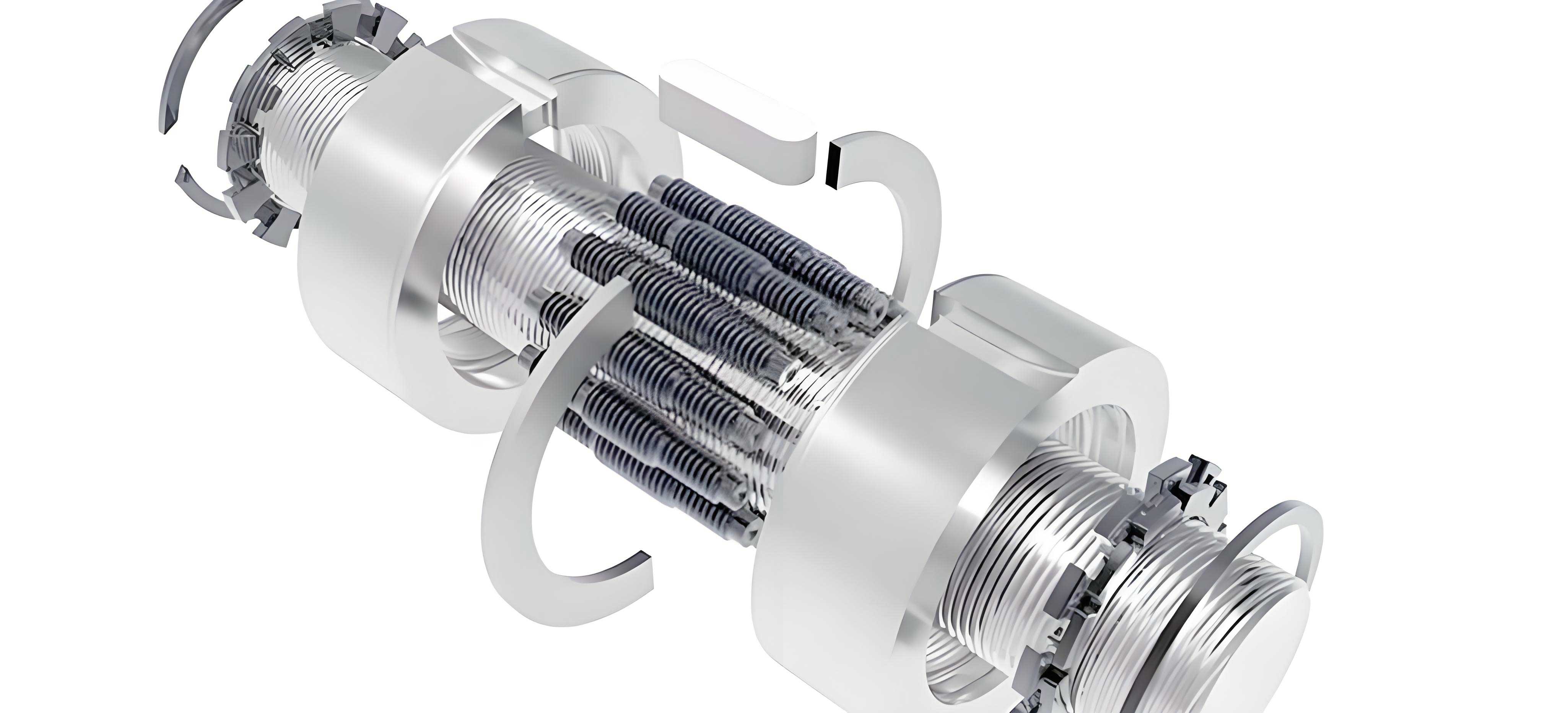
The planetary roller screw assembly consists of several key components: a threaded screw, multiple rollers arranged in a planetary configuration, a nut with internal threads, an internal gear ring, and retaining plates. The screw and nut typically feature multi-start threads, while the rollers have single-start threads, ensuring smooth rolling contact and minimal friction. During operation, the rotation of the screw drives the rollers, which in turn move the nut linearly, with the internal gear ring maintaining alignment and preventing collisions among rollers. To analyze the dynamic behavior of the planetary roller screw assembly, we first developed a detailed three-dimensional model using CATIA software. The geometric parameters were carefully selected to ensure proper meshing and interaction: the screw had 5 starts with a pitch of 1.25 mm and a maximum diameter of 30.8 mm; each roller had 25 teeth at the ends with a pitch circle diameter of 10 mm and a maximum diameter of 10.8 mm; and the internal gear ring had 125 teeth with a thread pitch diameter of 60.5 mm. This model captures the intricate geometry of the planetary roller screw assembly, enabling accurate finite element analysis.
Material properties play a crucial role in the dynamic response of the planetary roller screw assembly. For our simulation, we assigned bearing steel to the screw, nut, and rollers, with the following material parameters: Young’s modulus $$E = 206 \text{ GPa}$$, density $$\rho = 7.85 \times 10^{-6} \text{ kg/mm}^3$$, and Poisson’s ratio $$\nu = 0.3$$. These values reflect typical high-strength materials used in precision engineering, ensuring that our analysis of the planetary roller screw assembly aligns with real-world applications. The finite element model was constructed in ANSYS Workbench by importing the simplified assembly in STEP format. We defined contact pairs between interacting components, such as the screw-roller and roller-nut interfaces, setting them as frictional contacts to simulate realistic load transfer. The mesh was generated using a smart sizing approach, resulting in a high-quality discretization that balances computational efficiency and accuracy. The finite element equation governing the dynamic behavior of the planetary roller screw assembly can be expressed as:
$$[M]\{\ddot{u}\} + [C]\{\dot{u}\} + [K]\{u\} = \{F\}$$
where $$[M]$$ is the mass matrix, $$[C]$$ is the damping matrix, $$[K]$$ is the stiffness matrix, $$\{u\}$$ is the displacement vector, and $$\{F\}$$ is the external force vector. For modal analysis, we focus on free vibrations, neglecting damping and external forces, leading to the eigenvalue problem:
$$([K] – \omega^2 [M])\{\phi\} = 0$$
Here, $$\omega$$ represents the angular frequency, and $$\{\phi\}$$ is the mode shape vector. The natural frequency $$f$$ is derived from $$f = \omega / 2\pi$$. We solved this equation for the first six modes to capture the fundamental dynamic characteristics of the planetary roller screw assembly.
Boundary conditions were applied to simulate typical operational scenarios. Initially, we considered a horizontally mounted planetary roller screw assembly with one end fixed (restricting all translational degrees of freedom) and the other end simply supported (restricting radial displacements). This configuration mimics common industrial setups where the planetary roller screw assembly is subjected to axial and torsional loads. The modal analysis revealed the first six natural frequencies and their corresponding mode shapes, as summarized in Table 1. The results indicate that the planetary roller screw assembly exhibits a range of vibrational behaviors, including bending, axial, and torsional modes.
| Mode Order | Natural Frequency (Hz) | Maximum Displacement (mm) | Primary Vibration Type |
|---|---|---|---|
| 1 | 493 | 22.7 | Bending |
| 2 | 494 | 22.8 | Bending |
| 3 | 1277 | 34.9 | Axial |
| 4 | 2045 | 29.5 | Torsional |
| 5 | 2047 | 29.5 | Torsional |
| 6 | 2801 | 22.6 | Axial |
The mode shapes show that the first and second modes are bending vibrations in perpendicular directions, with similar natural frequencies due to symmetry in the planetary roller screw assembly. The third and sixth modes are axial vibrations, where the screw and nut undergo longitudinal oscillations. The fourth and fifth modes are torsional vibrations, also exhibiting frequency degeneracy. The maximum displacements occur primarily at the screw and nut housing, highlighting areas prone to deformation under dynamic loads. This analysis underscores the importance of considering modal properties in the design of a planetary roller screw assembly to avoid resonance and ensure structural integrity.
To further investigate the dynamic characteristics of the planetary roller screw assembly, we examined the effects of support conditions, nut position, and centrifugal forces. These factors are critical in real-world applications, as they can significantly alter the natural frequencies and vibration responses of the planetary roller screw assembly.
First, we analyzed different support configurations for the planetary roller screw assembly. Common support methods include fixed-supported, fixed-free, fixed-fixed, and supported-supported arrangements. By varying the boundary conditions in our finite element model, we computed the natural frequencies for each case, as shown in Table 2. The results demonstrate that the support type has a profound impact on the dynamic stiffness of the planetary roller screw assembly. The fixed-fixed support yields the highest natural frequencies across all modes, indicating greater rigidity and a higher critical speed threshold. This makes the planetary roller screw assembly with fixed-fixed supports suitable for high-speed operations. Conversely, the fixed-free support results in the lowest natural frequencies, particularly in the first few modes, suggesting increased vulnerability to vibrations. The relationship between support stiffness and natural frequency can be approximated by:
$$f_n \propto \sqrt{\frac{k_{eff}}{m_{eff}}}$$
where $$k_{eff}$$ is the effective stiffness influenced by support conditions, and $$m_{eff}$$ is the effective mass of the planetary roller screw assembly. Thus, optimizing support design is essential for enhancing the dynamic performance of the planetary roller screw assembly.
| Support Type | Mode 1 | Mode 2 | Mode 3 | Mode 4 | Mode 5 | Mode 6 |
|---|---|---|---|---|---|---|
| Fixed-Supported | 493 | 494 | 1277 | 2045 | 2047 | 2801 |
| Fixed-Free | 117 | 182 | 888 | 893 | 1090 | 2645 |
| Fixed-Fixed | 602 | 602 | 1394 | 2307 | 2323 | 4472 |
| Supported-Supported | 389 | 389 | 1394 | 1919 | 1933 | — |
Second, we explored the influence of the nut’s axial position on the modal properties of the planetary roller screw assembly. During operation, the nut moves along the screw, changing the mass distribution and stiffness characteristics. We simulated various nut positions from the fixed end to the supported end and computed the corresponding natural frequencies. The trends are illustrated in Figure 1, where the natural frequencies are plotted against the normalized axial displacement of the nut. For bending modes (Modes 1-3), the natural frequencies decrease as the nut moves toward the center, reaching a minimum at the midpoint, and then increase symmetrically. This behavior can be modeled using a beam vibration theory, where the effective length $$L_{eff}$$ of the screw varies with nut position, affecting the frequency according to:
$$f_n = \frac{\alpha_n}{2\pi} \sqrt{\frac{EI}{\rho A L_{eff}^4}}$$
Here, $$\alpha_n$$ is a constant depending on the mode and boundary conditions, $$I$$ is the area moment of inertia, $$A$$ is the cross-sectional area, and $$L_{eff}$$ is influenced by the nut’s location. For torsional modes (Modes 4-5), the frequencies peak near the center, indicating higher torsional stiffness when the nut is centrally located. These findings imply that the planetary roller screw assembly is most susceptible to vibrations when the nut is at mid-stroke, necessitating speed limitations in such configurations to prevent resonance.
Third, we considered the effect of centrifugal forces on the dynamic response of the planetary roller screw assembly. At high rotational speeds, the screw, rollers, and retaining plates experience centrifugal acceleration, which induces additional stresses and deformations. To account for this, we performed a prestressed modal analysis by first conducting a static structural analysis with rotational velocities: 11.5 rad/s for the screw, 4.32 rad/s for the rollers, and -17.27 rad/s for the retaining plates (negative indicating opposite direction). The results were then transferred to the modal analysis module. The centrifugal force $$F_c$$ acting on a mass element at radius $$r$$ is given by:
$$F_c = m \omega^2 r$$
where $$m$$ is the mass and $$\omega$$ is the angular velocity. This force modifies the stiffness matrix, leading to changes in natural frequencies. As shown in Table 3, the presence of centrifugal forces reduces the natural frequencies of the lower modes (e.g., Mode 1 drops from 493 Hz to 172 Hz) while having a lesser impact on higher modes. Additionally, the maximum displacements increase significantly, indicating reduced overall stiffness and potential accuracy degradation. For instance, the maximum displacement in Mode 3 rises from 34.9 mm to 55.6 mm. This highlights a trade-off in the planetary roller screw assembly: higher speeds may improve productivity but can compromise precision due to increased dynamic deformations. Therefore, in high-precision applications, it is advisable to limit the operational speed of the planetary roller screw assembly to mitigate centrifugal effects.
| Mode Order | Natural Frequency (Hz) | Maximum Displacement (mm) |
|---|---|---|
| 1 | 172 | 36.7 |
| 2 | 177 | 36.6 |
| 3 | 882 | 55.6 |
| 4 | 2104 | 55.9 |
| 5 | 2115 | 34.0 |
| 6 | 2803 | 48.3 |
To synthesize our findings, we developed a comprehensive model that relates the dynamic behavior of the planetary roller screw assembly to key parameters. The overall natural frequency $$f_{total}$$ can be expressed as a function of support stiffness $$k_s$$, nut position $$x_n$$, and rotational speed $$\omega_r$$:
$$f_{total} = f_0 \cdot \Gamma(k_s, x_n, \omega_r)$$
where $$f_0$$ is the baseline frequency from the fixed-supported case, and $$\Gamma$$ is a correction factor derived from our simulation data. For practical design purposes, we propose the following empirical formula for the first bending mode frequency of the planetary roller screw assembly:
$$f_1 = 500 \cdot \left(1 + 0.2 \cdot \frac{k_s}{k_{s0}} – 0.1 \cdot \left(\frac{x_n}{L} – 0.5\right)^2 – 0.3 \cdot \left(\frac{\omega_r}{\omega_{r0}}\right)^2\right) \text{ Hz}$$
Here, $$k_{s0}$$ is a reference support stiffness, $$L$$ is the screw length, and $$\omega_{r0}$$ is a critical rotational speed. This equation emphasizes the importance of each factor in tuning the dynamic response of the planetary roller screw assembly.
In conclusion, our finite element simulation study provides valuable insights into the dynamic characteristics of the planetary roller screw assembly. We have shown that the natural frequencies and mode shapes are highly dependent on support conditions, nut position, and rotational speeds. The fixed-fixed support configuration offers the best performance for high-speed applications of the planetary roller screw assembly, while mid-stroke nut positions require careful speed control to avoid resonance. Centrifugal forces, inherent in high-speed operation, can degrade accuracy by increasing deformations, suggesting a need for balanced design in precision-critical uses of the planetary roller screw assembly. These results underscore the utility of virtual prototyping and finite element analysis in optimizing the planetary roller screw assembly for diverse engineering challenges. Future work could explore nonlinear effects, thermal influences, and advanced materials to further enhance the performance of the planetary roller screw assembly.