
The precision and reliability of motion conversion in advanced mechanical systems are paramount. Among the critical components enabling this, the planetary roller screw assembly stands out for its exceptional load capacity, stiffness, and operational life. This mechanism, which efficiently converts rotary motion to linear motion and vice versa, is indispensable in fields ranging from aerospace and precision machine tools to robotics. The superior performance of a planetary roller screw assembly is fundamentally governed by the precise meshing contact between its three primary threaded elements: the screw, the plurality of rollers, and the nut. Any deviation from the ideal geometric profile of these threads, introduced during manufacturing, directly perturbs the designed meshing state. This perturbation can manifest as either backlash, which degrades positioning accuracy, or excessive interference, leading to increased friction, wear, and reduced efficiency. Therefore, a thorough understanding of how specific thread errors influence the meshing condition is crucial for the design, manufacturing, and quality assurance of high-performance planetary roller screw assembly systems.
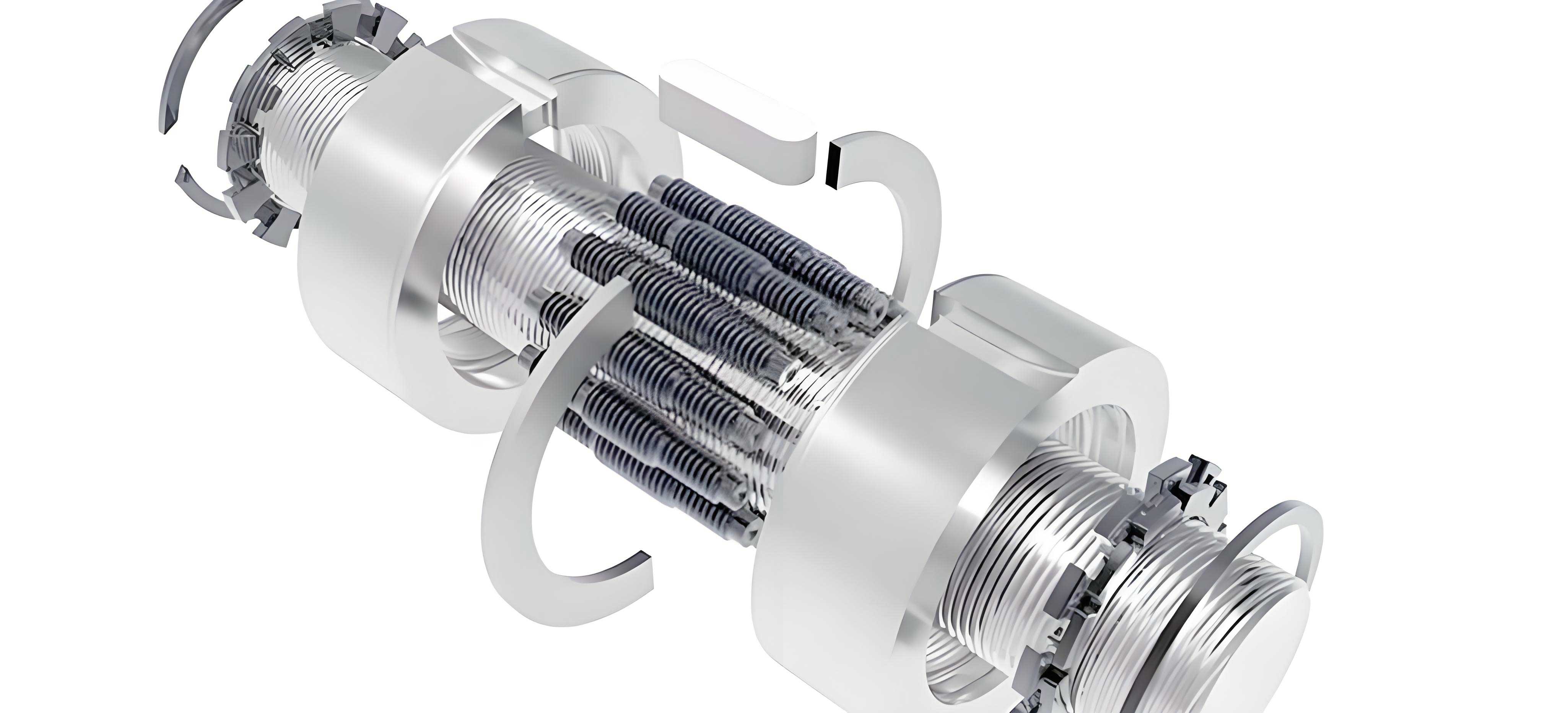
Geometric Configuration and Meshing Principle
The standard-type planetary roller screw assembly consists of a central screw, multiple rollers distributed circumferentially, a nut, and supporting elements like rings and retainers. During operation, the rotation of the screw causes the rollers to orbit planetarily, driving the nut in a linear translation. To optimize contact stress and fatigue life, the thread profiles are typically designed for point contact. The screw and nut threads commonly feature a straight-line (trapezoidal) profile in the axial section, while the roller thread profile is machined to a circular arc, as illustrated in the following key parameters.
| Parameter | Symbol | Typical Representation |
|---|---|---|
| Nominal Pitch | $$P_0$$ | Common for screw, roller, nut |
| Thread Half-Angle | $$\beta$$ | $$45^\circ$$ is common |
| Roller Profile Arc Radius | $$R_r$$ | – |
| Pitch Diameter (Screw, Roller, Nut) | $$d_s, d_r, d_n$$ | $$(r_s = d_s/2, etc.)$$ |
| Number of Thread Starts | $$N_s, N_r, N_n$$ | e.g., 5, 1, 5 |
| Lead (Screw, Roller, Nut) | $$P_s, P_r, P_n$$ | $$P_s = N_s P_0, P_r = N_r P_0, P_n = N_n P_0$$ |
| Center Distance (Screw-Roller) | $$a$$ | $$a = r_s + r_r$$ |
Mathematical Modeling of Meshing Contact
To analyze the meshing state, a precise mathematical model based on spatial gearing theory is established. Coordinate systems are fixed to each component: a static frame $$O(x, y, z)$$, a roller frame $$O_R(x_R, y_R, z_R)$$, a screw frame, and a nut frame. The relative motion and geometry are described within these frames.
Parametric Equations of Thread Helical Surfaces
The surface of each thread is generated by a line (the profile) performing a screw motion about its component’s axis. For the roller’s left-side profile, a point $$M$$ on the circular arc is parameterized by angle $$u_r$$. In the roller’s own coordinate system, its coordinates before the screw motion are:
$$
\begin{align*}
x_{rM}(u_r) &= R_r \sin u_r – R_r \sin \beta + r_r \\
y_{rM}(u_r) &= 0 \\
z_{rM}(u_r) &= -\frac{P_0}{4} + R_r \cos \beta – R_r \cos u_r
\end{align*}
$$
After applying the screw motion with parameter $$\theta_r$$ (rotation angle), the helical surface of the roller thread in the static frame is:
$$
\begin{align*}
x_r(u_r, \theta_r) &= (R_r \sin u_r – R_r \sin \beta + r_r) \cos \theta_r \\
y_r(u_r, \theta_r) &= (R_r \sin u_r – R_r \sin \beta + r_r) \sin \theta_r + a \\
z_r(u_r, \theta_r) &= -\frac{P_0}{4} + R_r \cos \beta – R_r \cos u_r + \frac{P_r \theta_r}{2\pi}
\end{align*}
$$
Similarly, the right-side helical surface of the screw, defined by parameter $$u_s$$, is given by (where $$r_s$$ is initially unknown for zero-backlash calculation):
$$
\begin{align*}
x_s(u_s, \theta_s, r_s) &= (u_s \cos \beta + r_s) \cos \theta_s \\
y_s(u_s, \theta_s, r_s) &= (u_s \cos \beta + r_s) \sin \theta_s \\
z_s(u_s, \theta_s) &= \frac{P_0}{4} + u_s \sin \beta + \frac{P_s \theta_s}{2\pi}
\end{align*}
$$
The right-side helical surface of the nut, with parameter $$u_n$$ and unknown pitch radius $$r_n$$, is:
$$
\begin{align*}
x_n(u_n, \theta_n, r_n) &= (u_n \cos \beta + r_n) \cos \theta_n \\
y_n(u_n, \theta_n, r_n) &= (u_n \cos \beta + r_n) \sin \theta_n \\
z_n(u_n, \theta_n) &= -\frac{P_0}{4} + u_n \sin \beta + \frac{P_n \theta_n}{2\pi}
\end{align*}
$$
Meshing Condition and Equation Formulation
The fundamental condition for continuous conjugate contact between two surfaces is that their relative velocity at the contact point is orthogonal to the common normal vector. For the roller-screw pair, this is expressed as $$\vec{v}_{rs} \cdot \vec{n} = 0$$. A more direct computational approach for point contact with prescribed profiles is to enforce coincidence of the contact point and parallelism of the surface normals. Therefore, the meshing condition for the roller and screw pair translates into a system of equations:
$$
\begin{cases}
x_r(u_r, \theta_r) = x_s(u_s, \theta_s, r_s) \\
y_r(u_r, \theta_r) = y_s(u_s, \theta_s, r_s) \\
z_r(u_r, \theta_r) = z_s(u_s, \theta_s, r_s) \\
\dfrac{n_{rx}}{n_{sx}} = \dfrac{n_{ry}}{n_{sy}} = \dfrac{n_{rz}}{n_{sz}}
\end{cases}
$$
The normal vector components (e.g., $$\vec{n}_r = (n_{rx}, n_{ry}, n_{rz})$$) are calculated from the partial derivatives of the surface equations:
$$
\vec{n} = \left( \frac{\partial y}{\partial u} \frac{\partial z}{\partial \theta} – \frac{\partial z}{\partial u} \frac{\partial y}{\partial \theta}, \quad \frac{\partial z}{\partial u} \frac{\partial x}{\partial \theta} – \frac{\partial x}{\partial u} \frac{\partial z}{\partial \theta}, \quad \frac{\partial x}{\partial u} \frac{\partial y}{\partial \theta} – \frac{\partial y}{\partial u} \frac{\partial x}{\partial \theta} \right)
$$
Solving this system for variables $$u_r, \theta_r, u_s, \theta_s, r_s$$ yields the precise contact point coordinates and the required screw pitch radius $$r_s$$ for zero backlash. An identical set of equations is established for the roller-nut pair to solve for $$u_r, \theta_r, u_n, \theta_n, r_n$$.
Numerical Solution and Zero-Backlash Design Parameters
The meshing equations constitute a system of nonlinear equations. A numerical method, such as the Newton-Raphson algorithm, is employed for solution. Consider a standard planetary roller screw assembly with the following theoretical design parameters derived from kinematic relations (e.g., $$a = r_s + r_r$$, $$P_s = P_n$$, etc.):
| Component | Pitch Diameter (mm) | Pitch (mm) | Starts | Lead (mm) |
|---|---|---|---|---|
| Screw | 19.5 (Theoretical) | 0.4 | 5 | 2.0 |
| Roller | 6.5 | 1 | 0.4 | |
| Nut | 32.5 (Theoretical) | 5 | 2.0 |
Other fixed parameters: $$\beta = 45^\circ$$, $$R_r = 3 \text{ mm}$$, $$a = 13 \text{ mm}$$.
Solving the meshing equations for the zero-backlash condition provides the actual required pitch radii:
| Contact Pair | Theoretical Pitch Radius (mm) | Calculated Zero-Backlash Pitch Radius (mm) | Implication |
|---|---|---|---|
| Roller – Screw | $$r_s = 9.75$$ | $$r_s \approx 9.746675$$ | Theoretical design causes interference. |
| Roller – Nut | $$r_n = 16.25$$ | $$r_n \approx 16.250000$$ (with negligible error) | Theoretical design is nearly ideal. |
This critical result indicates that using purely kinematic relations to size the screw thread leads to a meshing interference. For a functional planetary roller screw assembly, the actual screw pitch diameter must be slightly smaller than the kinematically derived value to achieve proper meshing without preload or excessive play.
Impact of Thread Manufacturing Errors on Meshing State
Deviations from nominal thread geometry during manufacturing alter the meshing state. The axial clearance at the potential contact point, denoted $$\Delta z$$, is used as the metric. A positive $$\Delta z$$ indicates backlash, while a negative value signifies interference. The analysis below quantifies the sensitivity of $$\Delta z$$ to various error types, using the calculated zero-backlash dimensions as the nominal baseline.
Pitch Diameter Error
The pitch diameter (or effective radius) is a primary control parameter. Errors in the pitch diameters of the screw ($$\Delta r_s$$), roller ($$\Delta r_r$$), and nut ($$\Delta r_n$$) have a direct and approximately linear impact on the axial clearance. The following relationship is observed from numerical solutions over a $$\pm 0.05 \text{ mm}$$ radius error range:
$$
\Delta z_{screw-pair} \propto – (\Delta r_s + \Delta r_r) \quad \text{and} \quad \Delta z_{nut-pair} \propto \Delta r_n – \Delta r_r
$$
In a planetary roller screw assembly, increasing the screw or roller pitch radius reduces clearance (increases interference) in the roller-screw pair. Increasing the nut pitch radius increases clearance in the roller-nut pair. The magnitude of change in $$\Delta z$$ is on the same order as the magnitude of the radius error itself (e.g., a 0.01 mm radius error causes a ~0.01 mm change in clearance), making this the most sensitive parameter.
Pitch Error
Deviations in the nominal pitch of the screw ($$\Delta P_s$$), roller ($$\Delta P_r$$), and nut ($$\Delta P_n$$) also induce linear changes in axial clearance, though with slightly lower sensitivity than pitch diameter errors. Analysis for pitch errors within $$\pm 0.05 \text{ mm}$$ shows:
- Screw Pitch Error ($$\Delta P_s$$): Directly reduces clearance in the roller-screw pair as error increases.
- Roller Pitch Error ($$\Delta P_r$$): Has opposing effects; it increases clearance in the roller-screw pair but decreases it in the roller-nut pair.
- Nut Pitch Error ($$\Delta P_n$$): Directly increases clearance in the roller-nut pair.
The governing relations can be summarized as:
$$
\begin{align*}
\Delta z_{screw-pair} &\approx C_1 \cdot \Delta P_r – C_2 \cdot \Delta P_s \\
\Delta z_{nut-pair} &\approx C_3 \cdot \Delta P_n – C_4 \cdot \Delta P_r
\end{align*}
$$
where $$C_1, C_2, C_3, C_4$$ are positive constants determined by the geometry. Pitch error control remains essential in manufacturing a high-quality planetary roller screw assembly.
Thread Half-Angle Error
Errors in the thread half-angle ($$\Delta \beta$$ for screw, roller, or nut) produce a non-linear, parabolic effect on the axial clearance. The sensitivity is significantly lower, with clearance changes on the order of $$10^{-4} \text{ mm}$$ for errors of $$\pm 0.5^\circ$$.
| Component with Error | Effect on Roller-Screw Clearance $$\Delta z$$ | Effect on Roller-Nut Clearance $$\Delta z$$ |
|---|---|---|
| Screw ($$\Delta \beta_s$$) | Parabola opening downward. Clearance is positive for small positive errors, turning to interference for negative or large positive errors. | No direct effect. |
| Roller ($$\Delta \beta_r$$) | Parabola opening downward with vertex at zero error. Any non-zero error causes interference. | Parabola opening downward with vertex at zero error. Any non-zero error causes interference. |
| Nut ($$\Delta \beta_n$$) | No direct effect. | Parabola opening downward with vertex at zero error. Any non-zero error causes interference. |
The parabolic behavior for the screw error $$\Delta \beta_s$$ can be approximated as:
$$\Delta z_{screw-pair} \approx -K (\Delta \beta_s – \delta)^2 + \epsilon$$
where $$K, \delta, \epsilon$$ are constants. For most practical purposes in planetary roller screw assembly tolerance planning, half-angle errors are of secondary concern compared to diameter and pitch errors.
Roller Profile Arc Radius Error
The radius $$R_r$$ of the circular arc on the roller thread profile has a minimal influence on the meshing state. Numerical analysis over a $$\pm 0.5 \text{ mm}$$ range shows that its effect on the roller-screw clearance is negligible (on the order of $$10^{-9} \text{ mm}$$) and effectively linear. It has no appreciable effect on the roller-nut clearance for the standard geometry. This parameter is therefore primarily optimized for contact stress and fatigue life, not for meshing clearance control in the planetary roller screw assembly.
Synthesis and Practical Implications for Assembly
The comprehensive error analysis leads to a clear hierarchy of control parameters for manufacturing and assembling a precision planetary roller screw assembly. The following table summarizes the sensitivity and practical significance of each error type.
| Error Type | Typical Impact on Axial Clearance $$\Delta z$$ | Sensitivity Ranking | Practical Manufacturing Focus |
|---|---|---|---|
| Pitch Diameter Error | Direct, linear, 1:1 scale impact ($$10^{-3} \text{ to } 10^{-2} \text{ mm}$$). | Highest | Primary control parameter. Critical for selective assembly or tolerance specification. |
| Pitch (Lead) Error | Linear, high sensitivity ($$10^{-4} \text{ to } 10^{-3} \text{ mm}$$). | High | Must be tightly controlled. Affects consistency across the thread length. |
| Thread Half-Angle Error | Non-linear (parabolic), low sensitivity ($$10^{-5} \text{ to } 10^{-4} \text{ mm}$$). | Low | Standard machining tolerances are usually acceptable. Not a primary adjustment variable. |
| Roller Arc Radius Error | Extremely low, negligible ($$<10^{-8} \text{ mm}$$). | Negligible | Optimized for durability, not for meshing adjustment. |
The key practical takeaway is that the pitch diameters of the screw and nut are the most effective parameters for adjusting the overall meshing preload or clearance in a planetary roller screw assembly. To achieve a target preload (slight designed interference) or zero-backlash condition, the actual manufactured screw pitch diameter must be deliberately sized smaller than the simple kinematic design value, as proven by the initial zero-backlash calculation. The nut diameter is less critical but should be held to its theoretical value or adjusted based on the roller-screw pairing. This methodology explains and resolves the common issue of excessive interference encountered when components are machined to nominal kinematic dimensions, thereby guiding the production of reliable and efficient planetary roller screw assembly systems.