
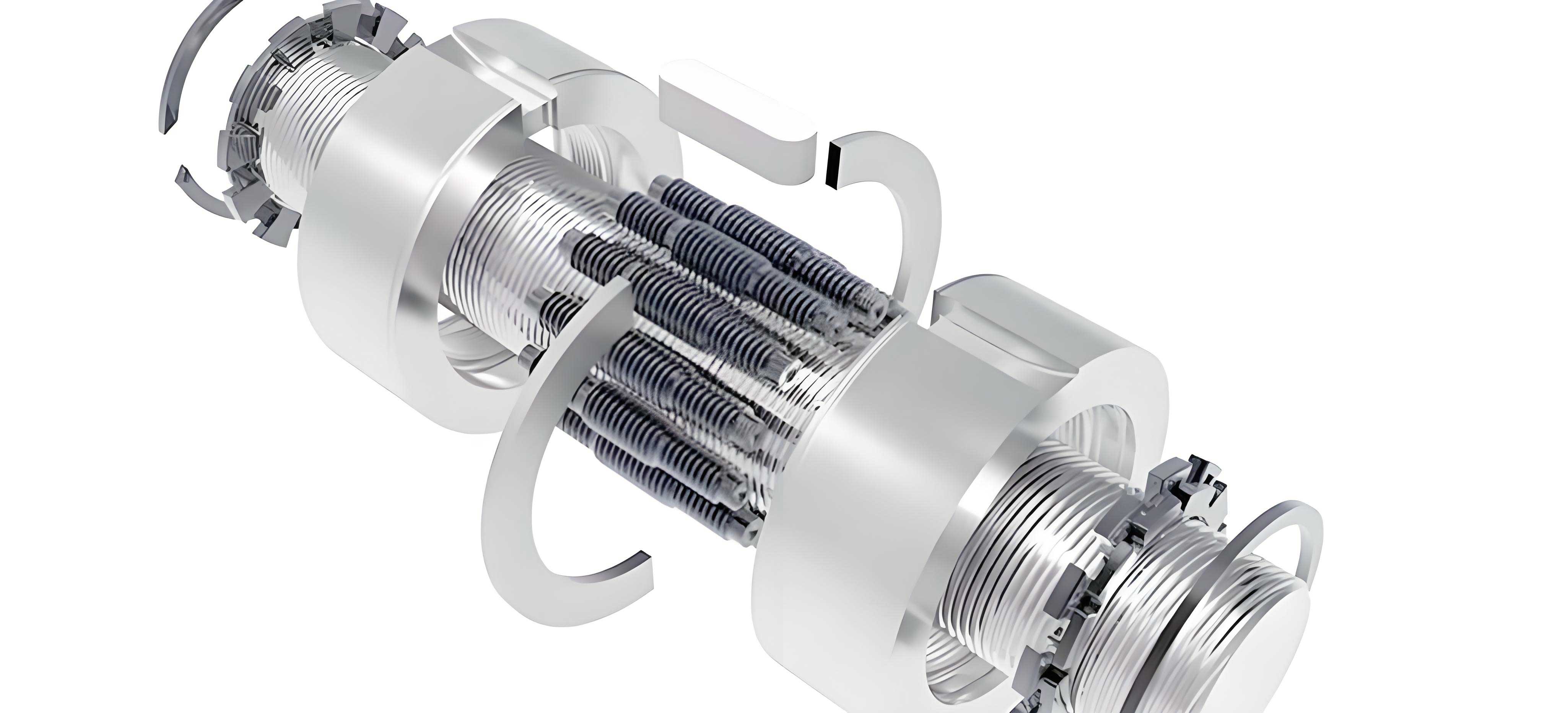
As a precision electromechanical transmission component, the planetary roller screw assembly stands out for its exceptional load capacity, high stiffness, and excellent resistance to shock loads. Its unique design, which integrates a threaded screw pair with a planetary gear system, enables the highly efficient conversion of rotary motion into linear motion. This mechanism finds critical applications in demanding sectors such as aerospace, defense, robotics, and high-performance industrial automation. My focus here is to delve into the intricate contact mechanics governing this assembly, with particular emphasis on the dynamic interaction between the threaded components and the synchronizing gear teeth. The understanding of these synchronized meshing dynamics and the resulting load distribution is paramount for optimizing the design, durability, and predictive maintenance of these sophisticated systems.
Fundamental Principles and Working Mechanism
The core function of a standard planetary roller screw assembly is to transform the rotation of an input shaft (the screw) into the precise linear translation of an output component (the nut). This is achieved through an intermediate set of threaded rollers arranged around the central screw. The screw features a multi-start thread with a specific profile, commonly a 90° included angle. Each roller possesses a matching single-start thread profile, and the nut houses an internal thread that corresponds to the screw’s thread.
The kinematic magic unfolds as follows: when the screw rotates, it drives the rollers. Due to the meshing geometry, these rollers not only rotate about their own axes (spin) but also orbit around the screw’s axis (revolution). Crucially, to prevent skewing moments and ensure pure rolling contact between the rollers and the nut, the ends of each roller are fitted with spur gear teeth. These teeth engage with a stationary internal ring gear (or a gear machined into the nut housing), constraining the rollers to maintain parallelism with the screw axis. A retainer or cage is typically used to maintain even circumferential spacing among the rollers.
Kinematic Analysis and Motion Relationships
A thorough kinematic analysis is essential for predicting the performance of a planetary roller screw assembly. The relationship between the input rotation and the output translation is defined by the lead of the assembly. For a standard configuration where the screw is the input and the nut is prevented from rotating, the axial displacement of the nut \( L_N \) for a given screw rotation is derived from the fundamental kinematic chain.
Let \( \omega_S \) be the angular velocity of the screw, \( n_S \) the number of thread starts on the screw, and \( P \) the thread pitch. The theoretical axial velocity \( v_N \) and displacement \( L_N \) of the nut over time \( t \) are given by:
$$ v_N = \frac{\omega_S}{2\pi} \cdot n_S \cdot P $$
$$ L_N = \frac{\omega_S \cdot t}{2\pi} \cdot n_S \cdot P $$
The rotational speeds of the rollers are also critical for dynamic analysis. If \( d_S \) and \( d_R \) are the pitch diameters of the screw and roller threads, respectively, and \( d_P = d_S + d_R \) is the pitch diameter of the roller’s orbit, then the orbital (revolution) speed of the roller \( \omega_P \) and its spin speed \( \omega_R \) relative to the screw rotation are:
$$ \omega_P = \frac{d_S}{2 d_P} \omega_S = \frac{k}{2(k+1)} \omega_S, \quad \text{where } k = d_S / d_R $$
$$ \omega_R = \omega_S \cdot \frac{k(k+2)}{2(k+1)} $$
These relationships are foundational for analyzing inertial effects and synchronizing conditions within the planetary roller screw assembly.
Contact Characteristics and Load Distribution
The planetary roller screw assembly is characterized by multiple, simultaneous contact interfaces. The primary load-bearing contacts are the threaded engagements: between the screw and each roller, and between each roller and the nut. Additionally, the spur gear teeth at the roller ends engage with the internal ring gear, providing essential kinematic constraint but also carrying load. Finally, the roller shafts are in contact with the retainer or cage pockets.
For the threaded contacts, the normal contact force \( F_n \) at any thread flank can be resolved into three orthogonal components: an axial force \( F_a \), a tangential (driving) force \( F_t \), and a radial force \( F_r \). These are related through the thread’s lead angle \( \lambda \) and flank angle \( \beta \):
$$ F_t = F_a \tan \lambda $$
$$ F_r = F_a \tan \beta $$
$$ F_n = F_a \sqrt{1 + \tan^2 \lambda + \tan^2 \beta} $$
Under a static or quasi-static axial load \( F_{load} \) applied to the nut, this load is shared among all active threads on all rollers. The load distribution along the engaged threads is not uniform; the first engaged threads typically carry the highest load due to elastic deflections of the screw, nut, and rollers. This non-uniform distribution is a key factor in determining the static stiffness and fatigue life of the planetary roller screw assembly.
Finite Element Modeling for Dynamic Analysis
To accurately capture the complex, coupled dynamic behavior, I employ the Finite Element Method (FEM). A three-dimensional model is constructed, simplifying the full assembly to a sector containing one screw, one nut segment, and typically three rollers to maintain symmetry and reduce computational cost while preserving the essential physics. The model incorporates the precise geometry of the threaded surfaces and the gear teeth.
Material properties are assigned (e.g., bearing steel GCr15: E = 212 GPa, \( \nu \) = 0.29, \( \rho \) = 7810 kg/m³). Contact pairs are defined between all interacting surfaces: screw-roller threads, roller-nut threads, roller gear teeth-internal ring gear teeth, and roller ends-cage pockets. Appropriate friction coefficients are applied to the contacting surfaces. Boundary conditions are applied to replicate real-world constraints: the screw is given a rotational speed, the nut is allowed only axial translation (often with an applied opposing load), the internal ring gear is fixed, and the rollers are constrained to spin and orbit appropriately via connections to the cage, which itself is allowed to translate axially with the nut.
This nonlinear transient dynamic model allows for the simulation of the planetary roller screw assembly’s response from startup to steady-state operation, revealing transient vibrations, impact loads due to clearance, and the steady-state fluctuating contact forces.
Simulation Results and Parametric Analysis
Running the FEM model provides detailed insights into the dynamic contact loads. The following sections summarize key findings from such simulations, illustrating the behavior of different contact interfaces and the influence of operating parameters. A sample set of geometric parameters for analysis is shown in the table below.
| Thread Pair Parameter | Value | Gear Pair Parameter | Value |
|---|---|---|---|
| Screw Pitch Diameter, \( d_S \) | 44 mm | Module, \( m \) | 0.55 mm |
| Number of Thread Starts, \( n_S \) | 6 | Roller Gear Teeth, \( z_R \) | 20 |
| Pitch, \( P \) | 2 mm | Internal Ring Gear Teeth, \( z_G \) | 120 |
| Roller Pitch Diameter, \( d_R \) | 11 mm | Pressure Angle, \( \alpha \) | 37.5° |
Dynamic Contact Load Profiles
Simulations reveal distinct dynamic signatures for each contact pair in the planetary roller screw assembly. The screw-roller and roller-nut thread contact forces rise from zero during startup, often showing an initial transient peak due to taking up clearances, before settling into a steady-state mean value with small-amplitude fluctuations. The steady-state thread load is slightly higher than the pure static theoretical value due to dynamic inertia and the coupling with gear mesh excitation.
The gear pair contact force exhibits a classic periodic fluctuation associated with gear meshing. The frequency of this fluctuation corresponds to the gear mesh frequency, which is a function of the roller spin speed and the number of gear teeth. Interestingly, the load on the gear teeth is typically an order of magnitude smaller than the primary thread loads, as its primary function is kinematic constraint rather than power transmission.
Perhaps the most surprising result is the significant dynamic load carried by the interface between the roller ends and the retainer/cage. This load also shows periodic fluctuation linked to the gear mesh cycle. Its mean value can be substantially higher than the gear tooth load, indicating that this interface is a critical load path and a potential site for wear in the planetary roller screw assembly.
Influence of Screw Rotational Speed
Varying the input speed \( \omega_S \) of the planetary roller screw assembly has several effects. As per kinematic equations, a higher screw speed directly increases the nut’s linear velocity. Dynamically, higher speeds reduce the time to overcome initial clearances and reach steady-state thread loading. However, the amplitude of fluctuations in the thread contact loads tends to increase with speed due to greater inertial forces.
For the gear pair and roller-cage contacts, the primary effect is on the fluctuation period. Since the roller’s spin speed \( \omega_R \) increases linearly with \( \omega_S \), the gear mesh frequency increases proportionally. This results in a shorter period and higher frequency of the periodic load fluctuations on these components, which can influence fatigue life and noise generation.
Influence of Nut Axial Load
The applied axial load \( F_{load} \) on the nut is the primary driver of contact forces within the planetary roller screw assembly. As expected, the mean steady-state contact loads on the screw-roller and roller-nut threads increase in direct proportion to the applied load. The initial transient冲击 during startup also becomes more pronounced with higher loads.
The behavior of the gear pair contact load is counter-intuitive. Rather than increasing, its mean value often slightly decreases as the nut load increases. This suggests a load-sharing mechanism where the threaded interfaces and the roller-cage interface become stiffer load paths, effectively “shunting” a portion of the reaction force away from the gear teeth. This highlights the complex, statically indeterminate nature of the load distribution in a planetary roller screw assembly.
Influence of Friction Coefficient
The coefficient of friction \( \mu \) at the threaded interfaces plays a crucial role. In low-friction regimes (e.g., \( \mu \) = 0.01 to 0.03), the contact loads are relatively stable and close to theoretical values. However, as the friction coefficient increases to levels more representative of boundary lubrication or poor conditions (e.g., \( \mu \) = 0.1 to 0.2), significant changes occur.
Higher friction causes a notable increase in the steady-state mean contact forces, as more torque (and thus tangential force) is required to overcome friction for the same axial output. More critically, the amplitude of dynamic fluctuations in all contact loads increases dramatically. Large friction coefficients can induce stick-slip phenomena and severe transient spikes, which are detrimental to smooth motion control, positioning accuracy, and the fatigue life of the planetary roller screw assembly. This underscores the critical importance of effective lubrication.
The table below summarizes the qualitative influence of key operational parameters on the dynamic behavior of the planetary roller screw assembly.
| Parameter Increase | Effect on Thread Load Mean | Effect on Load Fluctuation | Effect on Gear/Cage Load Period |
|---|---|---|---|
| Screw Speed (\( \omega_S \)) | No change | Amplitude increases | Decreases (frequency increases) |
| Nut Load (\( F_{load} \)) | Increases proportionally | Initial transient increases | Minor change |
| Friction Coeff. (\( \mu \)) | Increases significantly | Amplitude increases drastically | Minor change |
Design Considerations and Conclusion
The analysis presented elucidates the multifaceted dynamic contact mechanics within a planetary roller screw assembly. The synchronization between the threaded meshing and the gear meshing is not merely kinematic; it creates a coupled dynamic system where excitations from one interface influence the loads in another. Key takeaways for the design and application of these precision assemblies include:
- Load Path Awareness: The roller end-to-cage interface is a significant load-bearing element, not just a positioning device. Its design and material selection must be considered for long-term reliability.
- Dynamic Sensitivity: The assembly is sensitive to inertial effects at high speeds and to friction conditions. Optimal performance requires balancing speed capabilities with load, and ensuring excellent, consistent lubrication to minimize friction.
- Non-uniform Load Sharing: The gear teeth see a load that does not scale directly with the output load, a fact that must be accounted for in their strength analysis. The thread load distribution remains highly non-uniform and is the primary factor for static stiffness and fatigue life calculations.
- Modeling Necessity: Simplified static or single-thread-pair models are insufficient for predicting the true dynamic behavior, especially during transients or under high friction. Coupled finite element analysis, as demonstrated, is a powerful tool for uncovering these complex interactions.
In conclusion, the planetary roller screw assembly is a remarkably efficient and robust transmission component. Its performance and longevity are governed by the intricate dance of contact forces across its threaded and geared interfaces. A deep understanding of these synchronized meshing dynamics, facilitated by advanced modeling techniques, is essential for pushing the boundaries of its capabilities in speed, load, precision, and service life for the next generation of high-performance mechanical systems.