
In the realm of precision motion control and high-load transmission systems, the planetary roller screw assembly stands out as a paramount mechanism for converting rotary motion into linear motion and vice versa. My focus in this discourse is to delve deeply into the sliding characteristics inherent to these assemblies, which are critical for their performance in applications demanding high accuracy, high frequency response, substantial thrust capacity, and extended service life. The planetary roller screw assembly is extensively employed in aerospace vehicles, precision machine tools, and industrial sectors such as petroleum, chemical processing, and defense systems where linear servo drives are indispensable. For instance, in rocket flight control systems, the planetary roller screw assembly serves as a key transmission component within servo mechanisms to adjust flight attitude, underscoring its reliability under strenuous conditions. Compared to ball screws, the planetary roller screw assembly utilizes threaded rollers as rolling elements, which allow for larger contact radii and simultaneous engagement of multiple threads, leading to superior load-bearing capacity and stiffness. This analysis aims to comprehensively model and evaluate the relative sliding velocities between the screw and rollers, considering both idealized conditions and practical elastic deformations, to enhance the understanding and optimization of planetary roller screw assembly performance.
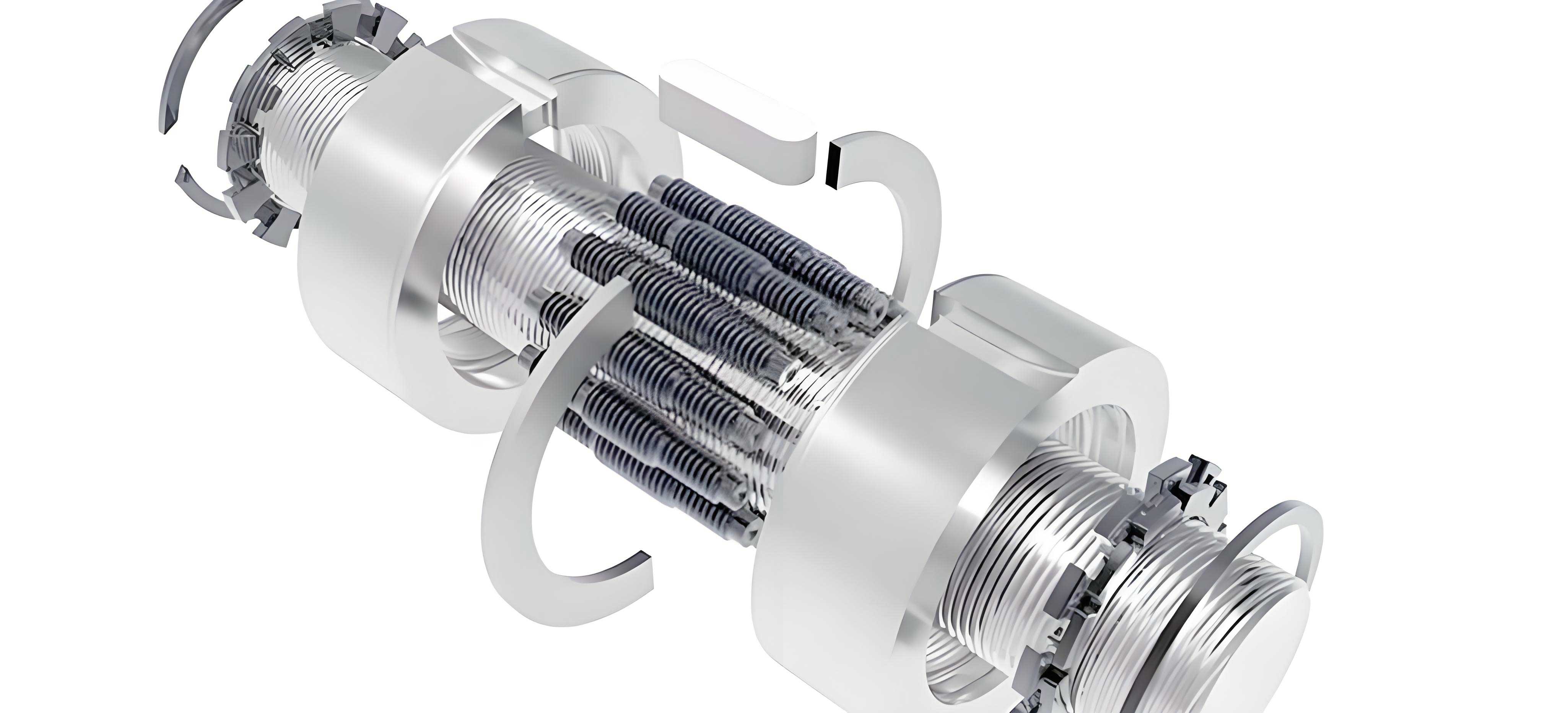
The fundamental operation of a planetary roller screw assembly revolves around its three primary components: the screw, the nut, and the rollers, often complemented by a retainer cage and an internal ring gear for proper alignment. In such a configuration, akin to a planetary gear system, the rotation of the screw—typically driven by an electric motor—induces motion in the rollers via frictional forces, which in turn drive the nut linearly. This kinematic interaction is foundational to analyzing sliding behavior. To facilitate a rigorous examination, I establish multiple coordinate systems: a global Cartesian coordinate system (xyz), a Frenet frame attached to the screw’s helical contact trajectory, and a local contact coordinate system (XYZ) at the interface between screw and roller. These frameworks enable precise positional analysis along the helical path of contact. The position vector \(\mathbf{l}(\theta)\) for any point on the screw thread can be expressed in the global coordinates as:
$$ \mathbf{l}(\theta) = r_S (\cos\theta \, \mathbf{i} + \sin\theta \, \mathbf{j} + \theta \tan\alpha_S \, \mathbf{k}) $$
where \(r_S\) is the screw radius, \(\theta\) is the angular parameter along the helix, and \(\alpha_S\) is the screw lead angle. The transformation between the global and Frenet frames is given by a rotation matrix that accounts for the helix geometry. In the Frenet frame, defined by unit vectors \(\mathbf{t}\), \(\mathbf{n}\), and \(\mathbf{b}\) (tangent, normal, and binormal), the position vector simplifies to:
$$ \mathbf{l}(\theta) = r_S (\theta \sin\alpha_S \tan\alpha_S \, \mathbf{t} – \mathbf{n} + \theta \sin\alpha_S \, \mathbf{b}) $$
This representation is pivotal for deriving velocity components. The kinematic relationship between the angular velocities of the screw (\(\omega_S\)) and roller (\(\omega_R\)) in a planetary roller screw assembly is derived from the rolling contact conditions, yielding:
$$ \frac{\omega_S}{\omega_R} = \frac{2(r_S + r_R)}{r_S} $$
where \(r_R\) is the roller radius. Additionally, the lead angle \(\alpha_S\) relates to the screw pitch \(P_S\) and radius via:
$$ \tan\alpha_S = \frac{P_S}{2\pi r_S} $$
and the ratio of screw to roller radii is tied to the pitch difference as per design parameters. These equations form the basis for analyzing sliding velocities without and with elastic deformation, which I will explore in detail.
In the idealized scenario neglecting elastic deformation, the contact between screw and roller in a planetary roller screw assembly is treated as a point contact according to Hertzian theory. The velocity of a contact point on the screw, \(\mathbf{v}_S\), due to its rotation with angular velocity \(\omega_S \mathbf{k}\), is:
$$ \mathbf{v}_S = \omega_S \mathbf{k} \times \mathbf{l}(\theta) = r_S \omega_S (-\sin\theta \, \mathbf{i} + \cos\theta \, \mathbf{j}) $$
Similarly, the velocity of the corresponding point on the roller, \(\mathbf{v}_R\), incorporates both rotational and translational components, resulting in:
$$ \mathbf{v}_R = 2 r_R \omega_R (\sin\theta \, \mathbf{i} – \cos\theta \, \mathbf{j}) – r_S \omega_S \tan\alpha_S \, \mathbf{k} $$
The relative sliding velocity \(\mathbf{v}_{SR}\) between screw and roller in the planetary roller screw assembly is then the vector difference:
$$ \mathbf{v}_{SR} = \mathbf{v}_S – \mathbf{v}_R = -(r_S \omega_S + 2 \omega_R r_R) \sin\theta \, \mathbf{i} + (r_S \omega_S + 2 \omega_R r_R) \cos\theta \, \mathbf{j} + r_S \omega_S \tan\alpha_S \, \mathbf{k} $$
Its magnitude, which indicates the sliding speed, is computed as:
$$ v_{SR} = \sqrt{ (r_S \omega_S + 2 \omega_R r_R)^2 (\sin^2\theta + \cos^2\theta) + (r_S \omega_S \tan\alpha_S)^2 } = \sqrt{ (r_S \omega_S + 2 \omega_R r_R)^2 + (r_S \omega_S \tan\alpha_S)^2 } $$
This model reveals that in the absence of elastic deformation, the sliding velocity in a planetary roller screw assembly depends on the angular parameter \(\theta\) and the lead angle \(\alpha_S\), but interestingly, the term involving \(\theta\) simplifies due to trigonometric identities, implying that the speed magnitude is constant with respect to \(\theta\) for given \(\alpha_S\). However, to capture real-world behavior, elastic deformation must be considered, which transforms the point contact into an elliptical contact area as per Hertzian contact mechanics.
When accounting for elastic deformation in a planetary roller screw assembly, the contact interface becomes an elliptical region with semi-major axis \(a\). A local contact coordinate system (XYZ) is defined where the X-Y plane lies on the contact surface, and Z is along the common normal direction. The position vector for an arbitrary point Q within this deformed area, relative to the global origin, involves additional terms due to deformation. Let \(\mathbf{l}_{QO}\) denote this vector, expressed in the Frenet frame as:
$$ \mathbf{l}_{QO} = (r_S \theta \sin\alpha_S \tan\alpha_S + y_Q) \, \mathbf{t} + (-r_S + \tilde{r} \cos\beta – x_Q \sin\beta) \, \mathbf{n} + (r_S \theta \sin\alpha_S + \tilde{r} \sin\beta + x_Q \cos\beta) \, \mathbf{b} $$
Here, \(x_Q\) and \(y_Q\) are coordinates of point Q in the contact plane, \(\beta\) is the contact angle, and \(\tilde{r}\) is the effective curvature radius reduction due to deformation, given by:
$$ \tilde{r} = R – \sqrt{R^2 – a^2} $$
with \(R\) as the combined curvature radius of the screw and roller:
$$ \frac{1}{R} = \frac{1}{2} \left( \frac{1}{r_R} + \frac{1}{r_S} \right) $$
The velocity of point Q on the screw, \(\mathbf{V}_{QS}\), is derived from the cross product of the screw’s angular velocity and \(\mathbf{l}_{QO}\). After transformations, it yields a complex expression in the Frenet frame. Similarly, the velocity of point Q on the roller, \(\mathbf{V}_{QR}\), includes both rigid body rotation and additional terms from deformation. The relative sliding velocity \(\mathbf{V}_{SR}\) in the deformed contact of the planetary roller screw assembly is then \(\mathbf{V}_{SR} = \mathbf{V}_{QS} – \mathbf{V}_{QR}\). In the contact coordinate system, this can be represented as:
$$ \mathbf{V}_{SR} = [ -2 \omega_R r_R \cos\beta \sin\alpha_S – (\omega_S – \omega_R) y_Q \cos\alpha_S \sin\beta + (\omega_S – 2\omega_R) \tilde{r} \sin\alpha_S ] \, \mathbf{i}_P + [ r_S \omega_S (1 + \tan^2\alpha_S) + 2 \omega_R r_R + (\omega_S – \omega_R) x_Q \sin\beta – (\omega_S – 2\omega_R) \tilde{r} \cos\beta ] \cos\alpha_S \, \mathbf{j}_P + [ -2 \omega_R r_R \sin\beta \sin\alpha_S + (\omega_S – \omega_R) (y_Q \cos\beta \cos\alpha_S – x_Q \sin\alpha_S) ] \, \mathbf{k}_P $$
The magnitude \(V_{SR}\) is computed by taking the Euclidean norm of these components, resulting in a comprehensive model that incorporates elastic effects, which I will simulate to assess parameter influences.
To analyze the impact of key parameters on sliding velocity in a planetary roller screw assembly, I conduct numerical simulations based on typical assembly specifications. Consider a planetary roller screw assembly with the following baseline parameters, which are representative of high-performance applications:
| Component | Nominal Diameter (mm) | Number of Starts | Pitch (mm) | Lead Angle (°) | Contact Angle (°) |
|---|---|---|---|---|---|
| Screw | 25 | 5 | 10 | 7.26 | 45 |
| Roller | 8.33 | 5 | 2 | 7.26 | 45 |
| Nut | 41.66 | 1 | 10 | 7.26 | 45 |
For the kinematic analysis, the angular velocity ratio is \(\omega_S / \omega_R = 2.67\), with \(\omega_S = 60\pi \, \text{rad/min}\) and \(\omega_R = 22.47\pi \, \text{rad/min}\). In the case without elastic deformation, the sliding velocity magnitude simplifies to:
$$ v_{SR} = \sqrt{ (0.937\pi)^2 + (0.75\pi \tan\alpha_S)^2 } $$
where the coefficients derive from the specific radii and velocities. I vary the lead angle \(\alpha_S\) from 0° to 15° to examine its effect. The results, computed for different \(\theta\) values, indicate that the sliding speed increases with \(\alpha_S\), but the curves for various \(\theta\) essentially overlap, confirming that the lead angle’s influence is independent of contact point position in the idealized model. This is summarized in the following table for select lead angles:
| Lead Angle, \(\alpha_S\) (°) | Relative Sliding Velocity, \(v_{SR}\) (m/s) | Observation |
|---|---|---|
| 0 | 2.94 | Minimum speed |
| 5 | 2.96 | Gradual increase |
| 10 | 3.00 | Noticeable rise |
| 15 | 3.05 | Maximum in range |
This trend underscores that in a planetary roller screw assembly without deformation, a higher lead angle exacerbates sliding, which could affect efficiency due to increased frictional losses. However, in practical scenarios, elastic deformation plays a crucial role. For the deformed contact analysis, I consider multiple points within the elliptical contact zone, with coordinates \((x_Q, y_Q)\) such as (0, 12.5 mm), (8.84, 8.84 mm), (12.5, 0 mm), (8.84, -8.84 mm), and (0, -12.5 mm), reflecting the semi-axes of the ellipse. The sliding velocity magnitude \(V_{SR}\) is evaluated using the derived formula with \(\beta = 45^\circ\) and varying \(\alpha_S\). The outcomes demonstrate that while the sliding speed still increases with lead angle, the effect is less pronounced compared to the idealized case. For instance, at \(\alpha_S = 7.26^\circ\), \(V_{SR}\) ranges from approximately 3.1 m/s to 3.8 m/s across the contact points, indicating variability due to deformation. A comparative table highlights this:
| Condition | Lead Angle \(\alpha_S\) (°) | Sliding Velocity Range (m/s) | Implication |
|---|---|---|---|
| Without Elastic Deformation | 0–15 | 2.94–3.05 | Uniform increase |
| With Elastic Deformation | 0–15 | 3.1–3.9 | Moderate increase, higher baseline |
This suggests that in a real planetary roller screw assembly, elastic deformation elevates sliding speeds overall, but the sensitivity to lead angle is mitigated. Importantly, a higher lead angle also corresponds to a larger pitch, enhancing the pure rolling efficiency between nut and rollers, which can offset sliding losses and boost overall transmission efficiency. Thus, optimizing the lead angle in a planetary roller screw assembly involves balancing these effects.
Next, I investigate the role of the contact angle \(\beta\) on sliding velocity in a planetary roller screw assembly with elastic deformation. Holding \(\alpha_S\) constant at 7.26°, I vary \(\beta\) from 22.5° to 60° and compute \(V_{SR}\) for the same set of contact points. The results consistently show that as \(\beta\) increases, the sliding velocity decreases. This inverse relationship is attributed to the geometry of contact: a larger contact angle alters the direction of normal forces and relative motion components, reducing the sliding contribution. The following table quantifies this effect for a representative contact point (0, 12.5 mm):
| Contact Angle, \(\beta\) (°) | Relative Sliding Velocity, \(V_{SR}\) (m/s) | Trend |
|---|---|---|
| 22.5 | 4.0 | Highest sliding |
| 45 | 3.5 | Moderate reduction |
| 60 | 3.0 | Lowest sliding |
This reduction in sliding velocity with increasing \(\beta\) is beneficial for the planetary roller screw assembly, as it diminishes frictional losses and wear. Moreover, since the motion between screw and roller comprises both rolling and sliding, a decrease in sliding implies a relative increase in rolling speed, which enhances transmission efficiency. Therefore, designing a planetary roller screw assembly with a higher contact angle can improve performance by minimizing unwanted sliding. It is worth noting that both lead angle and contact angle are interdependent parameters in the design of a planetary roller screw assembly, and their optimization requires holistic consideration of load capacity, stiffness, and efficiency goals.
To further elucidate the interactions, I derive general formulas for the sliding velocity components in a planetary roller screw assembly. From the kinematic relations, the relative velocity in the contact plane can be expressed in terms of fundamental parameters. Let \(v_{\text{slide}}\) denote the magnitude of sliding velocity. For the deformed case, it can be approximated as:
$$ v_{\text{slide}} \approx \sqrt{ A(\alpha_S, \beta) + B(\alpha_S, \beta) \cdot x_Q^2 + C(\alpha_S, \beta) \cdot y_Q^2 } $$
where \(A\), \(B\), and \(C\) are functions of the lead angle, contact angle, and geometric constants. For instance, a simplified version for small deformations might be:
$$ v_{\text{slide}} = \omega_S r_S \sqrt{ \tan^2\alpha_S + \left(1 + \frac{2 r_R}{r_S} \cdot \frac{\omega_R}{\omega_S}\right)^2 – 2 \left(1 + \frac{2 r_R}{r_S} \cdot \frac{\omega_R}{\omega_S}\right) \sin\beta \cos\alpha_S } $$
This highlights the quadratic dependence on angles. In practice, numerical methods like MATLAB simulations are employed to solve the full model, as analytical solutions become intractable due to nonlinearities from deformation. My simulations validate that for a planetary roller screw assembly under typical loads, the elliptical contact area dimensions (semi-major axis \(a\)) can be computed using Hertz formulas:
$$ a = \left( \frac{3 F R}{2 E^*} \right)^{1/3} $$
where \(F\) is the normal load, and \(E^*\) is the effective modulus of elasticity. Incorporating this into the velocity analysis adds precision but also complexity, emphasizing the need for computational tools in designing high-performance planetary roller screw assemblies.
In conclusion, my analysis of sliding characteristics in planetary roller screw assemblies reveals critical insights for engineering applications. First, in the absence of elastic deformation, increasing the lead angle monotonically increases the relative sliding velocity between screw and roller, but this effect is independent of the specific contact point location along the helix. Second, when elastic deformation is considered—a more realistic scenario for a planetary roller screw assembly—the sliding velocity also rises with lead angle, though the increase is less dramatic, and the baseline speeds are higher due to contact area expansion. Third, the contact angle exerts a significant influence: larger contact angles reduce sliding velocity, thereby promoting rolling motion and enhancing transmission efficiency. These findings suggest that optimizing a planetary roller screw assembly involves careful selection of both lead and contact angles to balance sliding losses with other performance metrics like load capacity and stiffness. Future work could explore thermal effects, lubrication impacts, and dynamic loading conditions to further refine the models. Ultimately, a deep understanding of sliding behavior is essential for advancing the reliability and efficiency of planetary roller screw assemblies in demanding technological fields.