
In the realm of precision mechanical transmissions, the planetary roller screw assembly stands out as a critical component for converting rotary motion into linear motion with high efficiency, load capacity, and stiffness. My research focuses on understanding the nuanced effects of design parameters, particularly the thread profile angle, on the contact characteristics of these assemblies. Through rigorous finite element analysis and analytical modeling, I aim to provide insights that can guide the optimization of planetary roller screw assemblies for enhanced performance and longevity. This article delves deep into the contact mechanics, presenting extensive data, formulas, and tables to elucidate the relationships between thread geometry and stress distribution.
The planetary roller screw assembly, often abbreviated as PRSA, is a sophisticated mechanism comprising a threaded screw, multiple threaded rollers, and a threaded nut. Its design allows for concurrent engagement of all rollers, leading to a higher number of contact points compared to alternatives like ball screws. This results in superior load-bearing capabilities and stiffness, making the planetary roller screw assembly indispensable in aerospace, robotics, precision machining, and other high-demand applications. However, the contact stresses at the thread interfaces are a primary concern, as they directly influence fatigue life, wear, and overall reliability. Among various geometric parameters, the thread profile angle—the angle between the flanks of the thread—plays a pivotal role in determining contact conditions. In this study, I investigate how variations in this angle affect the maximum contact stress and load distribution uniformity within a planetary roller screw assembly.
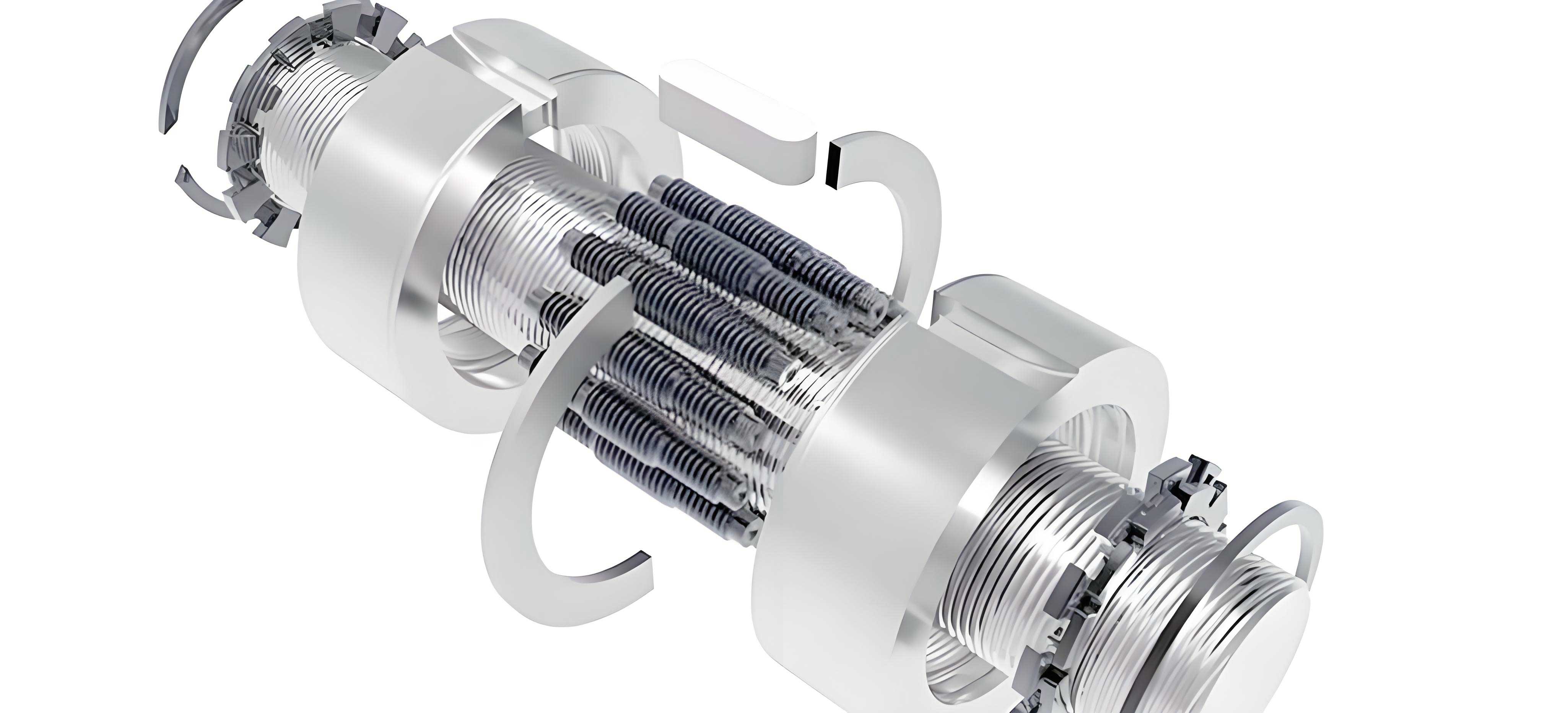
To set the context, let’s review the fundamental mechanics. In a planetary roller screw assembly, the screw and nut typically have multi-start threads, while each roller has a single-start thread. The rollers are arranged planetarily around the screw, with their axes parallel to the screw axis. To maintain proper alignment, gears are often incorporated at the roller ends. The thread profiles are crucial; typically, the roller threads are designed with a spherical contour to reduce friction and improve conformity, whereas the screw and nut threads may have trapezoidal profiles. The contact between roller and screw threads is not uniform across all engaged threads; due to elastic deformations, the first few threads near the load application bear the highest stresses. This non-uniform load distribution is a key factor in the design of planetary roller screw assemblies.
Previous studies have laid groundwork for understanding planetary roller screw assemblies. Researchers have analyzed friction mechanisms, noting that spin sliding at contacts is a significant contributor to friction torque. Others have applied Hertzian contact theory and fractal approaches to model contact deformations, consistently finding that the first thread carries the highest load. Dynamic analyses using multibody simulation software have revealed contact force variations under different external loads. Moreover, investigations into axial stiffness and friction torque have highlighted the influence of parameters like contact angle and lead angle. Notably, it has been established that to ensure stable contact points and accurate lead, at least one of the mating thread profiles should be curved, hence the common use of spherical roller threads. My work builds upon these findings by systematically exploring the thread profile angle, a parameter that directly affects the contact angle and stress magnitude in planetary roller screw assemblies.
The core of my methodology involves creating a detailed finite element model of a single roller-screw pair within the planetary roller screw assembly. This simplification is justified because the assembly’s symmetry allows for extrapolation of results to multiple rollers. I focus on a segment with four engaged threads to reduce computational expense while capturing essential stress patterns. The screw is fixed in all directions, and a constant axial load is applied to the roller, simulating typical operating conditions. The materials are set as bearing steel GCr15 with an elastic modulus of 212 GPa and a Poisson’s ratio of 0.3. The mesh is refined near contact regions to ensure accuracy, using hexahedral elements. For the roller thread, I adopt a spherical profile, where the equivalent sphere radius \( R \) is derived from the thread pitch diameter \( d_r \) and the thread profile angle \( \alpha \). The formula is:
$$ R = \frac{d_r}{2 \sin(\alpha/2)} $$
In my model, the roller pitch diameter is 8 mm. Thus, for profile angles of 60°, 80°, 85°, 90°, and 95°, the equivalent sphere radii compute to 8 mm, 6.223 mm, 5.921 mm, 5.657 mm, and 5.425 mm, respectively. The screw thread has a trapezoidal profile, and its geometry is adjusted for each case to prevent interference while keeping the roller thread thickness constant at 0.88 mm. This consistency in thread thickness ensures that variations in stress are primarily due to angle changes rather than bulk material differences. The finite element software ABAQUS is employed to solve the contact problem, extracting von Mises stress and contact pressure distributions.
Before delving into results, it’s essential to understand the theoretical underpinnings of contact stress in planetary roller screw assemblies. The Hertzian contact theory provides a baseline for point contacts, though actual thread contacts are more complex due to geometry and load sharing. For a spherical surface against a flat or another curved surface, the maximum contact pressure \( p_0 \) can be expressed as:
$$ p_0 = \frac{3F}{2\pi a b} $$
where \( F \) is the normal load, and \( a \) and \( b \) are the semi-axes of the contact ellipse. These depend on the principal curvatures of the surfaces. In planetary roller screw assemblies, the contact ellipse dimensions vary with thread profile angle, affecting stress concentration. Additionally, the load distribution along the threads is non-linear. Assuming elastic behavior, the load on the \( i \)-th thread \( F_i \) can be approximated by an exponential decay function:
$$ F_i = F_0 e^{-\beta (i-1)} $$
where \( F_0 \) is the load on the first thread and \( \beta \) is a decay constant related to the system stiffness. This model highlights why the first thread experiences the highest stress, a phenomenon observed across all planetary roller screw assembly configurations.
Now, let’s examine the finite element results. For a thread profile angle of 90°, the von Mises stress contour reveals that the maximum stress on the roller thread occurs at the first engaged thread, with a value of 1731 MPa. Subsequent threads show decreasing stresses: 1663 MPa, 1615 MPa, and 1625 MPa for threads 2, 3, and 4, respectively. This pattern confirms the load decay model. Similar trends are observed for other angles, but the magnitudes vary. To comprehensively analyze the impact of thread profile angle, I compiled data for all five angles. Below are tables summarizing the maximum contact stresses on roller threads and screw threads, along with the maximum relative error—a measure of load distribution uniformity defined as:
$$ \text{Maximum Relative Error} = \max\left( \frac{|\sigma_i – \bar{\sigma}|}{\bar{\sigma}} \times 100\% \right) $$
where \( \sigma_i \) is the stress on thread \( i \) and \( \bar{\sigma} \) is the average stress across the four threads. A lower error indicates more uniform loading, which is desirable for smooth operation and longevity of planetary roller screw assemblies.
| Thread Profile Angle (°) | Thread 1 Stress (MPa) | Thread 2 Stress (MPa) | Thread 3 Stress (MPa) | Thread 4 Stress (MPa) | Maximum Relative Error (%) |
|---|---|---|---|---|---|
| 60 | 1322 | 1287 | 1236 | 1208 | 8.62 |
| 80 | 1624 | 1551 | 1491 | 1487 | 8.43 |
| 85 | 1754 | 1624 | 1534 | 1555 | 12.54 |
| 90 | 1731 | 1663 | 1615 | 1625 | 6.70 |
| 95 | 1775 | 1771 | 1653 | 1659 | 6.87 |
This table clearly shows that for all angles, the highest stress on roller threads is always on thread 1. As the thread profile angle increases from 60° to 95°, the maximum stress generally rises, with values climbing from 1322 MPa to 1775 MPa. However, the maximum relative error exhibits a notable minimum at 90°, where it drops to 6.70%. This suggests that at 90°, the load is distributed more evenly among the threads of the planetary roller screw assembly, which can mitigate localized wear and enhance transmission stability.
Similarly, for the screw threads, the stresses are tabulated below:
| Thread Profile Angle (°) | Thread 1 Stress (MPa) | Thread 2 Stress (MPa) | Thread 3 Stress (MPa) | Thread 4 Stress (MPa) | Maximum Relative Error (%) |
|---|---|---|---|---|---|
| 60 | 1360 | 1326 | 1268 | 1214 | 10.73 |
| 80 | 1624 | 1564 | 1495 | 1457 | 10.28 |
| 85 | 1697 | 1626 | 1624 | 1514 | 10.78 |
| 90 | 1773 | 1677 | 1663 | 1573 | 11.28 |
| 95 | 1812 | 1726 | 1735 | 1644 | 9.27 |
Here, the same trend emerges: screw thread stresses peak at thread 1 and increase with angle. The relative errors are generally higher than for roller threads, but vary less significantly with angle. An interesting observation is that for angles 80° and 85°, the overall maximum contact stress in the planetary roller screw assembly occurs on the roller threads, whereas for 60°, 90°, and 95°, it occurs on the screw threads. Since the screw is typically larger and more robust, having the maximum stress on the screw might be advantageous for durability. Combining both perspectives, the 90° angle offers a balance: it yields the most uniform roller loading (lowest error) and places the peak stress on the screw, which is favorable for the planetary roller screw assembly’s lifespan.
To deepen the analysis, I derived analytical expressions linking thread profile angle to contact parameters. The contact angle \( \theta \) between the roller and screw threads is influenced by the profile angle. For a spherical roller thread, the effective contact angle can be approximated as:
$$ \theta = \arcsin\left( \frac{d_r \sin(\alpha/2)}{2R} \right) $$
Substituting \( R \) from earlier, this simplifies to \( \theta = \alpha/2 \) for perfect conformity, but in reality, deviations occur due to elastic deformation. The contact ellipse semi-axes \( a \) and \( b \) depend on the reduced radius of curvature \( R’ \), given by:
$$ \frac{1}{R’} = \frac{1}{R_1} + \frac{1}{R_2} $$
where \( R_1 \) and \( R_2 \) are the principal radii of curvature of the contacting surfaces. For the planetary roller screw assembly, \( R_1 \) is the equivalent sphere radius of the roller, and \( R_2 \) relates to the screw thread curvature. As \( \alpha \) increases, \( R \) decreases, altering \( R’ \) and thus the contact area. A smaller contact area leads to higher stresses, explaining the upward trend in maximum stress with angle.
Furthermore, the load distribution coefficient \( \beta \) can be expressed as a function of thread stiffness \( k_t \) and support stiffness \( k_s \):
$$ \beta = \sqrt{\frac{k_t}{k_s}} $$
The thread stiffness \( k_t \) itself depends on geometry; for a trapezoidal thread, it is proportional to the thread thickness and inversely proportional to the profile angle. A larger angle reduces \( k_t \), potentially increasing \( \beta \) and exacerbating load concentration on the first thread. However, at 90°, my results indicate a more uniform distribution, suggesting an optimal interplay between geometry and elasticity in the planetary roller screw assembly.
To validate the finite element outcomes, I performed a sensitivity analysis by varying the applied load. For a 90° profile angle, the maximum contact stress \( \sigma_{\text{max}} \) scales linearly with load \( F \), as per Hertzian theory:
$$ \sigma_{\text{max}} = C \sqrt[3]{F} $$
where \( C \) is a constant encompassing material and geometric factors. Plotting \( \sigma_{\text{max}} \) against \( F^{1/3} \) yielded a straight line, confirming elastic contact behavior. This consistency reinforces the reliability of my model for the planetary roller screw assembly.
Another aspect worth exploring is the effect of thread profile angle on friction and efficiency. The friction torque \( T_f \) in a planetary roller screw assembly arises from sources like elastic hysteresis, spin sliding, and lubricant viscous drag. Spin sliding is particularly sensitive to contact geometry. The spin sliding velocity \( \omega_s \) is related to the contact angle \( \theta \) and lead angle \( \lambda \):
$$ \omega_s = \omega_r \sin \theta \cos \lambda $$
where \( \omega_r \) is the roller angular velocity. A larger profile angle increases \( \theta \), potentially raising \( \omega_s \) and friction. However, a more uniform load distribution at 90° might offset this by reducing localized sliding, netting a favorable efficiency. This interplay underscores the complexity of optimizing planetary roller screw assemblies.
In practical design, the choice of thread profile angle must balance multiple factors. My findings suggest that 90° is a sweet spot for load uniformity, but other angles may be preferred for specific applications. For instance, in ultra-high-load scenarios, a smaller angle like 60° might be chosen to lower peak stress, albeit at the cost of less uniform loading. Conversely, for compact designs, larger angles reduce the equivalent sphere radius, allowing smaller rollers without interference, but stress increases. Designers of planetary roller screw assemblies must consider these trade-offs alongside manufacturing constraints—for example, machining spherical threads with precise angles requires advanced techniques.
To further illustrate the stress distributions, I include below a summary table comparing key metrics across angles for the planetary roller screw assembly:
| Thread Profile Angle (°) | Equivalent Sphere Radius (mm) | Max Roller Stress (MPa) | Max Screw Stress (MPa) | Roller Stress Uniformity Error (%) | Primary Max Stress Location |
|---|---|---|---|---|---|
| 60 | 8.000 | 1322 | 1360 | 8.62 | Screw |
| 80 | 6.223 | 1624 | 1624 | 8.43 | Roller |
| 85 | 5.921 | 1754 | 1697 | 12.54 | Roller |
| 90 | 5.657 | 1731 | 1773 | 6.70 | Screw |
| 95 | 5.425 | 1775 | 1812 | 6.87 | Screw |
This table encapsulates the trends: as angle increases, sphere radius decreases, and stresses generally increase. The 90° angle minimizes roller stress error and places max stress on the screw, making it a robust choice for planetary roller screw assemblies.
Beyond static analysis, dynamic effects in planetary roller screw assemblies warrant attention. Under operational speeds, inertial forces and damping can alter load distribution. The natural frequency \( f_n \) of the roller-screw system is influenced by thread stiffness, which varies with profile angle. Approximating the system as a spring-mass chain, the fundamental frequency is:
$$ f_n = \frac{1}{2\pi} \sqrt{\frac{k_{\text{eq}}}{m_{\text{eq}}}} $$
where \( k_{\text{eq}} \) is the equivalent stiffness and \( m_{\text{eq}} \) the equivalent mass. A higher thread profile angle may reduce \( k_{\text{eq}} \), lowering \( f_n \) and potentially inducing vibrations. Thus, for high-speed applications of planetary roller screw assemblies, dynamic simulations are recommended to complement static stress analysis.
Thermal effects also play a role. Friction-generated heat can cause thermal expansion, altering clearances and stress distributions. The coefficient of thermal expansion \( \alpha_T \) combined with temperature rise \( \Delta T \) leads to dimensional changes \( \Delta L = \alpha_T L \Delta T \). In a planetary roller screw assembly, differential expansion between screw and rollers might either alleviate or intensify contact stresses, depending on the design. A uniform load distribution, as seen with 90°, likely promotes even heat dissipation, mitigating thermal gradients.
In terms of manufacturing, the thread profile angle impacts tooling and accuracy. Spherical thread grinding for rollers becomes more challenging as angle deviates from standard values. Industry standards often favor 90° for planetary roller screw assemblies, aligning with my findings of optimal contact characteristics. This convergence of analytical, numerical, and practical perspectives strengthens the case for 90° as a preferred angle.
To conclude, my investigation into the influence of thread profile angle on contact characteristics of planetary roller screw assemblies reveals several key insights. First, the maximum contact stress invariably occurs on the first engaged thread, both for rollers and screw, due to elastic load decay. Second, as the thread profile angle increases, the maximum contact stress generally rises, attributed to reduced contact area from smaller equivalent sphere radii. Third, and most significantly, a thread profile angle of 90° yields the most uniform load distribution across roller threads, as evidenced by the lowest maximum relative error of 6.70%. This uniformity enhances transmission smoothness and reduces localized wear. Additionally, at 90°, the peak stress resides on the screw—a advantageous scenario given the screw’s larger size. Therefore, for designers seeking to optimize performance and durability, a 90° thread profile angle is recommended for planetary roller screw assemblies. Future work could extend this study to include dynamic loading, thermal effects, and multi-roller interactions to further refine the design guidelines for these critical mechanical components.
The planetary roller screw assembly continues to evolve, with advancements in materials and precision manufacturing opening new frontiers. By deeply understanding geometric influences like thread profile angle, we can push the boundaries of load capacity, efficiency, and reliability, ensuring that planetary roller screw assemblies meet the ever-growing demands of high-tech industries. My hope is that this detailed analysis serves as a valuable resource for engineers and researchers dedicated to perfecting the planetary roller screw assembly for tomorrow’s challenges.