
The rotary vector reducer, a pivotal component in modern high-precision robotics, is renowned for its compact design, high torsional rigidity, and exceptional load capacity. As industrial automation advances under initiatives like “Industry 4.0” and “Made in China 2025”, the demands on robotic joints for greater precision, reliability, and dynamic performance have intensified. The rotary vector reducer’s performance is fundamentally governed by the dynamic characteristics of its internal components, with the cycloidal wheel being one of the most critical. Understanding its vibrational behavior is essential to prevent resonance, minimize noise, and ensure the longevity and accuracy of the entire robotic system.
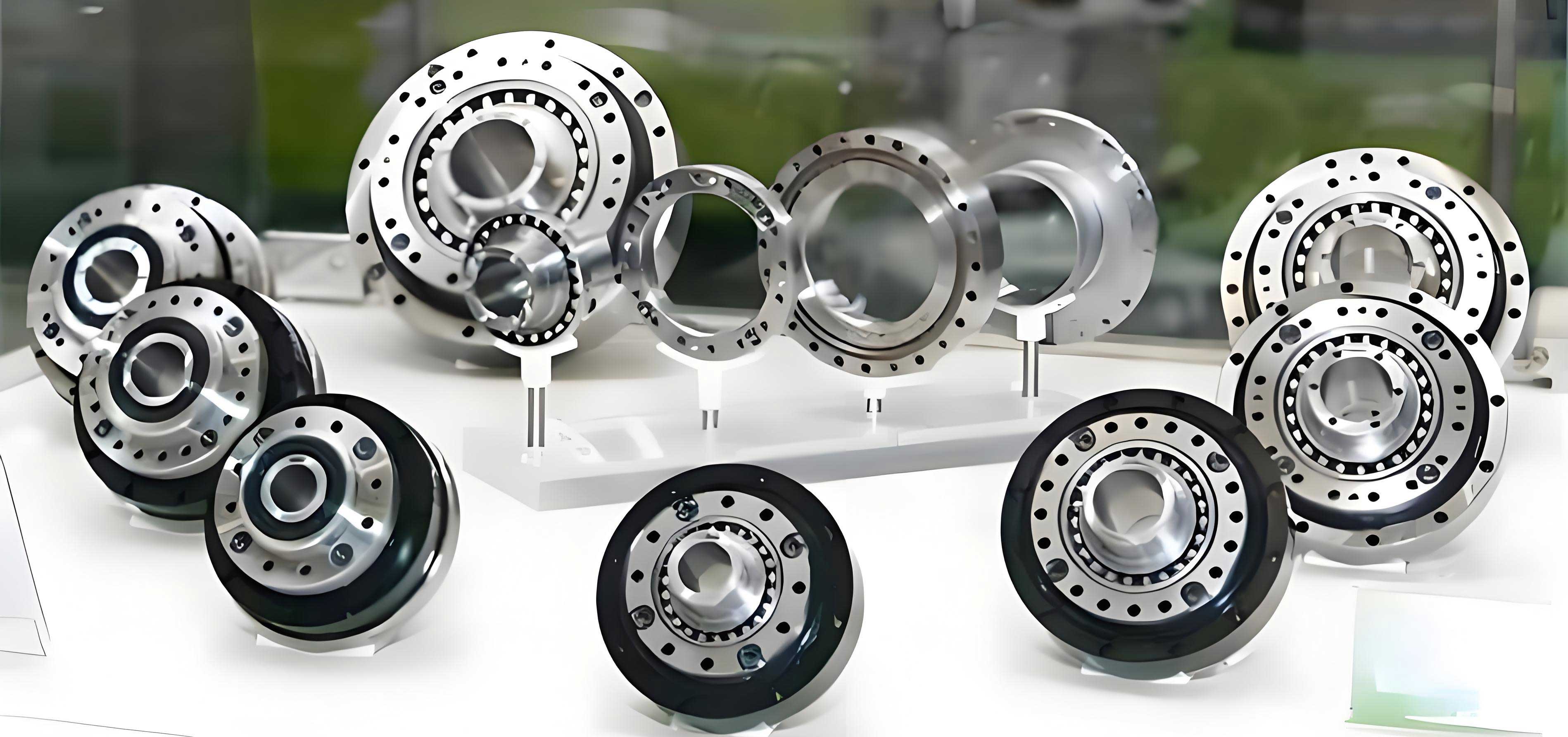
This article presents a detailed modal analysis of the cycloidal gear within a 2K-V type rotary vector reducer. While previous studies often rely on free-modal analysis, this work emphasizes the critical importance of constraint-modal analysis, which more accurately reflects the operational conditions where the cycloidal wheel interacts with other components like crankshaft bearings and the output shaft. Using Finite Element Analysis (FEA) software, both free and constrained modal analyses were conducted. The natural frequencies and corresponding mode shapes of the first 20 orders were extracted and compared, identifying structural weak points and critical resonance frequencies that must be avoided during the design of the rotary vector reducer and the selection of its配套 servo motors.
Parametric Modeling of the Cycloidal Wheel
The geometric accuracy of the finite element model is paramount for a reliable modal analysis. A 3D model of the cycloidal wheel was created using parametric design software. The primary technical parameters for the model, representative of a common 2K-V rotary vector reducer configuration, are listed in the table below.
| Parameter Name | Symbol | Value |
|---|---|---|
| Number of Cycloidal Teeth | $Z_c$ | 41 |
| Number of Pin Teeth | $Z_p$ | 42 |
| Short Width Coefficient | $K_1$ | 0.7 |
| Pin Center Circle Radius (mm) | $R_p$ | 108 |
| Tooth Width (mm) | $B_c$ | 20 |
| Eccentricity (mm) | $a$ | 2 |
| Pin Radius (mm) | $r_{rp}$ | 5 |
The tooth profile of the cycloidal wheel is mathematically defined by a set of parametric equations, which are essential for generating an accurate CAD model. These equations are based on the theory of trochoidal generation and are given by:
$$ x_0 = R_p \left[ \sin \left( \frac{Z_p}{Z_c} t \right) – \frac{K_1}{Z_p} \sin(Z_p t) \right] $$
$$ y_0 = R_p \left[ \cos \left( \frac{Z_p}{Z_c} t \right) – \frac{K_1}{Z_p} \cos(Z_p t) \right] $$
where $x_0$ and $y_0$ are the coordinates of the tooth profile, $t$ is the parametric variable (in radians), $R_p$ is the radius of the pin center circle, $Z_c$ and $Z_p$ are the number of cycloid and pin teeth respectively, and $K_1$ is the short width coefficient. Using these equations, the precise cycloidal lobe was generated. The final 3D model includes the central bore for the output shaft (Ø52 mm) and three equally spaced bearing holes (Ø55 mm) located on a pitch circle diameter of 120 mm to accommodate the crankshaft bearings.
Finite Element Model and Modal Analysis Theory
The 3D model was imported into ANSYS for meshing and analysis. The material was defined as bearing steel with the following properties: Elastic Modulus $E = 213$ GPa, Poisson’s ratio $\mu = 0.292$, and density $\rho = 7850$ kg/m³. The mesh was constructed using SOLID186 elements, a high-order 3D 20-node solid element well-suited for modeling complex deformations. A global element size of 2 mm was specified, resulting in a high-quality mesh with 228,035 nodes and 64,130 elements, ensuring convergence and accuracy for the modal analysis.
Modal analysis calculates the inherent vibration characteristics of a structure—its natural frequencies and mode shapes—without external loads. The governing equation for undamped free vibration is:
$$ [M]\{\ddot{u}\} + [K]\{u\} = \{0\} $$
where $[M]$ is the mass matrix, $[K]$ is the stiffness matrix, and $\{u\}$ is the displacement vector. Assuming harmonic motion $\{u\} = \{\phi\} e^{i \omega t}$, this leads to the classic eigenvalue problem:
$$ \left( [K] – \omega^2 [M] \right) \{\phi\} = \{0\} $$
Here, $\omega$ represents the natural circular frequency, and $\{\phi\}$ is the corresponding mode shape (eigenvector).
Two distinct modal analyses were performed:
- Free Modal Analysis: The model has no constraints applied. The first six modes (0 Hz) are rigid-body modes and are ignored. This analysis reveals the intrinsic dynamic properties of the cycloidal wheel in isolation.
- Constraint Modal Analysis: This simulation reflects the actual operating condition within the rotary vector reducer. Boundary conditions are applied to the contact areas between the cycloidal wheel and other components. Specifically, axial and radial constraints were applied to half the cylindrical surface of the three bearing holes, approximating the contact with the crankshaft bearings. This analysis provides the operational natural frequencies, which are crucial for resonance avoidance.
The Subspace Iteration method was employed to solve for the first 20 modes in each case.
Analysis Results and Comparative Discussion
The results from both analyses are summarized in the following tables. Table 1 lists the first 20 natural frequencies and the maximum displacement observed in each mode shape for the free modal analysis, starting from the 7th order (the first flexible mode).
| Mode Order | Natural Frequency (Hz) | Max Displacement (mm) |
|---|---|---|
| 7 | 1415.5 | 42.973 |
| 8 | 1415.5 | 42.473 |
| 9 | 2357.0 | 41.130 |
| 10 | 3539.8 | 29.776 |
| 11 | 3539.9 | 29.837 |
| 12 | 3554.5 | 38.606 |
| 13 | 3648.7 | 50.326 |
| 14 | 4571.2 | 32.136 |
| 15 | 4875.8 | 54.807 |
| 16 | 4875.8 | 54.474 |
| 17 | 5782.0 | 33.906 |
| 18 | 5782.5 | 33.873 |
| 19 | 6309.3 | 30.128 |
| 20 | 6395.0 | 43.701 |
A key observation from the free modal results is the occurrence of pairs of nearly identical frequencies (e.g., Modes 7 & 8, 10 & 11, 15 & 16, 17 & 18), indicating repeated roots in the system’s characteristic equation, often associated with symmetrical or degenerate mode shapes. The maximum displacements in free modes are generally high and frequently located at the tips of the cycloidal teeth or at the junctions between the central hole and the bearing holes.
Table 2 presents the results from the constraint modal analysis, which are far more relevant for the operational design of the rotary vector reducer.
| Mode Order | Natural Frequency (Hz) | Max Displacement (mm) |
|---|---|---|
| 1 | 673.19 | 31.639 |
| 2 | 755.95 | 38.781 |
| 3 | 932.35 | 49.338 |
| 4 | 1489.7 | 52.747 |
| 5 | 1719.1 | 48.346 |
| 6 | 1733.2 | 53.723 |
| 7 | 2543.1 | 26.447 |
| 8 | 2786.5 | 29.979 |
| 9 | 3584.2 | 50.684 |
| 10 | 3671.2 | 45.222 |
| 11 | 3935.3 | 47.048 |
| 12 | 4679.8 | 43.171 |
| 13 | 4789.9 | 45.725 |
| 14 | 5110.8 | 50.063 |
| 15 | 6101.9 | 63.698 |
| 16 | 6241.9 | 42.082 |
| 17 | 6313.3 | 54.389 |
| 18 | 6448.6 | 55.408 |
| 19 | 6583.6 | 39.325 |
| 20 | 7332.1 | 40.661 |
The constraint modal analysis reveals several critical findings for the rotary vector reducer design:
- Frequency Shift: The natural frequencies under constrained conditions are significantly lower than their free-modal counterparts. For instance, the first flexible mode drops from 1415.5 Hz (free) to 673.19 Hz (constrained). This downward shift is due to the non-uniform stiffness distribution introduced by the localized bearing constraints, which create relatively flexible regions compared to the highly stiff constrained areas.
- Critical Resonance Frequencies: The first six natural frequencies (673.19 Hz, 755.95 Hz, 932.35 Hz, 1489.7 Hz, 1719.1 Hz, and 1733.2 Hz) represent the most critical range to avoid during operation. The excitation frequencies from the servo motor and gear meshing within the rotary vector reducer must be designed to steer clear of these values to prevent resonant amplification of vibration and noise.
- Structural Weak Points: The mode shapes consistently show that the maximum deformation occurs at two primary locations: the outer profile of the cycloidal teeth and the thin webs connecting the central hole to the bearing holes or the outer rim. These areas are therefore the structural weak points of the cycloidal wheel. For example, modes often exhibit severe bending or伸缩 of the teeth, or torsional/bending deformation of the spoke-like connections.
- Mode Shape Complexity: A phenomenon of “mode crossing” or interchange is observed. For instance, the 16th and 17th mode shapes in the free analysis correspond to the 19th and 15th modes in the constraint analysis, respectively. This confirms that the dynamic behavior of the cycloidal wheel in a functioning rotary vector reducer is complex and cannot be accurately predicted by free-modal analysis alone.
Design Implications and Conclusion
The modal analysis of the cycloidal wheel provides vital insights for the design and application of high-performance rotary vector reducers. The following conclusions and recommendations are made:
- Primary Design Reference: Constraint modal analysis, which simulates the actual assembled state within the rotary vector reducer, must be the primary reference for dynamic design. Free-modal results, while useful for understanding the component’s intrinsic properties, do not accurately reflect its operational vibrational behavior due to significant frequency shifts and mode shape changes.
- Resonance Avoidance: The identified low-order natural frequencies (e.g., 673.19 Hz, 755.95 Hz, 932.35 Hz, 1489.7 Hz, 1719.1 Hz, 1733.2 Hz) are critical. Designers of the rotary vector reducer and selectors of the配套 servo motor must ensure that the primary excitation frequencies (e.g., from motor ripple, current harmonics, or tooth-meshing) do not coincide with these values, especially in the common operating speed ranges of industrial robots.
- Structural Optimization: The cycloidal tooth profile and the connections (webs) between the central hole and bearing holes are identified as structural weak points with high localized deformation. To enhance the dynamic performance and fatigue life of the rotary vector reducer, design optimization should focus on increasing the stiffness of these regions. This could involve topological optimization to add material in strategic locations or slight shape modifications, provided the fundamental gear geometry and performance are not compromised.
- Foundation for NVH Studies: This detailed modal data serves as a fundamental input for further comprehensive studies on the Noise, Vibration, and Harshness (NVH) characteristics of the entire rotary vector reducer assembly. It enables more accurate forced-response and harmonic analyses to predict vibration levels under operational loads.
In summary, a thorough constraint-based modal analysis is indispensable for unlocking the full performance potential of the rotary vector reducer. By identifying and avoiding key resonance frequencies and strengthening critical areas, engineers can design more reliable, quieter, and higher-precision reducers, thereby contributing to the advancement of next-generation industrial robotics and automated systems.