
The study of gear tribology occupies a central position in modern mechanical engineering. Friction at the gear mesh interface exerts a profound influence on the dynamic characteristics of gear transmission systems. On one hand, during meshing, the magnitude and direction of the friction force undergo periodic changes, introducing a non-harmonic internal excitation into the system. This friction-induced excitation is recognized as a significant source of vibration and noise in geared transmissions. On the other hand, friction can also exhibit a damping effect, reducing fluctuations in the meshing force, vibrations along the line of contact, and overall gear displacement. For helical gears, widely used in industrial applications due to their high load capacity and smooth operation, understanding these frictional dynamics is paramount.
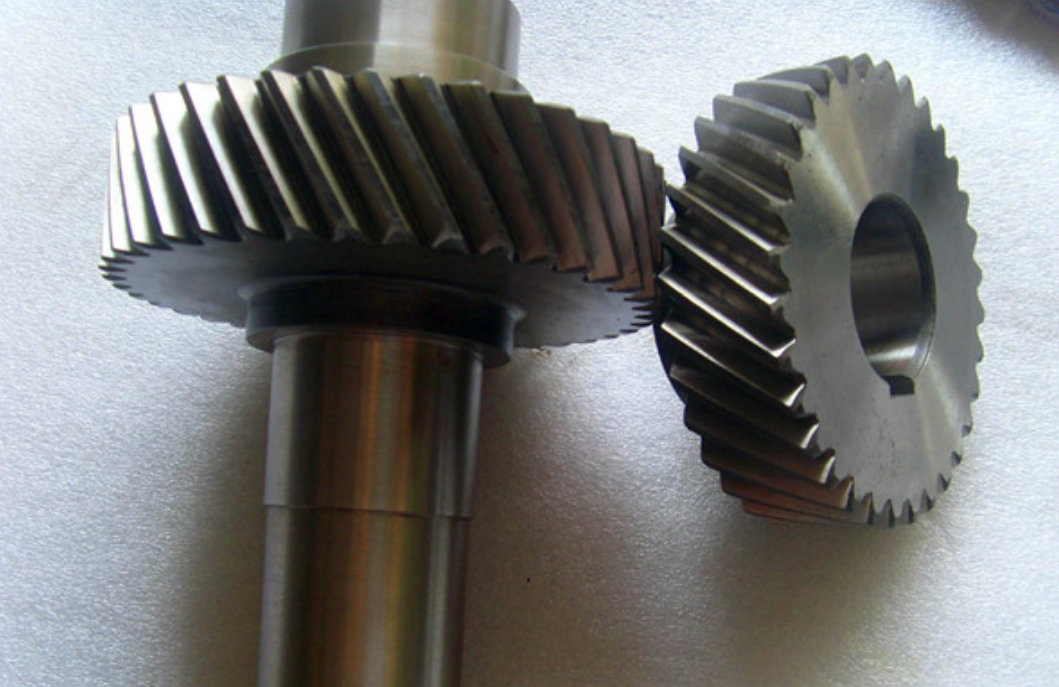
Particular attention must be paid to operating conditions involving low speed and high load. Under such heavy loading, the risk of boundary or dry friction increases significantly. Research indicates that surface friction can elevate contact stresses by approximately 6%, directly impacting contact fatigue strength. Furthermore, friction alters the effectiveness of profile modifications on transmission error. While previous studies have incorporated sliding friction models based on Elasto-Hydrodynamic Lubrication (EHL) theory with time-varying coefficients, a critical aspect often overlooked is the phenomenon of stick-slip friction.
Stick-slip friction, characterized by periodic cycles of adhesion (stick) and sudden release (slip), is a self-excited oscillatory phenomenon prevalent in contacting surfaces with relative motion. It is a primary source of vibration and noise in many mechanical systems, often attributed to a negative slope in the friction coefficient versus relative velocity curve. This stick-slip behavior introduces negative damping, which can, under certain conditions, lead to self-excited oscillations and instability in mechanical structures like gear transmissions. While extensively studied in systems like wheel-rail contacts or brake disc-pad assemblies, research on stick-slip within helical gears remains scarce. A comprehensive investigation into this phenomenon is therefore essential for enhancing the longevity, efficiency, and reliability of helical gears.
In this analysis, I develop a dynamic model for a helical gears pair that incorporates the effects of time-varying mesh stiffness, time-varying friction coefficient, and crucially, the stick-slip phenomenon. The primary objectives are: to establish the transition conditions between stick and slip states for a gear pair under friction; to integrate these conditions into the governing dynamic differential equations, forming a stick-slip dynamics model; and to conduct a comparative analysis of the dynamic responses, specifically meshing forces and friction forces, under pure sliding and stick-slip friction models. This study aims to elucidate the significant impact of adhesive friction on the dynamic characteristics of helical gears.
1. Meshing Characteristics of Helical Gears
1.1. Geometric and Kinematic Analysis
The dynamic behavior is analyzed using an eight-degree-of-freedom lumped-parameter model for the helical gears pair. In this model, each gear possesses three translational degrees of freedom (x, y, z) and one rotational degree of freedom (θ) about its axis. The model incorporates time-varying mesh stiffness $$K_m(t)$$, mesh damping $$C_m$$, and bearing support stiffness and damping in all directions. The fundamental parameters for the helical gears pair under consideration are summarized in the table below.
| Parameter | Value | Parameter | Value |
|---|---|---|---|
| Gear Ratio $$Z_1/Z_2$$ | 29 / 69 | Helix Angle at Base Circle $$\beta_b$$ [°] | 20 |
| Normal Module $$m_n$$ [mm] | 7 | Center Distance $$a$$ [mm] | 363 |
| Normal Pressure Angle $$\alpha_n$$ [°] | 26 | Face Width $$b$$ [mm] | 70 |
To analyze the meshing process, the path of contact on the transverse plane is examined. The theoretical line of action is denoted as $$N_1N_2$$, and the actual segment where meshing occurs is $$AB$$. For a tooth pair $$i$$ that has entered the mesh, the distance traveled along the line of action $$AB$$ after time $$t$$ is given by:
$$ s_i = \omega_1 r_{b1} \left[ \text{mod}(t, T_m) + (i-1)T_m \right] $$
where $$\omega_1$$ is the angular velocity of the driving gear, $$r_{b1}$$ is its base radius, $$T_m$$ is the meshing period, and $$\text{mod}()$$ is the modulo function. The maximum number of tooth pairs in simultaneous contact is $$N = \lceil \epsilon \rceil$$, where $$\epsilon$$ is the total contact ratio of the helical gears.
The contact in helical gears occurs along a line that moves across the face width. Considering a point $$J$$ on the contact line at a distance $$l$$ from the pitch point along the gear axis, the radii of curvature for the pinion and gear at this point are:
$$ R_1 = R_{t1} – l \sin\beta_b, \quad R_2 = R_{t2} + l \sin\beta_b $$
with $$R_{t1}$$ and $$R_{t2}$$ being the transverse radii of curvature at the pitch point, calculated from the gear geometry and the position $$s_i$$. The normal radii of curvature at point $$J$$, required for friction calculations, are $$R_{J1} = R_1 / \cos\beta_b$$ and $$R_{J2} = R_2 / \cos\beta_b$$. The comprehensive radius of curvature $$R_J$$ at the contact point is:
$$ R_J = \frac{R_{J1} R_{J2}}{R_{J1} + R_{J2}} $$
The tangential velocities at point $$J$$ for the two gears are $$v_1 = \omega_1 r_{b1} / \cos\alpha_{t1}$$ and $$v_2 = \omega_2 r_{b2} / \cos\alpha_{t2}$$, where $$\alpha_{ti}$$ are the transverse pressure angles. Key kinematic parameters for friction at point $$J$$ include the sliding velocity $$v_{sJ} = v_1 – v_2$$, rolling velocity $$v_{rJ} = v_1 + v_2$$, slide-to-roll ratio $$SR_J = 2 v_{sJ} / v_{rJ}$$, and entrainment velocity $$v_{eJ} = v_{rJ} / 2$$.
1.2. Load Distribution and Time-Varying Friction Coefficient
The total dynamic meshing force $$F_n$$ along the line of action is calculated from the relative deflection $$\delta_i$$ of the $$i$$-th tooth pair, which includes contributions from gear body displacements, rotational deflections, and static transmission error $$e_i(t)$$:
$$ \delta_i = \left[ (y_2 – y_1) + (r_{b1}\theta_1 – r_{b2}\theta_2) \right] \cos\beta_b + (z_1 – z_2)\sin\beta_b – e_i(t) $$
$$ F_n = K_m(t) \delta(t) + C_m \dot{\delta}(t) $$
The friction force is then $$F_f = \mu(t) F_n$$, where $$\mu(t)$$ is the instantaneous friction coefficient.
Determining an accurate time-varying friction coefficient $$\mu(t)$$ is crucial. I employ an enhanced EHL-based empirical formula that accounts for slide-to-roll ratio $$SR$$, Hertzian contact pressure $$p_h$$, lubricant dynamic viscosity $$\nu_0$$, and composite surface roughness $$\sigma$$:
$$ \mu = e^{f(SR, p_h, \nu_0, \sigma)} \cdot p_h^{b_2} \cdot |SR|^{b_3} \cdot v_{e}^{b_6} \cdot \nu_0^{b_7} \cdot R^{b_8} $$
where the function $$f(SR, p_h, \nu_0, \sigma)$$ is given by:
$$ f(SR, p_h, \nu_0, \sigma) = b_4 \cdot SR \cdot p_h \cdot \lg(\nu_0) + b_5 \cdot e^{|SR| \cdot p_h \cdot \lg(\nu_0)} + b_9 \cdot e^{\sigma} + b_1 $$
The coefficients $$b_1$$ to $$b_9$$ depend on the lubricant type. For the 75W-90 gear oil used in this analysis, the coefficients are as follows:
| Coefficient | Value | Coefficient | Value |
|---|---|---|---|
| $$b_1$$ | -8.92 | $$b_6$$ | -0.10 |
| $$b_2$$ | 1.03 | $$b_7$$ | 0.75 |
| $$b_3$$ | 1.04 | $$b_8$$ | -0.39 |
| $$b_4$$ | -0.35 | $$b_9$$ | 0.62 |
| $$b_5$$ | 2.81 |
The load distribution across the face width of the helical gears is calculated using the “slice method,” where the gear tooth is divided into $$m$$ independent, narrow spur gear slices. The total force is the sum of forces on all slices in contact. The Hertzian contact pressure $$p_h$$ for a slice is:
$$ p_h = \sqrt{ \frac{F_n \cdot E’}{2\pi R_J \cdot l_{\text{slice}}} } $$
where $$E’$$ is the effective elastic modulus and $$l_{\text{slice}}$$ is the slice width.
This model reveals the characteristic behavior of the friction coefficient in helical gears. The coefficient is near zero at the pitch point where sliding velocity is zero. It decreases as the contact point approaches the pitch line and increases as it moves away, primarily due to the negative slope relationship with sliding velocity. Importantly, the friction coefficient increases with applied load and decreases with increasing rotational speed. Discontinuities in $$\mu(t)$$ occur at the transitions between double and triple tooth contact zones due to abrupt load sharing changes. The friction coefficient is generally higher in the approach phase than in the recess phase for the driving gear.
2. Dynamic Model of Helical Gears Considering Stick-Slip
2.1. Governing Equations of Motion
Based on Newton’s second law, the equations of motion for the eight-degree-of-freedom system, considering sliding friction forces $$f_p$$ and $$f_g$$ on the pinion and gear along the line of action, and their corresponding moments $$M_p$$ and $$M_g$$, are formulated. The system includes bearing stiffness and damping in all directions.
To eliminate rigid body motion and reduce the system order, relative coordinates are introduced. The dynamic transmission error $$\delta(t)$$ along the line of action is a key coordinate. After non-dimensionalization and transformation, the final set of governing equations for the system dynamics can be expressed in the following form:
$$
\begin{aligned}
\ddot{x}_1(\tau) &= -\mu_{x1} x_1 – \eta_{x1} \dot{x}_1(\tau) + \frac{m_e}{m_1} f_p(\tau) \\
\ddot{y}_1(\tau) &= -\mu_{y1} y_1 – \eta_{y1} \dot{y}_1(\tau) – \frac{m_e}{m_1} F_d(\tau) \cos\beta_b \\
\ddot{z}_1(\tau) &= -\mu_{z1} z_1 – \eta_{z1} \dot{z}_1(\tau) – \frac{m_e}{m_1} F_d(\tau) \sin\beta_b \\
\ddot{x}_2(\tau) &= -\mu_{x2} x_2 – \eta_{x2} \dot{x}_2(\tau) – \frac{m_e}{m_2} f_g(\tau) \\
\ddot{y}_2(\tau) &= -\mu_{y2} y_2 – \eta_{y2} \dot{y}_2(\tau) + \frac{m_e}{m_2} F_d(\tau) \cos\beta_b \\
\ddot{z}_2(\tau) &= -\mu_{z2} z_2 – \eta_{z2} \dot{z}_2(\tau) + \frac{m_e}{m_2} F_d(\tau) \sin\beta_b \\
\ddot{\delta}(\tau) &= F_s \cos\beta_b – F_d(\tau) \cos^2\beta_b + \frac{2m_e}{m_1 r_{b1}} M_p(\tau) + \frac{2m_e}{m_2 r_{b2}} M_g(\tau) \\
& \quad + \left( \ddot{y}_1(\tau) – \ddot{y}_2(\tau) \right) \cos\beta_b + \left( \ddot{z}_1(\tau) – \ddot{z}_2(\tau) \right) \sin\beta_b – \ddot{e}(\tau)
\end{aligned}
$$
Here, variables with overbars are dimensionless, $$\tau = \omega_n t$$ is dimensionless time, $$\omega_n$$ is the natural frequency, $$m_e$$ is the equivalent mass, $$\mu_{(\cdot)}$$ and $$\eta_{(\cdot)}$$ are dimensionless stiffness and damping ratios for the bearings, and $$F_d(\tau)$$ is the dimensionless dynamic meshing force: $$F_d(\tau) = 2\xi \dot{\delta}(\tau) + \bar{K}(\tau)\delta(\tau)$$, with $$\xi$$ as the damping ratio and $$\bar{K}(\tau)$$ as the dimensionless time-varying mesh stiffness.
The friction forces $$f_p$$ and $$f_g$$ in the sliding state are calculated based on the relative sliding velocity $$v_{r}$$ at the mesh point and the friction coefficient $$\mu(t)$$:
$$ v_{r} = \left[ v_2 \sin\alpha_2 – \dot{x}_2 \right] – \left[ v_1 \sin\alpha_1 – \dot{x}_1 \right] $$
$$ f_p = f_g = \Theta(\delta) \cdot \text{sign}(v_{r}) \cdot \mu_j K_m \delta $$
where $$\Theta(\delta)$$ is a function accounting for gear backlash and $$\text{sign}()$$ gives the direction of friction, which reverses when the contact point passes the pitch point.
2.2. Definition and Transition Conditions for Stick-Slip State
The classical sliding model described above assumes continuous relative motion. However, when two gear teeth mesh near the pitch point, the relative sliding velocity $$v_r$$ approaches zero. If the tangential force required to maintain sliding is less than the maximum static friction force, the teeth will temporarily adhere or “stick” together. The contact then transitions from sliding to sticking friction.
The condition for the onset of stick (adhesion) between a pair of meshing teeth is twofold:
1. The relative sliding velocity at the contact point becomes zero:
$$ v_r = 0 $$
2. The magnitude of the tangential force required to initiate sliding is less than the maximum static friction force:
$$ |f_{21}| = |f_{12}| < f_{\text{max}} = \mu_{\text{static}} \cdot f_{\text{mesh}} $$
During the stick phase, the two teeth in contact move as a single body in the tangential direction. The sticking force, which is equal to the tangential force required to keep them adhered, can be derived from the equations of motion for the tangential (x-axis) degrees of freedom:
$$ f_{21} = m_1 \ddot{x}_1 + K_{x1} x_1 + c_{x1} \dot{x}_1 $$
$$ f_{12} = m_2 \ddot{x}_2 + K_{x2} x_2 + c_{x2} \dot{x}_2 $$
During stick, $$f_{21} = f_{12}$$. The stick phase persists as long as the condition $$|f_{21}| < \mu_{\text{static}} \cdot f_{\text{mesh}}$$ holds. When the applied tangential load exceeds this threshold, the contact breaks free and transitions back to the slip state. This cycle of stick and slip constitutes the stick-slip phenomenon in helical gears.
To model this behavior, the stick condition $$v_r=0$$ and the expression for the sticking force are incorporated into the general sliding dynamics equations. The system solver must dynamically check these conditions at each time step to determine the correct state (stick or slip) for each contacting tooth pair and apply the corresponding friction force law. This results in a piecewise-smooth dynamic system for the helical gears.
3. Analysis of Dynamic Characteristics Under Stick-Slip
3.1. Comparative Response: Sliding vs. Stick-Slip Models
The dynamic response of the helical gears system under the traditional sliding friction model and the proposed stick-slip model reveals significant differences. Analyzing the relative velocity $$v_r$$ between mating teeth is key to identifying stick events. In the sliding model, $$v_r$$ changes sign smoothly (with some oscillation due to system dynamics) as the contact passes through the pitch point. In the stick-slip model, however, when the stick condition is met, $$v_r$$ is enforced to be zero for a finite duration, creating distinct “stick zones” in the response plot. The transition out of stick is marked by a sudden jump in relative velocity.
The influence of operating conditions on stick-slip behavior is pronounced. Increasing the rotational speed intensifies the vibration frequency of the gear system. This leads to more frequent oscillations in the tangential force, which in turn triggers more frequent onset and breakage of the stick condition. Consequently, the number of stick events per meshing cycle increases with speed. Conversely, increasing the transmitted load raises the average meshing force $$f_{\text{mesh}}$$, thereby increasing the maximum static friction force threshold $$\mu_{\text{static}} \cdot f_{\text{mesh}}$$. This allows the sticking force to remain below the threshold for a longer duration during each stick event. Thus, higher loads lead to longer individual stick durations, increasing the probability of adhesive wear.
3.2. Meshing Force and Friction Force Response
The dynamic meshing force $$F_n(t)$$ for the entire gear pair under the sliding model shows periodic fluctuations corresponding to the changing number of teeth in contact (varying between two and three pairs for this design) and the changing mesh stiffness. The force is higher in the double-contact regions than in the triple-contact regions due to load sharing.
To isolate the effect on a single tooth, the single-tooth meshing force $$F_1$$ is calculated by distributing the total dynamic force proportional to the contact line length. Under the sliding model, $$F_1$$ exhibits a relatively smooth progression within the meshing cycle, with discontinuities at entry and exit. Under the stick-slip model, the response is dramatically different. As the tooth pair enters the pitch region and stick initiates, the constraint introduced by adhesion significantly alters the load distribution and system stiffness perceived by that tooth pair. This results in intense, high-frequency oscillations in the single-tooth meshing force specifically within the stick zone. Stick-slip friction therefore acts as a potent source of internal excitation, greatly increasing the fluctuation amplitude of the meshing force beyond that predicted by sliding models alone.
The behavior of the single-tooth friction force $$F_f$$ is equally revealing. In the sliding model, $$F_f$$ follows a pattern dictated by $$\mu(t) F_1(t)$$, changing direction at the pitch point. In the stick-slip model, the friction force during the stick phase is not given by a coefficient times the normal force; instead, it is equal to the tangential sticking force $$f_{21}$$, which is determined by the system’s inertial and elastic forces in the tangential direction. This force can vary considerably during the stick event. At the moment of slip, the friction force drops to the kinetic friction level. This results in a highly complex friction force response featuring plateaus (stick) followed by sharp transitions and oscillations (slip). This complex friction history has direct implications for wear mechanisms, vibration excitation, and noise generation in helical gears.
The key governing equations and conditions for the two models are summarized below for clarity.
| Aspect | Sliding Friction Model | Stick-Slip Friction Model |
|---|---|---|
| State Definition | Continuous sliding $$(v_r \neq 0)$$ | Two states: Stick $$(v_r = 0)$$ and Slip $$(v_r \neq 0)$$ |
| Friction Force | $$ F_f = \text{sign}(v_r) \cdot \mu(t) \cdot F_n $$ | Stick: $$ F_f = f_{stick} = m_1 \ddot{x}_1 + K_{x1}x_1 + c_{x1}\dot{x}_1 $$ Slip: Same as Sliding Model |
| Transition Condition | Not applicable | To Stick: $$v_r = 0$$ AND $$|f_{stick}| < \mu_s F_n$$ To Slip: $$|f_{stick}| \geq \mu_s F_n$$ |
| Primary Dynamic Effect | Introduces damping and periodic excitation. | Introduces piecewise constraints, negative damping potential, and high-frequency force oscillations near the pitch point. |
4. Conclusion
This investigation into the dynamics of helical gears under the influence of stick-slip friction yields several critical conclusions. Firstly, the time-varying friction coefficient exhibits a characteristic profile: it approaches zero at the pitch point, decreases as the contact approaches the pitch line, and increases when moving away from it. This coefficient demonstrates a negative slope with respect to sliding velocity, decreases with increasing rotational speed, and increases with applied load. This dependency creates the fundamental conditions necessary for stick-slip oscillations.
Secondly, the adhesive phase of stick-slip friction profoundly impacts the dynamic characteristics of helical gears. When the conditions for stick are satisfied near the pitch point, the mating teeth adhere, transitioning the contact from kinetic to static friction. This adhesion introduces a sudden constraint into the dynamic system, which acts as a significant source of internal excitation.
Thirdly, the operational regime heavily influences stick-slip propensity. High-speed conditions increase the frequency of vibration, leading to more frequent triggering and breaking of the stick condition. High-load conditions raise the static friction threshold, prolonging the duration of each stick event and thereby increasing the risk of adhesive wear. Therefore, helical gears operating under combined high-speed and high-load conditions are particularly susceptible to stick-slip phenomena.
Finally, a direct comparison between traditional sliding models and the stick-slip model reveals substantial differences in dynamic response. The stick-slip model predicts intense, high-frequency oscillations in the single-tooth meshing force specifically within the stick zones. The friction force response becomes markedly more complex, featuring periods of static friction (stick force) followed by dynamic transitions. These fluctuations in both meshing and friction forces, which are significantly greater than those predicted by sliding models alone, can contribute to elevated vibration levels, noise generation, and accelerated surface damage. Consequently, for an accurate prediction of the dynamic behavior, vibration, and wear of helical gears, especially in demanding operational regimes, incorporating stick-slip friction models is essential. Mitigation strategies, such as optimizing lubricant formulation, employing surface treatments, or carefully selecting system damping, should be considered to manage the adverse effects associated with stick-slip in helical gears.