
In the realm of mechanical power transmission, helical gears play a pivotal role due to their superior load-carrying capacity, smooth operation, and reduced noise compared to spur gears. However, the performance of helical gears is highly sensitive to misalignments that arise from various sources such as manufacturing errors, assembly inaccuracies, shaft deflections under load, and thermal expansions. These misalignments, often referred to as meshing misalignments, can lead to detrimental effects including uneven load distribution across the tooth face, increased transmission error, and exacerbated meshing impacts. These issues not only compromise the efficiency and reliability of gear systems but also accelerate wear and failure, leading to increased maintenance costs and downtime. Therefore, addressing meshing misalignment through advanced design techniques like tooth surface modification is crucial for enhancing the durability and performance of helical gear drives.
This article delves into a comprehensive study on compound modification strategies for helical gears, specifically targeting the mitigation of misalignment-induced problems. By integrating multiple modification techniques, we aim to optimize the meshing performance under realistic operating conditions where misalignments are inevitable. The focus is on developing a robust methodology that considers the complex three-dimensional contact nature of helical gears and employs multi-objective optimization to improve load distribution, minimize transmission error fluctuations, and reduce dynamic impacts. Through detailed mathematical modeling, simulation analyses, and parametric studies, we explore the efficacy of combined helical gear modifications and provide insights into their design and application.
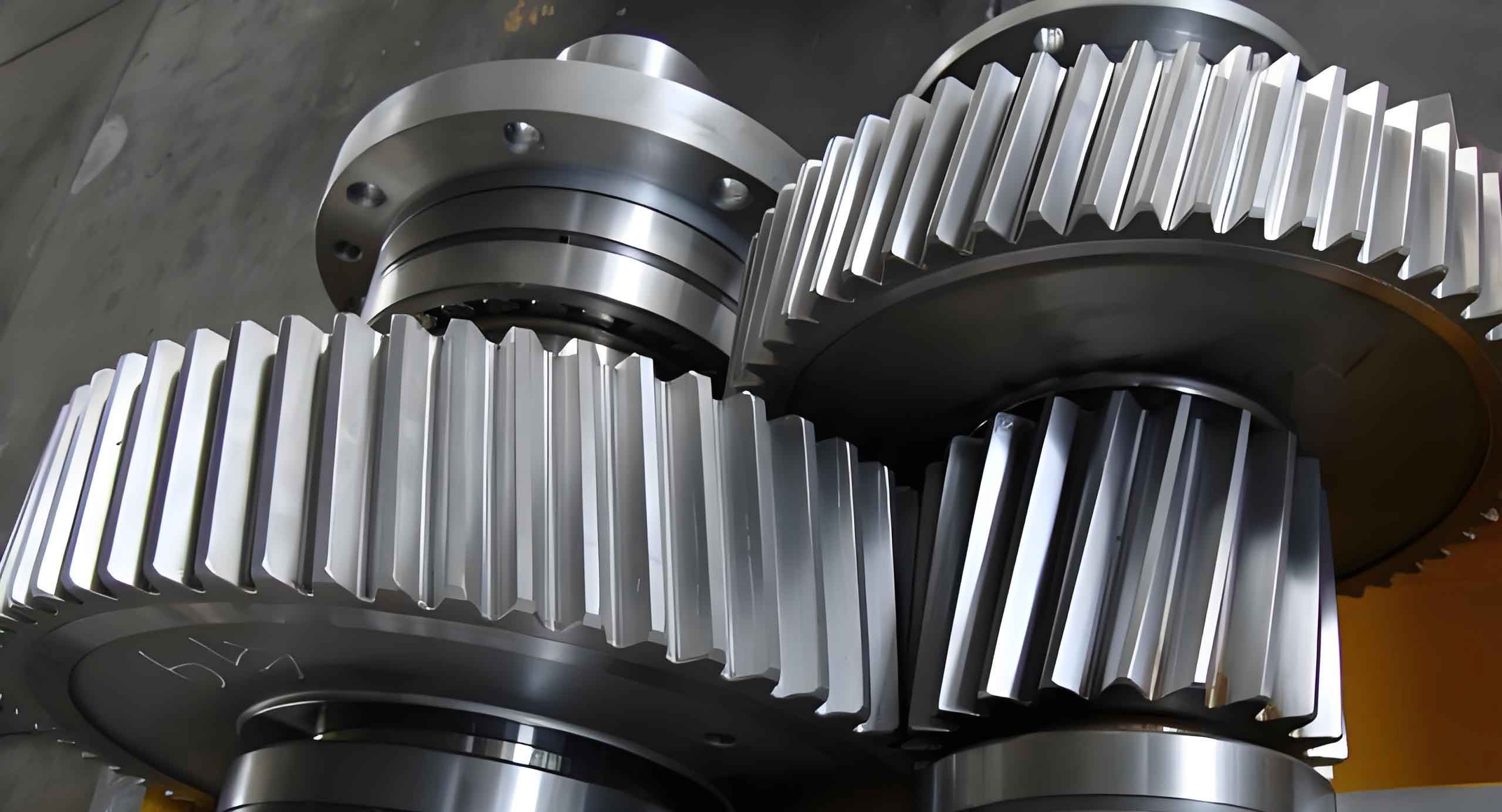
The inherent complexity of helical gear contact arises from the fact that the lines of contact are not parallel to the gear axis, creating a three-dimensional stress field that is challenging to analyze accurately. Traditional design approaches often assume ideal alignment, which rarely holds in practice. Consequently, gears experience edge loading, high-stress concentrations, and vibrational excitations that degrade system performance. To counteract these effects, tooth surface modifications—such as profile crowning, lead crowning, and diagonal modifications—have been employed. These modifications alter the gear tooth geometry intentionally to compensate for errors and deformations, thereby improving contact patterns and reducing undesirable dynamic behaviors. However, most existing studies focus on single modification types or ideal conditions, leaving a gap in understanding the synergistic effects of compound modifications under misaligned scenarios. This work bridges that gap by systematically investigating a compound modification approach for helical gears that accounts for meshing misalignment, leveraging advanced contact mechanics models and optimization algorithms to achieve superior performance.
Meshing misalignment in helical gears primarily stems from parallel axis misalignments, which can be decomposed into components within the plane of axes and perpendicular to it. According to international standards, these misalignments are quantified as parallel axis deviations. For instance, the axis parallelism deviation can be categorized into deviations in the axis plane (denoted as $f_{\sum\delta}$) and in the perpendicular plane (denoted as $f_{\sum\beta}$). These deviations are influenced by factors such as bearing clearances, shaft stiffness, and operational loads. The relationship between these deviations and gear geometry is often expressed empirically. For example, based on industry guidelines, the perpendicular plane deviation $f_{\sum\beta}$ can be estimated using the formula:
$$ f_{\sum\beta} = 0.5 \left( \frac{L}{b} \right) F_{\beta} $$
where $L$ is the bearing span, $b$ is the face width, and $F_{\beta}$ is the total helix deviation. The axis plane deviation $f_{\sum\delta}$ is typically twice that of $f_{\sum\beta}$, i.e., $f_{\sum\delta} = 2 f_{\sum\beta}$. These deviations induce misalignments along the line of action, which critically affect the normal clearance between mating teeth and lead to uneven load distribution. To model this effect, we define the misalignment components in a coordinate system aligned with the gear mesh. Let $M_i$ represent the angular error parallel to the plane of action, and $M_j$ represent the angular error perpendicular to it. These can be derived from the axis deviations $M_x$ and $M_y$ in the transverse plane using pressure angle $\alpha$:
$$ M_i = M_x \cos\alpha + M_y \sin\alpha $$
$$ M_j = M_x \sin\alpha + M_y \cos\alpha $$
These misalignment components directly influence the contact conditions between helical gear teeth. Under load, the gears undergo elastic deformations—including tooth bending, body deflections, and contact deformations—which further alter the meshing behavior. To accurately capture these effects, a detailed contact analysis model is essential. For helical gears, the three-dimensional contact problem can be simplified by discretizing the tooth width into multiple thin slices, each approximating a spur gear segment. This approach transforms the complex 3D stress analysis into a series of 2D problems, making computations tractable while retaining accuracy.
The deformation of each slice comprises several components: bending deformation of the tooth slice, body deformation of the gear segment, and contact deformation at the interface. The total deformation $\delta_i$ for the $i$-th slice can be expressed as:
$$ \delta_i = \delta_{zAi} + \delta_{zBi} + \delta_{RKAi} + \delta_{RKBi} + \delta_{HABi} $$
where $\delta_{zA(B)i}$ denotes the bending deformation of the slice from gear A or B, $\delta_{RKA(B)i}$ represents the body deformation, and $\delta_{HABi}$ is the contact deformation. Each deformation component can be calculated using empirical or analytical formulas derived from elasticity theory. For instance, the bending deformation $\delta_z$ for a tooth slice under normal load $F_{bti}$ over width $b$ is given by:
$$ \delta_z = \frac{F_{bti}}{b \cos^2 \alpha_{Fy}} \frac{1-\nu^2}{E} \left[ 12 \int_{0}^{y_p} \frac{(y_p – y)^2}{2(x’)^3} \, dy + \left( \frac{24}{1-\nu} + \tan^2 \alpha_{Fy} \right) \int_{0}^{y_p} \frac{dy}{2x’} \right] $$
Here, $E$ is Young’s modulus, $\nu$ is Poisson’s ratio, $y_p$ is the height along the tooth where force is applied, $x’$ is the transverse tooth thickness, and $\alpha_{Fy}$ is the operating pressure angle. Similarly, the body deformation $\delta_{RK}$ and contact deformation $\delta_{H1,2}$ can be computed using specialized formulas that account for gear geometry and material properties.
The stiffness of each slice is the reciprocal of its compliance, and the overall mesh stiffness for the gear pair is derived by assembling the slice stiffnesses along with torsional coupling between adjacent slices. The stiffness matrix for the system can be formulated as:
$$ \begin{bmatrix}
C_{pet1} + C_c & -C_c & 0 & \cdots & 0 \\
-C_c & C_{pet2} + 2C_c & -C_c & \cdots & 0 \\
0 & -C_c & \ddots & \cdots & 0 \\
\vdots & \vdots & \vdots & \ddots & -C_c \\
0 & 0 & 0 & -C_c & C_{petn} + C_c
\end{bmatrix}
\begin{bmatrix}
\delta_1 \\
\delta_2 \\
\vdots \\
\delta_n
\end{bmatrix}
=
\begin{bmatrix}
F_{bt1} \\
F_{bt2} \\
\vdots \\
F_{btn}
\end{bmatrix} $$
where $C_{peti}$ is the comprehensive stiffness of the $i$-th slice, and $C_c$ is the torsional coupling stiffness between slices. Solving this system yields the load distribution and deformations across the tooth face, enabling assessment of performance metrics such as load distribution factor, transmission error, and contact stress.
Tooth surface modification is a proactive design strategy to enhance the performance of helical gears by altering the tooth profile or lead. Common modification types for helical gears include profile modification, lead modification, and diagonal modification. Each type serves specific purposes: profile modification primarily reduces entry and exit shocks by easing the tooth tips, lead modification improves load distribution along the face width, and diagonal modification combines both effects to address complex misalignments. The modified tooth surface is typically defined by three parameters: the amount of modification, the length over which modification is applied, and the shape of the modification curve. The modification curve is often described by a power function:
$$ c = c_{\text{max}} \left( \frac{x}{l} \right)^n $$
where $c_{\text{max}}$ is the maximum modification amount, $x$ is the position along the tooth, $l$ is the modification length, and $n$ determines the curve type (e.g., $n=1$ for linear, $n=2$ for parabolic). In practice, the optimal modification parameters depend on the specific gear application, load conditions, and expected misalignments.
In this study, we focus on a compound modification approach that combines lead crowning (spiral angle modification) and profile crowning (tip and root relief) for helical gears. The lead crowning compensates for misalignments along the face width, ensuring even load distribution, while the profile crowning mitigates impacts at the start and end of mesh, smoothing the transmission error. The optimization goal is to minimize multiple objective functions: the load distribution factor $K_{H\beta}$, the peak-to-peak transmission error, and the maximum line load on the tooth surface. These objectives are often conflicting; for instance, excessive lead crowning might improve load distribution but increase transmission error. Therefore, a balanced optimization is necessary.
We consider a case study of a helical gear pair from a metro train transmission system. The gear parameters are summarized in the table below:
| Parameter | Pinion | Gear |
|---|---|---|
| Number of Teeth | 16 | 107 |
| Module (mm) | 5.5 | 5.5 |
| Pressure Angle (°) | 20 | 20 |
| Helix Angle (°) | 17 | 17 |
| Addendum Coefficient | 1 | 1 |
| Dedendum Coefficient | 1.35 | 1.35 |
| Face Width (mm) | 80 | 75 |
| Profile Shift Coefficient | 0.3145 | -0.0761 |
| Total Helix Deviation (mm) | 0.014 | 0.017 |
| Rotational Speed (rpm) | 1800 | 269 |
| Rated Power (kW) | 190 | 190 |
Using the formulas for axis deviations, we calculate the perpendicular plane deviation $f_{\sum\beta}$ and axis plane deviation $f_{\sum\delta}$ for this gear pair. Based on the bearing span and face width, the deviations are found to be $f_{\sum\beta} = 13.77 \, \mu m$ and $f_{\sum\delta} = 27.54 \, \mu m$. These misalignments induce a significant parallel misalignment $M_i$ along the line of action, computed as $M_i = f_{\sum\beta} \cos \alpha_t + f_{\sum\delta} \sin \alpha_t$, where $\alpha_t$ is the transverse pressure angle. For this case, $M_i \approx 22.7 \, \mu m$, which serves as a basis for determining the lead crowning amount.
Initially, we analyze the gear pair without any modification under the influence of misalignment. The results show severe edge loading, with a load distribution factor $K_{H\beta}$ of 1.55 and a maximum line load of 885 N/mm. The transmission error exhibits a peak-to-peak value of 2.56 $\mu m$, indicating substantial fluctuations that can cause vibration and noise. These outcomes underscore the detrimental effects of misalignment on helical gear performance.
Next, we apply a lead crowning modification to the pinion, with a crowning amount set to -22.7 $\mu m$ to counteract $M_i$. After modification, the load distribution improves markedly: $K_{H\beta}$ drops to 1.05, and the maximum line load reduces to 559 N/mm, a 36.8% decrease. The transmission error peak-to-peak value decreases to 2.07 $\mu m$, a 19% improvement. However, the line load remains high at the tooth tips, suggesting that impact loads during mesh entry and exit are still significant. This highlights the limitation of single-parameter modification for helical gears under misalignment.
To address this, we implement a compound modification: lead crowning combined with profile crowning on the pinion. The profile crowning amount is determined based on the elastic deformation of the teeth under load, using the relationship $W_t = C_r \cdot \delta_m$, where $W_t$ is the line load, $C_r$ is the mesh stiffness, and $\delta_m$ is the comprehensive deformation. The profile modification is applied as a parabolic curve ($n=2$) over the active profile length, with a maximum amount calculated to optimize impact reduction.
The compound modification yields superior results. The load distribution factor $K_{H\beta}$ remains at 1.05, similar to lead crowning alone, confirming that profile crowning does not adversely affect load distribution. However, the maximum line load drops dramatically to 329 N/mm, a 41% reduction compared to lead crowning alone. Moreover, the transmission error peak-to-peak value reduces to 1.19 $\mu m$, a 42% improvement. These enhancements demonstrate the synergistic effect of combining modifications for helical gears.
To generalize the findings, we conduct a parametric study varying the perpendicular plane deviation $f_{\sum\beta}$ from 0 to 30 $\mu m$ and evaluate the performance metrics for both single and compound modifications. The results are summarized in the following table:
| Misalignment $f_{\sum\beta}$ ($\mu m$) | Modification Type | $K_{H\beta}$ | Peak-to-Peak TE ($\mu m$) | Max Line Load (N/mm) |
|---|---|---|---|---|
| 0 | Lead Only | 1.00 | 2.07 | 526 |
| Compound | 1.00 | 1.19 | 310 | |
| 10 | Lead Only | 1.03 | 2.22 | 540 |
| Compound | 1.03 | 1.20 | 320 | |
| 20 | Lead Only | 1.10 | 2.45 | 580 |
| Compound | 1.10 | 1.21 | 335 | |
| 30 | Lead Only | 1.20 | 2.70 | 630 |
| Compound | 1.20 | 1.22 | 350 |
The table clearly shows that as misalignment increases, all performance metrics degrade for both modification types, but the compound modification consistently outperforms lead crowning alone in reducing transmission error and line load. The load distribution factor is largely determined by lead crowning and remains unaffected by profile crowning. This underscores the importance of a multi-objective approach when designing modifications for helical gears.
From a mechanical perspective, the improvements can be attributed to the way compound modification reshapes the tooth surface to better conform to the misaligned meshing conditions. Lead crowning compensates for angular misalignments along the face width, ensuring that contact initiates near the center of the tooth and spreads evenly. Profile crowning, on the other hand, relieves the tooth tips and roots, reducing the stiffness discontinuities that cause impacts during mesh transitions. Together, they create a more favorable contact ellipse that minimizes stress concentrations and smooths the transfer of load between teeth.
The mathematical optimization of modification parameters can be formulated as a constrained minimization problem. Let $\mathbf{x} = [c_l, c_p, l_l, l_p, n_l, n_p]$ represent the design vector, where $c_l$ and $c_p$ are the maximum amounts for lead and profile crowning, $l_l$ and $l_p$ are the modification lengths, and $n_l$ and $n_p$ are the curve exponents. The objective functions are:
$$ f_1(\mathbf{x}) = K_{H\beta}(\mathbf{x}), \quad f_2(\mathbf{x}) = \text{TE}_{\text{peak-to-peak}}(\mathbf{x}), \quad f_3(\mathbf{x}) = W_{\text{max}}(\mathbf{x}) $$
where $W_{\text{max}}$ is the maximum line load. Constraints include geometric limits (e.g., modification amounts must not undercut the tooth) and performance thresholds (e.g., contact ratio must remain above a minimum value). A multi-objective optimization algorithm, such as a genetic algorithm or gradient-based method, can be employed to find Pareto-optimal solutions. For this study, we used a simplified approach based on sensitivity analysis to determine near-optimal parameters, but advanced optimization could yield further improvements.
In practice, implementing compound modifications requires precise manufacturing techniques, such as grinding or skiving, which can increase production costs. However, the benefits in terms of extended gear life, reduced noise, and higher reliability often justify the investment, especially in critical applications like automotive transmissions, wind turbines, and industrial machinery. For helical gears in high-speed or heavy-load scenarios, the dynamic behavior is crucial, and modifications must be designed considering not only static loads but also dynamic excitations. Future work could integrate dynamic models to optimize modifications for minimizing vibrations and acoustic emissions.
Another aspect to consider is the effect of thermal deformations on meshing misalignment. During operation, gears heat up due to friction and power losses, causing dimensional changes that alter alignment. A comprehensive design might include thermal analysis to predict these effects and incorporate them into the modification strategy. Additionally, wear over time can change tooth profiles, so modifications might be designed to accommodate some wear without performance degradation.
In conclusion, this study demonstrates that compound modification—specifically combining lead crowning and profile crowning—is highly effective for improving the performance of helical gears under meshing misalignment. By addressing both load distribution and transmission error simultaneously, this approach offers a robust solution for enhancing gear durability and smoothness. The methodology presented here, based on detailed contact analysis and multi-objective optimization, provides a framework for designing advanced helical gear systems that can withstand realistic operating conditions. As industries continue to demand higher efficiency and reliability from gear drives, such optimization techniques will become increasingly vital in the design and manufacturing of helical gears.