
This article presents an advanced methodology for the automated generation of high-precision three-dimensional finite element models specifically designed for the tooth contact analysis of internal helical gear pairs. The conventional finite element method, while recognized as a powerful tool for gear strength evaluation, contact stress analysis, and meshing stiffness calculation, is often hampered by time-consuming manual modeling processes and insufficient mesh density in critical contact regions. These limitations can compromise the accuracy of stress predictions and dynamic behavior simulations. Our proposed approach directly addresses these challenges by establishing a fully parameterized, automated modeling pipeline that ensures geometric fidelity and enables intelligent local mesh refinement.
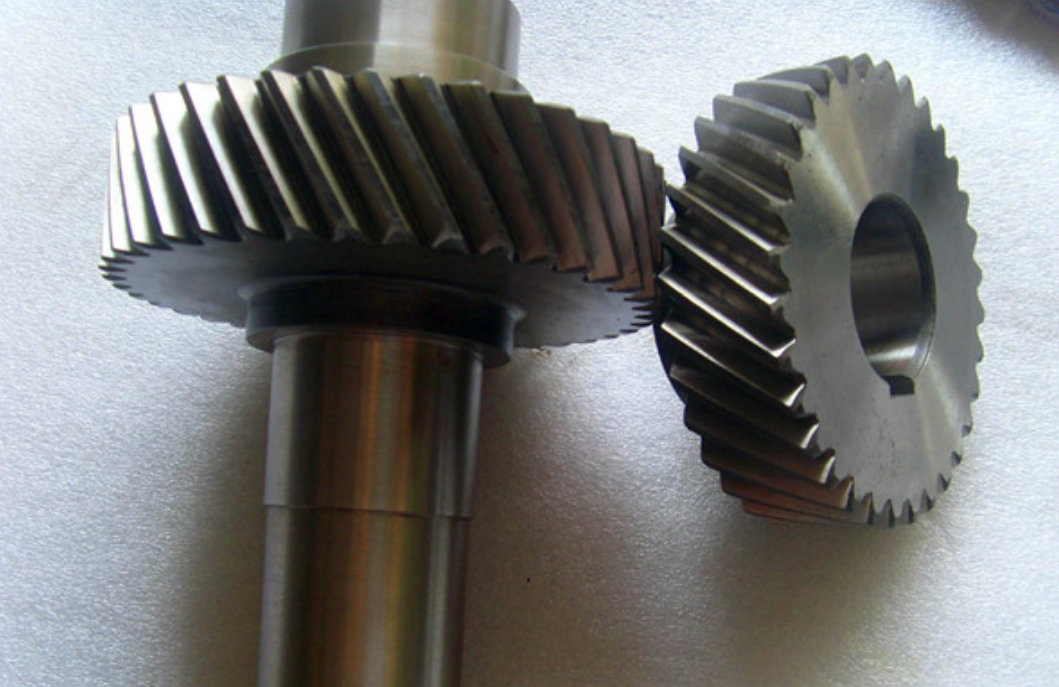
The foundation of an accurate finite element model lies in the precise geometric description of the gear teeth. For helical gears, this begins with an accurate two-dimensional tooth profile on the transverse plane, which is then swept along a helix. The challenge is to derive the complete profile, including the often-neglected but critically important root fillet transition curve. Unlike external helical gears, whose fillet can be generated by a rack cutter, internal helical gears require a pinion-type cutter (gear shaper). We employ the tooth profile normal method based on the governing principle of gear generation.
For an external helical gear generated by a rack cutter, the coordinate transformation from the cutter coordinate system \( (x_c, y_c) \) to the gear coordinate system \( (x_g, y_g) \) at a rotation angle \( \phi_g \) is given by:
$$
\begin{bmatrix} x_g \\ y_g \\ 1 \end{bmatrix} = \mathbf{M}_{gc} \begin{bmatrix} x_c \\ y_c \\ 1 \end{bmatrix}
$$
Where the transformation matrix \(\mathbf{M}_{gc}\) is:
$$
\mathbf{M}_{gc} = \begin{bmatrix}
\cos \phi_g & \sin \phi_g & r_g (\sin \phi_g – \phi_g \cos \phi_g) \\
-\sin \phi_g & \cos \phi_g & r_g (\cos \phi_g + \phi_g \sin \phi_g) \\
0 & 0 & 1
\end{bmatrix}
$$
The rack cutter profile consists of straight segments and a tip rounding fillet of radius \( r_{ct} \). The fillet curve in the cutter coordinates is parameterized by \( \theta \):
$$
\begin{cases}
x_c = a – r_{ct} \sin \theta \\
y_c = b – r_{ct} \cos \theta
\end{cases} \quad \text{for } 0 < \theta < \frac{\pi}{2} – \alpha_t
$$
Here, \(a\) and \(b\) are constants determined by the cutter’s basic parameters like module \(m\), addendum coefficient, and pressure angle \( \alpha_t \). The condition for a point on the cutter to be in contact (the equation of meshing) is:
$$
r_g \phi_g – a – b \tan \theta = 0
$$
Solving this simultaneously with the coordinate transformation yields the parametric equations for the generated root fillet curve on the external gear.
For the internal helical gear, a pinion-type shaper cutter is used. The coordinate transformation and the geometry of the shaper cutter tip fillet are more complex. The fillet on the shaper, with radius \( r_{ct} \), is described by:
$$
\begin{cases}
x_c = x_{o1} – r_{ct} \sin(\theta + \delta_c) \\
y_c = y_{o1} + r_{ct} \cos(\theta + \delta_c)
\end{cases}
$$
where \( (x_{o1}, y_{o1}) \) is the center of the fillet arc, and \( \delta_c \) is a fixed angle derived from the shaper’s base and tip radii. The equation of meshing is derived using the tooth profile normal method. For a point \(K(x_c, y_c)\) on the shaper fillet with a tangent angle \( \gamma \), the required shaper rotation angle \( \phi_c \) for contact is:
$$
\phi_c = \gamma + \zeta – \frac{\pi}{2}, \quad \text{where} \quad \zeta = \arccos\left( \frac{x_c \cos \gamma + y_c \sin \gamma}{r_{pc}} \right)
$$
and \( r_{pc} \) is the distance from the shaper center to the pitch point. For the fillet segment, \( \gamma = \theta + \delta_c \). The corresponding point on the internal gear profile is then obtained via the transformation matrix \(\mathbf{M}_{gc}\) for internal gear generation:
$$
\mathbf{M}_{gc} = \begin{bmatrix}
\cos(\phi_c – \phi_g) & \sin(\phi_c – \phi_g) & a \sin \phi_g \\
-\sin(\phi_c – \phi_g) & \cos(\phi_c – \phi_g) & a \cos \phi_g \\
0 & 0 & 1
\end{bmatrix}
$$
with \( \phi_g = \phi_c / i \), and \( i \) being the gear ratio. This process yields the precise transverse profile for the internal helical gear, including its root fillet.
With the accurate transverse profiles defined, the next step is the construction of the three-dimensional finite element mesh. We adopt a bottom-up, parametric approach using eight-node hexahedral (Solid185) elements, which are superior to tetrahedral elements in accuracy and computational efficiency for contact problems. The process begins by strategically populating the 2D tooth profile with keypoints, controlling density in critical areas like the root fillet and potential contact zones. This 2D keypoint mesh is then copied, translated, and rotated according to the helix angle to form multiple layers along the face width of the helical gear.
| Parameter | Planet Gear | Internal Ring Gear |
|---|---|---|
| Number of Teeth | 23 | 75 |
| Normal Module (mm) | 4 | |
| Normal Pressure Angle (°) | 20 | |
| Helix Angle (°) | 23 | |
| Addendum Coefficient | 1 | |
| Dedendum Coefficient | 1.25 | |
| Profile Shift Coefficient | 0 | 0 |
| Face Width (mm) | 15 | |
Hexahedral elements are created directly by connecting eight adjacent nodes from these layers. A single tooth model is first built and then circumferentially patterned to form the complete coarse-mesh model of the gear. A key innovation is the subsequent local refinement of the contact zone. A critical limitation of standard hexahedral meshes is the difficulty of local subdivision. We overcome this by developing an automatic procedure that:
- Identifies elements on the tooth flank that lie within the potential contact path.
- Reorganizes nodes to create a regular, well-defined contact band aligned with the theoretical line of contact.
- Applies a hierarchical subdivision template to these “contact-band” elements, recursively splitting them to achieve the desired local mesh density.
- Maps the newly created nodes from the linear interpolation back onto the exact theoretical tooth surface (involute or fillet) to preserve geometric accuracy.
This results in a hybrid mesh: a relatively coarse global mesh for computational efficiency, coupled with a very fine, geometrically exact mesh in the contact region for accurate stress and deformation analysis. This targeted refinement is crucial because contact stresses and bending stresses have high gradients near the surface. The table below summarizes the advantages of this local refinement strategy compared to a globally refined coarse mesh.
| Aspect | Globally Refined Coarse Mesh | Locally Refined Proposed Model |
|---|---|---|
| Modeling & Meshing Time | Minutes (Automated) | Minutes (Automated) |
| Solution Time (Typical) | ~47 minutes (for N=50)* | ~7.2 minutes |
| Contact Spot Pattern | Irregular, fragmented ellipses at low density; improves with global refinement | Smooth, continuous, and physically realistic |
| Max Contact Stress Accuracy | Approaches accurate value only at very high global density (N=50) | Within 3.5% of high-density global model result |
| Computational Resource Demand | Very high for accurate results | Moderate |
* N represents the number of elements along the tooth profile depth.
To validate the efficiency and accuracy of our automated high-precision modeling method for helical gears, a comparison was conducted. Different coarse-mesh models of an internal helical gear pair (parameters in Table 1) were created, varying the number of elements along the tooth profile (N=20, 30, 40, 50). The contact stress distribution and solution time were analyzed. As shown in the table and the associated stress plots, coarse models with low density (N=20) produce irregular, discontinuous contact patches and underestimate peak contact stress. While increasing global density (N=50) improves accuracy, it causes a dramatic increase in solution time (from ~3 minutes to ~47 minutes). In contrast, the proposed model starts with a coarse base (e.g., N=20) and applies 6 levels of local refinement only in the contact zone. It achieves a peak contact stress within 3.5% of the dense global model (N=50) but solves in approximately 7.2 minutes, offering superior computational efficiency without sacrificing accuracy. The contact patch from the locally refined model is smooth, continuous, and correctly shows edge loading effects.
Using this refined model, comprehensive tooth contact analysis for the helical gears was performed. The time-varying bending stress and contact stress on a single tooth over a full mesh cycle were extracted. The results clearly show the dynamic load sharing between two and three pairs of teeth due to the total contact ratio (\( \epsilon_{\gamma} = 2.12 \)). Stress peaks occur at the moments of mesh-in and mesh-out, highlighting the impact of edge contact and the potential need for profile modifications in helical gear design.
The model also enables the direct calculation of crucial dynamic excitation sources. The static transmission error (TE) and the corresponding mesh stiffness were computed for different load levels.
The mesh stiffness \( k_m \) is related to the applied torque \( T \) and the computed static transmission error \( \text{TE} \) by:
$$
k_m = \frac{T}{r_b^2 \cdot \text{TE}}
$$
where \( r_b \) is the base radius. The analysis shows that TE varies cyclically within a mesh period, being highest at the pitch point under single-tooth-pair contact and lowest in the middle of the double-tooth-pair contact regions. While TE amplitude increases significantly with load, the mesh stiffness is less sensitive, showing a slight nonlinear increase that saturates at higher torques. Furthermore, the load-sharing ratio among the concurrent contacting tooth pairs was quantified. At the transition points where three tooth pairs are theoretically in contact, the middle tooth carries the majority of the load (up to 92%), with the entering and exiting teeth sharing the remainder. In the middle of the double-tooth-pair contact region, the load is shared almost equally. This detailed insight into load distribution is vital for fatigue life prediction and robust design of helical gear transmissions.
In conclusion, this article has detailed a novel, automated methodology for creating high-precision 3D finite element models of internal helical gear pairs. By deriving exact tooth profiles including fillets, employing a bottom-up hexahedral meshing strategy, and implementing an intelligent local refinement technique for the contact zone, the method overcomes the major bottlenecks of traditional gear FEM modeling: accuracy, efficiency, and automation. The resulting models provide reliable and detailed results for contact stresses, bending stresses, transmission error, mesh stiffness, and load distribution, making them an excellent foundation for advanced analysis of helical gears, including studies on lubrication, micro-geometry optimization, and system-level dynamics. The fully parameterized nature of the approach allows for rapid model generation for any helical gear geometry, significantly enhancing the design and analysis workflow for complex gear drives.