
In my research on automotive transmission systems, I have focused extensively on the performance and durability of helical gears, which are essential components for efficient power transfer. The helical gears in manual transmissions are subjected to rigorous conditions, and their failure during durability testing can lead to significant design challenges. This study aims to analyze the behavior of helical gears under such tests and propose optimization strategies to enhance their reliability. Through a combination of theoretical analysis and practical experimentation, I explore various design parameters that influence the durability of helical gears, including shot peening, material selection, tooth width adjustment, and lead crowning. The goal is to achieve optimal performance without increasing costs or weight, aligning with automotive industry demands for high-quality, lightweight, and cost-effective products.
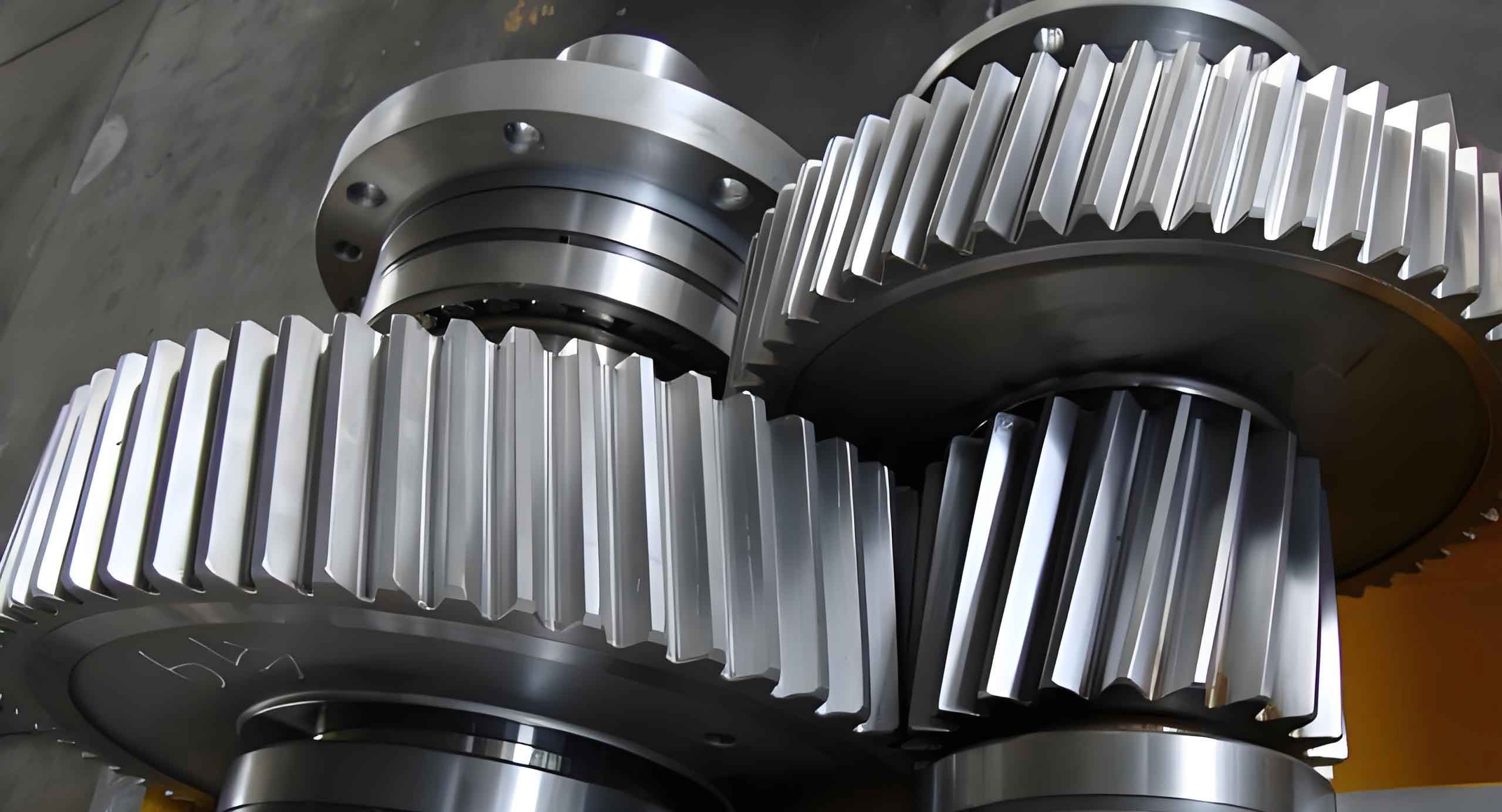
The investigation centers on a pair of helical gears used in the main reduction stage of a manual transmission. Initial durability tests revealed tooth breakage failures, prompting a detailed examination of the gear design. Helical gears are favored for their smooth operation and high load capacity, but their complex geometry necessitates careful optimization to prevent premature failure. In this work, I employ software tools like Romax, based on standards such as ISO 6336:2006, to calculate safety factors for bending and contact stress. The theoretical results are compared with actual test data from bench durability and vehicle road tests, providing insights into the effectiveness of each optimization measure. By iteratively refining the design parameters, I seek to identify the most cost-effective solutions for improving the longevity of helical gears in automotive applications.
Helical gears are prone to specific failure modes, with tooth breakage and pitting being the most common in transmission systems. Tooth breakage, a bending fatigue failure, originates at the tensile side of the tooth root and is often observed in helical gears under high cyclic loads. Pitting, on the other hand, is a contact fatigue failure that manifests as small pits on the tooth surface near the pitch circle. These failures can compromise the entire transmission, leading to downtime and increased maintenance costs. Understanding these modes is crucial for designing robust helical gears. In my analysis, I consider factors such as input torque, gear parameters, and system dynamics that contribute to these failures. For instance, the tangential force on helical gears is calculated using the formula: $$ F_t = \frac{2T}{d} $$ where \( F_t \) is the tangential force, \( T \) is the input torque, and \( d \) is the pitch diameter. This force directly influences the stress on helical gears, making it a key variable in durability assessments.
The performance of helical gears is influenced by multiple factors, including gear geometry, material properties, and operating conditions. Key parameters for helical gears include the normal module, pressure angle, helix angle, and tooth width, all of which affect the load distribution and stress concentrations. Additionally, application factors, dynamic load factors, and load distribution factors must be accounted for in theoretical calculations. Standards like ISO 6336:2006 provide guidelines for computing the load capacity of helical gears, but practical testing often reveals discrepancies due to unanticipated variables like vibration and misalignment. In this study, I evaluate these factors through a series of optimizations, aiming to enhance the durability of helical gears. For example, the bending stress formula for helical gears can be expressed as: $$ \sigma_F = \frac{F_t}{b m_n} Y_F Y_S Y_\beta Y_K $$ where \( \sigma_F \) is the bending stress, \( b \) is the face width, \( m_n \) is the normal module, \( Y_F \) is the form factor, \( Y_S \) is the stress correction factor, \( Y_\beta \) is the helix angle factor, and \( Y_K \) is the application factor. Similarly, the contact stress is given by: $$ \sigma_H = Z_E Z_H Z_\epsilon \sqrt{ \frac{F_t}{d b} \frac{u+1}{u} } $$ where \( Z_E \) is the elasticity factor, \( Z_H \) is the zone factor, \( Z_\epsilon \) is the contact ratio factor, and \( u \) is the gear ratio. These equations underscore the complexity of designing reliable helical gears.
To baseline the study, I first examined the original design of the helical gears. The main reduction gear pair had specific parameters, as summarized in Table 1. These helical gears were manufactured from 20CrMoH material and subjected to both bench and road durability tests. The tests indicated that the pinion experienced tooth breakage at the right end of the tooth width, failing to meet the required 300,000 km mileage target. Using Romax software, I calculated the theoretical safety factors for bending and contact, as shown in Table 2. Interestingly, the bending safety factor was higher than the contact safety factor, yet only tooth breakage occurred in practice, highlighting the need for experimental validation. The test results for the original design are provided in Table 3, demonstrating the early failure of these helical gears.
| Parameter | Symbol | Pinion | Gear |
|---|---|---|---|
| Center Distance (mm) | a | 126 | |
| Normal Module (mm) | m_n | 2.25 | |
| Pressure Angle (deg) | α_n | 20 | |
| Helix Angle (deg) | β | 30 | |
| Handedness | — | Left | Right |
| Number of Teeth | z | 19 | 77 |
| Face Width (mm) | b | 32 | 29.5 |
| Tooth Thickness (mm) | s | 4.255 | 3.669 |
| Tip Diameter (mm) | d_a | 56.7 | 207 |
| Root Diameter (mm) | d_f | 43.9 | 194.2 |
| Safety Factor | Symbol | Pinion | Gear |
|---|---|---|---|
| Bending Strength | S_F | 1.32 | 1.65 |
| Contact Strength | S_H | 1.15 | 1.15 |
| Test Type | Mileage Percentage (%) |
|---|---|
| Bench Durability Test | 38 |
| Vehicle Road Test | 52 |
The first optimization involved shot peening on the helical gears. Shot peening introduces compressive residual stresses in the tooth root region, enhancing bending fatigue strength. According to ANSI AGMA 2004-B89, this process can improve bending strength by up to 25%. In my study, based on supplier data, a 15% improvement was assumed. The measured residual stresses before and after shot peening are listed in Table 4, showing a significant increase in compressive stress. The recalculated safety factors for the pinion are presented in Table 5. Durability tests with shot-peened helical gears showed improved performance, as seen in Table 6, but tooth breakage still occurred before the target mileage, indicating that additional measures were needed for these helical gears.
| Sample | Residual Stress at Surface (MPa) Before | Residual Stress at 0.3mm Depth (MPa) Before | Residual Stress at Surface (MPa) After | Residual Stress at 0.3mm Depth (MPa) After |
|---|---|---|---|---|
| 1 | -253.1 | -43.4 | -460 | -950.3 |
| 2 | -240 | -9.7 | -551.7 | -1055.8 |
| 3 | -14.5 | -24.1 | -492.4 | -948.2 |
| 4 | -97.2 | -73.1 | -533.7 | -1035.8 |
| 5 | -116.5 | -55.9 | -593.1 | -1085.4 |
| Average | -176.7 | -41.2 | -526.2 | -1015.1 |
| Safety Factor | Symbol | Pinion | Gear |
|---|---|---|---|
| Bending Strength | S_F | 1.52 | 1.65 |
| Contact Strength | S_H | 1.15 | 1.15 |
| Test Type | Mileage Percentage (%) |
|---|---|
| Bench Durability Test | 52 |
| Vehicle Road Test | 80 |
Next, I explored material change for the helical gears. The pinion material was switched from 20CrMoH to 20CrNiMoH, which contains higher nickel content for better impact resistance and tensile strength. Assuming a 5% increase in both contact fatigue limit (\( \sigma_{Hlim} \)) and bending fatigue limit (\( \sigma_{Flim} \)), and combining with shot peening, the new safety factors were calculated, as shown in Table 7. However, test results in Table 8 revealed only marginal improvement, suggesting that material upgrade alone is insufficient for these helical gears under the given conditions. This outcome emphasizes the importance of holistic design approaches for helical gears, rather than relying solely on material enhancements.
| Safety Factor | Symbol | Pinion | Gear |
|---|---|---|---|
| Bending Strength | S_F | 1.596 | 1.65 |
| Contact Strength | S_H | 1.18 | 1.15 |
| Test Type | Mileage Percentage (%) |
|---|---|
| Bench Durability Test | 56 |
| Vehicle Road Test | 85 |
Given the persistent tooth breakage in helical gears, I investigated lead crowning as a solution to mitigate misalignment-induced localized loading. The failure consistently occurred at the right end of the pinion tooth width, indicating bias load due to system deformations. By modifying the lead slope deviation (\( f_{H\beta} \)) for the driven gear, I optimized the contact pattern to shift load toward the center. The \( f_{H\beta} \) was changed from 0±9 μm to 18±9 μm on the drive side and -12±9 μm on the driven side. Incorporating this into Romax simulations yielded updated safety factors in Table 9. Remarkably, tests with lead-crowned helical gears achieved 100% mileage completion, as shown in Table 10, demonstrating the efficacy of this micro-geometry adjustment for helical gears.
| Safety Factor | Symbol | Pinion | Gear |
|---|---|---|---|
| Bending Strength | S_F | 1.65 | 1.65 |
| Contact Strength | S_H | 1.25 | 1.15 |
| Test Type | Mileage Percentage (%) |
|---|---|
| Bench Durability Test | 100 |
| Vehicle Road Test | 100 |
Another potential optimization for helical gears is increasing the tooth width, which theoretically enhances load capacity. In this study, I considered adding 2 mm to the pinion width and 1.5 mm to the gear width, resulting in a 1.5 mm increase in mesh width. Combined with shot peening, material change, and lead crowning, the recalculated safety factors are presented in Table 11. However, due to space constraints in the transmission, this modification was not physically tested; instead, it serves as a reference for future designs of helical gears. The bending stress reduction from width increase can be approximated by: $$ \Delta \sigma_F \propto \frac{1}{b} $$ highlighting the benefit of wider helical gears, but practical limitations must be considered.
| Safety Factor | Symbol | Pinion | Gear |
|---|---|---|---|
| Bending Strength | S_F | 1.60 | 1.65 |
| Contact Strength | S_H | 1.20 | 1.15 |
Cost implications are critical in automotive applications, so I evaluated each optimization for helical gears relative to the original design. Assuming the original cost as 1.00, Table 12 summarizes the cost ratios for individual changes. Shot peening and lead crowning show minimal cost increases, while material change is more expensive. To visualize the trade-offs, I created a cost-performance matrix in Figure 8, ranking each option from 1 to 5 based on cost and mileage completion. This analysis underscores that for helical gears, combining shot peening and lead crowning offers the best balance of performance and affordability.
| Item | Cost Ratio |
|---|---|
| Original Design | 1.00 |
| Shot Peening Only | 1.0065 |
| High-Performance Material Only | 1.0538 |
| Lead Crowning Only | 1.00 |
| Tooth Width Increase Only | 1.0035 |
From my theoretical and experimental findings, I draw several conclusions regarding helical gears in automotive transmissions. First, bench durability tests tend to induce earlier failures in helical gears compared to road tests, indicating their higher severity for validation. Second, while theoretical calculations predicted pitting as the dominant failure mode for helical gears, actual tests revealed only tooth breakage, reinforcing the necessity of physical testing for helical gears. Third, shot peening significantly improves the bending strength of helical gears, as confirmed by both analysis and experiments. Fourth, material upgrade for helical gears provided limited benefits in this case, suggesting that it may not always be cost-effective. Fifth, lead crowning proved highly effective for helical gears by correcting misalignment and distributing loads evenly, thereby preventing localized stresses. Sixth, increasing tooth width in helical gears offers theoretical gains but may face design constraints.
Based on these insights, I recommend shot peening combined with lead crowning as the optimal strategy for enhancing the durability of helical gears without substantial cost increases. These methods can be applied to other helical gears in similar transmission systems, ensuring reliability while meeting industry demands. Future work could explore advanced coatings or hybrid materials for helical gears, but the current approach provides a practical foundation for optimization. In summary, the iterative process of testing and refinement is essential for developing robust helical gears that withstand the rigorous conditions of automotive applications.
Throughout this study, the focus on helical gears has highlighted their complexity and importance in transmission design. By leveraging both standard calculations and empirical data, I have demonstrated how targeted optimizations can resolve durability issues in helical gears. The use of formulas such as those for bending and contact stress, along with tabulated results, provides a comprehensive framework for engineers working with helical gears. As automotive technology evolves, continued research into helical gears will be vital for achieving higher efficiency and longevity in transmission systems.