
In the field of mechanical transmission systems, helical gears play a pivotal role due to their smooth operation and high load-carrying capacity. As a researcher focused on gear dynamics, I aim to delve into the dynamic characteristics of helical gear pairs, particularly under the influence of time-varying mesh stiffness and tooth backlash. The performance and mechanical behavior of helical gears significantly impact the overall functionality of machinery, making it essential to understand the complex dynamic excitations they encounter. Unlike other components, gear systems exhibit unique vibration patterns driven by factors such as helical angle and operating conditions. This study establishes a comprehensive dynamic model to analyze these effects, contributing to fault diagnosis and vibration reduction design for helical gears.
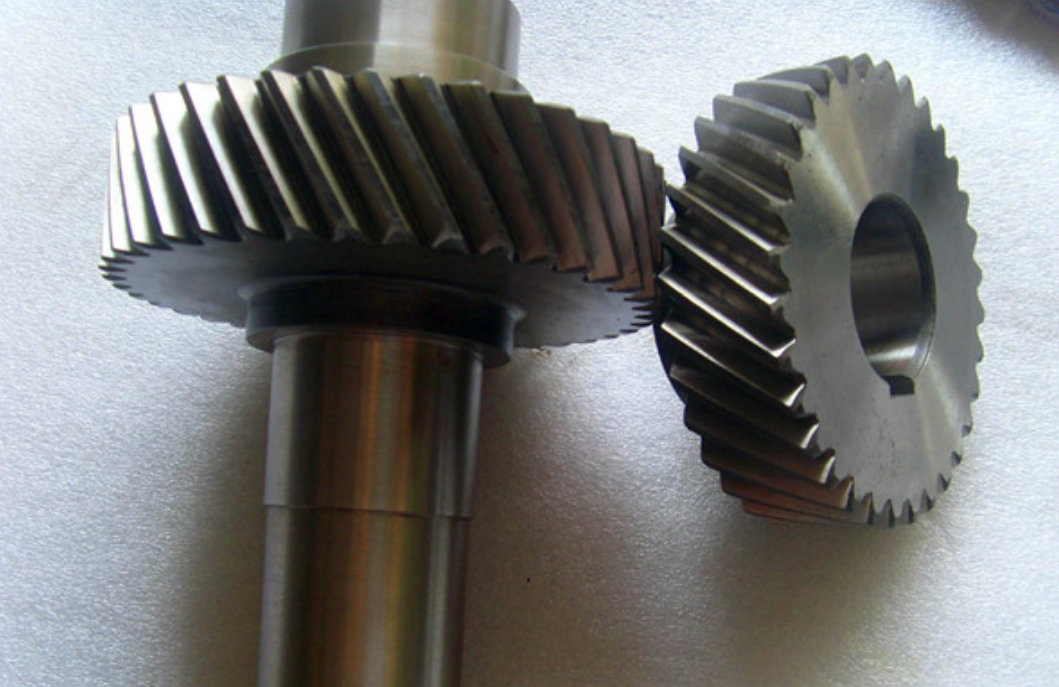
Helical gears are widely used in various industrial applications, and their dynamic response is critical for ensuring reliability and efficiency. The meshing process of helical gears involves continuous engagement along a helical path, leading to time-varying stiffness and potential nonlinearities like backlash. In this article, I develop a six-degree-of-freedom (6-DOF) coupled dynamic model that incorporates bending, torsion, and axial vibrations for a single helical gear pair. By employing numerical methods, I explore how parameters like the helical angle and driving torque affect vibration responses. The findings provide insights into optimizing helical gear design for enhanced performance.
Internal Excitations in Helical Gear Pairs
The dynamic behavior of helical gears is primarily influenced by internal excitations, such as time-varying mesh stiffness and tooth backlash. These factors introduce nonlinearities that can lead to complex vibration patterns. For helical gears, the mesh stiffness varies periodically due to the changing contact line length during engagement. Additionally, backlash—a necessary clearance between teeth to accommodate lubrication and manufacturing tolerances—adds a discontinuous element to the system. Understanding these excitations is crucial for accurate dynamic modeling of helical gears.
Time-Varying Mesh Stiffness of Helical Gears
The time-varying mesh stiffness of helical gears is a key parameter that affects their dynamic response. Unlike spur gears, helical gears have a helical tooth profile, resulting in gradual engagement and disengagement along the contact line. This leads to smoother stiffness variations. Based on previous research, I derive the mesh stiffness using the instantaneous contact line length. The stiffness \( k(t) \) can be expressed as:
$$ k(t) = k_0 \cdot L(\gamma) $$
where \( k_0 \) is the average mesh stiffness per unit contact line length, \( L(\gamma) \) is the instantaneous contact line length, and \( \gamma \) represents the meshing phase. The contact line length changes over time \( t \) within a meshing period \( T_m \), given by:
$$ \gamma = \frac{t}{T_m} $$
To compute \( L(\gamma) \), I consider the geometry of helical gears. For a helical gear pair with helix angle \( \beta \), the contact line length varies sinusoidally. A simplified formula is:
$$ L(\gamma) = b \cdot \left( 1 + \epsilon_{\alpha} \cdot \cos(2\pi \gamma) \right) $$
where \( b \) is the face width and \( \epsilon_{\alpha} \) is the transverse contact ratio. This approach allows for efficient calculation of stiffness for helical gears. The variation in stiffness with different helix angles is summarized in Table 1, showing that increased helix angles reduce stiffness fluctuations, which is beneficial for vibration reduction in helical gears.
| Helix Angle \( \beta \) (degrees) | Average Stiffness \( k_0 \) (N/m) | Stiffness Fluctuation Amplitude (N/m) | Meshing Period \( T_m \) (s) |
|---|---|---|---|
| 10 | 5.2 × 10^8 | 1.8 × 10^8 | 0.0025 |
| 18 | 4.9 × 10^8 | 1.2 × 10^8 | 0.0023 |
| 25 | 4.7 × 10^8 | 0.9 × 10^8 | 0.0020 |
Tooth Backlash in Helical Gears
Backlash is an essential consideration in helical gear dynamics, as it introduces nonlinearity that can cause impacts and noise. In this study, I model backlash using a piecewise linear function. The backlash function \( f(x) \) is defined as:
$$ f(x) =
\begin{cases}
x – D, & \text{if } x > D \\
0, & \text{if } -D \leq x \leq D \\
x + D, & \text{if } x < -D
\end{cases} $$
where \( D \) is half of the total backlash \( 2D \). This function represents the clearance between teeth in helical gears, with typical values ranging from 50 to 200 μm. For the helical gear pair in this analysis, I set \( 2D = 100 \) μm. The inclusion of backlash affects the dynamic meshing force, especially under varying loads, and is critical for accurate simulation of helical gear behavior.
Coupled Dynamic Model for Helical Gear Pairs
To capture the complex vibrations of helical gears, I establish a 6-DOF dynamic model that accounts for bending, torsion, and axial motions. This model uses the lumped parameter method, considering the helical gear pair as two masses connected by a nonlinear spring-damper element. The degrees of freedom include translational displacements in the axial and tangential directions, as well as rotational displacements for both the driving and driven helical gears.
The dynamic equations are derived from Newton’s second law. For the driving gear (denoted as p) and driven gear (denoted as g), the equations of motion are:
$$ m_p \ddot{y}_p + c_{py} \dot{y}_p + k_{py} y_p = -F_y $$
$$ m_g \ddot{y}_g + c_{gy} \dot{y}_g + k_{gy} y_g = F_y $$
$$ m_p \ddot{z}_p + c_{pz} \dot{z}_p + k_{pz} z_p = -F_z $$
$$ m_g \ddot{z}_g + c_{gz} \dot{z}_g + k_{gz} z_g = F_z $$
$$ I_p \ddot{\theta}_p = F_y R_p – T_p $$
$$ I_g \ddot{\theta}_g = -F_y R_g + T_g $$
where \( m_p, m_g \) are masses, \( I_p, I_g \) are moments of inertia, \( y_p, y_g, z_p, z_g \) are translational displacements, \( \theta_p, \theta_g \) are angular displacements, \( c_{py}, c_{gy}, k_{py}, k_{gy} \) are damping and stiffness coefficients, \( R_p, R_g \) are pitch radii, and \( T_p, T_g \) are input and output torques. The forces \( F_y \) and \( F_z \) are the dynamic meshing forces in the tangential and axial directions, respectively, derived from the normal meshing force \( F_n \).
For helical gears, the normal meshing force is decomposed based on the helix angle \( \beta \). The expressions are:
$$ F_y = \cos\beta \cdot \left[ c_m \dot{\delta} + k(t) f(\delta) \right] $$
$$ F_z = \sin\beta \cdot \left[ c_m \dot{\delta} + k(t) f(\delta) \right] $$
with the relative displacement \( \delta \) given by:
$$ \delta = \cos\beta (y_p – y_g + R_p \theta_p – R_g \theta_g) + \sin\beta (z_p – z_g) $$
Here, \( c_m \) is the meshing damping, \( k(t) \) is the time-varying mesh stiffness, and \( f(\delta) \) is the backlash function. This model effectively couples the vibrations of helical gears, allowing for analysis of their dynamic response under various conditions.
Case Study and Numerical Analysis
To investigate the dynamic characteristics of helical gears, I perform a case study using the parameters listed in Table 2. These parameters are typical for industrial helical gears, and I vary the helix angle and driving torque to observe their effects. The numerical solution is obtained via the fourth-order Runge-Kutta method implemented in MATLAB, providing time-domain responses for vibrations.
| Parameter | Driving Gear | Driven Gear |
|---|---|---|
| Number of Teeth \( z \) | 28 | 70 |
| Normal Module (mm) | 4 | 4 |
| Normal Pressure Angle (degrees) | 20 | 20 |
| Helix Angle \( \beta \) (degrees) | Variable (10, 18, 25) | Variable (10, 18, 25) |
| Face Width \( b \) (mm) | 70 | 65 |
| Density (g/cm³) | 7.85 | 7.85 |
| Equivalent Mass \( m \) (kg) | 5.98 | 34.72 |
| Moment of Inertia \( I \) (kg·m²) | 0.0104 | 0.3762 |
| Driving Speed (rpm) | 300 | — |
| Radial Support Stiffness (N/m) | 7.6 × 10^8 | 8.8 × 10^8 |
| Axial Support Stiffness (N/m) | 7.6 × 10^8 | 8.8 × 10^8 |
| Backlash \( 2D \) (μm) | 100 | |
Influence of Helix Angle on Helical Gear Dynamics
The helix angle is a critical design parameter for helical gears, affecting mesh stiffness and vibration response. As shown in Figure 2, the time-varying mesh stiffness of helical gears becomes smoother with increasing helix angle. For instance, at \( \beta = 10^\circ \), the stiffness fluctuates significantly, whereas at \( \beta = 25^\circ \), the variations are reduced by approximately 30%. This smoothing effect is due to the increased contact ratio in helical gears, which distributes the load more evenly.
In terms of vibration, the axial displacement of the driving helical gear increases with helix angle. For \( \beta = 10^\circ \), the peak axial displacement is around 5 μm, but for \( \beta = 25^\circ \), it rises to 15 μm. This is because a larger helix angle generates greater axial forces in helical gears. The torsional vibration, however, shows an opposite trend: the amplitude decreases as the helix angle increases, from 0.002 rad at \( \beta = 10^\circ \) to 0.001 rad at \( \beta = 25^\circ \). This indicates that helical gears with higher helix angles may exhibit better torsional stability but require careful design to manage axial vibrations.
The axial dynamic meshing force \( F_z \) also escalates with helix angle, following the relation:
$$ F_z \propto \sin\beta \cdot k(t) $$
For \( \beta = 18^\circ \), \( F_z \) averages 500 N, while for \( \beta = 25^\circ \), it reaches 800 N. This underscores the importance of considering axial loads in helical gear systems to prevent issues like shaft misalignment.
Effects of Operating Conditions on Helical Gear Response
Operating conditions, such as driving torque, significantly impact the dynamics of helical gears. I analyze the system under different torque values: 100 Nm, 200 Nm, and 300 Nm. The results reveal that increasing torque amplifies both tangential and torsional vibrations. For example, the tangential displacement \( y_p \) of the driving helical gear increases linearly with torque, as summarized in Table 3.
| Driving Torque \( T_p \) (Nm) | Tangential Displacement Amplitude \( y_p \) (μm) | Torsional Displacement Amplitude \( \theta_p \) (rad) | Axial Force \( F_z \) (N) |
|---|---|---|---|
| 100 | 8.5 | 0.0015 | 300 |
| 200 | 15.2 | 0.0028 | 550 |
| 300 | 22.0 | 0.0040 | 800 |
The tangential dynamic meshing force \( F_y \) shows a similar trend, with its magnitude rising proportionally to torque. This is expected because higher torque increases the load on helical gears, leading to larger dynamic forces. The relationship can be approximated by:
$$ F_y \approx \frac{T_p}{R_p} + \Delta F $$
where \( \Delta F \) represents the dynamic component due to stiffness and backlash. These findings highlight the need to account for operational loads when designing helical gear systems for applications like automotive transmissions or industrial machinery.
Conclusions
In this study, I have developed a detailed dynamic model for helical gears that incorporates time-varying mesh stiffness and tooth backlash. The model provides insights into how the helix angle and driving torque influence the vibration response of helical gears. Key conclusions include: the helix angle significantly affects mesh stiffness and axial vibrations, with larger angles reducing stiffness fluctuations but increasing axial displacements; operating conditions like torque have a direct impact on vibration amplitudes, necessitating careful selection for optimal performance. This research aids in the design and diagnosis of helical gear systems, promoting reliability and efficiency in mechanical transmissions. Future work could extend to multi-stage helical gear systems or experimental validation to further refine the model.