
In the field of heavy-duty machinery, such as high-power emulsion pumps used in mining operations, the reliability and durability of transmission systems are paramount. Helical gears, due to their superior meshing characteristics, high load-bearing capacity, and compact design, are extensively employed in these applications. However, under low-speed and high-torque conditions, helical gears are prone to tooth-root fractures caused by excessive bending stress, leading to catastrophic failures. Traditional design methods, often based on standardized theoretical calculations, may not accurately capture the complex stress distributions in helical gear teeth. In this study, I explore a finite element analysis (FEA) approach using ABAQUS to evaluate the tooth-root bending stress in helical gears, focusing on the most critical loading scenario—the shortest contact line position. This method provides a more precise assessment compared to conventional theories, enabling better design optimization for helical gears in demanding environments.
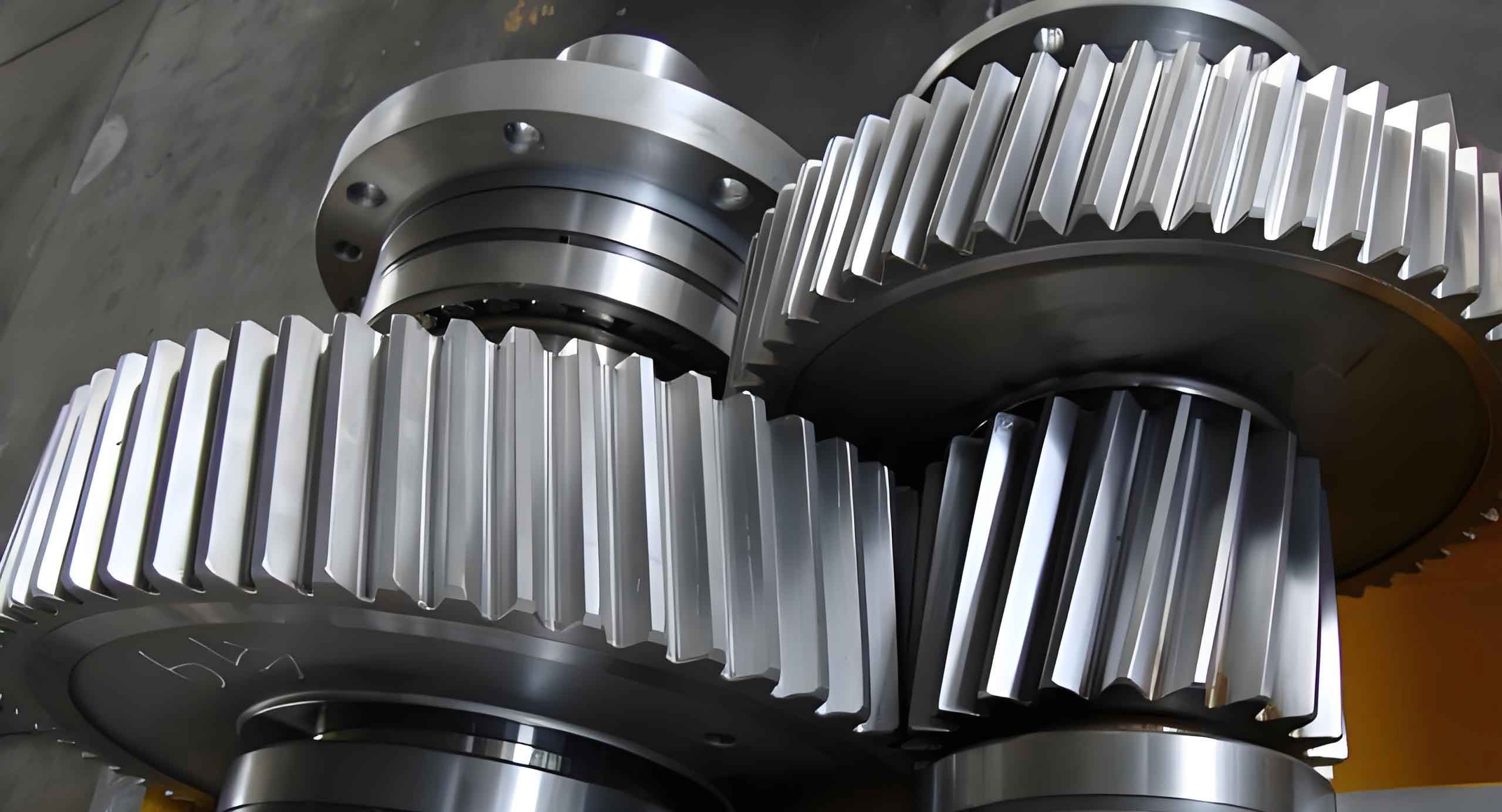
The helical gear is a type of cylindrical gear with teeth that are cut at an angle to the axis of rotation, resulting in a helical tooth form. This geometry allows for smoother and quieter operation compared to spur gears, as multiple teeth are in contact simultaneously. The helical gear’s ability to handle higher loads makes it ideal for applications like emulsion pumps, where power transmission efficiency and robustness are critical. However, the complex three-dimensional stress state in helical gear teeth, particularly at the root where bending stresses concentrate, necessitates advanced analysis techniques. Traditional methods, such as those outlined in mechanical design handbooks, rely on simplified formulas that may underestimate or overestimate stresses, leading to either over-designed or unsafe helical gear configurations. Therefore, employing finite element analysis offers a more realistic simulation of the helical gear behavior under operational loads.
To understand the stress distribution in a helical gear, it is essential to first analyze the meshing process. During engagement, the contact between two helical gears occurs along a line that moves across the tooth face. This contact line varies in length and position throughout the meshing cycle. The most severe loading condition arises when the contact line is at its shortest length, as this results in the highest load density on the tooth surface. For a helical gear pair, the shortest contact line, denoted as \( S_{\text{lim}} \), can be calculated based on gear geometry parameters. The formulas for determining \( S_{\text{lim}} \) depend on the total contact ratio, which combines the transverse contact ratio \( \epsilon_{\alpha} \) and the axial contact ratio \( \epsilon_{\beta} \). The fractional parts of these ratios, \( \epsilon_{\alpha}’ \) and \( \epsilon_{\beta}’ \), are used in the calculations.
When \( \epsilon_{\alpha}’ + \epsilon_{\beta}’ \leq 1 \), the shortest contact line length is given by:
$$ S_{\text{lim}} = \frac{(1 – \epsilon_{\alpha}’)(1 – \epsilon_{\beta}’)}{\sqrt{1 – \epsilon_{\alpha}’^2 – \epsilon_{\beta}’^2}} \cdot p_{ba} $$
When \( \epsilon_{\alpha}’ + \epsilon_{\beta}’ \geq 1 \), the formula becomes:
$$ S_{\text{lim}} = \frac{\epsilon_{\alpha}’ \epsilon_{\beta}’}{\sqrt{\epsilon_{\alpha}’^2 + \epsilon_{\beta}’^2}} \cdot p_{ba} $$
Here, \( p_{ba} \) represents the transverse base pitch, which is a fundamental parameter derived from the gear’s module and pressure angle. For the helical gear in this study, used in a 400 L/min, 37.5 MPa emulsion pump, the key parameters are summarized in Table 1. This helical gear pair functions similarly to a double-helical or herringbone gear, providing balanced axial forces.
| Parameter | Pinion (Active) | Gear (Driven) |
|---|---|---|
| Number of Teeth, \( z \) | 24 | 83 |
| Normal Module, \( m_n \) (mm) | 5 | 5 |
| Normal Pressure Angle, \( \alpha_n \) (°) | 20 | 20 |
| Helix Angle, \( \beta \) (°) | 18 | 18 |
| Normal Profile Shift Coefficient, \( x_n \) | 0 | 0 |
| Face Width, \( b \) (mm) | 110 | 100 |
| Center Distance, \( a \) (mm) | 281.266 | |
From these values, the transverse contact ratio \( \epsilon_{\alpha} \) is calculated as 0.854, and the axial contact ratio \( \epsilon_{\beta} \) is 1.967. The fractional parts are \( \epsilon_{\alpha}’ = 0.854 \) and \( \epsilon_{\beta}’ = 0.967 \), so \( \epsilon_{\alpha}’ + \epsilon_{\beta}’ = 1.821 \geq 1 \). Using the second formula, with \( p_{ba} = 50.83 \) mm, the shortest contact line length is \( S_{\text{lim}} = 27.02 \) mm. The position of this contact line on the driven helical gear tooth is determined by the radius at the start point \( M \), given by:
$$ R_M = R_a \cdot \cos(\alpha_{at}) $$
where \( R_a = 222.82 \) mm is the tip radius and \( \alpha_{at} = 20.94^\circ \) is the transverse pressure angle at the tip. This yields \( R_M = 214.65 \) mm. The endpoint \( N \) is located along the tooth face at a distance \( S_{\text{lim}} \) from \( M \), within the plane of action. This shortest contact line represents the worst-case loading scenario for the helical gear tooth, as it concentrates the applied force over a minimal area, maximizing the bending stress at the root.
The finite element analysis of the helical gear tooth-root bending stress involves several systematic steps, as illustrated in the flowchart below. This process integrates geometric modeling, meshing, load application, and solution in ABAQUS, ensuring an accurate simulation of the helical gear under operational conditions.
| Step | Description | Key Actions |
|---|---|---|
| 1 | Geometric Modeling | Create a 3D model of a single tooth from the driven helical gear using CAD software (e.g., SolidWorks). |
| 2 | Model Import | Convert the model to Parasolid format and import it into ABAQUS for finite element analysis. |
| 3 | Contact Line Definition | Incorporate the calculated shortest contact line \( S_{\text{lim}} \) and its position into the finite element model. |
| 4 | Loading and Boundary Conditions | Apply loads based on Hertz contact theory and constraints to simulate realistic engagement. |
| 5 | Solution and Post-processing | Solve for stress distributions and extract the maximum tooth-root bending stress. |
In Step 1, the 3D geometry of a single tooth from the driven helical gear is generated. The helical gear tooth profile is based on involute geometry, with the helix angle defining the tooth orientation. To simplify the analysis, only one tooth is modeled, as the stress state is localized. The boundaries of the tooth segment are chosen to minimize edge effects: a circumferential width \( L_1 = 25.0 \) mm and a radial thickness \( L_2 = 7.5 \) mm are used, based on prior studies showing that these dimensions have negligible impact on the root stress results. The 3D model accurately captures the helical tooth form, including the root fillet where bending stresses peak.
For the finite element analysis in ABAQUS, the model is meshed using tetrahedral elements, specifically the C3D4 type, which are suitable for complex geometries. A global element size of 0.5 mm is applied, resulting in a mesh with 102,838 elements. This fine mesh ensures resolution of stress gradients, particularly near the root region of the helical gear tooth. The material properties are defined for alloy steel 17CrNiMo6, commonly used in heavy-duty gears. The properties are: Young’s modulus \( E = 206 \) GPa, Poisson’s ratio \( \nu = 0.3 \), tensile strength 1,420 MPa, and yield strength 1,340 MPa. These values are input into ABAQUS to simulate linear elastic behavior, which is valid for stress levels below yield.
Loading conditions are critical for accurate stress analysis. In helical gear meshing, the contact force is distributed along the contact line. However, to avoid stress singularities in FEA, the line contact is modeled as a narrow contact band with a width corresponding to the Hertzian contact area. The contact stress \( \sigma_H \) is calculated using Hertz theory, which assumes elastic deformation of two curved surfaces. The formula for maximum contact stress is:
$$ \sigma_H = \sqrt{\frac{P_{ca} E_{eq}}{\pi \rho_{\Sigma}}} $$
where \( P_{ca} \) is the load per unit length on the tooth, \( E_{eq} \) is the equivalent Young’s modulus, and \( \rho_{\Sigma} \) is the equivalent curvature radius. For a gear pair, these are derived as follows. The load per unit length is:
$$ P_{ca} = \frac{K F_t}{b} $$
with \( K \) being the load factor, \( F_t \) the tangential force at the pitch circle, and \( b \) the face width. The tangential force is related to the torque \( T \) on the pinion:
$$ F_t = \frac{2T}{d_1} $$
where \( d_1 \) is the pitch diameter of the pinion. For the emulsion pump helical gear, the maximum torque is \( T = 3,498 \) N·m, leading to \( F_t = 4,620 \) N. With a load factor \( K = 1.5 \) to account for dynamic effects, and face width \( b = 100 \) mm for the driven gear, \( P_{ca} = 446 \) N/mm. The equivalent curvature radius \( \rho_{\Sigma} \) and equivalent Young’s modulus \( E_{eq} \) are computed from the gear geometries:
$$ \frac{1}{\rho_{\Sigma}} = \frac{1}{\rho_1} \pm \frac{1}{\rho_2} $$
where \( \rho_1 \) and \( \rho_2 \) are the radii of curvature at the contact point for the pinion and gear, respectively. For helical gears, these are derived from the transverse profiles. The equivalent Young’s modulus is:
$$ \frac{1}{E_{eq}} = \frac{1 – \nu_1^2}{E_1} + \frac{1 – \nu_2^2}{E_2} $$
Given the same material for both gears, \( E_{eq} = 226.5 \) GPa. Substituting the values, the Hertz contact stress is \( \sigma_H = 519 \) MPa. This stress is applied as a pressure load over the contact band on the helical gear tooth model, corresponding to the shortest contact line position.
Boundary conditions are applied to simulate the tooth’s support within the gear body. On the two side faces and the bottom face of the tooth segment, all degrees of freedom (displacements in x, y, and z directions) are constrained, representing fixed supports. This prevents rigid body motion and approximates the stiffness of the surrounding gear structure. The applied load and constraints are depicted schematically in the finite element model, ensuring a realistic setup for stress analysis.
Solving the finite element model in ABAQUS yields the stress distribution throughout the helical gear tooth. The results show that the maximum bending stress occurs at the tooth root, specifically in the fillet region where the geometry transitions from the tooth to the gear body. For the driven helical gear under the shortest contact line loading, the maximum von Mises stress at the root is \( \sigma_{FE} = 149 \) MPa. This stress is indicative of the bending fatigue risk, as it exceeds the theoretical value calculated using standard methods.
To compare, the theoretical tooth-root bending stress \( \sigma_T \) is computed using the formula from mechanical design standards:
$$ \sigma_T = \frac{F_t K}{b m_n} Y_{sa} Y_{\beta} $$
where \( Y_{sa} \) is the stress correction factor and \( Y_{\beta} \) is the helix angle factor. For this helical gear, \( Y_{sa} = 0.753 \) and \( Y_{\beta} = 0.877 \), giving \( \sigma_T = 131 \) MPa. The finite element result is approximately 14% higher than the theoretical value, highlighting that traditional methods may underestimate the actual stress in helical gears. This discrepancy arises because theoretical formulas simplify the stress concentration at the root and assume uniform load distribution, whereas FEA captures the complex three-dimensional stress state, including effects of the helical tooth geometry and localized contact.
The stress distribution from FEA reveals that the helical gear tooth experiences not only bending but also torsional and contact stresses due to the helix angle. The table below summarizes the key stress values and comparisons, emphasizing the advantages of FEA for helical gear design.
| Aspect | Theoretical Method | Finite Element Analysis | Difference |
|---|---|---|---|
| Tooth-Root Bending Stress (MPa) | 131 | 149 | +13.7% |
| Assumptions | Simplified load distribution, 2D model | 3D geometry, Hertz contact, realistic constraints | More accurate in FEA |
| Safety Factor | Higher (based on lower stress) | Lower (reflecting true stress) | FEA provides realistic assessment |
| Application | Initial design estimates | Detailed analysis and optimization | FEA is superior for critical designs |
The higher stress from FEA suggests that helical gears designed using traditional methods might have an inflated safety factor, potentially leading to over-engineering. In contrast, FEA allows for a more precise evaluation, enabling weight reduction and cost savings while ensuring reliability. For the helical gear in emulsion pumps, where failures can cause significant downtime, accurate stress analysis is crucial. Moreover, the finite element method can be extended to study other aspects, such as fatigue life, thermal effects, and wear, further enhancing helical gear performance.
In discussing the results, it is important to consider the limitations of this study. The analysis assumes linear elastic material behavior and static loading, whereas real helical gears experience dynamic loads and possible plastic deformation. Additionally, the contact model simplifies surface interactions without accounting for lubrication or wear. However, for bending stress assessment, these assumptions are reasonable, as the primary focus is on the root region where bending dominates. Future work could involve transient analysis to simulate the entire meshing cycle of the helical gear, or incorporate fatigue criteria to predict service life.
From a design perspective, the findings underscore the need to integrate finite element analysis into the helical gear development process. By using FEA, engineers can identify stress concentrations and optimize tooth geometry, such as adjusting the root fillet radius or helix angle, to reduce bending stresses. For instance, increasing the fillet radius can lower stress peaks, but it must be balanced with manufacturing constraints. Similarly, modifying the helix angle affects the contact pattern and load distribution in helical gears, influencing both bending and surface durability. Parametric studies using ABAQUS can efficiently explore these design variables, leading to robust helical gear configurations.
In conclusion, this study demonstrates the effectiveness of finite element analysis in evaluating tooth-root bending stress in helical gears for high-power emulsion pumps. The ABAQUS-based method, which incorporates the shortest contact line and Hertz contact theory, provides a more accurate stress prediction than traditional theoretical calculations. The results show that the finite element-derived bending stress is 149 MPa, which is 14% higher than the theoretical value of 131 MPa, indicating that conventional design approaches may overestimate the safety factor for helical gears. Therefore, adopting FEA in helical gear design ensures better accuracy, leading to optimized performance and reliability in demanding applications. As technology advances, such computational tools will become indispensable in developing next-generation helical gear systems for heavy machinery.
To further illustrate the mathematical framework, here are key equations used in helical gear analysis, presented in LaTeX format for clarity. These formulas are fundamental for understanding the mechanics of helical gears and form the basis for both theoretical and finite element methods.
The transverse pressure angle \( \alpha_t \) for a helical gear is derived from the normal pressure angle \( \alpha_n \) and helix angle \( \beta \):
$$ \tan(\alpha_t) = \frac{\tan(\alpha_n)}{\cos(\beta)} $$
The base diameter \( d_b \) is calculated as:
$$ d_b = d \cos(\alpha_t) $$
where \( d \) is the pitch diameter. The transverse contact ratio \( \epsilon_{\alpha} \) is given by:
$$ \epsilon_{\alpha} = \frac{\sqrt{R_{a1}^2 – R_{b1}^2} + \sqrt{R_{a2}^2 – R_{b2}^2} – a \sin(\alpha_t)}{\pi m_t \cos(\alpha_t)} $$
with \( R_a \) as tip radius, \( R_b \) as base radius, \( a \) as center distance, and \( m_t \) as transverse module. The axial contact ratio \( \epsilon_{\beta} \) for a helical gear is:
$$ \epsilon_{\beta} = \frac{b \sin(\beta)}{\pi m_n} $$
These parameters feed into the shortest contact line calculations, ultimately influencing the stress analysis. By leveraging such equations in conjunction with FEA, designers can achieve a comprehensive understanding of helical gear behavior, ensuring that these critical components meet the stringent demands of industrial applications.