
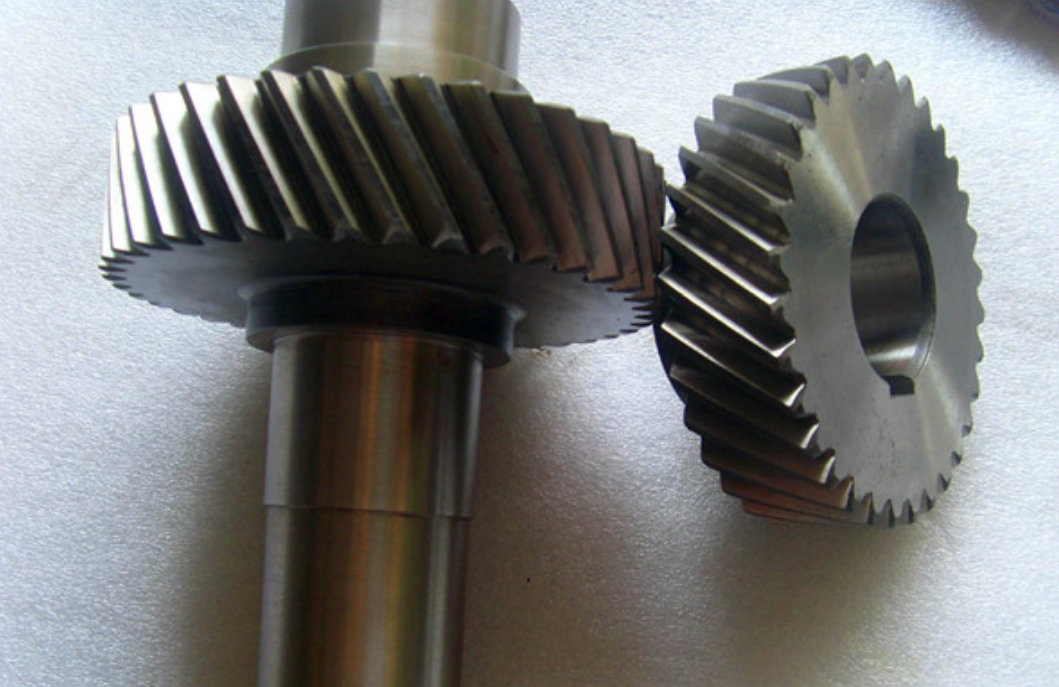
In modern mechanical transmission systems, particularly within demanding sectors like marine propulsion, helical gear drives are increasingly required to operate under conditions of high speed and heavy load. During the meshing process, intense friction occurs between the contacting teeth, generating significant heat and leading to instantaneous temperature rises on the tooth flank. This phenomenon can induce substantial thermal deformation of the gear teeth, adversely affecting transmission accuracy, increasing vibration and noise levels in reduction gearboxes, and in severe cases, causing scuffing failure on the contact surfaces. Therefore, the accurate prediction of the tooth flank temperature field and the investigation into how fundamental design parameters influence this temperature are critical for the reliable, high-performance design of helical gear systems, providing essential theoretical guidance for preventing thermal failure.
Extensive research has been conducted globally on predicting gear tooth temperatures. Early studies often relied on analytical methods with simplifying assumptions. For instance, some researchers modeled the temperature distribution along the face width of spur gears as parabolic to predict bulk temperatures. Others developed methods to calculate instantaneous dynamic loads and flash temperatures, later applying finite element analysis to study the effects of geometric parameters like pitch diameter and face width. The coupled thermo-elastic finite element analysis has also been employed to understand the interaction between deformation, contact stress, and temperature fields under various loads and speeds. For more complex geometries like spiral bevel gears, methodologies were proposed that account for the varying heat generation based on load, sliding velocity, and coefficient of friction throughout the mesh cycle. Furthermore, experimental investigations using embedded thermocouples have been crucial in measuring bulk temperatures and developing empirical correlations, studying the influence of inlet oil temperature and cooling efficiency. While these studies provide a strong foundation, many predictive models lack comprehensive validation against experimental data. Moreover, a systematic, quantitative analysis of how key fundamental design parameters of involute helical gears, such as addendum coefficient and helix angle, affect the flank temperature remains insufficiently reported. This work aims to address these gaps by establishing a validated finite element model and using it to conduct a detailed parametric study.
Development of the Finite Element Analysis Model for Helical Gears
The core of this analysis is the construction of a robust three-dimensional finite element model capable of simulating the transient thermal state of a meshing helical gear pair. The commercial software ANSYS, coupled with its APDL (ANSYS Parametric Design Language) scripting capability, is utilized for parametric modeling and automated analysis. This approach allows for efficient geometry generation, meshing, and application of complex boundary conditions based on gear design variables. The accuracy of the model hinges on the correct definition of thermal boundary conditions, which primarily consist of two parts: 1) convective heat dissipation from the gear surfaces to the surrounding air and lubricating oil, and 2) the internal heat generation due to frictional work at the contacting tooth flanks.
Convective Heat Transfer Boundary Conditions
Heat is dissipated from the gear body to the environment via convection. The convection coefficient is not uniform across all gear surfaces; it varies significantly between the tooth tip, the tooth flank, and the gear side faces. Based on established thermal analyses for rotating gears, the following formulas are applied to define these coefficients.
The convection coefficient for the tooth tip surface is given by:
$$h_{tip} = 0.064 \lambda_f Pr^{\frac{1}{3}} \left( \frac{\omega}{\nu_f} \right)^{0.5}$$
The convection coefficient for the tooth flank surface is:
$$h_{flank} = \frac{0.114 Re^{0.731} Pr^{\frac{1}{3}} \lambda_f}{r}$$
The convection coefficient for the gear side face is:
$$h_{side} = \frac{0.6 \lambda_f Pr}{(0.56 + 0.26 Pr^{0.5} + Pr)^{\frac{2}{3}}} \left( \frac{\omega}{\nu_f} \right)^{0.5}$$
In these equations, the Prandtl number $Pr$ and Reynolds number $Re$ are defined as:
$$Pr = \frac{\rho_f \nu_f c_f}{\lambda_f}$$
$$Re = \frac{\omega \cdot r_c^2}{\nu_f} = \frac{v_c \cdot h_{am}}{\nu_f}$$
where:
- $\lambda_f$ is the thermal conductivity of the lubricant (W/m·K)
- $\rho_f$ is the density of the lubricant (kg/m³)
- $\nu_f$ is the kinematic viscosity of the lubricant (m²/s)
- $c_f$ is the specific heat capacity of the lubricant (J/kg·K)
- $\omega$ is the angular velocity of the gear (rad/s)
- $r_c$ is the radius of an arbitrary point on the gear face (m)
- $v_c$ is the pitch line velocity (m/s)
- $h_{am}$ is the average tooth height (m)
For this study, an L-TSA turbine oil is assumed as the lubricant. Its relevant physical properties at 40°C are summarized in the table below:
| Property | Symbol | Value | Unit |
|---|---|---|---|
| Density | $\rho_f$ | 900 | kg/m³ |
| Kinematic Viscosity | $\nu_f$ | 48.92 × 10⁻⁶ | m²/s |
| Thermal Conductivity | $\lambda_f$ | 0.1277 | W/m·K |
| Specific Heat Capacity | $c_f$ | 1906.3 | J/kg·K |
Frictional Heat Generation on the Tooth Flank
The primary source of heat in a high-speed helical gear mesh is the friction between the interacting tooth surfaces. The frictional heat flux at any point on the flank is a function of the contact pressure, the relative sliding velocity at that point, and the coefficient of friction. To facilitate calculation, a dimensionless linear coordinate system is established along the line of action.
Let K be the pitch point. The dimensionless coordinate $\Gamma_y$ for an arbitrary point Y on the line of action is defined as:
$$\Gamma_y = \frac{KY}{N_1K} = \frac{N_1Y – N_1K}{N_1K} = \frac{\tan(\alpha_{y1})}{\tan(\alpha’_t)} – 1$$
where $\alpha’_t$ is the transverse pressure angle at the pitch point K, and $\alpha_{y1}$ is the transverse pressure angle corresponding to point Y on the pinion.
The heat flux generated by sliding friction at point Y is calculated as:
$$q_y = f \cdot \sigma_H \cdot V_s \cdot \gamma$$
where:
- $f$ is the coefficient of friction.
- $\sigma_H$ is the Hertzian contact stress at the point of contact.
- $V_s$ is the relative sliding velocity at point Y.
- $\gamma$ is the heat partition coefficient, typically taken as 0.9, representing the fraction of frictional energy converted into heat.
The average Hertzian contact stress $\sigma_H$ for two cylindrical bodies in line contact can be expressed as:
$$\sigma_H = \sqrt{ \frac{ \frac{F_{bn}}{L} \cdot \left( \frac{1-\nu_1^2}{E_1} + \frac{1-\nu_2^2}{E_2} \right)^{-1} }{ \pi \cdot \left( \frac{R_1 + R_2}{R_1 R_2} \right) } }$$
where:
- $F_{bn}$ is the normal load perpendicular to the contact line.
- $L$ is the total length of the contact line.
- $E_1, E_2$ are the Young’s moduli of the pinion and gear.
- $\nu_1, \nu_2$ are the Poisson’s ratios of the pinion and gear.
- $R_1, R_2$ are the radii of curvature at the contact point for the pinion and gear, respectively.
The heat flux is partitioned between the two mating gears. The heat flux entering the pinion ($q_{y1}$) and gear ($q_{y2}$) at point Y are:
$$q_{y1} = \beta \cdot q_y$$
$$q_{y2} = (1 – \beta) \cdot q_y$$
where $\beta$ is the heat partition factor, which depends on the thermal properties and conditions of the two bodies. For simplification in initial analysis, an equal partition ($\beta = 0.5$) is often assumed.
The relative sliding velocity $V_s$ at any contact point Y is a key parameter and is given by:
$$V_s = |V_{y1} – V_{y2}| = \frac{\pi n_1}{30} \cdot \frac{d_{b1}}{2} \cdot \sin(\alpha’_t) \cdot \left| 1 + \frac{1}{i} \cdot \Gamma_y \right|$$
where:
- $n_1$ is the rotational speed of the pinion (rpm).
- $d_{b1}$ is the base diameter of the pinion.
- $i$ is the gear ratio ($Z_2/Z_1$).
A constant coefficient of friction $f = 0.05$ is adopted for this analysis, a value commonly used in gear thermal calculations under lubricated conditions.
Implementing these boundary conditions in the FE model requires careful handling. Since standard finite element surfaces cannot simultaneously have a convection coefficient and a heat flux applied, surface effect elements are created overlaying the tooth flank faces. Using APDL, the coordinates of nodes on these surfaces are accessed. The meshing status (in or out of contact) for each node at a given rotational position is determined programmatically. Based on its location, the corresponding average frictional heat flux $q_y$ is then calculated and applied as a boundary condition to that node or set of nodes, while the convection coefficient $h_{flank}$ is applied elsewhere on the tooth surface.
Validation of the Finite Element Model Against Experimental Data
To establish the credibility of the proposed finite element analysis methodology for helical gear temperature prediction, a direct comparison with published experimental results is essential. The experimental work involved testing a pair of helical gears under various operating conditions and measuring the steady-state bulk temperature at specific points below the tooth surface using embedded thermocouples.
The geometric parameters of the test helical gear pair are listed below:
| Parameter | Pinion | Gear | Unit |
|---|---|---|---|
| Normal Module ($m_n$) | 4.35 | mm | |
| Number of Teeth ($Z$) | 16 | 32 | – |
| Normal Pressure Angle ($\alpha_n$) | 17.5 | ° | |
| Helix Angle ($\beta$) | 31.06 | ° | |
| Center Distance ($a$) | 120.4 | mm | |
| Face Width ($b$) | 25 | mm | |
| Profile Shift Coefficient ($x_n$) | 0.408 | -0.715 | – |
Five thermocouples were embedded approximately 0.1 mm beneath the tooth surface at strategic locations from the tip to the root along the path of contact. Temperatures were recorded at a high frequency until a stable value was achieved for various pinion speeds ranging from 500 to 3000 rpm.
Using the identical geometric and operational parameters as inputs, the finite element model was executed. The resulting temperature field on the pinion tooth flank is characterized by localized high-temperature zones, primarily at the regions of engagement and disengagement where sliding velocities and frictional work are significant. For quantitative validation, the predicted temperatures at locations corresponding to the experimental thermocouple positions (specifically at points near the engagement and disengagement regions) are extracted and compared.
The comparison between the FEA-predicted temperatures and the experimentally measured values across the speed range is shown in the conceptual data below:
| Pinion Speed (rpm) | Experimental Temp. at Point 1 (°C) | FEA Temp. at Point 1 (°C) | Error (%) | Experimental Temp. at Point 5 (°C) | FEA Temp. at Point 5 (°C) | Error (%) |
|---|---|---|---|---|---|---|
| 500 | 62.1 | 61.9 | 0.32 | 64.5 | 64.3 | 0.31 |
| 1000 | 67.8 | 66.5 | 1.92 | 70.2 | 69.1 | 1.57 |
| 2000 | 78.3 | 75.9 | 3.07 | 82.0 | 79.4 | 3.17 |
| 3000 | 89.6 | 84.5 | 5.69 | 93.8 | 88.5 | 5.65 |
The trends are consistent: temperature increases with rotational speed due to higher sliding velocities and power loss. The numerical values from the finite element analysis show close agreement with the experimental data. The maximum error observed is within 5.67%, occurring at the highest speed of 3000 rpm. The slightly lower temperatures predicted by the FE model can be attributed to idealized conditions in the simulation, such as perfect gear geometry, ideal alignment, and the assumed constant friction coefficient, whereas real experiments inherently involve manufacturing tolerances, assembly errors, and potentially more complex tribological conditions that can lead to slightly higher heat generation. This level of agreement validates the proposed finite element analysis model as a reliable tool for predicting the flank temperature of helical gears.
Parametric Study: Influence of Key Helical Gear Design Parameters on Flank Temperature
With the validated model in hand, a systematic parametric study is conducted to quantitatively assess the influence of fundamental helical gear design parameters on the maximum tooth flank temperature. This analysis provides direct engineering insight for optimizing gear geometry to mitigate thermal risks. The base gear parameters for this study are representative of a high-power marine application:
| Parameter | Value | Unit |
|---|---|---|
| Normal Module ($m_n$) | 18 | mm |
| Number of Teeth ($Z_1/Z_2$) | 29 / 80 | – |
| Normal Pressure Angle ($\alpha_n$) | 20 | ° |
| Helix Angle ($\beta$) | 11.9 | ° |
| Center Distance ($a$) | ~ | mm (Calculated) |
| Face Width ($b$) | 330 | mm |
| Profile Shift Coefficient ($x_{n1} / x_{n2}$) | 0.1295 / -0.2697 | – |
| Pinion Speed ($n_1$) | 500 | rpm |
| Transmitted Power ($P$) | 7200 | kW |
In each analysis series, only one specific parameter is varied while all others, including load, speed, and lubrication conditions, are held constant at their base values.
Effect of Addendum Coefficient ($h_a^*$)
The addendum coefficient directly determines the tooth height. While a standard value of $h_a^* = 1.0$ is common, designs may use long teeth ($h_a^* > 1$) for increased contact ratio or short teeth ($h_a^* < 1$) for higher bending strength. The analysis reveals a pronounced effect on gear temperature. The finite element results clearly show that the maximum flank temperature increases monotonically with the addendum coefficient. For instance, compared to a short tooth design ($h_a^* = 0.8$), a long tooth design ($h_a^* = 1.2$) exhibits a significantly higher maximum temperature. The temperature rise can be quantified as approximately 22.7% for this specific change. This increase is primarily due to the longer tip path of the longer teeth, which can experience higher sliding velocities near the tip region during the engagement and disengagement phases, leading to greater frictional heat generation in those areas. Furthermore, the longer addendum may slightly alter the contact line pattern and the heat dissipation path. For high-speed, heavily loaded helical gears prone to scuffing, this finding strongly supports the selection of a smaller addendum coefficient (short teeth) as a beneficial design measure for thermal management.
The relationship can be summarized by the following trend, where $T_{max}$ is the maximum flank temperature and $h_a^*$ is the addendum coefficient:
$$T_{max} \propto (h_a^*)^k \quad \text{where } k > 0$$
| Addendum Coefficient ($h_a^*$) | Max. Flank Temp., $T_{max}$ (°C) | Percentage Increase from Base ($h_a^*=1.0$) |
|---|---|---|
| 0.8 | ~81.4 | -12.5% |
| 0.9 | ~87.2 | -6.3% |
| 1.0 (Base) | ~93.1 | 0.0% |
| 1.1 | ~99.5 | +6.9% |
| 1.2 | ~106.3 | +14.2% |
Effect of Helix Angle ($\beta$)
The helix angle is a defining characteristic of a helical gear, influencing smoothness of operation, axial load, and contact ratio. The analysis of its effect on flank temperature yields a more nuanced, non-monotonic relationship. While the overall trend suggests a general decrease in maximum temperature with increasing helix angle, the curve exhibits distinct fluctuations. This behavior can be explained by competing mechanisms:
- Load Distribution Effect: Increasing the helix angle (while keeping normal module and number of teeth constant) increases the transverse contact ratio and the total length of contact lines. This leads to a better distribution of the load among more teeth, reducing the unit load and consequently the contact stress ($\sigma_H$). Lower contact stress directly reduces the frictional heat flux ($q_y$), promoting a decrease in temperature.
- Meshing Phase and Thermal Dissipation Effect: Changing the helix angle alters the axial overlap and the precise phasing of the contact lines as they sweep across the tooth face. This can affect which part of the tooth (root, middle, tip) is engaged at a given time and how many tooth pairs are in contact simultaneously. If the meshing pattern shifts such that a region with fewer concurrent contact pairs (higher unit load) aligns with an area relatively far from the well-cooled gear sides and tips (e.g., the middle of the tooth flank), the local heat generation may spike while convective cooling is less effective. This can cause local temperature peaks, manifesting as fluctuations in the overall maximum temperature plot.
Thus, the optimal helix angle from a thermal perspective is not simply the largest possible one but must be chosen considering this complex interaction. The axial thrust bearing load, which increases with $\beta$, is also a critical practical constraint.
The trend can be conceptually represented as a function with a general decaying envelope superimposed with oscillations:
$$T_{max}(\beta) = A \cdot e^{-B\beta} + C \cdot \sin(D\beta + \phi)$$
where $A, B, C, D, \phi$ are constants dependent on other gear parameters.
| Helix Angle, $\beta$ (°) | Max. Flank Temp., $T_{max}$ (°C) | Note on Trend |
|---|---|---|
| 8 | ~98.5 | High |
| 12 (Base) | ~93.1 | Local Minimum |
| 16 | ~91.8 | Local Minimum |
| 20 | ~94.7 | Local Maximum |
| 24 | ~90.2 | Lower Overall |
Effect of Face Width ($b$)
The face width is a primary parameter for adjusting load capacity. The analysis shows that increasing the face width leads to an overall increase in the maximum tooth flank temperature, albeit with some minor fluctuations. While a wider gear naturally has a larger surface area for heat dissipation, this benefit is outweighed by the thermal effects related to load distribution and internal heat conduction. Increasing face width reduces the unit load (load per unit face width), which should lower heat generation per unit area. However, the heat generated in the central region of a very wide tooth must travel a longer path through the gear body to reach the cooled side faces. This increased thermal resistance impedes heat flow out of the core of the tooth, leading to heat accumulation and higher temperatures in the central region of the flank. This effect is particularly pronounced in high-power helical gears where heat generation is substantial. Consequently, simply increasing face width indiscriminately can be detrimental from a thermal scuffing perspective. Effective cooling strategies, such as internal oil jets or spray cooling directed at the tooth roots, become increasingly important for wide-face helical gears.
The relationship can be expressed as:
$$T_{max}(b) = T_0 + \alpha \cdot b – \delta \cdot e^{-\eta b}$$
where $T_0$ is a base temperature, $\alpha$ represents the dominant linear increase due to thermal resistance, and the exponential term accounts for the minor initial benefit of reduced unit load which diminishes with width.
| Face Width, $b$ (mm) | Max. Flank Temp., $T_{max}$ (°C) | Note on Trend |
|---|---|---|
| 250 | ~86.5 | Lower |
| 290 | ~90.1 | |
| 330 (Base) | ~93.1 | |
| 370 | ~96.8 | |
| 410 | ~100.5 | Higher |
Conclusion
This study successfully developed and validated a three-dimensional finite element analysis model for predicting the tooth flank temperature field of helical gears. The model incorporates detailed thermal boundary conditions, including spatially varied convective heat transfer to air and oil, and frictional heat generation based on instantaneous contact mechanics. Validation against experimental data demonstrated a high level of accuracy, with a maximum prediction error within 5.67%, confirming the model’s reliability for engineering analysis.
Applying this model to a parametric study yielded significant insights into the influence of key design parameters on the thermal behavior of high-speed helical gears:
- Addendum Coefficient: The tooth flank temperature exhibits a strong positive correlation with the addendum coefficient. Selecting a smaller value (short teeth) is a thermally favorable design choice for applications where scuffing resistance is critical.
- Helix Angle: The relationship between helix angle and maximum temperature is complex. While a general decreasing trend exists due to improved load sharing, local fluctuations occur because of changes in meshing phase and associated cooling effectiveness. Design selection must balance thermal benefits with other constraints like axial load.
- Face Width: Contrary to the simple notion that a larger face width improves cooling via more surface area, the analysis reveals that increased face width generally leads to higher maximum flank temperatures. This is attributed to the increased thermal resistance for heat conduction from the tooth core to the cooled side faces, leading to heat accumulation.
The findings provide a quantitative foundation for the anti-scuffing design of helical gears. Designers can use such finite element-based parametric studies to optimize gear geometry, not just for strength and durability, but also for thermal performance, ultimately enhancing the reliability and efficiency of high-power transmission systems. Future work could integrate this thermal model with a thermo-elastohydrodynamic lubrication (TEHL) analysis for even more precise predictions under fully coupled conditions.