
In modern mechanical engineering, the pursuit of efficiency, reliability, and compactness in power transmission systems has led to significant advancements in gear design methodologies. Among these, helical gear reducers stand out due to their superior load-bearing capacity, smooth operation, and reduced noise levels compared to spur gears. The optimization of helical gear systems, however, presents a complex challenge involving multiple objectives and constraints, often requiring sophisticated computational techniques. In this article, I explore the integration of an improved genetic algorithm with penalty function methods to achieve multi-objective, multi-constraint reliability optimization for hardened-tooth-surface modified helical gear reducers. Furthermore, I detail the implementation of three-dimensional parametric modeling based on optimization results, leveraging VB and SolidWorks interfaces for precise gear representation.
The helical gear reducer, characterized by its angled teeth that engage gradually, offers enhanced performance in terms of torque transmission and durability. However, designing such systems necessitates balancing conflicting goals such as minimizing volume while maximizing reliability and efficiency. Traditional optimization approaches often struggle with local optima and computational inefficiencies when handling mixed-variable, nonlinear problems. To address these limitations, I propose a refined genetic algorithm that incorporates adaptive strategies and mixed encoding schemes. This approach not only mitigates the risk of premature convergence but also ensures global optimization, making it particularly suitable for helical gear reducer design.
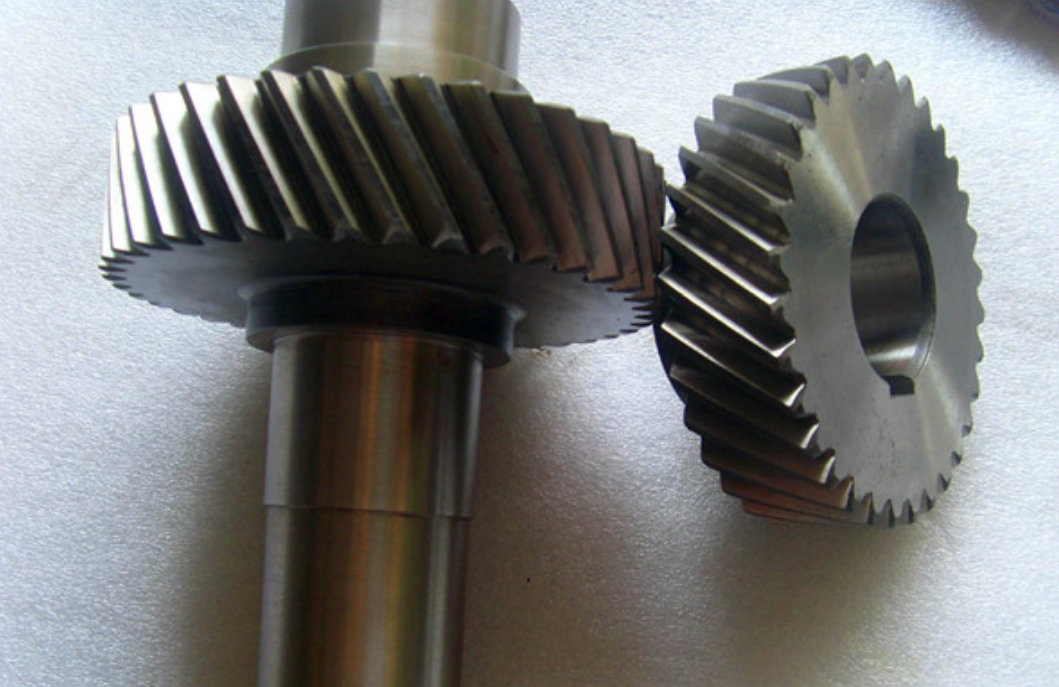
Genetic algorithms, inspired by natural selection, have proven effective in solving complex engineering problems due to their parallelism and global search capabilities. However, standard genetic algorithms suffer from drawbacks such as slow convergence and difficulty in handling constraints. My improved version addresses these issues through several key modifications. Firstly, I employ mixed encoding, combining real-value and discrete encoding to reduce computational burden and avoid mapping errors associated with binary strings. For helical gear design variables like module, number of teeth, helix angle, and modification coefficients, this encoding allows for precise representation within feasible regions.
The fitness function is crucial for guiding the search process. I use the objective function directly, augmented with penalty terms to handle constraint violations. This penalty strategy penalizes infeasible solutions, thereby steering the population toward feasible regions. The adaptive crossover and mutation rates further enhance performance by adjusting based on individual fitness. For instance, when the population diversity declines, higher rates promote exploration, preventing stagnation in local optima. The formulas for adaptive crossover rate \(P_c\) and mutation rate \(P_m\) are given by:
$$
P_c = \begin{cases}
P_{c1} – \frac{(P_{c1} – P_{c2})(f’ – f_{avg})}{f_{max} – f_{avg}}, & \text{if } f’ \geq f_{avg} \\
P_{c1}, & \text{if } f’ < f_{avg}
\end{cases}
$$
$$
P_m = \begin{cases}
P_{m1} – \frac{(P_{m1} – P_{m2})(f – f_{avg})}{f_{max} – f_{avg}}, & \text{if } f \geq f_{avg} \\
P_{m1}, & \text{if } f < f_{avg}
\end{cases}
$$
where \(f_{max}\) is the maximum fitness in the population, \(f_{avg}\) is the average fitness, \(P_{c1}\) and \(P_{m1}\) are rates for the least fit individuals, and \(P_{c2}\) and \(P_{m2}\) are rates for the fittest individuals. This dynamic adjustment ensures that the algorithm maintains a balance between exploitation and exploration throughout the evolution process.
For the helical gear reducer optimization, I establish a comprehensive mathematical model. The design aims to minimize the volume of the gearbox while maximizing overall reliability, quantified through constraints on contact fatigue strength, bending fatigue strength, and total contact ratio. The helical gear geometry introduces additional variables such as helix angle and modification coefficients, which significantly influence performance. The objective functions are defined as follows:
First, the volume minimization function for a two-stage helical gear reducer:
$$
\min f_1(x) = \frac{\pi}{4} \psi_1 (1 + i_1^2) \left( \frac{m_{n1} z_1}{\cos \beta_1} \right)^3 + \frac{\pi}{4} \psi_2 (1 + i_2^2) \left( \frac{m_{n2} z_3}{\cos \beta_2} \right)^3
$$
where \(i_2 = i_0 / i_1\), \(m_{n}\) is the normal module, \(z\) is the number of teeth, \(\beta\) is the helix angle, \(\psi\) is the face width coefficient, and \(i\) is the transmission ratio. Second, the total contact ratio maximization function:
$$
\min f_2(x) = -\sum_{i=1}^{2} \left[ \left(1.88 – 3.2 \left( \frac{1}{z_{2i-1}} + \frac{1}{i_i z_{2i-1}} \right) \right) \cos \beta_i + \frac{b_i \sin \beta_i}{\pi m_{ni}} \right]
$$
To combine these into a single objective, I use a weighted sum approach:
$$
\min f(x) = f_1(x) + \omega f_2(x)
$$
Here, \(\omega\) is a weighting coefficient that balances the two goals. For the helical gear reducer example, I set \(\omega = 1 \times 10^{-6}\) based on empirical tuning.
The design variables include both continuous and discrete parameters, reflecting the mixed nature of helical gear design:
$$
X = [m_{n1}, m_{n2}, i_1, z_1, z_3, \psi_1, \psi_2, \beta_1, \beta_2, x_{n1}, x_{n3}]^T
$$
where \(x_n\) represents the modification coefficients. For modified helical gears, I assume zero-drive transmission, i.e., \(x_{n1} + x_{n2} = 0\) and \(x_{n3} + x_{n4} = 0\). The constraints are categorized into inequality and regional constraints. Inequality constraints involve reliability conditions for contact and bending fatigue strength, derived from logarithmic normal distributions with a reliability coefficient of 2.327 for a reliability greater than 0.99. For instance, the contact fatigue reliability constraint is expressed as:
$$
\frac{\ln \bar{\sigma}_{HGi} – \ln \bar{\sigma}_{Hi}}{\sqrt{C_{\sigma_{HGi}}^2 + C_{\sigma_{Hi}}^2}} \geq 2.327 \quad (i=1,2)
$$
where \(\bar{\sigma}_{Hi}\) and \(\bar{\sigma}_{HGi}\) are mean values of contact stress and contact fatigue strength limit, and \(C\) denotes variation coefficients. Similarly, bending fatigue reliability constraints are enforced for all gears. Additionally, the total contact ratio must exceed a minimum value \(\varepsilon_{rmin}\) to ensure smooth operation of the helical gear system.
Regional constraints define the feasible ranges for variables, such as module (2 to \(m_{nmax}\)), number of teeth (\(z_{min}\) to \(z_{max}\)), helix angle (\(\beta_{min}\) to \(\beta_{max}\)), and modification coefficients (\(x_{nmin}\) to \(x_{nmax}\)). These are handled directly through the encoding scheme, ensuring that all generated solutions remain within bounds.
The implementation of the improved genetic algorithm begins with population initialization. To promote diversity, I generate individuals randomly within the regional constraints. For continuous variables like helix angle and modification coefficients, real values are sampled uniformly; for discrete variables like module, values are selected from predefined arrays. The initial population size is set to 50, balancing computational efficiency and solution quality. Fitness evaluation involves calculating the penalized objective function, where penalty terms \(MP\) are added for constraint violations:
$$
MP = M_1 P_h + M_2 P_f + M_3 P_c
$$
with \(P_h\), \(P_f\), and \(P_c\) representing penalties for contact stress, bending stress, and contact ratio violations, respectively. The penalty factors \(M_1\), \(M_2\), and \(M_3\) are tuned to reflect the severity of violations. The overall fitness function becomes:
$$
\min f(x) = f_1(x) + \omega f_2(x) + MP
$$
Crossover operations employ multi-parent discrete recombination, where genes from randomly selected parents are combined to form new offspring. This enhances genetic diversity and helps escape local optima. Mutation is performed adaptively, with rates adjusted based on fitness. For a selected gene, a small random perturbation within its feasible range is applied, ensuring that mutated individuals remain valid. Selection combines elitism and roulette wheel methods: the best individual is preserved, while others are chosen probabilistically based on fitness.
The algorithm terminates after 30 generations or when the change in average fitness falls below a threshold. For the helical gear reducer case study, the optimization yields significant improvements over conventional design. The results are summarized in the table below, highlighting reductions in volume and increases in contact ratio.
| Parameter | Conventional Design | Improved Genetic Algorithm Design |
|---|---|---|
| High-Speed Stage Module (mm) | 2.5 | 2.5 |
| High-Speed Stage Teeth Number | 20 | 19 |
| High-Speed Stage Transmission Ratio | 6.8 | 6.4 |
| High-Speed Stage Face Width (mm) | 25 | 30 |
| High-Speed Stage Helix Angle (degrees) | 15 | 11.5 |
| Low-Speed Stage Module (mm) | 4 | 3.5 |
| Low-Speed Stage Teeth Number | 20 | 20 |
| Low-Speed Stage Transmission Ratio | 5.22 | 5.54 |
| Low-Speed Stage Face Width (mm) | 35 | 30 |
| Low-Speed Stage Helix Angle (degrees) | 16 | 14.2 |
| Volume (mm³) | 7.2 × 10⁶ | 5.9 × 10⁶ |
| Total Contact Ratio | 5.4 | 5.8 |
The optimized helical gear reducer achieves an 18% reduction in volume and a 7.4% increase in contact ratio, demonstrating the efficacy of the improved genetic algorithm. The modification coefficients are set as \(x_{n1} = 0.25\) and \(x_{n2} = -0.25\) for the high-speed stage, and similarly for the low-speed stage, ensuring balanced load distribution and enhanced durability.
Transitioning to three-dimensional parametric modeling, I leverage the optimization results to generate accurate helical gear models. The involute tooth profile of a helical gear is derived from its base circle and helix angle. For a modified helical gear, the profile uses the same involute curve as a standard gear but applied over different segments. The coordinate equations for the involute in the transverse plane are essential for modeling. In polar coordinates, the radius \(r_k\) and angle \(\theta_k\) are given by:
$$
r_k = \frac{r_b}{\cos \alpha_k}, \quad \theta_k = \tan \alpha_k – \alpha_k
$$
where \(r_b\) is the base radius and \(\alpha_k\) is the pressure angle. In Cartesian coordinates, the parametric equations are:
$$
x = r_b \cos \phi + r_b \phi \sin \phi, \quad y = r_b \sin \phi – r_b \phi \cos \phi
$$
Here, \(\phi\) is the roll angle. The key radii for the helical gear include the base radius \(r_b = \frac{m_n z \cos \alpha_t}{2 \cos \beta}\), addendum radius \(r_a = \frac{m_n (z + 2h_{at}^* + 2x_t)}{2 \cos \beta}\), and dedendum radius \(r_f = \frac{m_n (z – 2h_{at}^* – 2c_t^* + 2x_t)}{2 \cos \beta}\), where \(h_{at}^*\) and \(c_t^*\) are tooth height coefficients, and \(x_t\) is the transverse modification coefficient.
To automate the modeling process, I develop a system using VB and SolidWorks API. The SolidWorks API provides interfaces for creating and manipulating geometric entities programmatically. Through VB, I call these APIs to generate helical gear models based on optimized parameters. The modeling procedure involves several steps: first, recording a macro in SolidWorks to capture the sequence of operations for creating a helical gear; second, writing VB code to compute tooth profile points using the involute equations; third, constructing the helical gear body by extruding the profile along a helix path defined by the helix angle \(\beta\) and face width \(b\); and finally, adding features like keyways and bores.
The helix path is crucial for helical gear modeling. The helix radius \(r_1\) is set to the addendum radius \(r_a\), and the pitch \(p\) is calculated as \(p = \frac{\pi d}{\tan \beta}\), where \(d\) is the reference diameter. The number of turns corresponds to the gear width. In VB, I use the computed points to generate spline curves for the tooth profile, which are then trimmed and extruded. Circular patterning creates all teeth, resulting in a complete helical gear model. The integration with a database via ADO technology allows for storing and retrieving design parameters, facilitating iterative design processes.
The overall system comprises a main interface with modules for optimization and 3D modeling. The optimization module accepts input parameters such as power, speed, and material properties, runs the improved genetic algorithm, and displays results. The 3D modeling module imports these results and automatically generates helical gear models in SolidWorks. This seamless workflow enhances design efficiency and accuracy, enabling rapid prototyping and validation.
In conclusion, the synergy between improved genetic algorithms and penalty function methods offers a robust framework for optimizing helical gear reducers. By addressing constraints adaptively and employing mixed encoding, the algorithm achieves global solutions that balance volume minimization and reliability maximization. The subsequent 3D parametric modeling, driven by optimization outputs, ensures precise geometric representation of helical gears. This integrated approach not only advances the design of helical gear systems but also provides a scalable methodology for other complex engineering problems. Future work may explore dynamic load conditions and thermal effects to further refine helical gear performance in real-world applications.
Throughout this discussion, the helical gear has been a central focus, underscoring its importance in mechanical transmissions. The optimization techniques and modeling strategies detailed here can be extended to various gear types, but the helical gear’s unique characteristics, such as angled teeth and smooth engagement, make it particularly amenable to these advanced methods. As computational tools evolve, the design and analysis of helical gear systems will continue to benefit from such integrative approaches, paving the way for more efficient and reliable power transmission solutions.