
The analysis of dynamic behavior in power transmission systems is a fundamental aspect of mechanical engineering design, particularly for applications demanding high precision and low noise, such as automotive transmissions. Among the core components, the helical gear is extensively utilized due to its superior load-carrying capacity and smoother operation compared to spur gears, attributable to its gradual engagement characteristics. However, this very advantage introduces complex dynamic interactions. The primary sources of vibration and noise in gear systems stem from internal dynamic excitations inherent to the meshing process. This article presents a detailed nonlinear dynamic analysis of a helical gear pair, with a focused investigation into the influence of two critical internal excitations: the time-varying meshing stiffness and manufacturing-derived pitch error. A comprehensive dynamic model is developed, and its response is numerically solved to elucidate the impact of these parameters on the system’s vibrational signature.
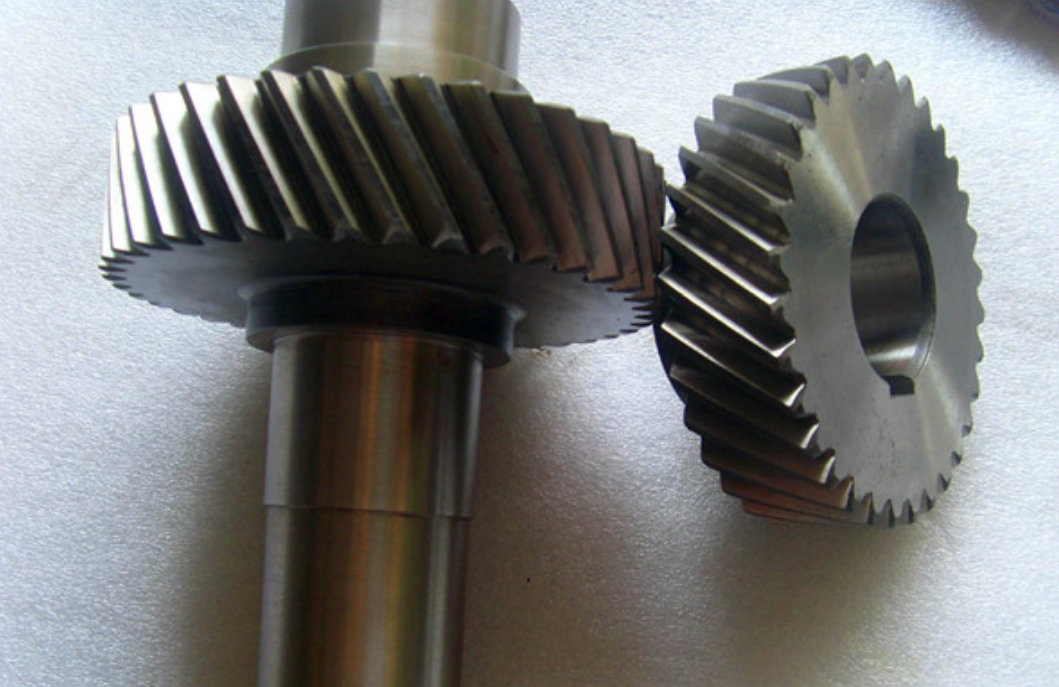
Internal excitations in a helical gear system are the vibrations generated by the meshing action itself, as opposed to external forces from engines or loads. The most significant among these are the parametric excitation due to time-varying meshing stiffness and the displacement excitation caused by geometric transmission errors, such as tooth pitch error. The stiffness excitation arises because the total length of contact lines between mating teeth changes periodically as multiple tooth pairs engage and disengage. This variation causes the system’s effective stiffness to fluctuate with time, acting as a parametric pump that can excite system resonances. Concurrently, deviations from the ideal tooth profile, encapsulated as pitch errors, introduce kinematic disturbances that directly displace the meshing action from its theoretical path. The dynamic response of the system is the result of the complex interplay between these excitations, the system’s inertia, damping, and bearing supports.
Theoretical Formulation of Time-Varying Meshing Stiffness for Helical Gears
The accurate quantification of time-varying meshing stiffness is paramount for realistic dynamic modeling. For a helical gear pair, the engagement occurs not instantaneously along the full face width but progresses along a sloping contact line. The method of time-varying contact lines provides an efficient analytical approach to model this phenomenon, superior in computational speed to detailed finite element analyses for initial dynamic studies.
The core principle involves calculating the instantaneous total length of all contact lines between the mating gear teeth during a meshing cycle. For a helical gear with a contact ratio greater than 2, there are always at least two tooth pairs in contact. The transition between N and N+1 pairs in contact is responsible for the periodic stiffness variation. The engagement process for a single tooth pair can be characterized by key angular positions: the angle from start of engagement to full engagement ($\theta_1$), and the angle from start of engagement to start of disengagement ($\theta_2$). These angles are derived from the fundamental geometry of the helical gear: helix angle ($\beta$), normal module ($m_n$), pressure angle ($\alpha_n$), and face width ($F$).
The corresponding times are:
$$ t_1 = \frac{60 \theta_1}{2\pi n_1}, \quad t_2 = \frac{60 \theta_2}{2\pi n_1} $$
where $n_1$ is the rotational speed of the driving gear in rpm. The meshing period for a single tooth is $t_z = 60 / (n_1 z_1)$, where $z_1$ is the number of teeth on the driver.
Based on the geometric progression of contact lines, a generalized piecewise function for the total contact line length $l(t)$ over a single-tooth meshing period $t_z$ can be formulated for external helical gear pairs. This function accounts for the linear increase and decrease of contact lines as teeth engage and disengage. Let $l_{\text{max}}$ be the maximum possible contact line length for a single tooth pair, and let $n$ represent the smaller number of tooth pairs in simultaneous contact during the cycle (e.g., 2 for a contact ratio between 2 and 3). The time nodes $t_a$, $t_b$, and $t_c$ mark the transitions in the contact line summation, as illustrated in the analysis.
The general form is:
$$
l(t) =
\begin{cases}
n l_{\text{max}} + \frac{l_{\text{max}}}{t_1} t, & 0 \leq t < t_a \\[6pt]
n l_{\text{max}} + \frac{l_{\text{max}}}{t_1} t – \frac{l_{\text{max}}}{t_1} (t – t_a), & t_a \leq t < t_b \\[6pt]
n l_{\text{max}} + \frac{l_{\text{max}}}{t_1} t – \frac{l_{\text{max}}}{t_1} (t – t_a) – \frac{l_{\text{max}}}{t_1} (t – t_b), & t_b \leq t < t_c \\[6pt]
n l_{\text{max}}, & t_c \leq t < t_z
\end{cases}
$$
The specific values of $t_a$, $t_b$, and $t_c$ are determined by the gear’s overlap ratio and the phasing between successive tooth engagements. The time-varying meshing stiffness $k(t)$ is then directly proportional to the total contact line length:
$$ k(t) = \lambda \cdot l(t) $$
where $\lambda$ is a stiffness per unit length coefficient, which can be obtained from the ratio of the mean mesh stiffness $k_m$ (calculated per standards like ISO 6336 or AGMA 2001) to the mean contact line length $l_m$: $\lambda = k_m / l_m$.
To validate this method, the stiffness of a sample automotive transmission helical gear pair was calculated. The basic geometry is summarized in Table 1.
| Parameter | Driver Gear | Driven Gear |
|---|---|---|
| Number of Teeth, $z$ | 29 | 36 |
| Normal Module, $m_n$ (mm) | 2.5 | 2.5 |
| Normal Pressure Angle, $\alpha_n$ (°) | 20 | 20 |
| Helix Angle, $\beta$ (°) | 20 | 20 |
| Profile Shift Coefficient | 0.3388 | 0.3099 |
| Face Width, $F$ (mm) | 25 | 25 |
The mean mesh stiffness $k_m$ was computed as 18.477 N/(μm·mm). Applying the time-varying contact line method yielded a periodic stiffness curve $k(t)$ for a single meshing cycle. For comparison, a commercial gear analysis software (KISSsoft) was used to simulate the same stiffness. The results, comparing peak, minimum, and average values over three meshing cycles, are presented in Table 2.
| Stiffness Value | Time-Varying Contact Line Method (N/(μm·mm)) | Software Simulation (N/(μm·mm)) | Relative Error (%) |
|---|---|---|---|
| Maximum, $k_{max}$ | 18.87 | 20.26 | 7.4 |
| Minimum, $k_{min}$ | 18.11 | 18.68 | 3.1 |
| Average, $k_m$ | 18.48 | 19.61 | 6.1 |
The results show excellent agreement in the trend and magnitude. The slight underestimation by the analytical method is expected, as specialized software accounts for more detailed elastic deformation across the tooth flank contact patch. This validates the time-varying contact line method as a sufficiently accurate and computationally efficient tool for preliminary dynamic analysis of helical gear systems.
Modeling of Pitch Error Excitation
Manufacturing imperfections are unavoidable and constitute a significant source of vibration. Among various errors, the single tooth pitch error—the deviation between the actual and theoretical angular spacing between adjacent teeth—directly affects kinematic transmission accuracy and excites vibrations at the meshing frequency and its harmonics. It is a short-period error influencing running smoothness.
The tooth pitch error excitation $e(t)$ is commonly modeled as a sinusoidal function superposed on a mean error:
$$ e(t) = e_0 + e_r \sin(\omega_m t + \phi) $$
where $e_0$ is the mean error, $e_r$ is the amplitude of error variation, $\omega_m$ is the gear meshing frequency ($\omega_m = 2\pi n_1 z_1 / 60$), and $\phi$ is an initial phase angle. For the analyzed gear pair, the single pitch error $f_{pt}$ was specified as 12 μm according to standard tolerance tables. The total static transmission error (STE), which is the primary kinematic excitation, is the composite effect of pitch errors on all contacting teeth. This STE modifies the ideal kinematic relationship between the driving and driven helical gears and acts as a forced displacement input to the dynamic system.
Development of a Nonlinear Dynamic Model for Helical Gears
To investigate the combined effect of time-varying meshing stiffness and tooth pitch error, a lumped-parameter, nonlinear dynamic model of a helical gear pair is established. The model considers five degrees of freedom (DOF) per gear body, accounting for bending-torsion-axial coupling, which is crucial for helical gears due to the presence of axial forces. Each gear (subscripts 1 for driver, 2 for driven) is modeled with: translational displacements in the radial (y-axis) and axial (z-axis) directions ($y_1$, $z_1$, $y_2$, $z_2$), and a torsional rotation about its axis ($\theta_1$, $\theta_2$). The supporting shafts and bearings are represented by equivalent linear springs ($k_{1y}$, $k_{1z}$, $k_{2y}$, $k_{2z}$) and dampers ($c_{1y}$, $c_{1z}$, $c_{2y}$, $c_{2z}$) in the respective directions.
The nonlinearities enter the model through the varying mesh stiffness $k(t)$ and the backlash function (though for simplicity in this focused analysis, backlash is considered negligible, assuming continuous contact). The dynamic meshing force is derived from the relative displacement along the line of action, projected onto the radial (y) and axial (z) directions using the helix angle $\beta$ and base circle radii $r_{b1}$, $r_{b2}$. The force components include contributions from the time-varying meshing stiffness and a linear mesh damping $c_m$.
The equations of motion, derived using Newton’s second law, form a system of coupled, second-order, nonlinear differential equations:
$$
\begin{aligned}
m_1 \ddot{y}_1 + c_{1y} \dot{y}_1 + k_{1y} y_1 &= -F_y \\
m_1 \ddot{z}_1 + c_{1z} \dot{z}_1 + k_{1z} z_1 &= F_z \\
I_1 \ddot{\theta}_1 + F_y r_{b1} &= T_1 \\
m_2 \ddot{y}_2 + c_{2y} \dot{y}_2 + k_{2y} y_2 &= F_y \\
m_2 \ddot{z}_2 + c_{2z} \dot{z}_2 + k_{2z} z_2 &= -F_z \\
I_2 \ddot{\theta}_2 + F_y r_{b2} &= -T_2
\end{aligned}
$$
Here, $m_i$ and $I_i$ are the mass and mass moment of inertia of gear $i$, and $T_1$, $T_2$ are the external input and load torques, respectively. The meshing force components $F_y$ and $F_z$ are defined as:
$$
\begin{aligned}
F_y &= \cos\beta \left\{ k(t) \left[ y_1 + \theta_1 r_{b1} – y_2 + \theta_2 r_{b2} – e_y(t) \right] + c_m \left[ \dot{y}_1 + \dot{\theta}_1 r_{b1} – \dot{y}_2 + \dot{\theta}_2 r_{b2} – \dot{e}_y(t) \right] \right\} \\
F_z &= \sin\beta \left\{ k(t) \left[ z_1 – \tan\beta (\theta_1 r_{b1} + y_2) – z_2 + \tan\beta (y_2 – \theta_2 r_{b2}) – e_z(t) \right] + c_m \left[ \dot{z}_1 – \tan\beta (\dot{\theta}_1 r_{b1} + \dot{y}_2) – \dot{z}_2 + \tan\beta (\dot{y}_2 – \dot{\theta}_2 r_{b2}) – \dot{e}_z(t) \right] \right\}
\end{aligned}
$$
The terms $e_y(t)$ and $e_z(t)$ represent the projections of the static transmission error vector, primarily driven by the tooth pitch error, onto the y and z coordinate directions. This system of equations captures the essential dynamics of the helical gear pair. The model parameters used for numerical simulation are listed in Table 3.
| Parameter | Driver Gear | Driven Gear |
|---|---|---|
| Mass, $m$ (kg) | 0.8 | 1.19 |
| Mass Moment of Inertia, $I$ (kg·mm²) | 710.29 | 1641.05 |
| External Torque, $T$ (N·m) | 250 (Input) | 310.3 (Load) |
| Radial Bearing Stiffness, $k_y$ (N/m) | 9.235e8 | 9.235e8 |
| Axial Bearing Stiffness, $k_z$ (N/m) | 5.432e7 | 5.432e7 |
| Mesh Damping Ratio, $\zeta_m$ | 0.07 | |
Numerical Solution and Analysis of Dynamic Response
The system of nonlinear differential equations is solved numerically using a fourth-order Runge-Kutta method. The analysis proceeds in two main stages: first, examining the time-domain response to understand the transient and steady-state behavior; second, transforming the response to the frequency domain via Fast Fourier Transform (FFT) to identify dominant vibration frequencies and the sensitivity to parameter changes.
Time-Domain Response Characteristics
The vibration acceleration responses in the radial (y), axial (z), and torsional ($\theta$) directions were computed for two cases: one with only time-varying meshing stiffness excitation (idealized, no pitch error), and another incorporating both stiffness and tooth pitch error excitation.
For the idealized case, the acceleration responses for both the driver and driven helical gear exhibit clear periodicity corresponding to the meshing frequency. The torsional vibration amplitude is significantly larger than the translational vibrations, indicating that torsional vibration is the dominant mode of oscillation in this system. Axial vibration amplitude is larger than radial vibration, which is characteristic of helical gears due to the axial force component from the helix angle.
Introducing the tooth pitch error modifies the response. While the periodic nature remains, the waveforms show increased modulation and higher-frequency content. The most pronounced change is observed in the axial vibration acceleration, whose amplitude and waveform distortion increase noticeably. The torsional vibration amplitude also increases, but the relative change is less dramatic than in the axial direction. The radial vibration shows the smallest change. This indicates that for this specific helical gear configuration, the kinematic excitation from pitch error couples more strongly into the axial vibration degree of freedom.
Frequency-Domain Analysis and Parametric Influence
A more detailed understanding is gained from the frequency spectrum of the steady-state response. The influence of time-varying meshing stiffness and tooth pitch error magnitude is investigated parametrically.
Influence of Time-Varying Meshing Stiffness Magnitude
The nominal time-varying meshing stiffness $k(t)$ was scaled by factors of 0.9, 1.0, and 1.1 to simulate the effect of different gear designs or contact conditions (e.g., different material, tooth modifications). The vibration acceleration spectra were computed for each case.
The key observations are:
- As the stiffness increases (from 90% to 110% of nominal), the fundamental vibration frequencies remain essentially unchanged, as they are governed by the system’s fixed inertia and bearing properties.
- The vibration acceleration amplitudes at these frequencies, however, decrease with increasing stiffness. A stiffer mesh provides a stronger restoring force, reducing the dynamic deflection for the same excitation level.
- The reduction is most significant in the torsional direction, followed by the radial, and then the axial direction.
- The reduction in vibration amplitude is not linear with the increase in stiffness. The improvement (amplitude reduction) when increasing stiffness from 90% to 100% is more substantial than the improvement when increasing from 100% to 110%. This implies that for a system with relatively low mesh stiffness, a small increase in stiffness yields a large vibration benefit, whereas the benefit diminishes as stiffness is increased further.
This nonlinear relationship can be quantified. Table 4 shows the percentage change in vibration amplitude at a dominant frequency (e.g., 300 Hz) relative to the nominal (100%) stiffness case.
| Stiffness Level | Radial Vibration Change | Axial Vibration Change | Torsional Vibration Change |
|---|---|---|---|
| 90% $k(t)$ | +31.2% (Driver) +32.2% (Driven) |
+16.4% (Driver) +1.7% (Driven) |
+30.1% (Driver) +30.1% (Driven) |
| 110% $k(t)$ | -15.7% (Driver) -16.3% (Driven) |
-3.9% (Driver) -3.8% (Driven) |
-16.5% (Driver) -16.5% (Driven) |
The data confirms the asymmetric effect: a 10% decrease in stiffness causes a ~31% increase in torsional/radial amplitude, while a 10% increase causes only a ~16% decrease. This has important implications for the design and diagnosis of helical gear systems; wear or damage that reduces effective mesh stiffness can rapidly escalate vibration levels.
Influence of Tooth Pitch Error Magnitude
Similarly, the amplitude of the tooth pitch error excitation $e(t)$ was scaled by factors of 0.9, 1.0, and 1.1. The resulting spectra were analyzed.
The key observations are:
- Increasing the pitch error magnitude leads to a proportional increase in vibration acceleration amplitudes across all frequency components, particularly at the meshing frequency and its harmonics.
- The increase is most pronounced in the torsional vibration spectrum, followed by axial, and then radial vibration. This contrasts with the time-domain observation where axial change was most visible; the frequency domain reveals that the overall energy increase is highest in torsion.
- Unlike stiffness, the relationship between error increase and vibration increase is more linear. A 10% increase in error amplitude produces a roughly consistent percentage increase in vibration amplitude.
Quantifying this at another dominant frequency (e.g., 360 Hz), as shown in Table 5, confirms the near-linear relationship.
| Error Level | Radial Vibration Change | Axial Vibration Change | Torsional Vibration Change |
|---|---|---|---|
| 90% $e(t)$ | -36.4% (Driver) -37.6% (Driven) |
-31.2% (Driver) -31.2% (Driven) |
-36.9% (Driver) -36.9% (Driven) |
| 110% $e(t)$ | +37.0% (Driver) +37.0% (Driven) |
+30.8% (Driver) +30.8% (Driven) |
+36.8% (Driver) +36.8% (Driven) |
Comparing the overall effect, the variation in vibration amplitude caused by a 10% change in time-varying meshing stiffness is significantly greater than that caused by a 10% change in tooth pitch error amplitude. This underscores that for this helical gear system, the parametric stiffness excitation is a more potent source of dynamic force than the kinematic error excitation. Therefore, in noise and vibration reduction efforts for helical gears, enhancing mesh stiffness consistency (e.g., through optimal profile and lead modifications) might yield greater benefits than merely tightening pitch error tolerances beyond a certain point.
Conclusion
This comprehensive analysis of a helical gear pair’s nonlinear dynamics yields several key conclusions:
- The time-varying contact line method provides an effective and validated analytical approach for calculating the time-varying meshing stiffness of external helical gear pairs, offering a good balance between accuracy and computational efficiency for dynamic modeling.
- The established five-DOF bending-torsion-axial coupled dynamic model successfully captures the essential nonlinear behavior of the helical gear pair under the combined excitation of time-varying meshing stiffness and tooth pitch error.
- The dynamic response is dominated by torsional vibrations. The introduction of tooth pitch error most visibly distorts the time-domain waveform of the axial vibration response, while increasing the overall energy content across all directions, especially in torsion.
- Parametric studies reveal crucial design insights:
- Time-Varying Meshing Stiffness: There is a strongly nonlinear relationship between mesh stiffness and vibration amplitude. Reducing stiffness below its nominal design value causes vibration levels to rise rapidly. This highlights the critical importance of maintaining design stiffness (avoiding wear, thinning, etc.) and suggests that designs with higher inherent mesh stiffness are more robust against vibration escalation from minor degradations.
- Tooth Pitch Error: The relationship between error magnitude and vibration amplitude is more linear. While tighter tolerances reduce vibration, the rate of improvement is consistent. The analysis helps identify a potential economic trade-off between machining cost (tolerance) and acoustic performance.
- For the specific system analyzed, the excitation from time-varying meshing stiffness variation has a greater influence on the overall vibration level than the excitation from typical levels of tooth pitch error. This points designers towards prioritizing optimization of load sharing and stiffness variation through tooth modifications as a primary strategy for helical gear noise reduction, with error control as a secondary, yet important, factor.
The methodologies and findings presented form a solid foundation for further research, including the effects of backlash nonlinearity, friction, bearing clearance, and the integration of this gear pair model into a full transmission system model for even more comprehensive vibration and noise prediction.