
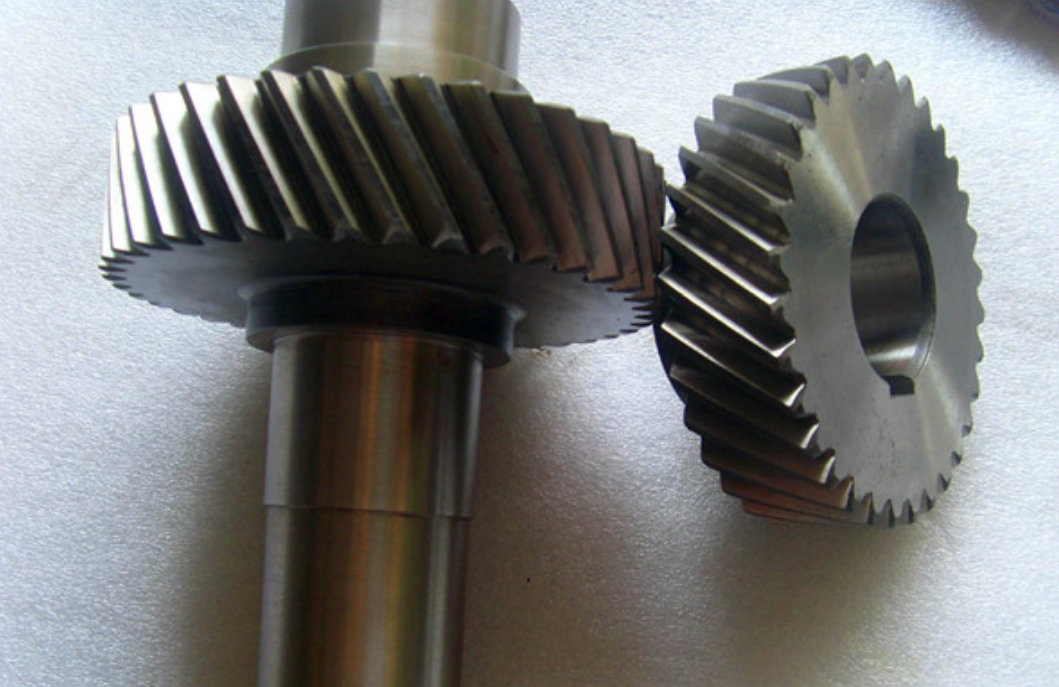
The manufacturing of precision plastic components, such as helical gears, presents unique challenges in injection molding. The inherent complexity of the helical gear geometry, characterized by angled teeth that engage gradually, demands exceptional dimensional accuracy and surface finish to ensure proper meshing and transmission performance. When the design incorporates additional features like side-holes, the molding process becomes significantly more intricate, necessitating sophisticated mold designs with side-actions (side-core pulls) and careful consideration of filling patterns to prevent defects. This article details a first-person, in-depth analysis conducted to optimize the molding process for a specific helical gear part featuring a side-hole. The core methodology relied on advanced simulation using Moldflow software to virtually prototype the process, predict potential issues, and refine both the part’s manufacturability and the mold design before physical tooling was commissioned.
The primary objective was to develop a robust molding strategy that ensures complete cavity filling, minimizes residual stresses and warpage, and eliminates critical defects that could compromise the structural integrity or function of the final helical gear. The part in question, a plastic helical gear with a radially oriented side-hole, requires a mold with a side-core pull mechanism for the hole and a carefully designed ejection system to avoid damaging the delicate gear teeth during part removal. The material selected for this application was Polyoxymethylene (POM), a semi-crystalline engineering thermoplastic renowned for its high strength, stiffness, excellent wear and friction properties, and good dimensional stability—all crucial for a functioning helical gear. Key material properties and the initial process parameters established for the simulation are summarized in Table 1.
| Parameter Category | Value / Description |
|---|---|
| Material | Polyoxymethylene (POM), Semi-crystalline |
| Melt Temperature | 230 °C |
| Mold Temperature (Core Side) | 60 °C |
| Mold Temperature (Cavity Side) | 80 °C |
| Injection Pressure Control | 120 MPa (Maximum) |
| Velocity/Pressure Switchover | Automatic (95% cavity fill) |
| Packing Pressure Profile | 80% of injection pressure for 7 seconds |
| Cooling Time | 20 seconds |
The foundation of any successful mold filling analysis is the strategic placement of the gate, as it dictates the flow path of the molten polymer. Utilizing Moldflow’s autonomous gate location optimizer, a preliminary analysis was performed on the 3D model of the helical gear. The software identified the optimal gate location at the top face of the gear’s hub. This location was deemed rational for several reasons aligned with standard mold design principles for a helical gear: it allows the melt to flow symmetrically into the gear body, facilitates a straightforward ejection mechanism from the core side, and aligns with a logical partings line strategy where the gear’s top face and upper cylindrical surface serve as the primary parting plane.
Following the identification of the optimal gate region, a comprehensive filling analysis was executed. The Fill Time result, as shown in the simulation contours, indicated a total fill time of approximately 2.15 seconds. The progression of the flow front was observed to be balanced and uniform, with no significant hesitation or race-tracking effects around the helical gear teeth. The smooth, concentric advancement of the melt front from the gate at the hub outward towards the gear tip and downwards along the shaft is critical for achieving uniform packing and cooling, thereby reducing orientation-induced stresses which are a primary cause of warpage in semi-crystalline materials like POM. The filling pattern confirmed the viability of the single gate at the hub center for this helical gear geometry.
A critical aspect of the analysis involved predicting and managing potential defects. The Air Traps analysis predicted the location of potential voids or burn marks caused by trapped air. For the helical gear with a side-hole, air traps were primarily predicted at the end-of-fill regions in the thick hub section and, notably, in the blind volumes created by the side-hole core. Since the mold design employs a side-action for the hole, ensuring proper venting in these core pins is paramount. The simulation results directly informed the mold design, specifying the need for precision venting channels on the side-core to allow trapped air to escape, thus preventing surface blemishes or incomplete filling in this localized area.
Another significant defect analyzed was weld lines, which form when separate flow fronts converge. For a helical gear, weld lines can be particularly detrimental if they occur across the load-bearing faces of the teeth, severely reducing local strength. The simulation revealed that with the central gate, the primary weld lines formed internally within the thicker web of the gear hub and did not propagate across the critical functional surfaces of the helical gear teeth. This is a favorable outcome. The strength of these internal weld lines can be further enhanced by optimizing the process parameters, notably by increasing the melt and mold temperature at the point of confluence to improve molecular diffusion. The pressure drop $$ \Delta P $$ across a flow path is related to the melt viscosity $$ \eta $$ and flow rate $$ Q $$ by relationships derived from the Hele-Shaw approximation, which is fundamental to mold filling simulations:
$$ \Delta P \propto \eta \cdot Q \cdot L / h^3 $$
where \( L \) is the flow length and \( h \) is the cavity thickness. Increasing melt temperature reduces \( \eta \), thereby lowering the pressure required to fill and pack the cavity, which also benefits weld line strength.
The analysis of warpage, the total deformation of the part after ejection, was broken down into its contributing factors: differential cooling, differential shrinkage, and molecular orientation. For this POM helical gear, the orientation-induced warpage was the most significant contributor, though its absolute magnitude was within acceptable limits for the application. This is characteristic of semi-crystalline materials where flow-induced alignment of polymer chains leads to anisotropic shrinkage. The shrinkage-induced deformation showed a pattern where the free-end of the cylindrical base exhibited more contraction than the region constrained by the helical gear teeth and the gate location. The cooling-induced warpage highlighted minor distortions at the extremities due to non-uniform heat extraction. The total displacement result was crucial for assessing whether the final helical gear would meet its concentricity and axial runout tolerances. The warpage \( W \) can be conceptually linked to the internal stress \( \sigma \) developed due to non-uniform cooling and shrinkage:
$$ \sigma \propto E \cdot \alpha \cdot \Delta T $$ and $$ W \propto \sigma / E $$
where \( E \) is the modulus of the material, \( \alpha \) is the coefficient of thermal expansion, and \( \Delta T \) is the temperature gradient. Minimizing \( \Delta T \) through an optimized cooling system is key to controlling warpage.
Based on the filling analysis, the software’s Process Optimization module was employed to recommend an injection speed profile. Instead of a constant injection speed, a profiled approach was generated. The recommendation suggested a faster initial speed to quickly advance the melt through the sprue and runner, followed by a carefully controlled reduction in speed as the melt begins to fill the intricate helical gear teeth and the side-hole region. This profile aims to balance two competing needs: minimizing shear heating and material degradation in the gates, and ensuring complete filling of thin sections without premature freezing. A higher initial speed also helps maintain a higher melt temperature at the flow front, which improves the merging of flow fronts and reduces the visibility and weakness of weld lines in the helical gear hub.
The pressure history during injection and packing is a vital diagnostic tool. The simulated cavity pressure curve showed a sharp rise during the initial filling phase, peaking at the moment of complete cavity fill (switchover point) at around 140 MPa. Subsequently, during the packing phase, the pressure was maintained at a high level (approx. 110 MPa) to compensate for volumetric shrinkage as the material cools. A well-controlled packing phase is essential for preventing sink marks in the thick sections of the helical gear hub and for achieving high dimensional stability. The pressure \( P \) in the cavity during packing is critical for determining the final density \( \rho \) of the material, which follows its Pressure-Volume-Temperature (PVT) relationship, often modeled by equations like the Tait equation for amorphous polymers or modified versions for semi-crystalline ones like POM:
$$ V(T, P) = V_0(T) \left[1 – C \ln\left(1 + \frac{P}{B(T)}\right)\right] + V_t(T, P) $$
where \( V \) is specific volume, \( V_0 \) is specific volume at zero pressure, \( C \) is a constant, \( B(T) \) is a temperature-dependent parameter, and \( V_t \) accounts for the transition for crystalline materials.
The cumulative insights from the Moldflow analysis directly informed the final mold design. The gating was implemented as a single pinpoint gate at the top center of the gear hub, as validated. To form the side-hole, a mechanically actuated side-core pull system with integrated vents was designed. Given the sensitivity of the helical gear teeth to damage during ejection, a carefully engineered ejection system was necessary. A combination of ejector pins under the gear hub and a specialized ring ejector or a plate acting on the upper rim of the cylindrical base was conceptualized to ensure uniform, simultaneous force distribution, preventing any bending or shearing of the delicate helical gear teeth. The cooling circuit was designed with particular attention to uniformizing the temperature around the gear form, utilizing conformal cooling channels where possible to extract heat efficiently from the complex tooth geometry.
| Predicted Issue | Root Cause | Optimization Strategy |
|---|---|---|
| Air Traps in side-hole core | Trapped gas in blind cavity of side-core. | Incorporate micro-vents (< 0.02 mm) on the side-core pin face. |
| Potential weak weld lines in hub | Converging flow fronts in thick section. | Increase melt and mold temperature by 10°C; Optimize injection speed profile. |
| Orientation-induced warpage | Anisotropic shrinkage due to fiber/filler alignment (if any) and molecular orientation. | Optimize gate size and location (done); Adjust packing pressure profile (2-stage). |
| Sink marks in gear hub | Insufficient local packing pressure and time. | Increase local packing pressure and time; Ensure adequate cooling time. |
| High injection pressure | Long, thin flow paths into gear teeth. | Confirm machine capacity is sufficient; Consider slight increase in melt temperature to reduce viscosity. |
In conclusion, the application of Moldflow simulation software was instrumental in the successful optimization of the injection molding process for a complex helical gear part with a side-hole. By performing a virtual “trial run,” the analysis validated a single-gate approach, predicted and provided solutions for potential defects like air traps and weld lines, and quantified the expected warpage behavior. This proactive, simulation-driven approach significantly de-risks the mold manufacturing process. It enables the identification and correction of design flaws in the digital realm, leading to a higher first-time success rate for the physical mold, reduced time-to-market, and the production of high-quality, dimensionally stable plastic helical gears that meet stringent performance requirements. The methodology underscores the critical role of computer-aided engineering (CAE) in modern, precision plastics manufacturing, transforming the development of intricate components like the helical gear from an art reliant on trial-and-error into a controlled, predictable science.