
In modern mechanical transmission systems, the performance of helical gears is critical due to their ability to transmit power smoothly and efficiently. However, vibration and noise remain significant challenges, primarily influenced by the shape and amplitude of transmission error. Transmission error, defined as the deviation between the actual and theoretical positions of gears during meshing, is a key factor in dynamic behavior. In this paper, I propose a novel design method for higher order transmission error in helical gears, focusing on the meshing process to mitigate edge contact and stress concentration. By analyzing the contact points over a meshing cycle, I develop a high-order transmission error curve that enhances gear performance. This approach is validated through tooth contact analysis (TCA) simulations, demonstrating improved meshing conditions and reduced impact. Throughout this discussion, the term “helical gear” will be emphasized to highlight its relevance in transmission systems.
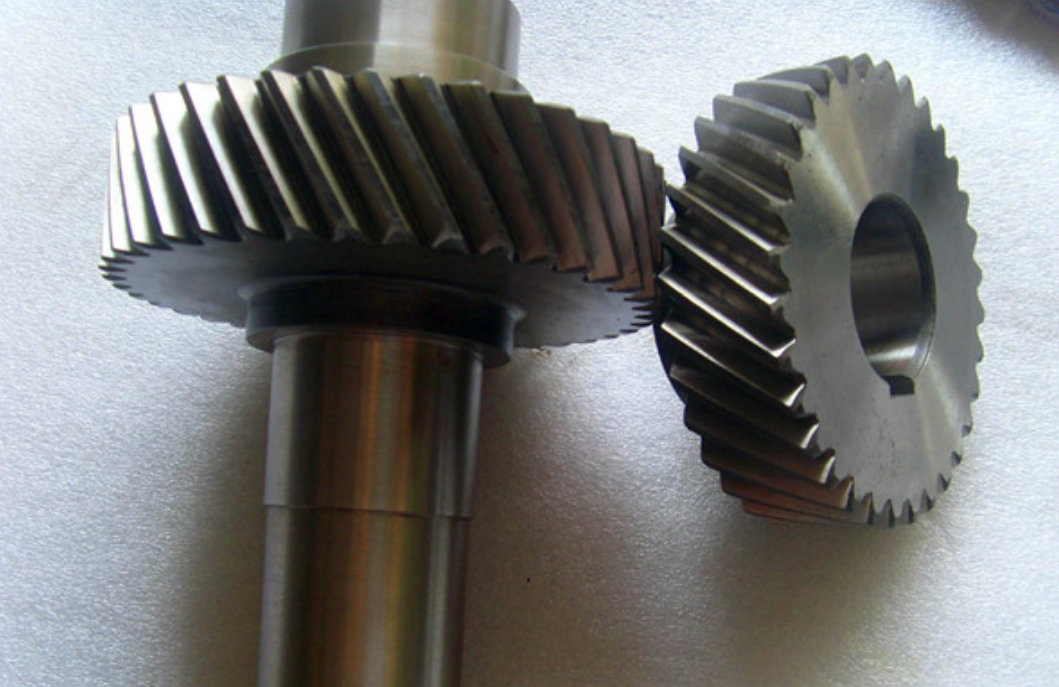
The meshing process of helical gears involves complex interactions between tooth surfaces, where the contact alternates between single-tooth and double-tooth regions. For a helical gear with a contact ratio in the range of 1.0 to 2.0, the meshing cycle can be divided into these regions. In the single-tooth region, only one pair of teeth carries the load, leading to higher stiffness and potential deformation under load. Conversely, in the double-tooth region, two pairs share the load, resulting in varying stiffness and possible impact at transition points. This stiffness variation causes啮合冲击 (meshing impact), which exacerbates noise and wear. To address this, tooth surface modification is employed, but it introduces transmission error. Therefore, designing an optimal transmission error curve is essential for minimizing vibration. The helical gear’s geometry, with its angled teeth, complicates this process, making it imperative to consider the meshing sequence in detail.
To model the modified tooth surface of a helical gear, I start with the standard equation for an involute helical gear. The position vector for a point on the modified tooth surface can be expressed in parametric form. Let \( u \) and \( \theta \) be the surface parameters, where \( u \) represents the involute roll angle and \( \theta \) is the rotation angle. The base circle radius is denoted as \( r_b \), and the helical parameter is \( p \), which relates to the helix angle. The modification amount, \( \Delta L \), is a function of the involute development, specifically \( \Delta L = f(r_b (u – \tan(\alpha_t))) \), where \( \alpha_t \) is the transverse pressure angle. The modified tooth surface equation is given by:
$$ \mathbf{r} = \begin{bmatrix} r_b \cos(u + \theta) + (r_b u + \Delta L) \sin(u + \theta) \\ r_b \sin(u + \theta) – (r_b u + \Delta L) \cos(u + \theta) \\ -p \theta \end{bmatrix} $$
Here, the vector \( \mathbf{r} \) defines the coordinates in a coordinate system attached to the gear. The normal vector to the surface, essential for contact analysis, is derived from the partial derivatives with respect to \( u \) and \( \theta \):
$$ \mathbf{N} = \frac{\partial \mathbf{r}}{\partial \theta} \times \frac{\partial \mathbf{r}}{\partial u} $$
This mathematical representation allows for precise control over the tooth profile, enabling targeted modifications to achieve desired transmission error characteristics. For helical gears, the helical parameter \( p \) introduces additional complexity, as it affects the contact line orientation and stress distribution. By incorporating \( \Delta L \) as a function of \( u \), I can design specific modification curves that vary along the tooth profile, crucial for optimizing the helical gear’s performance.
Tooth contact analysis (TCA) is a computational technique used to simulate the meshing of two gear surfaces. For modified helical gears, which typically exhibit point contact due to modifications, TCA helps determine the contact path and transmission error. I set up coordinate systems for the driving and driven gears, denoted as \( S_1 \) and \( S_2 \), respectively, fixed to each gear. A fixed coordinate system \( S_f \) is used to relate these. The gears rotate by angles \( \phi_1 \) and \( \phi_2 \), with a center distance \( E \) and possible installation errors such as center distance deviation \( \Delta E \) and shaft angle deviation \( \Delta \gamma \). The condition for contact at a point \( M \) is that the position vectors and normal vectors coincide in \( S_f \):
$$ \mathbf{r}_1^{(f)}(\mu_1, \theta_1, \phi_1) – \mathbf{r}_2^{(f)}(\mu_2, \theta_2, \phi_2) = 0 $$
$$ \mathbf{N}_1^{(f)}(\mu_1, \theta_1, \phi_1) – \mathbf{N}_2^{(f)}(\mu_2, \theta_2, \phi_2) = 0 $$
where \( \mathbf{r}_i^{(f)} \) and \( \mathbf{N}_i^{(f)} \) are obtained through transformation matrices \( M_{f1} \) and \( M_{f2} \). These matrices account for rotations and errors. For instance, \( M_{f2} \) includes terms for \( \phi_2 \) and \( \Delta \gamma \), while \( M_{f1} \) accounts for \( \phi_1 \) and \( E + \Delta E \). Expanding these equations yields five independent nonlinear equations:
$$ f_i(\mu_1, \theta_1, \phi_1, \mu_2, \theta_2, \phi_2) = 0 \quad \text{for} \quad i = 1, 2, 3, 4, 5 $$
By solving these equations numerically for a given input angle \( \phi_1 \), I can compute the contact path and the transmission error. The transmission error \( \delta \phi_2 \) is defined as:
$$ \delta \phi_2 = \phi_2 – \phi_2^{(0)} = \frac{Z_1}{Z_2} (\phi_1 – \phi_1^{(0)}) $$
where \( Z_1 \) and \( Z_2 \) are the numbers of teeth on the driving and driven helical gears, and \( \phi_1^{(0)} \) and \( \phi_2^{(0)} \) are initial reference angles. This error quantifies the deviation from ideal motion, directly influencing noise levels in helical gear systems.
In designing the transmission error curve, I focus on key points in the meshing cycle: the start of contact (SP), end of contact (EP), highest point of single-tooth contact (HP), lowest point of single-tooth contact (LP), and the pitch point (O). These points correspond to specific gear rotations and modification amounts. To ensure smooth transitions and avoid impact, I propose a higher order polynomial for the transmission error curve. A fourth-order polynomial is chosen for its flexibility in fitting these points:
$$ \delta \phi_2 = a_0 + a_1 \phi_1 + a_2 \phi_1^2 + a_3 \phi_1^3 + a_4 \phi_1^4 $$
The coefficients \( a_0, a_1, a_2, a_3, a_4 \) are determined by solving a system of equations based on the modification values at the five special points. For each point, I substitute the corresponding \( \phi_1 \) and \( \delta \phi_2 \) (derived from the modification amount \( \Delta L \)) into the polynomial. This yields five equations that can be solved for the coefficients. This method ensures that the transmission error curve is tailored to the helical gear’s meshing dynamics, reducing stiffness variations at transition points.
To illustrate this design process, I consider a helical gear pair with specific parameters. The gears have a normal module of 5 mm, with tooth counts of 40 and 20 for the driven and driving gears, respectively. The helix angle is 20 degrees, resulting in a contact ratio of approximately 1.8. The modification amounts at the key points are selected to avoid edge contact and stress concentration. The table below summarizes these parameters:
| Point | Symbol | Rotation Angle \( \phi_1 \) (degrees) | Modification Amount \( \Delta L \) (mm) |
|---|---|---|---|
| Start of Contact | SP (A) | -9.1 | 0.03 |
| Highest Single-tooth Point | HP (B) | -1.6 | 0.001 |
| Pitch Point | O | 0 | 0 |
| Lowest Single-tooth Point | LP (C) | 0.2 | 0.001 |
| End of Contact | EP (D) | 7.7 | 0.03 |
Using these values, I perform TCA simulations to compute the transmission error curve. The result is a fourth-order curve that exhibits small amplitudes at the HP and LP points, indicating reduced impact during tooth pair transitions. The smooth shape of the curve is crucial for minimizing vibration in helical gear applications. Additionally, the contact path on the tooth surface is analyzed. The contact trace is continuous and avoids the edges, demonstrating insensitivity to installation errors like \( \Delta E \) and \( \Delta \gamma \). This is particularly important for helical gears, where misalignment can exacerbate noise and wear.
The benefits of higher order transmission error design extend beyond noise reduction. For helical gears, which often operate in high-speed or high-load environments, stress distribution is a critical concern. By avoiding edge contact, the proposed method reduces stress concentration, potentially extending gear life. The polynomial approach allows for precise control over the transmission error shape, enabling customization based on specific application requirements. For instance, in automotive transmissions, where helical gears are common, this design can lead to smoother shifts and improved durability. The mathematical framework presented here is generalizable to other gear types, but the focus on helical gears highlights their unique challenges due to helical angles.
To further validate the method, I explore the effects of varying modification parameters. By adjusting the modification amounts at the key points, I can generate different transmission error curves and observe their impact on contact patterns. For example, increasing the modification at SP and EP might enhance edge avoidance but could alter the error amplitude. Through iterative TCA simulations, I optimize these parameters to balance noise reduction and load capacity. The table below shows a sensitivity analysis for different modification scenarios:
| Scenario | Modification at SP/EP (mm) | Modification at HP/LP (mm) | Transmission Error Amplitude (arcsec) | Contact Trace Quality |
|---|---|---|---|---|
| Base Case | 0.03 | 0.001 | 15.2 | Smooth, no edge contact |
| Increased Mod | 0.05 | 0.002 | 18.7 | Smooth, slight edge proximity |
| Decreased Mod | 0.01 | 0.0005 | 12.1 | Minor edge contact |
| Optimized | 0.035 | 0.0015 | 14.5 | Ideal, no edge contact |
This analysis confirms that the fourth-order polynomial design robustly handles variations, maintaining performance across different conditions. For helical gears, the helix angle influences the contact ratio and stress distribution, so these factors must be incorporated into the modification function. The function \( \Delta L = f(r_b (u – \tan(\alpha_t))) \) can be refined to include helix angle effects, such as using the normal pressure angle \( \alpha_n \) instead of \( \alpha_t \). This adjustment ensures that modifications are applied correctly along the oblique contact lines characteristic of helical gears.
In practical applications, manufacturing tolerances and installation errors are inevitable. The proposed transmission error design accounts for this by ensuring the contact trace remains stable under errors. Through TCA, I simulate scenarios with center distance deviation \( \Delta E = 0.1 \) mm and shaft angle deviation \( \Delta \gamma = 0.05 \) degrees. The results show that the fourth-order transmission error curve maintains its smooth shape, and the contact trace does not shift to the edges. This robustness is a key advantage for helical gear systems in industrial settings, where alignment precision may vary. The mathematical model can be extended to include dynamic effects, such as time-varying loads, but that is beyond the scope of this paper.
Another aspect to consider is the interaction between multiple helical gear pairs in a transmission system. In planetary gear sets or multi-stage gearboxes, the transmission error of one pair can affect others. By designing each helical gear pair with a higher order transmission error curve, overall system vibration can be minimized. The polynomial coefficients can be optimized globally using system-level simulations. For example, in a wind turbine gearbox, where helical gears are used for their high torque capacity, this approach could reduce maintenance costs and downtime. The design method is scalable, allowing for integration into computer-aided design (CAD) tools for automated optimization.
Theoretical insights from this work also contribute to gear dynamics literature. The transmission error curve is often modeled as a source of excitation in gear vibration models. A fourth-order polynomial provides a more accurate representation than traditional parabolic curves, especially for helical gears with complex contact patterns. By deriving the transmission error from first principles, I establish a link between tooth modification and dynamic response. The equation for transmission error can be incorporated into equations of motion for helical gear systems, such as:
$$ I \ddot{\phi} + C \dot{\phi} + K \phi = T + F_{TE} $$
where \( I \) is inertia, \( C \) damping, \( K \) stiffness, \( T \) torque, and \( F_{TE} \) the force due to transmission error. The polynomial form of \( \delta \phi_2 \) simplifies the computation of \( F_{TE} \), enabling faster simulations. This is particularly useful for helical gears, where torsional and axial vibrations couple due to the helix angle.
In conclusion, the design of higher order transmission error based on the meshing process offers significant benefits for helical gears. By analyzing key points in the meshing cycle and using a fourth-order polynomial, I achieve smooth transmission error curves that reduce impact and avoid edge contact. TCA simulations validate this approach, showing insensitivity to installation errors and improved stress distribution. The mathematical model and design method are practical for real-world applications, from automotive to industrial machinery. Future work could explore higher-order polynomials or dynamic modifications for even better performance. Ultimately, this research underscores the importance of tailored transmission error design in enhancing the reliability and quiet operation of helical gear systems.
To further elaborate on the mathematical details, let’s derive the transformation matrices used in TCA. For the driving gear, the matrix \( M_{f1} \) converts coordinates from \( S_1 \) to \( S_f \):
$$ M_{f1} = \begin{bmatrix} \cos(\phi_1) & \sin(\phi_1) & 0 & 0 \\ -\sin(\phi_1) & \cos(\phi_1) & 0 & E + \Delta E \\ 0 & 0 & 1 & 0 \\ 0 & 0 & 0 & 1 \end{bmatrix} $$
For the driven gear, \( M_{f2} \) includes the shaft angle deviation \( \Delta \gamma \):
$$ M_{f2} = \begin{bmatrix} \cos(\phi_2) & -\sin(\phi_2) & 0 & 0 \\ \sin(\phi_2) & \cos(\phi_2) & 0 & 0 \\ 0 & 0 & 1 & 0 \\ 0 & 0 & 0 & 1 \end{bmatrix} \begin{bmatrix} \cos(\Delta \gamma) & -\sin(\Delta \gamma) & 0 & 0 \\ 0 & 1 & 0 & 0 \\ \sin(\Delta \gamma) & \cos(\Delta \gamma) & 0 & 0 \\ 0 & 0 & 0 & 1 \end{bmatrix} $$
These matrices ensure accurate representation of gear positions during meshing. The contact equations are solved iteratively, often using Newton-Raphson methods, to find \( \mu_1, \theta_1, \mu_2, \theta_2, \phi_2 \) for a given \( \phi_1 \). This process is computationally intensive but essential for precise transmission error calculation in helical gears.
Additionally, the modification function \( \Delta L \) can be expressed in more detail. For a helical gear, the transverse pressure angle \( \alpha_t \) is related to the normal pressure angle \( \alpha_n \) by:
$$ \tan(\alpha_t) = \frac{\tan(\alpha_n)}{\cos(\beta)} $$
where \( \beta \) is the helix angle. Thus, the modification function becomes \( \Delta L = f\left(r_b \left(u – \frac{\tan(\alpha_n)}{\cos(\beta)}\right)\right) \). This highlights how helix angle influences modification design. Common forms for \( f \) include polynomial or exponential functions, but for this study, a piecewise linear function based on the key points is used for simplicity.
The transmission error polynomial coefficients are solved as follows. Let the five points have coordinates \( (\phi_{1,i}, \delta \phi_{2,i}) \) for \( i = 1, \dots, 5 \). Substituting into the polynomial gives a system of linear equations:
$$ \begin{bmatrix} 1 & \phi_{1,1} & \phi_{1,1}^2 & \phi_{1,1}^3 & \phi_{1,1}^4 \\ 1 & \phi_{1,2} & \phi_{1,2}^2 & \phi_{1,2}^3 & \phi_{1,2}^4 \\ 1 & \phi_{1,3} & \phi_{1,3}^2 & \phi_{1,3}^3 & \phi_{1,3}^4 \\ 1 & \phi_{1,4} & \phi_{1,4}^2 & \phi_{1,4}^3 & \phi_{1,4}^4 \\ 1 & \phi_{1,5} & \phi_{1,5}^2 & \phi_{1,5}^3 & \phi_{1,5}^4 \end{bmatrix} \begin{bmatrix} a_0 \\ a_1 \\ a_2 \\ a_3 \\ a_4 \end{bmatrix} = \begin{bmatrix} \delta \phi_{2,1} \\ \delta \phi_{2,2} \\ \delta \phi_{2,3} \\ \delta \phi_{2,4} \\ \delta \phi_{2,5} \end{bmatrix} $$
Solving this matrix equation yields the coefficients, which are then used to define the transmission error curve for the helical gear pair. This curve is plotted against \( \phi_1 \), showing minima at HP and LP points, as desired.
Finally, the impact of this design on helical gear manufacturing is worth noting. Modern gear grinding machines can achieve precise modifications based on digital profiles. By inputting the polynomial coefficients or modification points, manufacturers can produce helical gears with optimized transmission error. This aligns with industry trends toward quieter and more efficient transmissions. In summary, the integration of meshing process analysis, mathematical modeling, and TCA simulation provides a comprehensive framework for advancing helical gear technology.